Kenya Cloud CRM Market Size & Growth Rate (2026-2032)
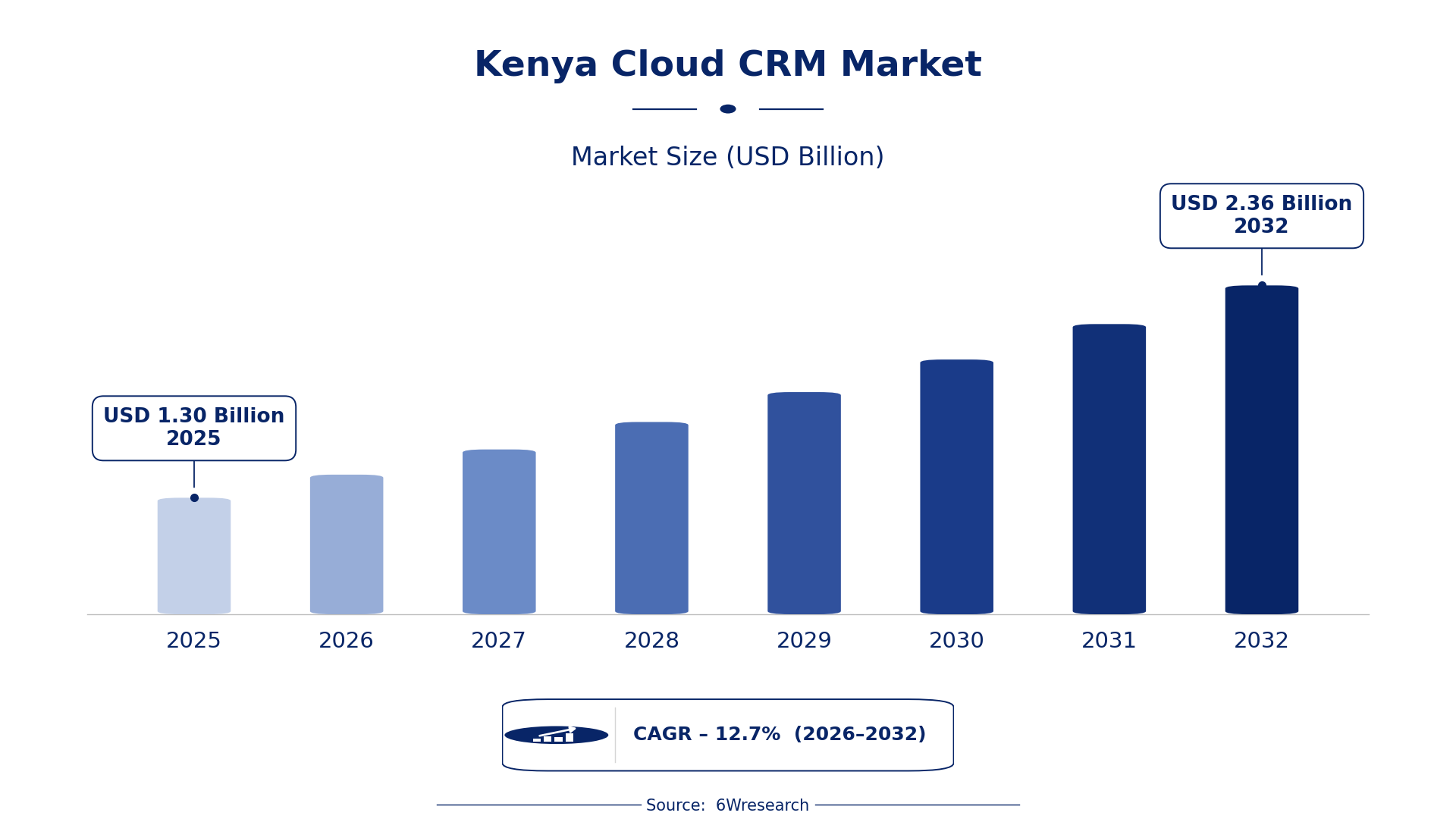
The Kenya Cloud CRM Market was estimated at USD 1297 Million in 2025 and is projected to reach USD 2361 Million by 2032, growing at a CAGR of 12.7% from 2026 to 2032.
Kenya Cloud CRM Market Synopsis
As businesses in Kenya increasingly recognize the importance of customer relationship management, the demand for Cloud CRM solutions is surging. This trend is particularly pronounced among small and medium enterprises (SMEs), which are eager to adopt technologies that enhance their customer engagement without heavy infrastructure investments.
The Kenyan market is seeing a shift toward digital solutions that promise efficiency and scalability. Local CRM providers are customizing their offerings to meet unique business needs, ensuring that companies can integrate these tools seamlessly into their existing operations.
Kenya Cloud CRM Market Year-wise Growth Rate and Key Drivers
This graph illustrates the annual growth rates of the Kenya Cloud CRM Market from 2021 to 2032, highlighting a steady upward trajectory and projected expansion over the forecast period.
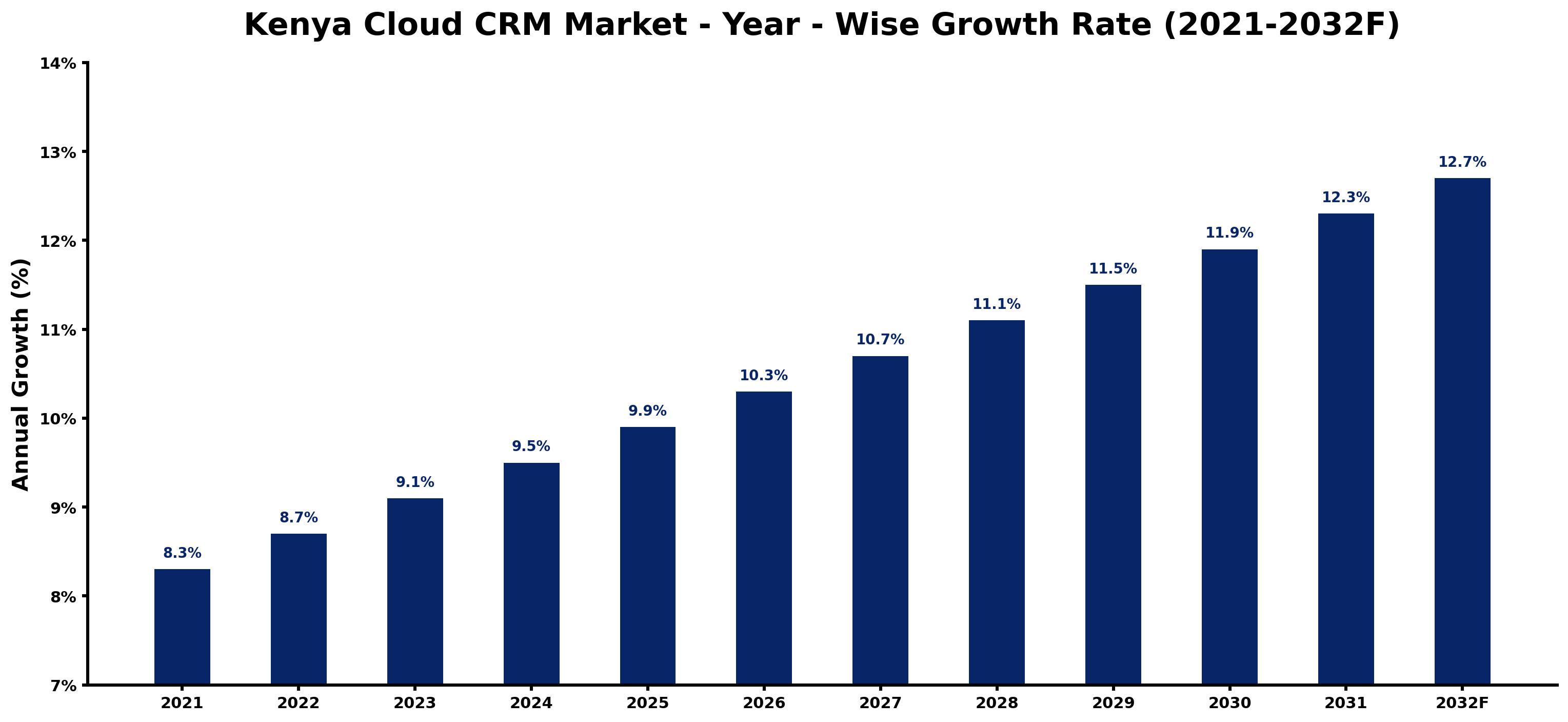
The table below presents the year‑wise growth rates along with the key drivers influencing the market
| Year | Growth Rate | Major Drivers |
| 2021 | 8.3% | Increased mobile penetration boosting cloud service adoption. |
| 2022 | 8.7% | Youth demographic driving demand for innovative CRM solutions. |
| 2023 | 9.1% | Local enterprises seeking efficiency through cloud-based systems. |
| 2024 | 9.5% | Regulatory support for digital innovation from CAK initiative. |
| 2025 | 9.9% | E-commerce growth increasing need for customer relationship tools. |
| 2026 | 10.3% | Partnerships between tech firms enhancing CRM accessibility. |
| 2027 | 10.7% | Rise in startups prioritizing customer data management. |
| 2028 | 11.1% | Government funding for tech entrepreneurship expanding market reach. |
| 2029 | 11.5% | Integration of AI in CRM improving user experience. |
| 2030 | 11.9% | Growing awareness of customer-centric strategies boosting CRM use. |
| 2031 | 12.3% | Local demand for multilingual support in CRM solutions. |
| 2032 | 12.7% | Increased internet connectivity enhancing cloud service uptake. |
Note: Market size estimations and growth projections presented in this report are based on 6Wresearch's proprietary forecasting methodology, utilizing the latest available industry data, government publications, and primary research inputs.
Kenya Cloud CRM Market Key Takeaways
Below are some of the specific key takeaways from the market, including:
- Rapid adoption of Cloud CRM solutions among SMEs driven by the need for efficiency.
- Customization and local support are becoming crucial for CRM vendors in Kenya.
- Growing awareness of cloud benefits, including flexibility and data security.
- Investment opportunities are emerging in training and implementation services.
- Government policies are increasingly supportive of ICT development and adoption.
Evaluation of Restraints in Kenya Cloud CRM Market
Despite the promising growth of the Cloud CRM market in Kenya, several factors are holding back wider adoption. A significant barrier remains the limited awareness among SMEs, many of which still rely on traditional CRM methods. This reliance is often coupled with concerns about data security and the perceived complexity of cloud solutions. on top of that, inconsistent internet connectivity and high data costs pose additional challenges that impede businesses from fully embracing cloud technologies.
Kenya Cloud CRM Market Trends
A noticeable trend in the Kenya Cloud CRM market is the move towards integrated platforms that combine sales, marketing, and customer service functions. Businesses are increasingly seeking solutions that offer scalability and can adapt to changing market conditions. The rise of mobile technology is also influencing CRM adoption, as more users demand access to customer data on-the-go. Additionally, there is a heightened focus on personalized customer experiences, pushing companies to utilize CRM tools that facilitate deeper insights into customer preferences.
Kenya Cloud CRM Market Opportunities
The evolving landscape presents numerous investment opportunities within the Kenya Cloud CRM market. As organizations seek to enhance customer relationships, there is a growing demand for tailored CRM solutions that cater specifically to local business needs. Companies can capitalize on this by developing innovative services that focus on training and support for SMEs transitioning to cloud-based systems. on top of that, as the digital transformation accelerates, those providing integration services between various business applications can expect significant growth.
Government Initiatives in the Kenya Cloud CRM Market
The Kenyan government is actively promoting the development of the Cloud CRM market through various initiatives aimed at enhancing ICT infrastructure and accessibility. This supportive regulatory environment is crucial for fostering innovation and encouraging businesses to adopt cloud solutions. Policies that focus on improving digital literacy and connectivity are essential for enabling SMEs to leverage Cloud CRM technologies effectively.
- A recently completed National ICT Masterplan aimed to improve access to ICT services and infrastructure.
- A current initiative seeks to enhance internet connectivity in rural areas, expanding potential customer bases for Cloud CRM providers.
- Ongoing training programs are being implemented to educate businesses about the benefits and functionalities of Cloud CRM systems.
- A planned public-private partnership is expected to enhance data security measures within the Cloud CRM sector by 2027.
- New regulatory frameworks are being introduced to promote transparency in cloud service billing, set to roll out in late 2025.
Future Insights of the Kenya Cloud CRM Market
Looking ahead to 2026-2032, the Kenya Cloud CRM market is set for remarkable growth. Increased internet penetration and mobile device usage will further drive the demand for cloud solutions. As businesses prioritize customer engagement and retention, the focus will shift towards CRM platforms that provide actionable insights and enhance customer interactions. The continued evolution of cloud technology will likely lead to more sophisticated solutions tailored to the specific challenges faced by Kenyan businesses.
Kenya Cloud CRM Market Latest Developments
Recent months have seen a surge in activity within the Kenya Cloud CRM market, with a focus on enhancing the offerings and capabilities of local providers. Companies are increasingly investing in technology upgrades and partnerships to better serve the growing demand.
- A major technology vendor launched a new CRM platform tailored specifically for Kenyan SMEs in early 2025, enhancing accessibility and user experience.
- In Q1 2025, a leading regional operator began an initiative to integrate AI capabilities into existing Cloud CRM solutions, which remains ongoing.
- Another vendor announced plans for a rollout of a training program designed to help businesses transition to cloud-based CRM systems, expected to begin in mid-2026.
- An expansion into the Kenyan market by a foreign CRM provider is currently underway, aiming to introduce innovative customer engagement tools by late 2025.
- A collaborative project between local tech startups aims to develop a customizable CRM solution specifically for the agricultural sector, set to be launched in early 2026.
Kenya Cloud CRM Market - Key Attractiveness of the Report
- 10 Years of Market Numbers
- Historical Data Starting from 2022 to 2025
- Base Year: 2025
- Forecast Data until 2032
- Key Performance Indicators Impacting the Market
- Major Upcoming Developments and Projects
Key Highlights of the Report:
- Kenya Cloud CRM Market Outlook
- Market Size of Kenya Cloud CRM Market, 2025
- Forecast of Kenya Cloud CRM Market, 2032
- Historical Data and Forecast of Kenya Cloud CRM Revenues & Volume for the Period 2022-2032F
- Kenya Cloud CRM Market Trend Evolution
- Kenya Cloud CRM Market Drivers and Challenges
- Kenya Cloud CRM Price Trends
- Kenya Cloud CRM Porter's Five Forces
- Kenya Cloud CRM Industry Life Cycle
- Historical Data and Forecast of Kenya Cloud CRM Market Revenues & Volume By Vertical for the Period 2022-2032F
- Historical Data and Forecast of Kenya Cloud CRM Market Revenues & Volume By Nonprofit for the Period 2022-2032F
- Historical Data and Forecast of Kenya Cloud CRM Market Revenues & Volume By Higher Education for the Period 2022-2032F
- Historical Data and Forecast of Kenya Cloud CRM Market Revenues & Volume By Nonprofit Sub Vertical for the Period 2022-2032F
- Historical Data and Forecast of Kenya Cloud CRM Market Revenues & Volume By Education for the Period 2022-2032F
- Historical Data and Forecast of Kenya Cloud CRM Market Revenues & Volume By Research and Innovation for the Period 2022-2032F
- Historical Data and Forecast of Kenya Cloud CRM Market Revenues & Volume By Social Affairs for the Period 2022-2032F
- Historical Data and Forecast of Kenya Cloud CRM Market Revenues & Volume By Children and Youth for the Period 2022-2032F
- Historical Data and Forecast of Kenya Cloud CRM Market Revenues & Volume By Art and Culture for the Period 2022-2032F
- Historical Data and Forecast of Kenya Cloud CRM Market Revenues & Volume By Others for the Period 2022-2032F
- Kenya Cloud CRM Import Export Trade Statistics
- Market Opportunity Assessment By Vertical
- Market Opportunity Assessment By Nonprofit Sub Vertical
- Kenya Cloud CRM Top Companies Market Share
- Kenya Cloud CRM Competitive Benchmarking By Technical and Operational Parameters
- Kenya Cloud CRM Company Profiles
- Kenya Cloud CRM Key Strategic Recommendations






































