Kenya Compressors Market Growth Rate Analysis (2025 - 2031)
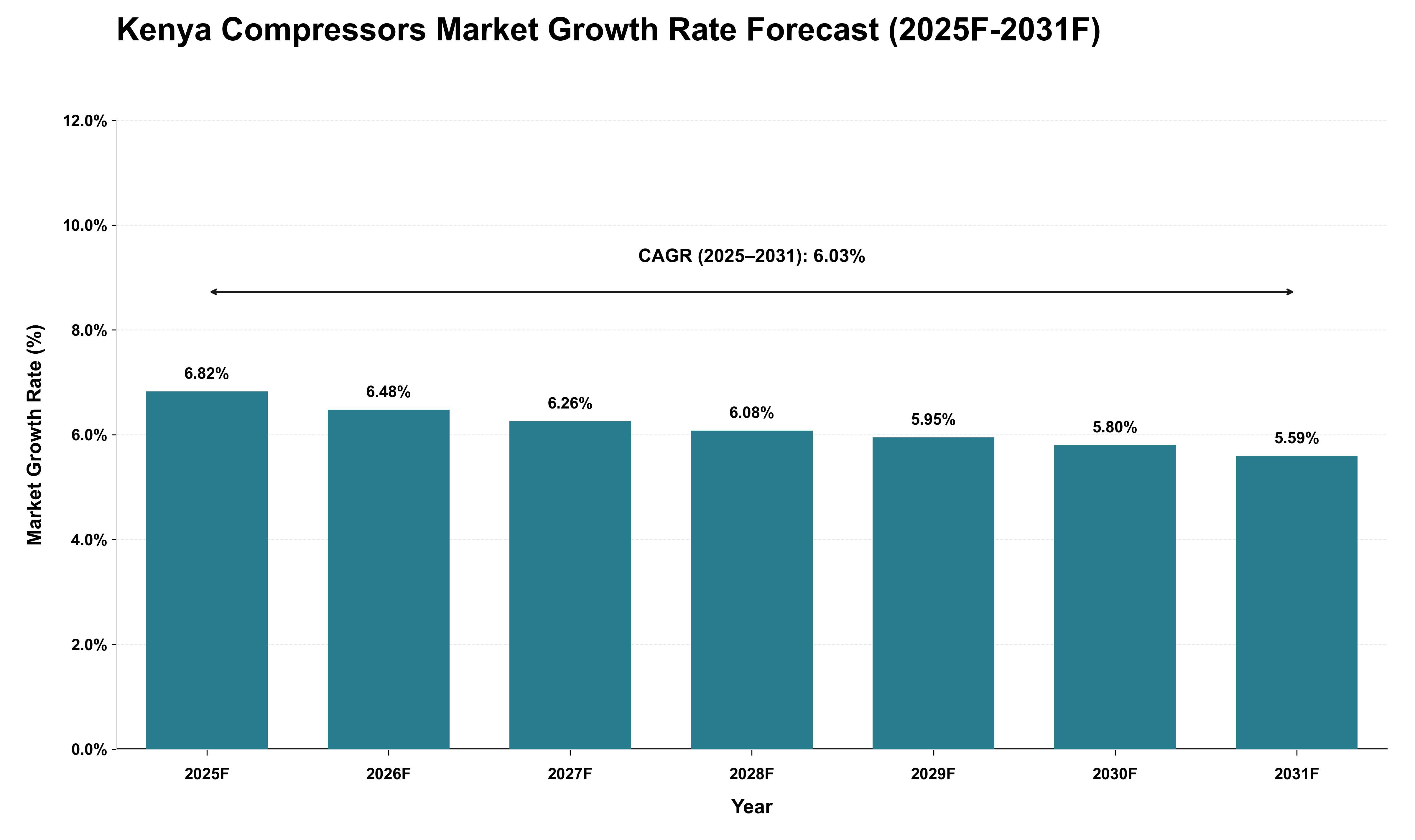
The Kenya compressors market will experience a notable growth trajectory driven by evolving raw material availability and pricing dynamics. As the demand for energy-efficient and technologically advanced compressors rises, the sector will likely face increased pressure on sourcing high-quality materials, particularly metals and plastics essential for manufacturing. The forecasted CAGR of 6.03% reflects a robust expansion, with annual growth rates peaking at 6.82% in 2025 before gradually tapering off to 5.59% by 2031. This trend suggests that while initial demand may be buoyed by infrastructure projects and industrialization efforts, fluctuations in global commodity prices could introduce volatility in production costs. Additionally, import dependencies on specific raw materials may lead to supply chain challenges, influencing pricing strategies and ultimately impacting market competitiveness as manufacturers adapt to these cyclical trends over the forecast period.
Key Highlights of the Report:
- Kenya Compressors Market Outlook
- Market Size of Kenya Compressors Market, 2024
- Forecast of Kenya Compressors Market, 2031
- Historical Data and Forecast of Kenya Compressors Revenues & Volume for the Period 2021 - 2031
- Kenya Compressors Market Trend Evolution
- Kenya Compressors Market Drivers and Challenges
- Kenya Compressors Price Trends
- Kenya Compressors Porter's Five Forces
- Kenya Compressors Industry Life Cycle
- Historical Data and Forecast of Kenya Compressors Market Revenues & Volume By Type for the Period 2021 - 2031
- Historical Data and Forecast of Kenya Compressors Market Revenues & Volume By Positive Displacement for the Period 2021 - 2031
- Historical Data and Forecast of Kenya Compressors Market Revenues & Volume By Dynamic for the Period 2021 - 2031
- Historical Data and Forecast of Kenya Compressors Market Revenues & Volume By Industry for the Period 2021 - 2031
- Historical Data and Forecast of Kenya Compressors Market Revenues & Volume By Automotive for the Period 2021 - 2031
- Historical Data and Forecast of Kenya Compressors Market Revenues & Volume By Steel for the Period 2021 - 2031
- Historical Data and Forecast of Kenya Compressors Market Revenues & Volume By Chemical for the Period 2021 - 2031
- Historical Data and Forecast of Kenya Compressors Market Revenues & Volume By Medical for the Period 2021 - 2031
- Historical Data and Forecast of Kenya Compressors Market Revenues & Volume By Others for the Period 2021 - 2031
- Kenya Compressors Import Export Trade Statistics
- Market Opportunity Assessment By Type
- Market Opportunity Assessment By Industry
- Kenya Compressors Top Companies Market Share
- Kenya Compressors Competitive Benchmarking By Technical and Operational Parameters
- Kenya Compressors Company Profiles
- Kenya Compressors Key Strategic Recommendations






































