Kenya Construction Aggregates Market Size Growth Rate
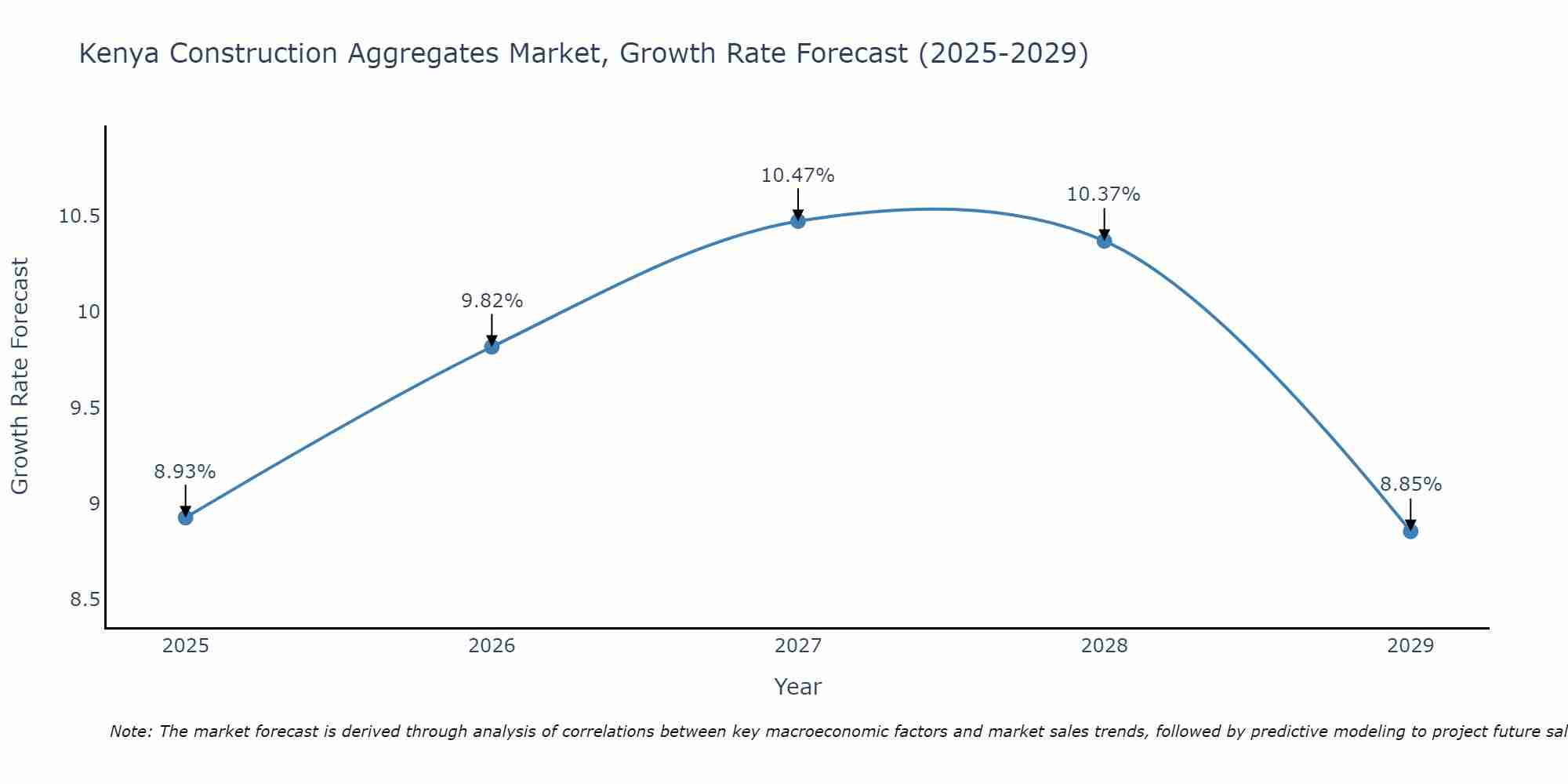
The Kenya Construction Aggregates Market is projected to witness mixed growth rate patterns during 2025 to 2029. Growth accelerates to 10.47% in 2027, following an initial rate of 8.93%, before easing to 8.85% at the end of the period.
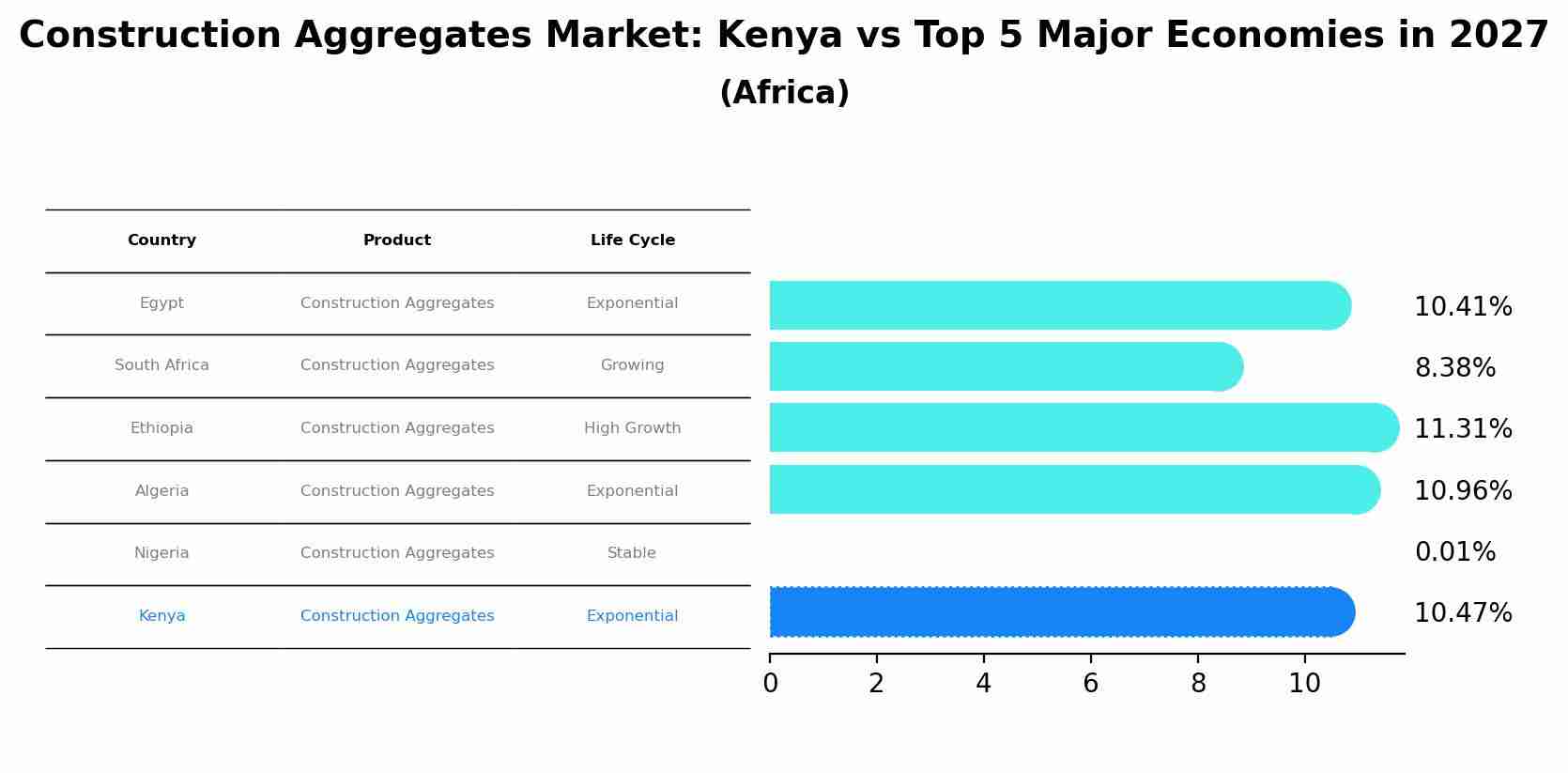
Construction Aggregates Market: Kenya vs Top 5 Major Economies in 2027 (Africa)
By 2027, Kenya's Construction Aggregates market is forecasted to achieve a high growth rate of 10.47%, with Egypt leading the Africa region, followed by South Africa, Ethiopia, Algeria and Nigeria.
Kenya Construction Aggregates Market Overview
The construction industry relies on aggregates such as sand, gravel, and crushed stone for building roads, bridges, and infrastructure projects. In Kenya, the construction aggregates market is witnessing steady growth due to ongoing urbanization and infrastructure development initiatives.
Drivers of the market
The Kenya construction aggregates market is driven by the booming construction sector and the increasing demand for materials used in infrastructure development projects. Construction aggregates, including sand, gravel, crushed stone, and recycled concrete, are essential components in the construction of roads, buildings, bridges, and other infrastructure. With the government`s investments in infrastructure projects and the expansion of the real estate and transportation sectors, the demand for construction aggregates is expected to remain high, thereby driving market growth.
Challenges of the market
Limited availability of high-quality construction aggregates and infrastructure constraints for aggregate extraction pose challenges to Kenya construction aggregates market. Additionally, fluctuating demand from construction projects impacts market stability.
Government Policy of the market
The Kenya government may implement policies to support the construction aggregates market, including regulations for quarrying operations, environmental impact assessments, and quality control measures for aggregate producers and suppliers. Additionally, there may be initiatives to promote sustainable extraction practices, investment in infrastructure projects, and local sourcing of construction materials to support economic development and infrastructure growth in Kenya.
Key Highlights of the Report:
- Kenya Construction Aggregates Market Outlook
- Market Size of Kenya Construction Aggregates Market, 2019
- Forecast of Kenya Construction Aggregates Market, 2026
- Historical Data and Forecast of Kenya Construction Aggregates Revenues & Volume for the Period 2016 - 2026
- Kenya Construction Aggregates Market Trend Evolution
- Kenya Construction Aggregates Market Drivers and Challenges
- Kenya Construction Aggregates Price Trends
- Kenya Construction Aggregates Porter's Five Forces
- Kenya Construction Aggregates Industry Life Cycle
- Historical Data and Forecast of Kenya Construction Aggregates Market Revenues & Volume By Product Type for the Period 2016 - 2026
- Historical Data and Forecast of Kenya Construction Aggregates Market Revenues & Volume By Crushed stone for the Period 2016 - 2026
- Historical Data and Forecast of Kenya Construction Aggregates Market Revenues & Volume By Sand for the Period 2016 - 2026
- Historical Data and Forecast of Kenya Construction Aggregates Market Revenues & Volume By Gravel for the Period 2016 - 2026
- Historical Data and Forecast of Kenya Construction Aggregates Market Revenues & Volume By Other aggregates for the Period 2016 - 2026
- Historical Data and Forecast of Kenya Construction Aggregates Market Revenues & Volume By Applications for the Period 2016 - 2026
- Historical Data and Forecast of Kenya Construction Aggregates Market Revenues & Volume By Commercial for the Period 2016 - 2026
- Historical Data and Forecast of Kenya Construction Aggregates Market Revenues & Volume By Residential for the Period 2016 - 2026
- Historical Data and Forecast of Kenya Construction Aggregates Market Revenues & Volume By Industrial for the Period 2016 - 2026
- Historical Data and Forecast of Kenya Construction Aggregates Market Revenues & Volume By Infrastructure for the Period 2016 - 2026
- Kenya Construction Aggregates Import Export Trade Statistics
- Market Opportunity Assessment By Product Type
- Market Opportunity Assessment By Applications
- Kenya Construction Aggregates Top Companies Market Share
- Kenya Construction Aggregates Competitive Benchmarking By Technical and Operational Parameters
- Kenya Construction Aggregates Company Profiles
- Kenya Construction Aggregates Key Strategic Recommendations






































