Kenya Cookware Market Size Growth Rate
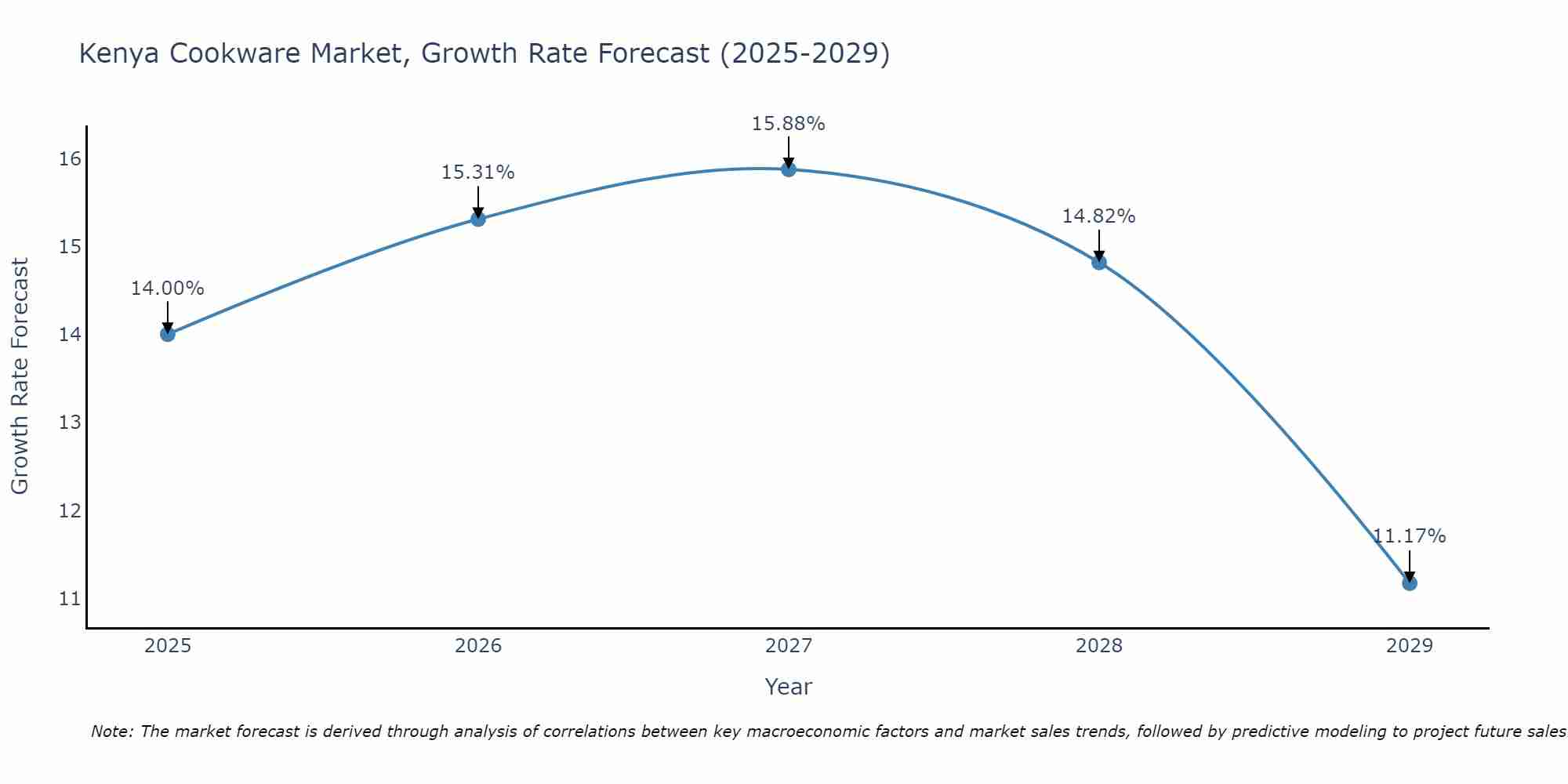
The Kenya Cookware Market is projected to witness mixed growth rate patterns during 2025 to 2029. Starting at 14.00% in 2025, the market peaks at 15.88% in 2027, and settles at 11.17% by 2029.
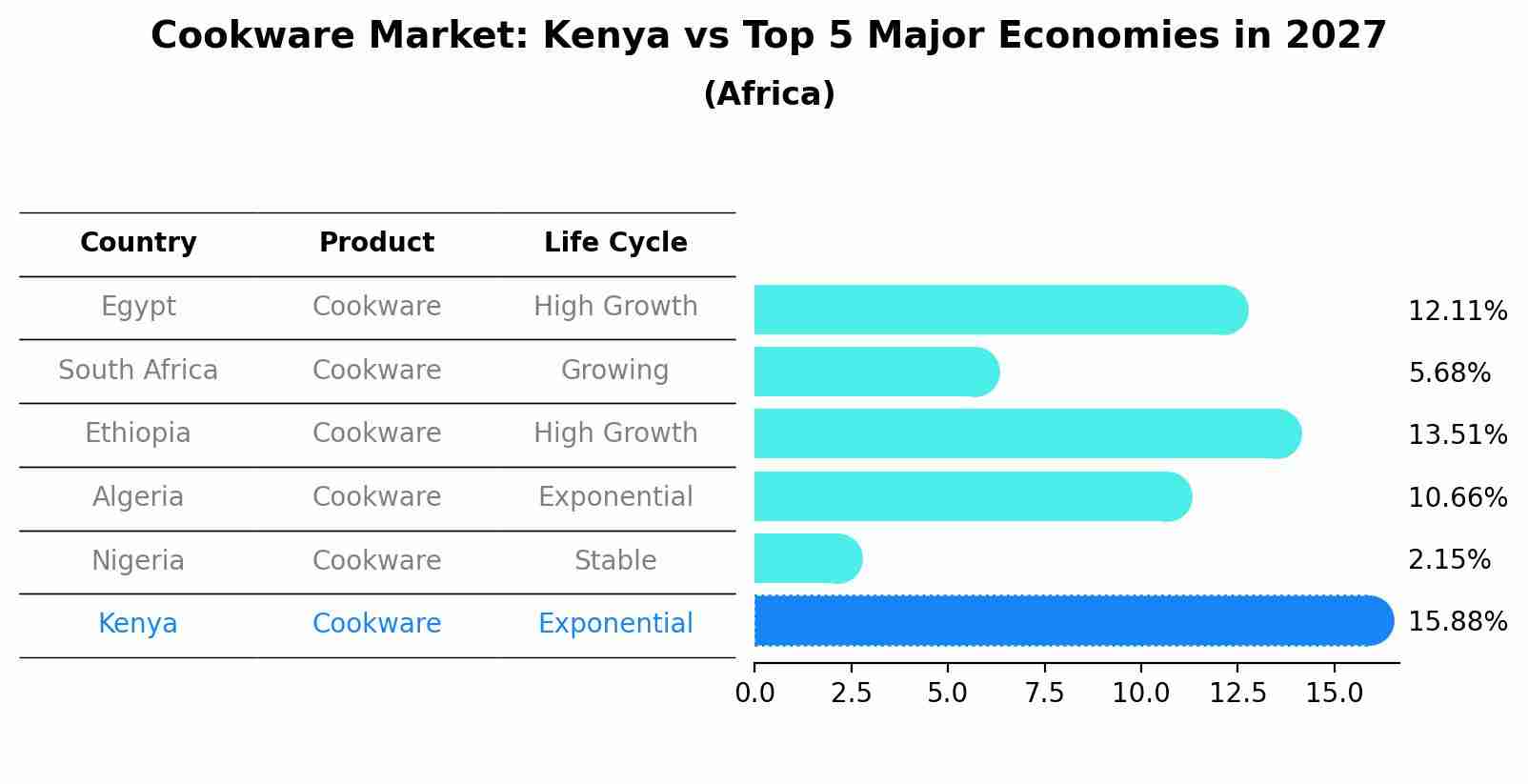
Cookware Market: Kenya vs Top 5 Major Economies in 2027 (Africa)
The Cookware market in Kenya is projected to grow at a exponential growth rate of 15.88% by 2027, within the Africa region led by Egypt, along with other countries like South Africa, Ethiopia, Algeria and Nigeria, collectively shaping a dynamic and evolving market environment driven by innovation and increasing adoption of emerging technologies.
Kenya Cookware Market Synopsis
The Kenyan cookware market consists mainly of imported products from countries such as China, India and South Africa. In addition to these imports, local producers manufacture low-cost items primarily designed for rural households without access to modern amenities or electricity supplies. This segment accounts for more than two thirds of all sales in the sector.
Recent innovation in Kenyas cookware industry includes non-stick aluminum pans that are resistant to corrosion and have superior heat retention properties compared to traditional designs made from iron or steel . These new pan designs are becoming increasingly popular among urban consumers who want convenience when preparing meals at home. Additionally, there has been a rise in demand for eco-friendly alternatives such as bamboo steamers which require less energy consumption than electric models while providing healthier cooking options due to their natural material composition
Key Highlights of the Report:
- Kenya Cookware Market Outlook
- Market Size of Kenya Cookware Market, 2019
- Forecast of Kenya Cookware Market, 2026
- Historical Data and Forecast of Kenya Cookware Revenues & Volume for the Period 2016 - 2026
- Kenya Cookware Market Trend Evolution
- Kenya Cookware Market Drivers and Challenges
- Kenya Cookware Price Trends
- Kenya Cookware Porter's Five Forces
- Kenya Cookware Industry Life Cycle
- Historical Data and Forecast of Kenya Cookware Market Revenues & Volume By Material Type for the Period 2016 - 2026
- Historical Data and Forecast of Kenya Cookware Market Revenues & Volume By Aluminium for the Period 2016 - 2026
- Historical Data and Forecast of Kenya Cookware Market Revenues & Volume By Stainless Steel for the Period 2016 - 2026
- Historical Data and Forecast of Kenya Cookware Market Revenues & Volume By Others for the Period 2016 - 2026
- Historical Data and Forecast of Kenya Cookware Market Revenues & Volume By Distribution Channels for the Period 2016 - 2026
- Historical Data and Forecast of Kenya Cookware Market Revenues & Volume By Offline for the Period 2016 - 2026
- Historical Data and Forecast of Kenya Cookware Market Revenues & Volume By Online for the Period 2016 - 2026
- Kenya Cookware Import Export Trade Statistics
- Market Opportunity Assessment By Material Type
- Market Opportunity Assessment By Distribution Channels
- Kenya Cookware Top Companies Market Share
- Kenya Cookware Competitive Benchmarking By Technical and Operational Parameters
- Kenya Cookware Company Profiles
- Kenya Cookware Key Strategic Recommendations






































