Kenya Dog and Cat Food Market Summary
The kenya dog and cat food market was estimated at USD 235 Million in 2025 and is projected to reach USD 314 Million by 2032, growing at a CAGR of 5.0% from 2026 to 2032.
Kenya Dog and Cat Food Market Year-wise Growth Rate and Key Drivers
This graph highlights how the Kenya Dog and Cat Food Market has steadily grown over the past five years, supported by major growth factors.
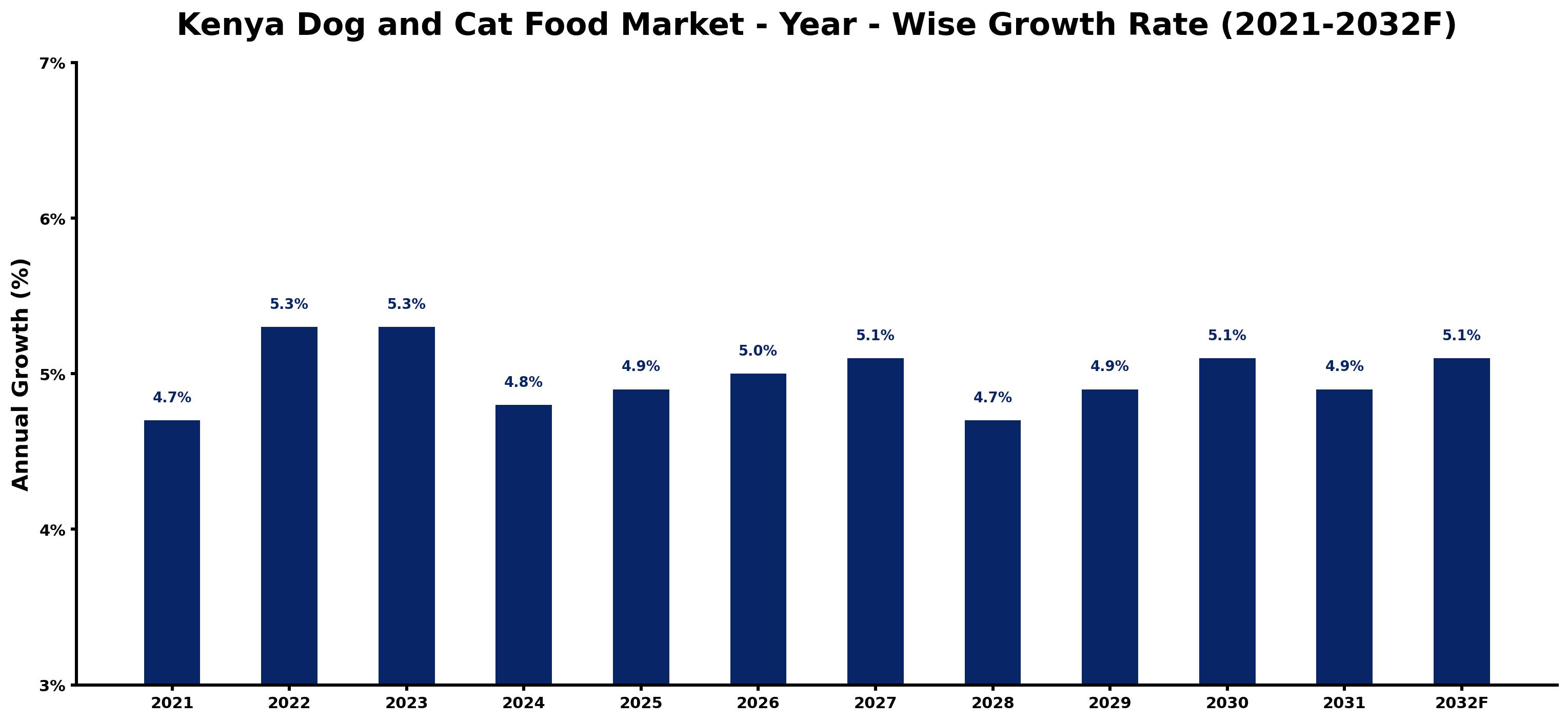
The table below presents the year wise growth rates along with the key drivers influencing the market
| Year | Growth Rate | Major Drivers |
| 2021 | 4.7% | Pet ownership in urban areas surged, leading to increased demand for premium pet foods. |
| 2022 | 5.3% | Local brands emerged, reflecting the unique dietary needs of Kenyan dogs and cats. |
| 2023 | 5.3% | E-commerce platforms expanded, improving accessibility to quality pet food products nationwide. |
| 2024 | 4.8% | Veterinary clinics reported higher visitation rates, driving pet health awareness and food purchases. |
| 2025 | 4.9% | Health-conscious pet owners prioritized organic ingredients, reshaping product offerings significantly. |
| 2026 | 5.0% | Social media influence grew, with pet influencers promoting specific brands and dietary trends. |
| 2027 | 5.1% | Urbanization trends intensified, leading to greater household disposable income for pet care. |
| 2028 | 4.7% | Supply chain enhancements facilitated more reliable distribution of various pet food options. |
| 2029 | 4.9% | Local manufacturing capabilities improved, enabling faster production and reduced import reliance. |
| 2030 | 5.1% | Sustainability practices gained traction, pushing brands towards eco-friendly ingredients and packaging. |
| 2031 | 4.9% | Increased expatriate communities influenced market preferences for imported pet food varieties. |
| 2032 | 5.1% | Collaborations between brands and local farmers emerged, enhancing ingredient sourcing and quality. |
Note - Market size estimations and growth projections presented in this report are based on 6Wresearch's advanced forecasting approach, validated with industry datasets as of June 2026.
Kenya Dog and Cat Food Market Synopsis
The Kenya Dog and Cat Food Market is projected to reach 5.0% and witness significant growth during the forecast period (2026-2032). The increase in pet ownership combined with a heightened focus on the health and nutrition of pets has resulted in a burgeoning market for dog and cat food in the country. Urbanization and changing consumer lifestyles are facilitating the demand for premium pet food options, as pet owners are becoming more discerning about the products they choose for their furry companions.
Kenya Dog and Cat Food Market Growth Drivers
The growth of the Kenya Dog and Cat Food Market can be attributed to several key drivers:
- Rising Pet Ownership: An increasing number of households in Kenya are welcoming pets, particularly dogs and cats, contributing to a larger market for pet food products.
- Humanization of Pets: As pets are increasingly viewed as family members, there is a noticeable shift towards premium food options that prioritize nutritional value and quality.
- Awareness of Pet Nutrition: Pet owners are becoming more informed about the dietary requirements of their animals, which drives the demand for specialized and high-quality pet food products.
- Urbanization and Lifestyle Changes: As urban living becomes more common, pet owners are seeking convenient and nutritionally balanced food options that fit into their busy lifestyles.
- Increased Disposable Income: With the rise in disposable income, consumers are willing to spend more on premium pet food that promises better health and well-being for their pets.
Kenya Dog and Cat Food Market Challenges and Restraints
Despite the robust growth prospects, the Kenya Dog and Cat Food Market faces several challenges:
- Ingredient Sourcing: Manufacturers often encounter difficulties in sourcing high-quality ingredients necessary for producing nutritious pet food, which can impact product availability.
- Nutritional Quality Assurance: Ensuring that pet food meets stringent nutritional standards can be challenging, particularly for smaller manufacturers.
- Regulatory Compliance: Manufacturers must navigate complex regulations regarding the production and marketing of pet food, which can pose barriers to entry and expansion.
- Brand Differentiation: With numerous brands in the market, distinguishing one's products and establishing brand loyalty can be a significant challenge.
- Market Saturation: The increasing number of products available may lead to market saturation, resulting in heightened competition and pressure on pricing.
Kenya Dog and Cat Food Market Trends and Opportunities
This market is witnessing several trends that present opportunities for growth:
- Premiumization of Products: Consumers are opting for premium pet food that offers enhanced nutritional benefits, creating new product development opportunities.
- Natural and Organic Options: There is a growing trend towards natural and organic pet food products as consumers become more health-conscious and environmentally aware.
- Innovative Product Formulations: The introduction of innovative formulations, including specialized diets for pets with unique health needs, is gaining traction.
- Online Retail Growth: The rise of e-commerce presents opportunities for manufacturers and retailers to reach a broader audience and cater to the changing shopping habits of consumers.
- Focus on Sustainability: As sustainability becomes a priority for consumers, there is potential for growth in eco-friendly packaging and sustainable sourcing practices in the pet food sector.
Kenya Dog and Cat Food Market Government Investment and Initiatives
The Kenyan government has recognized the importance of the pet food industry and has implemented various policies aimed at promoting safe and nutritious pet food production. These include regulatory measures to ensure quality standards are upheld in the manufacturing process. The government also emphasizes consumer education regarding responsible pet ownership and proper pet nutrition to enhance the overall health and welfare of pets in the country. By investing in research and development initiatives, the government aims to support local manufacturers in improving product quality and safety.
Kenya Dog and Cat Food Market Latest Developments (May 2025 - June 2026)
Recent developments in the Kenya Dog and Cat Food Market indicate a continued focus on product innovation and consumer engagement. Industry stakeholders are increasingly investing in research to enhance the nutritional profiles of pet food products. There is also a marked rise in the availability of specialized pet diets catering to specific health conditions. Furthermore, marketing strategies are evolving to appeal to a more discerning consumer base, highlighting the quality and safety of ingredients. Trade shows and exhibitions are being held to showcase new product offerings and facilitate networking among industry players, which underscores the market's growth potential and dynamism.
Kenya Dog and Cat Food Market - Key Attractiveness of the Report
- 10 Years of Market Numbers
- Historical Data Starting from 2022 to 2025
- Base Year: 2025
- Forecast Data until 2032
- Key Performance Indicators Impacting the Market
- Major Upcoming Developments and Projects
Key Highlights of the Report:
- Kenya Dog and Cat Food Market Outlook
- Market Size of Kenya Dog and Cat Food Market, 2025
- Forecast of Kenya Dog and Cat Food Market, 2032
- Historical Data and Forecast of Kenya Dog and Cat Food Revenues & Volume for the Period 2022-2032F
- Kenya Dog and Cat Food Market Trend Evolution
- Kenya Dog and Cat Food Market Drivers and Challenges
- Kenya Dog and Cat Food Price Trends
- Kenya Dog and Cat Food Porter's Five Forces
- Kenya Dog and Cat Food Industry Life Cycle
- Historical Data and Forecast of Kenya Dog and Cat Food Market Revenues & Volume By Animal Type for the Period 2022-2032F
- Historical Data and Forecast of Kenya Dog and Cat Food Market Revenues & Volume By Dog for the Period 2022-2032F
- Historical Data and Forecast of Kenya Dog and Cat Food Market Revenues & Volume By Cat for the Period 2022-2032F
- Historical Data and Forecast of Kenya Dog and Cat Food Market Revenues & Volume By Product Type for the Period 2022-2032F
- Historical Data and Forecast of Kenya Dog and Cat Food Market Revenues & Volume By Dry Food for the Period 2022-2032F
- Historical Data and Forecast of Kenya Dog and Cat Food Market Revenues & Volume By Wet/Canned Food for the Period 2022-2032F
- Historical Data and Forecast of Kenya Dog and Cat Food Market Revenues & Volume By Nutritious Food for the Period 2022-2032F
- Historical Data and Forecast of Kenya Dog and Cat Food Market Revenues & Volume By Snacks/Treats for the Period 2022-2032F
- Historical Data and Forecast of Kenya Dog and Cat Food Market Revenues & Volume By Others for the Period 2022-2032F
- Historical Data and Forecast of Kenya Dog and Cat Food Market Revenues & Volume By Distribution Channel for the Period 2022-2032F
- Historical Data and Forecast of Kenya Dog and Cat Food Market Revenues & Volume By Specialized Pet Shops for the Period 2022-2032F
- Historical Data and Forecast of Kenya Dog and Cat Food Market Revenues & Volume By Supermarkets/Hypermarkets for the Period 2022-2032F
- Historical Data and Forecast of Kenya Dog and Cat Food Market Revenues & Volume By Online Channel for the Period 2022-2032F
- Historical Data and Forecast of Kenya Dog and Cat Food Market Revenues & Volume By Other Channels for the Period 2022-2032F
- Kenya Dog and Cat Food Import Export Trade Statistics
- Market Opportunity Assessment By Animal Type
- Market Opportunity Assessment By Product Type
- Market Opportunity Assessment By Distribution Channel
- Kenya Dog and Cat Food Top Companies Market Share
- Kenya Dog and Cat Food Competitive Benchmarking By Technical and Operational Parameters
- Kenya Dog and Cat Food Company Profiles
- Kenya Dog and Cat Food Key Strategic Recommendations






































