Kenya Electrical Components Market Size, Share & Growth Rate
The Kenya Electrical Components Market was estimated at USD 365 Million in 2025 and is projected to reach USD 505 Million by 2032, growing at a CAGR of 4.7% from 2026 to 2032. This growth trajectory is primarily driven by ongoing urbanization, substantial infrastructure projects, and an escalating demand for electricity across both residential and commercial sectors. These factors are fostering an environment ripe for investment and innovation in the electrical components arena.
Kenya Electrical Components Market Year-wise Growth Rate and Key Drivers
This graph highlights how the Kenya Electrical Components Market has steadily grown over the years, supported by major growth factors.
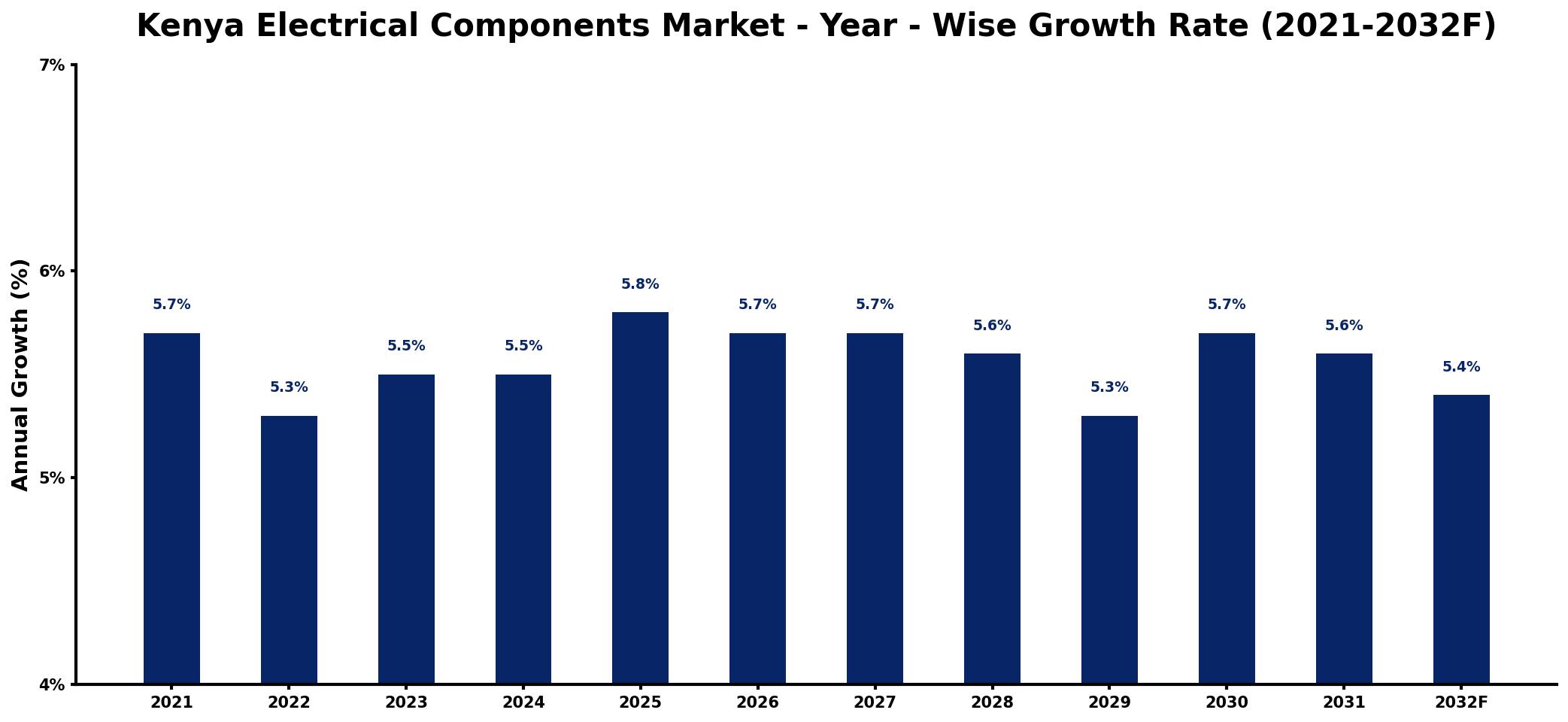
The table below presents the year‑wise growth rates along with the key drivers influencing the market
| Year | Growth Rate | Major Drivers |
| 2021 | 5.7% | Rising construction sector investments |
| 2022 | 5.3% | Growing renewable energy initiatives |
| 2023 | 5.5% | Increased urbanization and infrastructure |
| 2024 | 5.5% | Expansion of manufacturing capabilities |
| 2025 | 5.8% | Surge in technology adoption rates |
| 2026 | 5.7% | Development of smart city projects |
| 2027 | 5.7% | Strengthening of power generation systems |
| 2028 | 5.6% | Boost in residential energy efficiency |
| 2029 | 5.3% | Advancements in telecommunications networks |
| 2030 | 5.7% | Increased foreign direct investments |
| 2031 | 5.6% | Growth in export markets demand |
| 2032 | 5.4% | Enhancement of logistics and supply |
Note: Market size estimations and growth projections presented in this report are based on 6Wresearch's proprietary forecasting methodology, utilizing the latest available industry data, government publications, and primary research inputs.
Kenya Electrical Components Market Synopsis
The strongest force shaping the Kenya Electrical Components Market right now is the significant push towards renewable energy solutions. Government initiatives aimed at expanding access to electricity and promoting sustainable practices are key drivers of this transformation. Concurrently, the rapid growth in urbanization is creating an urgent demand for reliable electrical infrastructure.
With an extensive array of products including wires, cables, switches, and lighting solutions, the market presents a dynamic landscape. However, the rising competition and the prevalence of counterfeit products pose serious threats to local manufacturers, challenging their ability to maintain quality and consumer trust.
Kenya Electrical Components Market Key Takeaways
- The market is driven by increasing urbanization and infrastructure development.
- Government policies aimed at enhancing electricity access are fostering growth.
- Energy-efficient products and renewable energy components are gaining traction.
- Counterfeit goods and inconsistent supply chain issues present notable challenges.
- Investment opportunities abound in manufacturing and sustainable practices.
Evaluation of Restraints in Kenya Electrical Components Market
Despite the positive outlook, several restraints hinder the growth of the Kenya Electrical Components Market. Inconsistent power supply remains a critical issue, disrupting manufacturing processes and driving costs higher. Moreover, the high tariffs on raw materials limit production efficiency and exacerbate competition from lower-cost imports. The proliferation of counterfeit products erodes trust in the industry and poses safety risks for consumers. Addressing these challenges requires concerted efforts from stakeholders to enhance quality control, improve supply chain reliability, and support local manufacturers in navigating these hurdles.
Kenya Electrical Components Market Trends
Key trends in the Kenya Electrical Components Market include a growing preference for energy-efficient solutions, particularly LED lighting and smart home technologies. As sustainability becomes a national priority, the adoption of renewable energy sources—especially solar—is surging. Furthermore, there is a marked interest in automation and digital technologies, propelling demand for sophisticated electrical components tailored for industrial applications. The shift towards eco-friendly practices and modern solutions is reshaping consumer and business preferences across the market.
Kenya Electrical Components Market Opportunities
The Kenya Electrical Components Market is ripe with opportunities for investors and companies looking to establish a foothold in the energy sector. The rapid urbanization and infrastructural expansion are creating a pressing need for electrical components such as transformers, cables, and switches. Additionally, the governments drive to improve electricity access in rural areas and its support for renewable energy projects signal promising avenues for investment. Companies focused on innovation, quality assurance, and localized production can leverage these trends for sustained growth.
Government Initiatives in the Kenya Electrical Components Market
The Kenyan government has rolled out several initiatives aimed at fostering growth within the electrical components market. The Energy Act promotes renewable energy development, while the Energy Regulatory Commission Act establishes regulatory oversight. The Kenya Bureau of Standards Act ensures that electrical products meet quality benchmarks, thus promoting safety and reliability. Furthermore, policies like the Buy Kenya Build Kenya initiative encourage local manufacturing, aiming to reduce dependence on imports and bolster the domestic industry. These strategic moves are crucial for developing a robust and self-sustaining electrical components sector.
Future Insights of the Kenya Electrical Components Market
Looking ahead to 2026-2032, the Kenya Electrical Components Market is poised for steady growth bolstered by ongoing urbanization and infrastructure investments. The burgeoning focus on sustainability and energy efficiency is likely to spur demand for advanced electrical solutions. Additionally, technological advancements such as smart grids and IoT integration will play pivotal roles in shaping market dynamics. While challenges such as raw material price fluctuations may pose risks, the overall outlook remains optimistic, driven by a commitment to innovation and sustainable practices.
Kenya Electrical Components Market Latest Developments (2025 - 2026)
In recent months, the Kenya Electrical Components Market has been witnessing strategic shifts toward enhanced digitalization and automation within manufacturing processes. Local manufacturers are increasingly investing in technology to boost production efficiency and improve quality control measures. Moreover, there is a notable rise in partnerships between local firms and international players aimed at knowledge transfer and innovation in product development. These movements signify a robust response to the growing demand for energy-efficient and sustainable electrical solutions.
Kenya Electrical Components Market - Key Attractiveness of the Report
- 10 Years of Market Numbers
- Historical Data Starting from 2022 to 2025
- Base Year: 2025
- Forecast Data until 2032
- Key Performance Indicators Impacting the Market
- Major Upcoming Developments and Projects
Key Highlights of the Report:
- Kenya Electrical Components Market Outlook
- Market Size of Kenya Electrical Components Market, 2025
- Forecast of Kenya Electrical Components Market, 2032
- Historical Data and Forecast of Kenya Electrical Components Revenues & Volume for the Period 2022-2032F
- Kenya Electrical Components Market Trend Evolution
- Kenya Electrical Components Market Drivers and Challenges
- Kenya Electrical Components Price Trends
- Kenya Electrical Components Porter's Five Forces
- Kenya Electrical Components Industry Life Cycle
- Historical Data and Forecast of Kenya Electrical Components Market Revenues & Volume By Building Automation for the Period 2022-2032F
- Historical Data and Forecast of Kenya Electrical Components Market Revenues & Volume By Datacom Accessories for the Period 2022-2032F
- Historical Data and Forecast of Kenya Electrical Components Market Revenues & Volume By Security & wiring Accessories for the Period 2022-2032F
- Historical Data and Forecast of Kenya Electrical Components Market Revenues & Volume By Cables & Wires for the Period 2022-2032F
- Historical Data and Forecast of Kenya Electrical Components Market Revenues & Volume By Datacom Cables for the Period 2022-2032F
- Historical Data and Forecast of Kenya Electrical Components Market Revenues & Volume By LV Cables for the Period 2022-2032F
- Historical Data and Forecast of Kenya Electrical Components Market Revenues & Volume By MV&HV Cables for the Period 2022-2032F
- Historical Data and Forecast of Kenya Electrical Components Market Revenues & Volume By Special Cables for the Period 2022-2032F
- Historical Data and Forecast of Kenya Electrical Components Market Revenues & Volume By Industrial Automation for the Period 2022-2032F
- Historical Data and Forecast of Kenya Electrical Components Market Revenues & Volume By Automation Controls for the Period 2022-2032F
- Historical Data and Forecast of Kenya Electrical Components Market Revenues & Volume By Auxiliary Controls for the Period 2022-2032F
- Historical Data and Forecast of Kenya Electrical Components Market Revenues & Volume By Drives & Motion Controls for the Period 2022-2032F
- Historical Data and Forecast of Kenya Electrical Components Market Revenues & Volume By Measurement Controls and Relays for the Period 2022-2032F
- Historical Data and Forecast of Kenya Electrical Components Market Revenues & Volume By Lighting for the Period 2022-2032F
- Historical Data and Forecast of Kenya Electrical Components Market Revenues & Volume By Fixtures for the Period 2022-2032F
- Historical Data and Forecast of Kenya Electrical Components Market Revenues & Volume By Lamps & LEDs for the Period 2022-2032F
- Historical Data and Forecast of Kenya Electrical Components Market Revenues & Volume By Power Distribution for the Period 2022-2032F
- Historical Data and Forecast of Kenya Electrical Components Market Revenues & Volume By Cable Management for the Period 2022-2032F
- Historical Data and Forecast of Kenya Electrical Components Market Revenues & Volume By Enclosures & Panels for the Period 2022-2032F
- Historical Data and Forecast of Kenya Electrical Components Market Revenues & Volume By LV Electrical Distribution for the Period 2022-2032F
- Historical Data and Forecast of Kenya Electrical Components Market Revenues & Volume By Renewable Energies for the Period 2022-2032F
- Historical Data and Forecast of Kenya Electrical Components Market Revenues & Volume By HVAC for the Period 2022-2032F
- Historical Data and Forecast of Kenya Electrical Components Market Revenues & Volume By Renewable energy for the Period 2022-2032F
- Historical Data and Forecast of Kenya Electrical Components Market Revenues & Volume By Safety & Tools for the Period 2022-2032F
- Historical Data and Forecast of Kenya Electrical Components Market Revenues & Volume By Safety Equipment for the Period 2022-2032F
- Historical Data and Forecast of Kenya Electrical Components Market Revenues & Volume By Working Tools & Accessories for the Period 2022-2032F
- Kenya Electrical Components Import Export Trade Statistics
- Market Opportunity Assessment By Building Automation
- Market Opportunity Assessment By Cables & Wires
- Market Opportunity Assessment By Industrial Automation
- Market Opportunity Assessment By Lighting
- Market Opportunity Assessment By Power Distribution
- Market Opportunity Assessment By Renewable Energies
- Market Opportunity Assessment By Safety & Tools
- Kenya Electrical Components Top Companies Market Share
- Kenya Electrical Components Competitive Benchmarking By Technical and Operational Parameters
- Kenya Electrical Components Company Profiles
- Kenya Electrical Components Key Strategic Recommendations






































