Kenya End User Computing Market Size & Growth Rate (2026-2032)
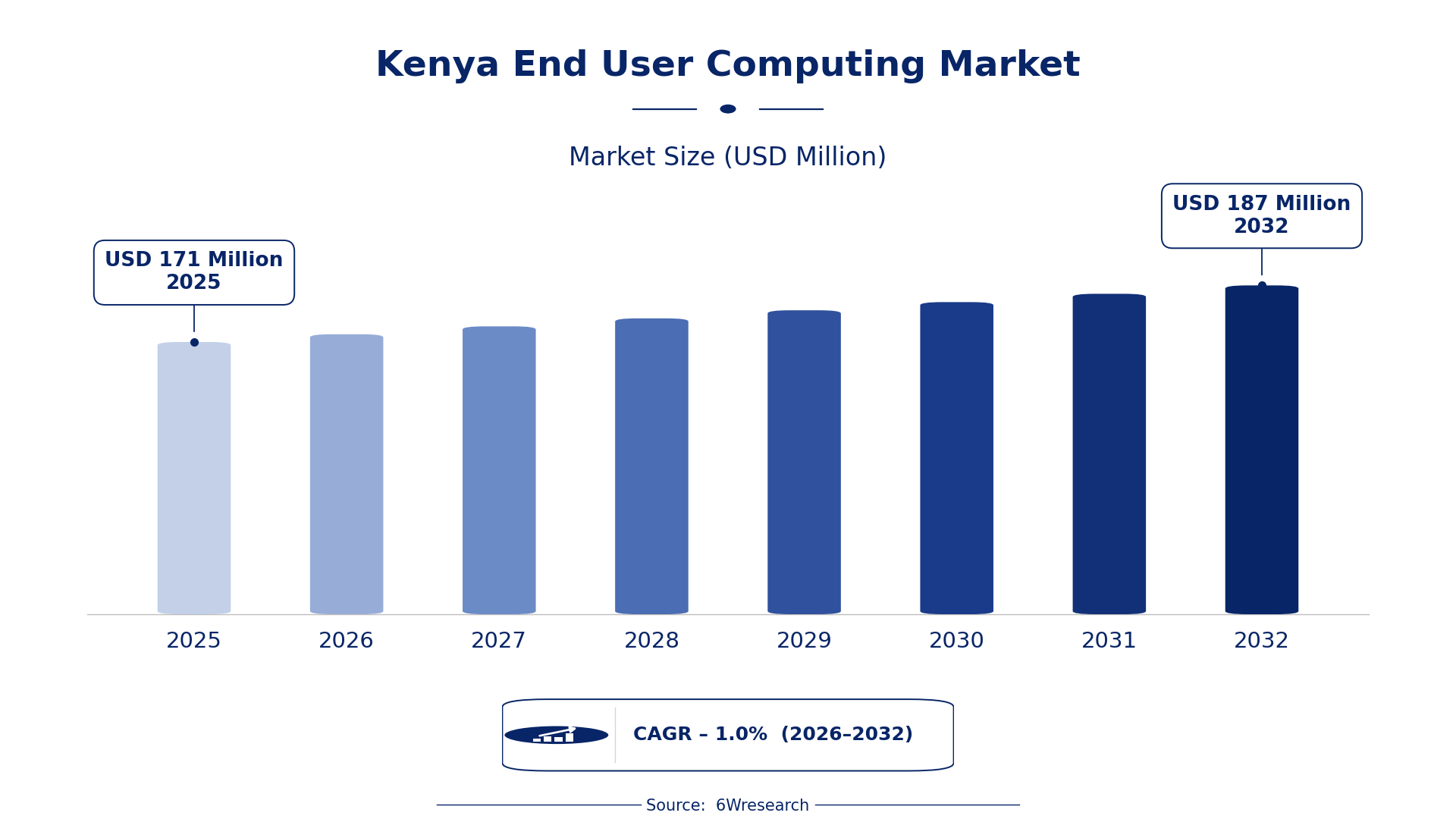
The Kenya End User Computing Market was estimated at USD 171 Million in 2025 and is projected to reach USD 187 Million by 2032, growing at a CAGR of 1.0% from 2026 to 2032.
Kenya End User Computing Market Synopsis
The Kenya End User Computing Market is on an upward trajectory, driven by the increasing integration of technology into everyday operations. As digital transformation takes hold, businesses and individuals are actively seeking efficient computing solutions that enhance productivity and facilitate remote work.
The rise of SMEs has been particularly notable, as these enterprises look for cost-effective options to stay competitive. With mobile devices and cloud solutions gaining traction, the demand for secure and flexible end-user computing options is expected to grow substantially in the coming years.
Kenya End User Computing Market Year-wise Growth Rate and Key Drivers
This graph illustrates the annual growth rates of the Kenya End User Computing Market from 2021 to 2032, highlighting a steady upward trajectory and projected expansion over the forecast period.
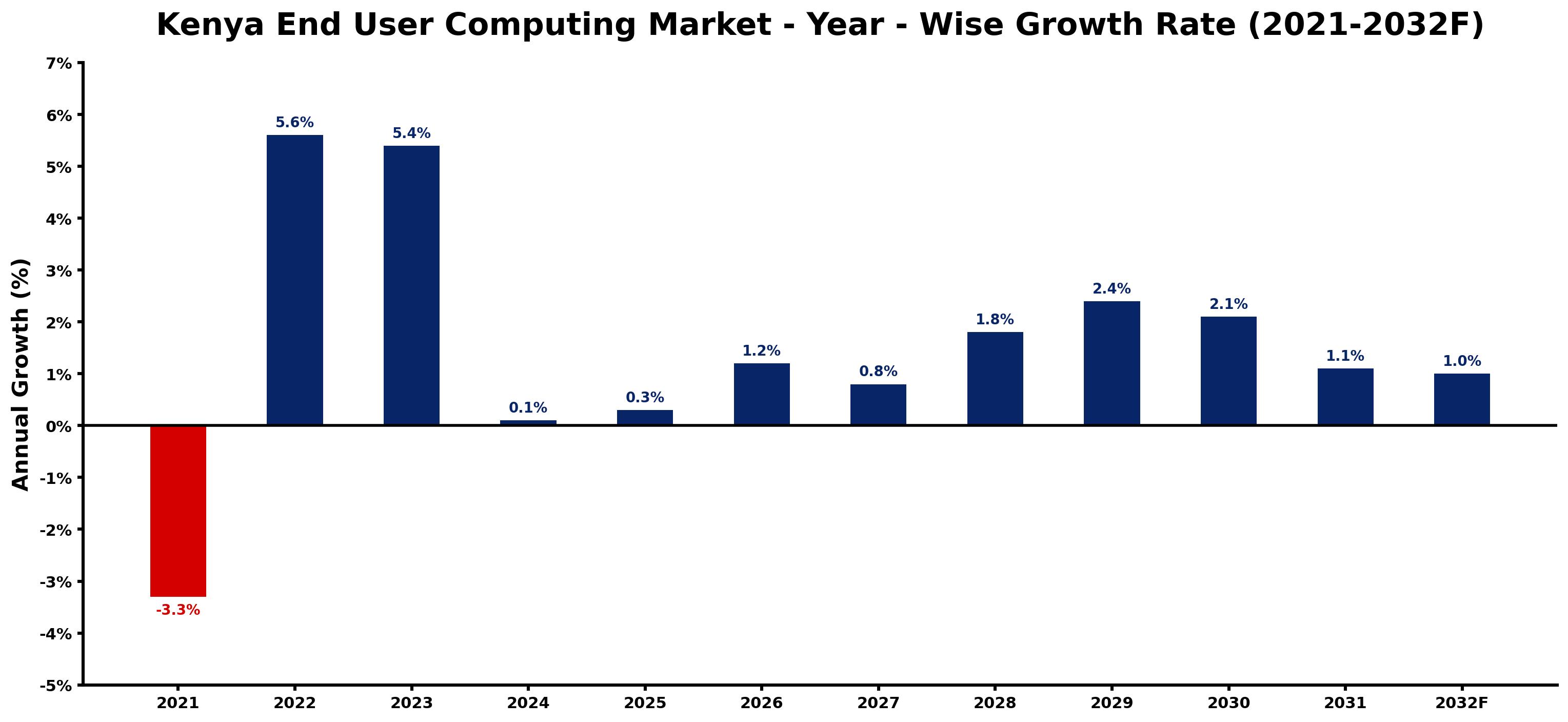
The table below presents the year‑wise growth rates along with the key drivers influencing the market
| Year | Growth Rate | Major Drivers |
| 2021 | -3.3% | Weak consumer spending due to high inflation rates. |
| 2022 | 5.6% | Increased smartphone penetration enhancing digital workspace adoption. |
| 2023 | 5.4% | Growing remote work culture driving personal computing demand. |
| 2024 | 0.1% | Local businesses investing in digital operational efficiencies. |
| 2025 | 0.3% | Government partnership with ICT Authority boosting tech skills. |
| 2026 | 1.2% | Increase in mobile banking usage requiring end-user devices. |
| 2027 | 0.8% | Youth population growth boosting demand for computing solutions. |
| 2028 | 1.8% | E-commerce expansion increasing need for reliable computing tools. |
| 2029 | 2.4% | Rising interest in tech-savvy entrepreneurship among youth. |
| 2030 | 2.1% | Mobile applications surge stimulating software and device usage. |
| 2031 | 1.1% | Telecommunication advancements improving internet accessibility and usability. |
| 2032 | 1.0% | Supportive regulatory framework for tech renting services emerging. |
Note: Market size estimations and growth projections presented in this report are based on 6Wresearch's proprietary forecasting methodology, utilizing the latest available industry data, government publications, and primary research inputs.
Kenya End User Computing Market Key Takeaways
Below are some of the specific key takeaways from the market, including:
- The increasing shift toward cloud-based solutions is reshaping the computing landscape.
- Remote work is driving a surge in demand for mobile devices and virtual desktop infrastructure.
- SMEs are emerging as key contributors to market growth, seeking scalable solutions.
- Cybersecurity concerns are prompting investments in secure computing practices.
- Sustainability is becoming a priority, influencing the development of energy-efficient technologies.
Evaluation of Restraints in Kenya End User Computing Market
Despite the positive trajectory, several restraints hinder growth in the Kenya End User Computing Market. Affordability remains a significant barrier; many individuals and businesses struggle to invest in necessary computing devices. This limits access to technology, particularly in rural areas where internet connectivity is often unreliable. on top of that, inadequate IT infrastructure and support services further stifle the effective utilization of end-user computing solutions, ultimately affecting productivity levels.
Kenya End User Computing Market Trends
Several key trends are defining the Kenya End User Computing Market. The transition to cloud-based solutions and virtual desktop infrastructure (VDI) is notable, as organizations seek flexible and scalable options that also prioritize data security. The demand for mobile devices, including laptops and tablets, continues to rise, driven by remote work initiatives and an increasing focus on digitalization.
Additionally, companies are looking to enhance user experience through advanced technologies, such as artificial intelligence and machine learning, integrated into end-user devices. The push for sustainability is also influencing choices, with organizations prioritizing energy-efficient solutions to reduce their environmental impact.
Kenya End User Computing Market Opportunities
The Kenya End User Computing Market is ripe with investment opportunities. Hardware demand is surging, particularly for laptops, tablets, and smartphones, fueled by increasing tech adoption and e-learning initiatives. Software solutions, encompassing productivity tools and security software, are also in high demand as both businesses and individuals look to enhance their digital capabilities.
There’s also a growing trend towards remote work and flexible working arrangements, creating a need for innovative solutions tailored to this evolving work environment. Investors have the chance to capitalize on these changing dynamics as Kenya's technological landscape continues to evolve.
Government Initiatives in the Kenya End User Computing Market
Government policies play a crucial role in shaping the Kenya End User Computing Market. With a strong emphasis on enhancing ICT infrastructure and promoting digital literacy, the government is actively working to increase access to technology. These efforts are geared toward fostering a tech-savvy population that can leverage digital solutions for economic growth.
- A recently launched Digital Literacy Program aims to equip primary school students with access to digital devices and essential skills training.
- The National ICT Master Plan is currently underway, focusing on boosting digital literacy and skills development among the population.
- A national initiative to upgrade digital infrastructure is planned, expected to enhance connectivity across urban and rural areas by 2028.
- Vision 2030 is being implemented, which prioritizes ICT as a cornerstone for the country's development strategy.
Future Insights of the Kenya End User Computing Market
Looking ahead to 2026-2032, the Kenya End User Computing Market is expected to expand, driven by increasing internet penetration and a growing appetite for cloud-based services. As the government continues to promote digital literacy and entrepreneurship, the presence of global technology firms is likely to increase, further fueling market growth.
The trend towards mobile devices and remote work is anticipated to persist, leading to higher demand for end-user computing solutions tailored to this new working paradigm. Businesses that adapt quickly to these changes will find ample opportunities for growth.
Kenya End User Computing Market Latest Developments
Recent activity in the Kenya End User Computing Market indicates a dynamic environment, with various initiatives aimed at enhancing technology access and utilization. Over the past year, companies and government entities have focused on implementing solutions that facilitate remote work and improve digital infrastructure.
- A major technology vendor launched a new line of energy-efficient laptops in early 2025, targeting SMEs looking to upgrade their computing capabilities.
- An ongoing initiative began in mid-2025 to expand high-speed internet access to rural areas, addressing connectivity challenges.
- A partnership between local universities and tech companies, formed in late 2025, aims to promote digital literacy among students through hands-on workshops.
- A rollout of cloud-based productivity tools is expected to begin in the second half of 2026, enhancing collaboration for remote teams.
Kenya End User Computing Market - Key Attractiveness of the Report
- 10 Years of Market Numbers
- Historical Data Starting from 2022 to 2025
- Base Year: 2025
- Forecast Data until 2032
- Key Performance Indicators Impacting the Market
- Major Upcoming Developments and Projects
Key Highlights of the Report:
- Kenya End User Computing Market Outlook
- Market Size of Kenya End User Computing Market, 2025
- Forecast of Kenya End User Computing Market, 2032
- Historical Data and Forecast of Kenya End User Computing Revenues & Volume for the Period 2022-2032F
- Kenya End User Computing Market Trend Evolution
- Kenya End User Computing Market Drivers and Challenges
- Kenya End User Computing Price Trends
- Kenya End User Computing Porter's Five Forces
- Kenya End User Computing Industry Life Cycle
- Historical Data and Forecast of Kenya End User Computing Market Revenues & Volume By Solution for the Period 2022-2032F
- Historical Data and Forecast of Kenya End User Computing Market Revenues & Volume By Virtual Desktop Infrastructure for the Period 2022-2032F
- Historical Data and Forecast of Kenya End User Computing Market Revenues & Volume By Device Management for the Period 2022-2032F
- Historical Data and Forecast of Kenya End User Computing Market Revenues & Volume By Unified Communication for the Period 2022-2032F
- Historical Data and Forecast of Kenya End User Computing Market Revenues & Volume By Software Asset Management for the Period 2022-2032F
- Historical Data and Forecast of Kenya End User Computing Market Revenues & Volume By Service for the Period 2022-2032F
- Historical Data and Forecast of Kenya End User Computing Market Revenues & Volume By Consulting for the Period 2022-2032F
- Historical Data and Forecast of Kenya End User Computing Market Revenues & Volume By Support for the Period 2022-2032F
- Historical Data and Forecast of Kenya End User Computing Market Revenues & Volume By Maintenance for the Period 2022-2032F
- Historical Data and Forecast of Kenya End User Computing Market Revenues & Volume By Training for the Period 2022-2032F
- Historical Data and Forecast of Kenya End User Computing Market Revenues & Volume By Education for the Period 2022-2032F
- Historical Data and Forecast of Kenya End User Computing Market Revenues & Volume By Managed Services for the Period 2022-2032F
- Historical Data and Forecast of Kenya End User Computing Market Revenues & Volume By Industry Vertical for the Period 2022-2032F
- Historical Data and Forecast of Kenya End User Computing Market Revenues & Volume By IT and telecom for the Period 2022-2032F
- Historical Data and Forecast of Kenya End User Computing Market Revenues & Volume By Banking, Financial Services, and Insurance (BFSI) for the Period 2022-2032F
- Historical Data and Forecast of Kenya End User Computing Market Revenues & Volume By Education for the Period 2022-2032F
- Historical Data and Forecast of Kenya End User Computing Market Revenues & Volume By Healthcare for the Period 2022-2032F
- Historical Data and Forecast of Kenya End User Computing Market Revenues & Volume By Government for the Period 2022-2032F
- Historical Data and Forecast of Kenya End User Computing Market Revenues & Volume By Retail for the Period 2022-2032F
- Historical Data and Forecast of Kenya End User Computing Market Revenues & Volume By Media and entertainment for the Period 2022-2032F
- Historical Data and Forecast of Kenya End User Computing Market Revenues & Volume By Manufacturing for the Period 2022-2032F
- Kenya End User Computing Import Export Trade Statistics
- Market Opportunity Assessment By Solution
- Market Opportunity Assessment By Service
- Market Opportunity Assessment By Industry Vertical
- Kenya End User Computing Top Companies Market Share
- Kenya End User Computing Competitive Benchmarking By Technical and Operational Parameters
- Kenya End User Computing Company Profiles
- Kenya End User Computing Key Strategic Recommendations






































