Kenya Ethyl Alcohol Market Size Growth Rate
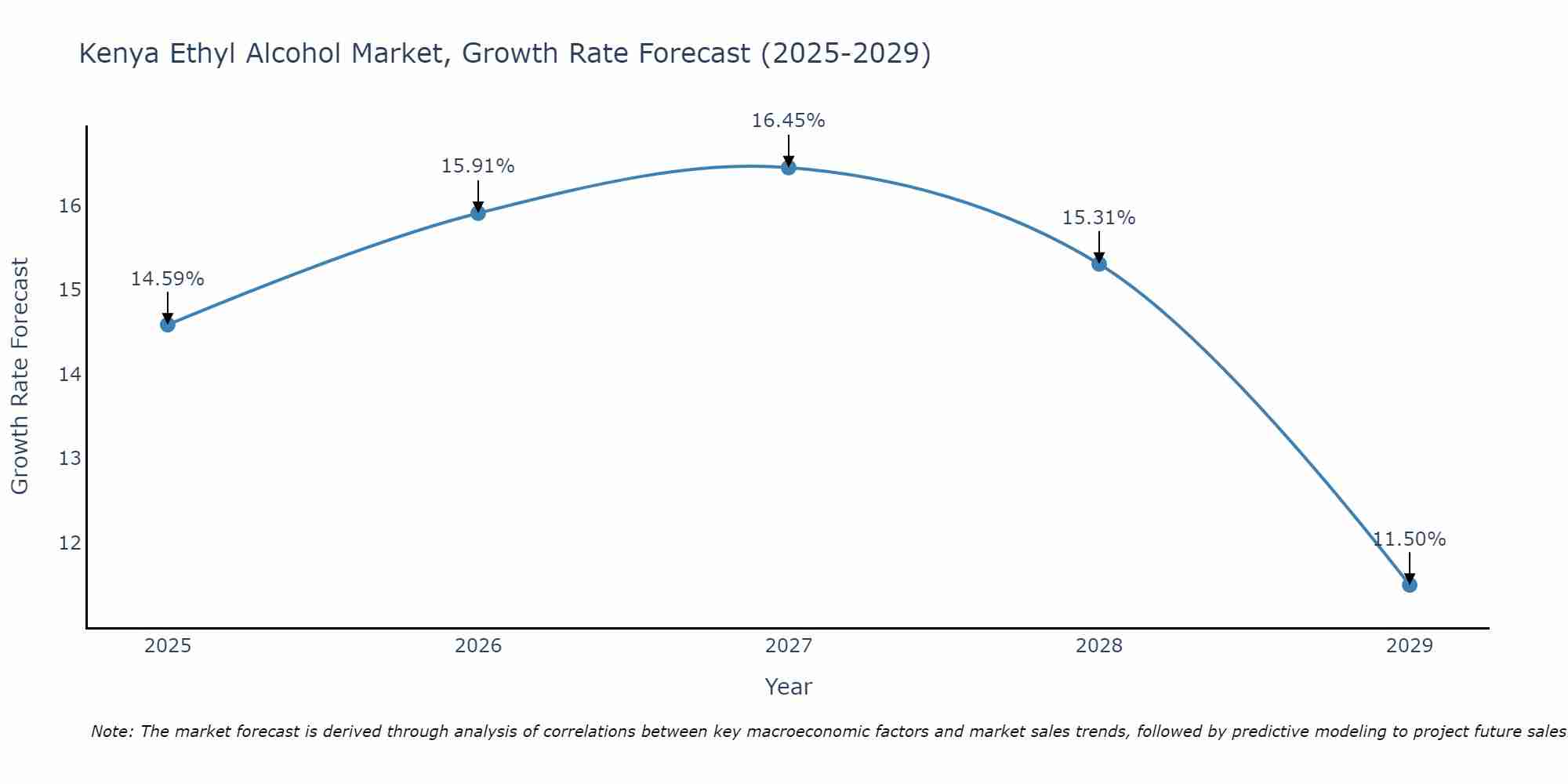
The Kenya Ethyl Alcohol Market is projected to witness mixed growth rate patterns during 2025 to 2029. Growth accelerates to 16.45% in 2027, following an initial rate of 14.59%, before easing to 11.50% at the end of the period.
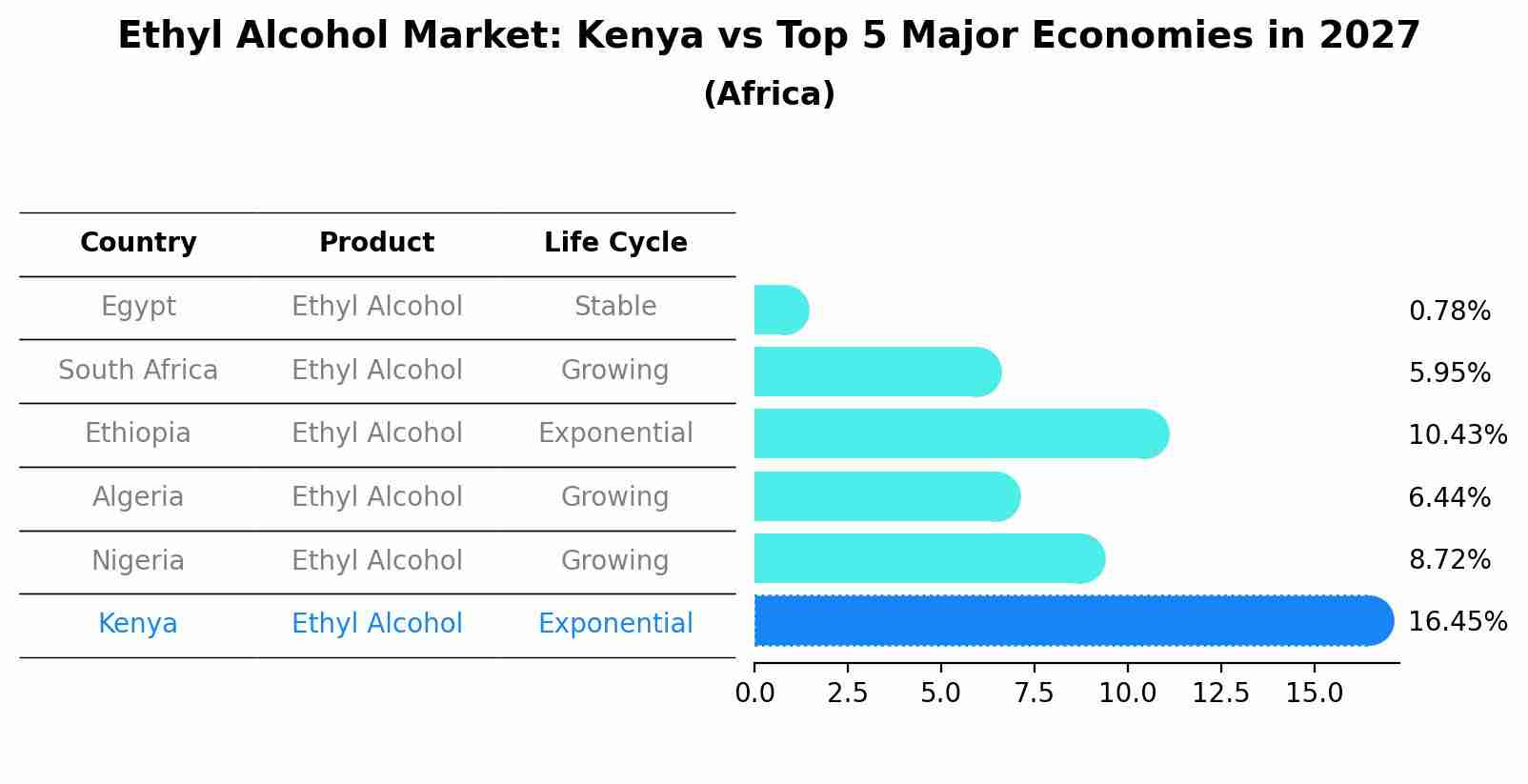
Ethyl Alcohol Market: Kenya vs Top 5 Major Economies in 2027 (Africa)
The Ethyl Alcohol market in Kenya is projected to grow at a exponential growth rate of 16.45% by 2027, within the Africa region led by Egypt, along with other countries like South Africa, Ethiopia, Algeria and Nigeria, collectively shaping a dynamic and evolving market environment driven by innovation and increasing adoption of emerging technologies.
Kenya Ethyl Alcohol Market Overview
The Kenya ethyl alcohol market is witnessing steady growth driven by increasing demand in various industries such as pharmaceuticals, cosmetics, food and beverage, and industrial applications. The market is primarily fueled by the pharmaceutical sector, where ethyl alcohol is used for manufacturing medicines, disinfectants, and antiseptics. Additionally, the demand for ethyl alcohol in the cosmetics industry for producing perfumes, lotions, and other personal care products is contributing to market growth. The food and beverage sector also plays a significant role in driving market expansion as ethyl alcohol is used in the production of alcoholic beverages and flavoring extracts. With a growing economy and increasing consumer awareness about the benefits of ethyl alcohol-based products, the Kenya ethyl alcohol market is expected to continue its upward trajectory in the coming years.
Kenya Ethyl Alcohol Market Trends
The Kenya Ethyl Alcohol market is currently experiencing a growing demand, primarily driven by the increasing use of alcohol-based sanitizers due to the COVID-19 pandemic. The healthcare sector is a key consumer of ethyl alcohol for disinfection purposes, contributing to the market growth. Additionally, the beverage industry in Kenya is witnessing a rise in the production of alcoholic beverages, further boosting the demand for ethyl alcohol. The government`s initiatives to promote local manufacturing and reduce dependency on imports have also led to a surge in domestic production of ethyl alcohol. With consumers becoming more health-conscious and hygiene-aware, the market is expected to continue its growth trajectory in the near future.
Kenya Ethyl Alcohol Market Challenges
In the Kenya Ethyl Alcohol Market, several challenges are faced, including fluctuating raw material prices, inconsistent government regulations, and intense competition. Fluctuating raw material prices, such as sugarcane and maize, can impact production costs and pricing strategies for ethyl alcohol manufacturers. Inconsistent government regulations, particularly in terms of taxation and licensing requirements, can create uncertainty and hinder market growth. Additionally, the market is highly competitive, with various local and international players vying for market share, leading to pricing pressures and the need for constant innovation to differentiate products. Overall, navigating these challenges requires companies in the Kenya Ethyl Alcohol Market to stay agile, monitor market trends closely, and adapt their strategies to remain competitive.
Kenya Ethyl Alcohol Market Investment Opportunities
The Kenya Ethyl Alcohol Market presents promising investment opportunities due to increasing demand from various sectors such as pharmaceuticals, beverages, and cosmetics. With the growing population and rising disposable income levels, the consumption of ethyl alcohol for industrial and commercial purposes is expected to escalate. Additionally, the government`s support for the local manufacturing industry and the emphasis on promoting ethanol production for clean energy initiatives further enhance the market potential. Investors can explore opportunities in ethanol production plants, distribution networks, and establishing partnerships with key industry players to capitalize on the market growth. However, it is crucial to conduct thorough market research, assess regulatory frameworks, and stay updated on industry trends to make informed investment decisions in the Kenya Ethyl Alcohol Market.
Kenya Ethyl Alcohol Market Government Policy
The Kenyan government has implemented several policies related to the ethyl alcohol market, primarily focusing on regulation and taxation. The government imposes excise duty on ethyl alcohol products to control consumption and generate revenue. Additionally, there are strict regulations in place to ensure the quality and safety of ethyl alcohol products, including licensing requirements for producers and distributors. The government also encourages the use of ethyl alcohol for industrial purposes, such as in the production of pharmaceuticals and alcoholic beverages, to promote economic growth and development. Overall, the government policies in Kenya aim to strike a balance between regulating the ethyl alcohol market to protect public health and safety while also supporting the industry`s growth and contribution to the economy.
Kenya Ethyl Alcohol Market Future Outlook
The future outlook for the Kenya Ethyl Alcohol Market appears positive, driven by several factors including the increasing demand for ethyl alcohol in various industries such as pharmaceuticals, healthcare, and cosmetics. Additionally, the rising awareness regarding the benefits of using ethyl alcohol for sanitization purposes, especially in light of the ongoing global health crisis, is expected to further boost market growth. Government initiatives to promote the production and use of ethyl alcohol for various applications, coupled with advancements in production technologies, are likely to drive market expansion in the coming years. However, challenges such as fluctuating raw material prices and regulatory constraints may pose some obstacles to market growth, necessitating strategic planning and innovation within the industry to capitalize on emerging opportunities.
Key Highlights of the Report:
- Kenya Ethyl Alcohol Market Outlook
- Market Size of Kenya Ethyl Alcohol Market, 2021
- Forecast of Kenya Ethyl Alcohol Market, 2031
- Historical Data and Forecast of Kenya Ethyl Alcohol Revenues & Volume for the Period 2018 - 2031
- Kenya Ethyl Alcohol Market Trend Evolution
- Kenya Ethyl Alcohol Market Drivers and Challenges
- Kenya Ethyl Alcohol Price Trends
- Kenya Ethyl Alcohol Porter's Five Forces
- Kenya Ethyl Alcohol Industry Life Cycle
- Historical Data and Forecast of Kenya Ethyl Alcohol Market Revenues & Volume By Grade for the Period 2018 - 2031
- Historical Data and Forecast of Kenya Ethyl Alcohol Market Revenues & Volume By Food Grade for the Period 2018 - 2031
- Historical Data and Forecast of Kenya Ethyl Alcohol Market Revenues & Volume By Industrial Grade for the Period 2018 - 2031
- Historical Data and Forecast of Kenya Ethyl Alcohol Market Revenues & Volume By Pharmaceutical Grade for the Period 2018 - 2031
- Historical Data and Forecast of Kenya Ethyl Alcohol Market Revenues & Volume By Lab Grade for the Period 2018 - 2031
- Historical Data and Forecast of Kenya Ethyl Alcohol Market Revenues & Volume By End-user Industry for the Period 2018 - 2031
- Historical Data and Forecast of Kenya Ethyl Alcohol Market Revenues & Volume By Automotive and Transportation for the Period 2018 - 2031
- Historical Data and Forecast of Kenya Ethyl Alcohol Market Revenues & Volume By Food and Beverage for the Period 2018 - 2031
- Historical Data and Forecast of Kenya Ethyl Alcohol Market Revenues & Volume By Pharmaceutical for the Period 2018 - 2031
- Historical Data and Forecast of Kenya Ethyl Alcohol Market Revenues & Volume By Cosmetics and Personal Care (Includes hand-Sanitizer) for the Period 2018 - 2031
- Historical Data and Forecast of Kenya Ethyl Alcohol Market Revenues & Volume By Other End-user Industries for the Period 2018 - 2031
- Kenya Ethyl Alcohol Import Export Trade Statistics
- Market Opportunity Assessment By Grade
- Market Opportunity Assessment By End-user Industry
- Kenya Ethyl Alcohol Top Companies Market Share
- Kenya Ethyl Alcohol Competitive Benchmarking By Technical and Operational Parameters
- Kenya Ethyl Alcohol Company Profiles
- Kenya Ethyl Alcohol Key Strategic Recommendations






































