Kenya Hosiery Market Size Growth Rate
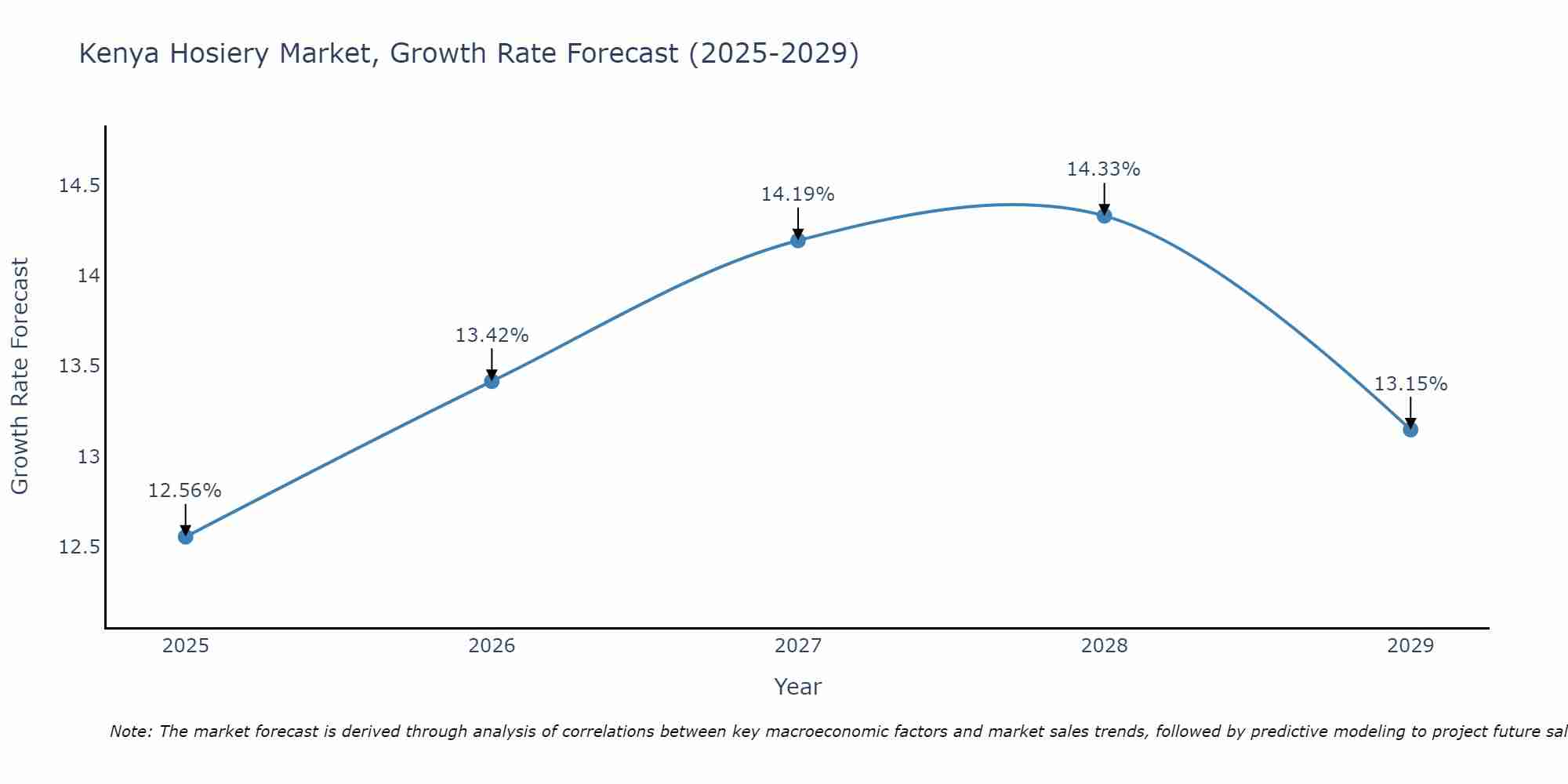
The Kenya Hosiery Market is projected to witness mixed growth rate patterns during 2025 to 2029. Growth accelerates to 14.33% in 2028, following an initial rate of 12.56%, before easing to 13.15% at the end of the period.
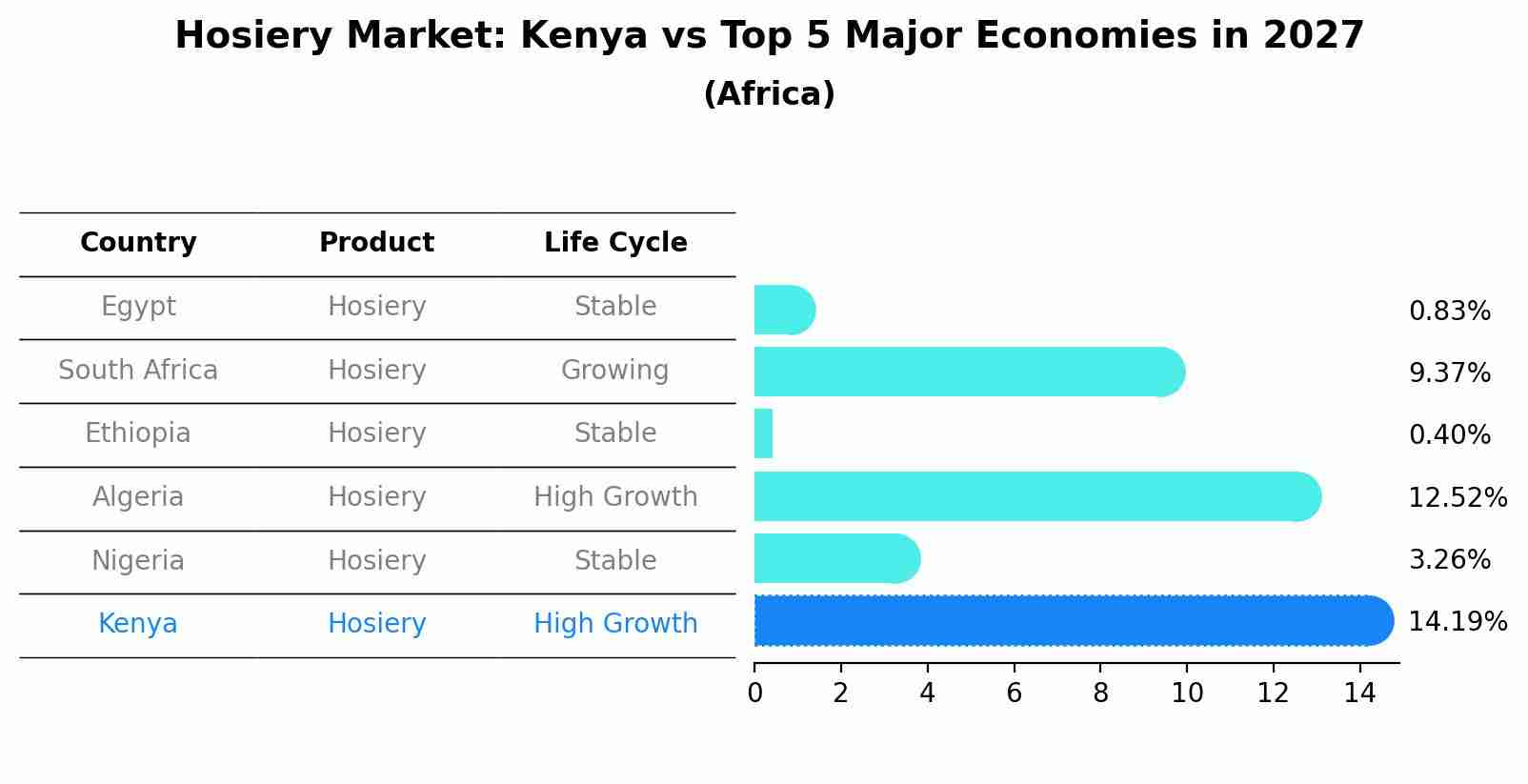
Hosiery Market: Kenya vs Top 5 Major Economies in 2027 (Africa)
The Hosiery market in Kenya is projected to grow at a high growth rate of 14.19% by 2027, within the Africa region led by Egypt, along with other countries like South Africa, Ethiopia, Algeria and Nigeria, collectively shaping a dynamic and evolving market environment driven by innovation and increasing adoption of emerging technologies.
Kenya Hosiery Market Overview
The Kenya hosiery market is experiencing steady growth driven by increasing consumer disposable income, changing fashion trends, and a growing awareness of the benefits of hosiery products. The market offers a wide range of products including socks, stockings, tights, and leggings, catering to different demographics and preferences. International brands have a notable presence in the market, alongside local manufacturers who are known for their quality and affordability. Retail channels such as specialty stores, department stores, online platforms, and supermarkets play a crucial role in distributing hosiery products across the country. With a young and fashion-conscious population, the Kenya hosiery market presents opportunities for further expansion and innovation, especially with the rising demand for sustainable and ethically produced hosiery items.
Kenya Hosiery Market Trends
The Kenya hosiery market is experiencing a growing demand for sustainable and eco-friendly products, with consumers becoming more conscious of the environmental impact of their clothing choices. There is a notable shift towards organic cotton and recycled materials in hosiery products. Additionally, the market is seeing an increase in the popularity of athleisure hosiery, with more people incorporating comfortable and stylish hosiery into their everyday wear. Online shopping for hosiery is also on the rise, driven by the convenience and variety offered by e-commerce platforms. Brands are focusing on inclusivity and diversity in their product offerings to cater to a wider range of body types and skin tones. Overall, the Kenya hosiery market is witnessing a shift towards sustainable practices, comfortable designs, and inclusive product ranges to meet the evolving preferences of consumers.
Kenya Hosiery Market Challenges
In the Kenya hosiery market, some challenges that are commonly faced include stiff competition from imported hosiery products, which often offer lower prices due to economies of scale and differing production costs. This can make it difficult for local hosiery manufacturers to compete effectively in terms of pricing. Additionally, the fluctuating cost of raw materials, such as cotton and synthetic fibers, can impact the profitability of hosiery businesses in Kenya. Another challenge is the lack of awareness and education among consumers regarding the benefits of quality hosiery products, leading to a preference for cheaper, lower-quality alternatives. Furthermore, inadequate infrastructure and logistical challenges can hinder the distribution and marketing efforts of hosiery companies in reaching their target market effectively.
Kenya Hosiery Market Investment Opportunities
The Kenya hosiery market presents promising investment opportunities due to the increasing demand for quality socks, stockings, and tights driven by the country`s growing population and expanding middle-class segment. Investors can capitalize on this trend by investing in local hosiery manufacturing companies or importing high-quality hosiery products to meet the rising consumer needs. E-commerce platforms also offer a viable avenue for investment by establishing online retail channels to reach a wider customer base. Additionally, partnerships with local retailers and fashion brands can provide distribution channels for hosiery products. With the right market positioning, product quality, and marketing strategies, investors can tap into the lucrative Kenya hosiery market and benefit from its growth potential.
Kenya Hosiery Market Government Policy
The Kenyan government has implemented various policies to support the hosiery market in the country. These policies include the promotion of local manufacturing through initiatives such as the Buy Kenya, Build Kenya strategy, which encourages consumers to purchase locally made hosiery products. Additionally, the government has enacted trade policies to facilitate the importation of raw materials for hosiery production at a competitive cost. Furthermore, there are regulations in place to ensure quality standards are met, enhancing consumer confidence in locally produced hosiery items. Overall, the government`s interventions aim to boost the domestic hosiery market, create employment opportunities, and contribute to the growth of the textile and apparel industry in Kenya.
Kenya Hosiery Market Future Outlook
The Kenya hosiery market is expected to witness steady growth in the coming years driven by factors such as increasing disposable incomes, changing fashion trends, and a growing awareness of health benefits associated with wearing hosiery. The market is likely to see a shift towards more sustainable and eco-friendly products as consumers become more conscious of their environmental footprint. Additionally, the rise of e-commerce platforms and social media influencers is anticipated to boost the demand for hosiery products, especially among the younger demographic. Collaborations between hosiery brands and fashion designers are also expected to drive innovation and introduce new styles to the market. Overall, the Kenya hosiery market is poised for expansion with opportunities for both local and international brands to capture a larger share of the consumer base.
Key Highlights of the Report:
- Kenya Hosiery Market Outlook
- Market Size of Kenya Hosiery Market, 2021
- Forecast of Kenya Hosiery Market, 2031
- Historical Data and Forecast of Kenya Hosiery Revenues & Volume for the Period 2018 - 2031
- Kenya Hosiery Market Trend Evolution
- Kenya Hosiery Market Drivers and Challenges
- Kenya Hosiery Price Trends
- Kenya Hosiery Porter's Five Forces
- Kenya Hosiery Industry Life Cycle
- Historical Data and Forecast of Kenya Hosiery Market Revenues & Volume By End-User for the Period 2018 - 2031
- Historical Data and Forecast of Kenya Hosiery Market Revenues & Volume By Men for the Period 2018 - 2031
- Historical Data and Forecast of Kenya Hosiery Market Revenues & Volume By Women for the Period 2018 - 2031
- Historical Data and Forecast of Kenya Hosiery Market Revenues & Volume By Distribution Channel for the Period 2018 - 2031
- Historical Data and Forecast of Kenya Hosiery Market Revenues & Volume By Offline for the Period 2018 - 2031
- Historical Data and Forecast of Kenya Hosiery Market Revenues & Volume By Online for the Period 2018 - 2031
- Kenya Hosiery Import Export Trade Statistics
- Market Opportunity Assessment By End-User
- Market Opportunity Assessment By Distribution Channel
- Kenya Hosiery Top Companies Market Share
- Kenya Hosiery Competitive Benchmarking By Technical and Operational Parameters
- Kenya Hosiery Company Profiles
- Kenya Hosiery Key Strategic Recommendations






































