Kenya Natural Sand Market Growth Rate Analysis (2025 - 2031)
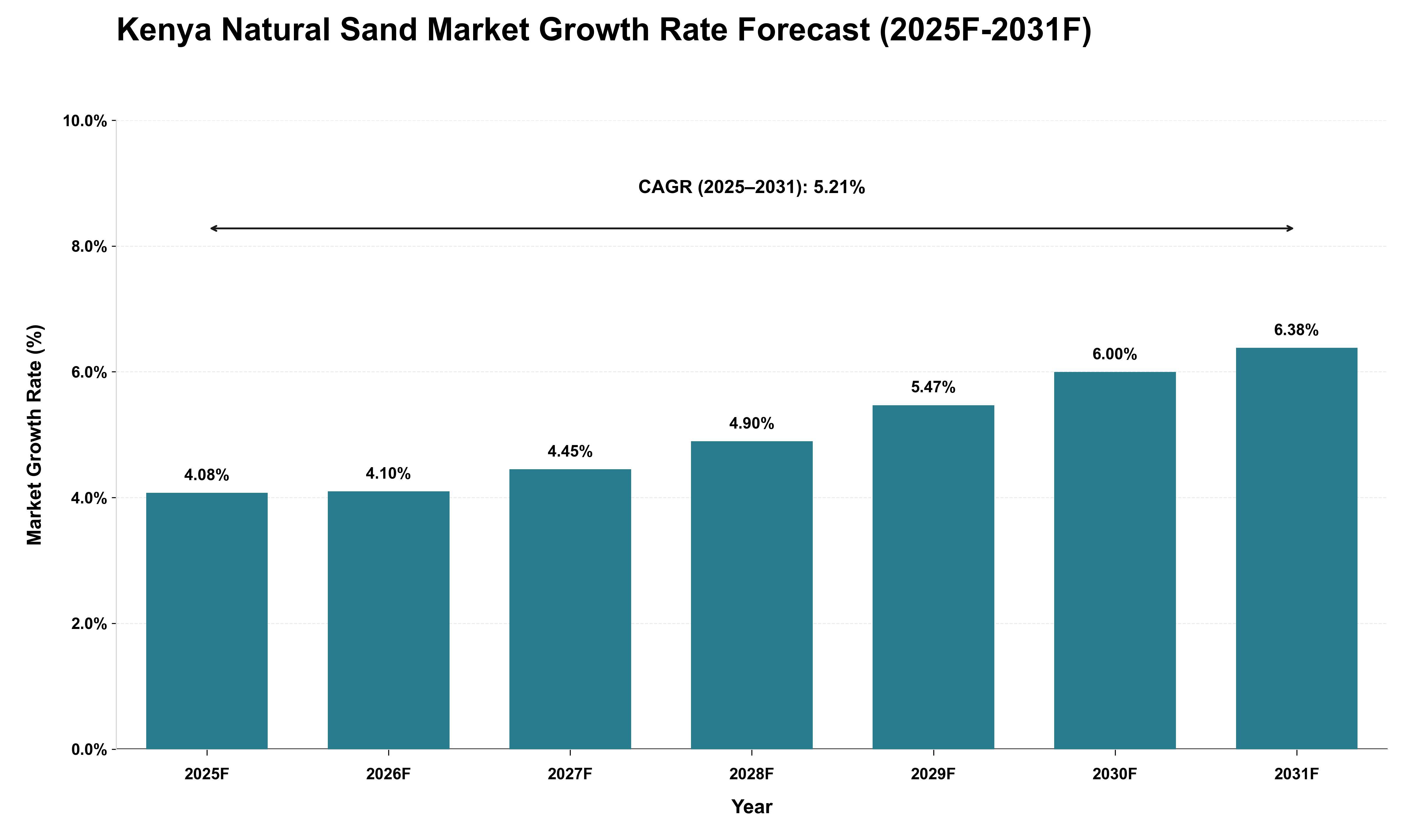
The Kenya natural sand market will experience a notable shift in end-use demand driven by infrastructure development and urbanization trends, which will underpin a projected CAGR of 5.21% from 2025 to 2031. As construction activities intensify, particularly in urban centers, the annual growth rates are expected to rise progressively, peaking at 6.38% in 2031. This growth trajectory reflects an increasing reliance on natural sand for concrete production and other construction materials, influenced by both domestic projects and regional trade dynamics. Additionally, import dependencies may fluctuate as local production capabilities evolve to meet rising demand; however, external supply chain factors could introduce volatility. The cyclical nature of construction demand will further amplify these trends, with each year showing incremental increases in growth rates that align with broader economic recovery patterns and investment influxes into infrastructure projects across Kenya.
Key Highlights of the Report:
- Kenya Natural Sand Market Outlook
- Market Size of Kenya Natural Sand Market, 2024
- Forecast of Kenya Natural Sand Market, 2031
- Historical Data and Forecast of Kenya Natural Sand Revenues & Volume for the Period 2021 - 2031
- Kenya Natural Sand Market Trend Evolution
- Kenya Natural Sand Market Drivers and Challenges
- Kenya Natural Sand Price Trends
- Kenya Natural Sand Porter's Five Forces
- Kenya Natural Sand Industry Life Cycle
- Historical Data and Forecast of Kenya Natural Sand Market Revenues & Volume By Types for the Period 2021 - 2031
- Historical Data and Forecast of Kenya Natural Sand Market Revenues & Volume By River Sand for the Period 2021 - 2031
- Historical Data and Forecast of Kenya Natural Sand Market Revenues & Volume By Mountain Sand for the Period 2021 - 2031
- Historical Data and Forecast of Kenya Natural Sand Market Revenues & Volume By Sea Sand for the Period 2021 - 2031
- Historical Data and Forecast of Kenya Natural Sand Market Revenues & Volume By Applications for the Period 2021 - 2031
- Historical Data and Forecast of Kenya Natural Sand Market Revenues & Volume By Residential for the Period 2021 - 2031
- Historical Data and Forecast of Kenya Natural Sand Market Revenues & Volume By Industrial for the Period 2021 - 2031
- Historical Data and Forecast of Kenya Natural Sand Market Revenues & Volume By Commercial for the Period 2021 - 2031
- Historical Data and Forecast of Kenya Natural Sand Market Revenues & Volume By Infrastructure for the Period 2021 - 2031
- Historical Data and Forecast of Kenya Natural Sand Market Revenues & Volume By Other for the Period 2021 - 2031
- Kenya Natural Sand Import Export Trade Statistics
- Market Opportunity Assessment By Types
- Market Opportunity Assessment By Applications
- Kenya Natural Sand Top Companies Market Share
- Kenya Natural Sand Competitive Benchmarking By Technical and Operational Parameters
- Kenya Natural Sand Company Profiles
- Kenya Natural Sand Key Strategic Recommendations






































