Kenya Phenol Market Size Growth Rate
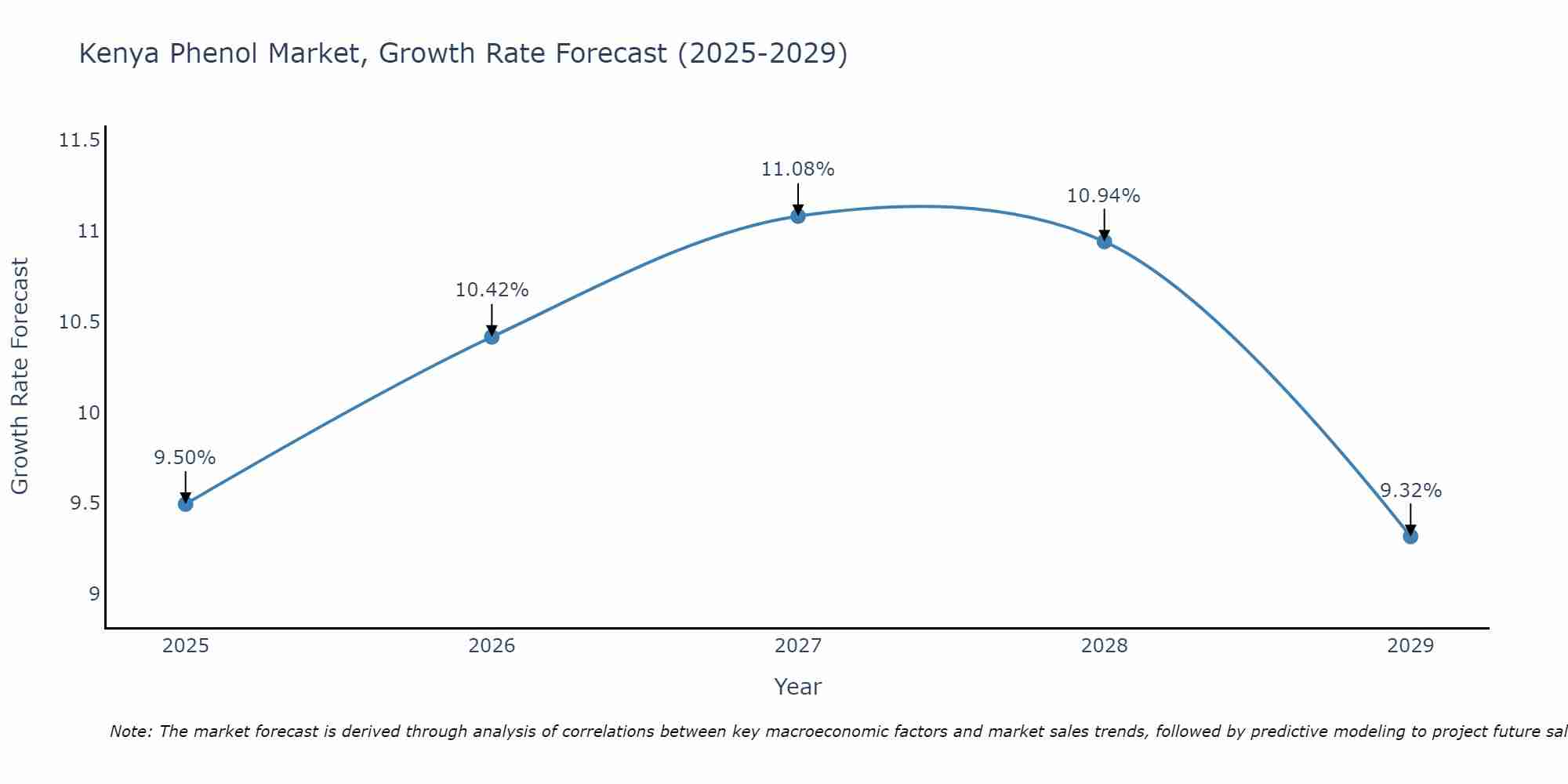
The Kenya Phenol Market is projected to witness mixed growth rate patterns during 2025 to 2029. Growth accelerates to 11.08% in 2027, following an initial rate of 9.50%, before easing to 9.32% at the end of the period.
Phenol Market: Kenya vs Top 5 Major Economies in 2027 (Africa)
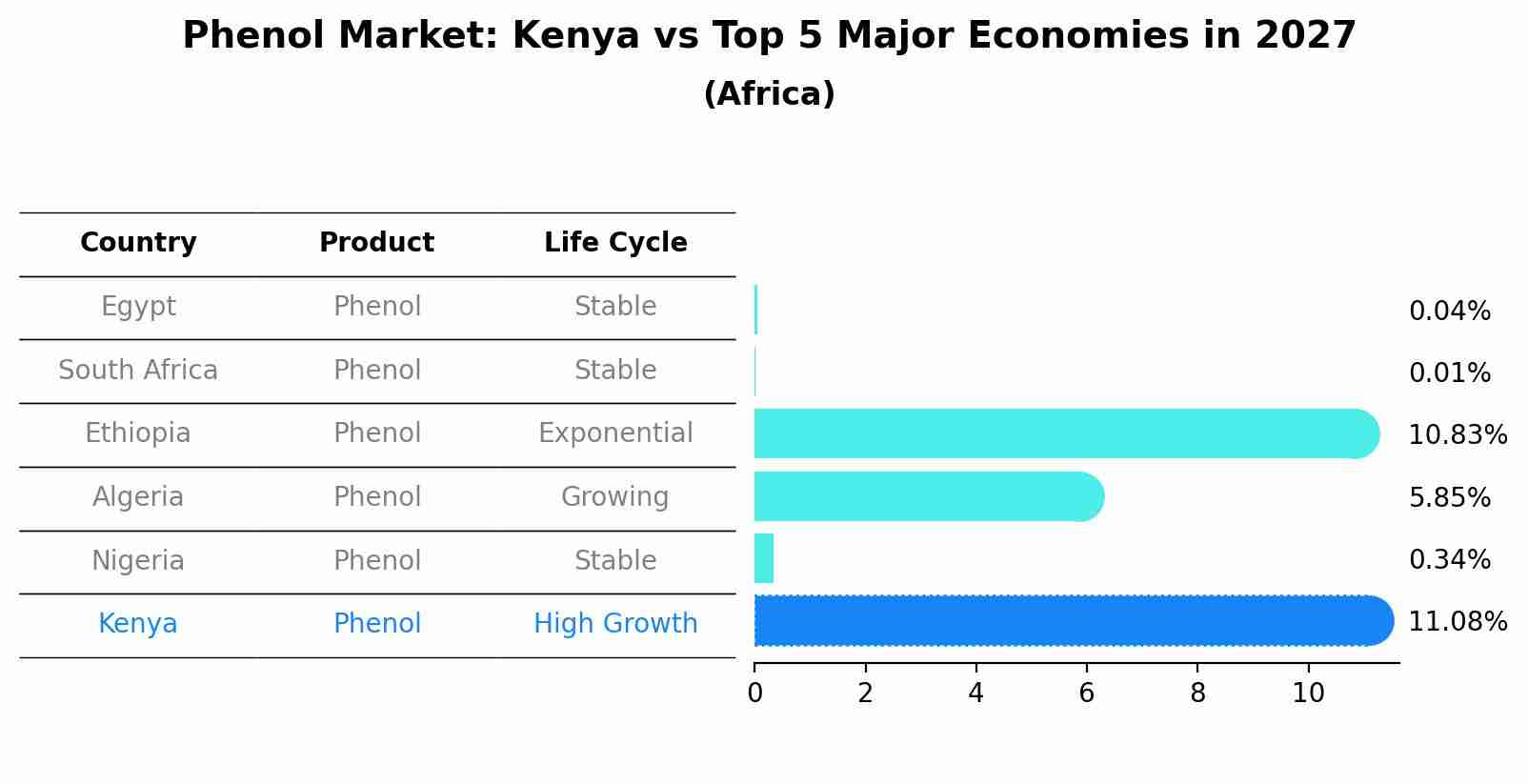
The Phenol market in Kenya is projected to grow at a high growth rate of 11.08% by 2027, highlighting the country's increasing focus on advanced technologies within the Africa region, where Egypt holds the dominant position, followed closely by South Africa, Ethiopia, Algeria and Nigeria, shaping overall regional demand.
Kenya Phenol Market Overview
The Kenya phenol market is experiencing steady growth driven by increasing demand from various industries such as pharmaceuticals, plastics, and agriculture. Phenol is primarily used in the production of resins, adhesives, and pharmaceuticals, which are witnessing a surge in demand within the country. Additionally, the growing construction sector and increasing government investments in infrastructure projects are further boosting the demand for phenol-based products. However, the market faces challenges such as fluctuating prices of raw materials and environmental regulations regarding phenol production processes. Key players in the Kenya phenol market include local manufacturers as well as international companies looking to capitalize on the country`s expanding industrial sector. Overall, the Kenya phenol market presents opportunities for growth, particularly in sectors like healthcare and construction.
Kenya Phenol Market Trends
The Kenya phenol market is experiencing steady growth driven by various industries such as pharmaceuticals, plastics, and agriculture. The increasing demand for phenol in the production of resins, adhesives, and pharmaceuticals is a key trend in the market. Additionally, the rising awareness about the benefits of phenol-based products, such as its antiseptic properties in healthcare and agricultural applications, is contributing to market growth. Companies are focusing on expanding their product portfolios and investing in research and development to meet the evolving consumer needs. The market is also witnessing a shift towards sustainable practices with a growing emphasis on eco-friendly production processes and bio-based phenol derivatives. Overall, the Kenya phenol market is poised for further expansion as industries continue to leverage the diverse applications of phenol.
Kenya Phenol Market Challenges
In the Kenya Phenol Market, some of the key challenges include limited domestic production capacity, leading to a heavy reliance on imports for meeting demand. This dependency on imports can expose the market to price fluctuations, supply chain disruptions, and currency exchange rate risks. Additionally, the market may face regulatory hurdles and environmental concerns related to the production and use of phenol, which could impact the growth and sustainability of the industry. Furthermore, competition from alternative chemicals and substitutes may pose a threat to the market share of phenol-based products. Overall, navigating these challenges requires strategic planning, investments in technology and infrastructure, as well as a deep understanding of market dynamics and regulatory landscape.
Kenya Phenol Market Investment Opportunities
The Kenya Phenol Market presents promising investment opportunities due to increasing demand in various industries such as pharmaceuticals, plastics, and cosmetics. With a growing population and rising disposable incomes, the demand for phenol-based products is expected to continue to rise. Investing in phenol production facilities or distribution networks could be lucrative as the country aims to expand its industrial base and promote local manufacturing. Additionally, there is potential for innovation and product development in eco-friendly and sustainable phenol derivatives to cater to the growing trend of environmentally conscious consumers. However, it is important to consider factors such as regulatory environment, competition, and market dynamics before making investment decisions in the Kenya Phenol Market.
Kenya Phenol Market Government Policy
The Kenyan government has implemented various policies related to the Phenol market to promote local production and ensure environmental sustainability. These policies include regulations on the importation of Phenol to protect local manufacturers, incentives for local production to boost domestic manufacturing capacity, and strict environmental standards to minimize pollution and promote sustainable practices within the industry. Additionally, the government has put in place measures to support research and development in the sector to enhance innovation and technological advancement. Overall, these policies aim to stimulate growth in the Phenol market, safeguard local industries, and contribute to the country`s economic development while ensuring environmental protection and sustainability.
Kenya Phenol Market Future Outlook
The Kenya Phenol Market is expected to witness steady growth in the coming years, driven by increasing industrial activities, particularly in the manufacturing and construction sectors. The rising demand for phenol as a key ingredient in the production of plastics, resins, and pharmaceuticals is anticipated to fuel market growth. Additionally, the growing awareness regarding the benefits of phenol-based products in various applications, such as automotive, electronics, and healthcare, is likely to further boost market expansion. However, challenges related to price volatility of raw materials and regulatory constraints may pose some limitations to market growth. Overall, with the country`s focus on industrial development and increasing investments in key sectors, the Kenya Phenol Market is poised for gradual but sustainable growth in the foreseeable future.
Key Highlights of the Report:
- Kenya Phenol Market Outlook
- Market Size of Kenya Phenol Market, 2021
- Forecast of Kenya Phenol Market, 2027
- Historical Data and Forecast of Kenya Phenol Revenues & Volume for the Period 2018 - 2027
- Kenya Phenol Market Trend Evolution
- Kenya Phenol Market Drivers and Challenges
- Kenya Phenol Price Trends
- Kenya Phenol Porter's Five Forces
- Kenya Phenol Industry Life Cycle
- Historical Data and Forecast of Kenya Phenol Market Revenues & Volume By End-users for the Period 2018 - 2027
- Historical Data and Forecast of Kenya Phenol Market Revenues & Volume By Bisphenol A for the Period 2018 - 2027
- Historical Data and Forecast of Kenya Phenol Market Revenues & Volume By Phenolic Resins for the Period 2018 - 2027
- Historical Data and Forecast of Kenya Phenol Market Revenues & Volume By Caprolactam for the Period 2018 - 2027
- Historical Data and Forecast of Kenya Phenol Market Revenues & Volume By Alkyl Phenyls for the Period 2018 - 2027
- Historical Data and Forecast of Kenya Phenol Market Revenues & Volume By Others for the Period 2018 - 2027
- Kenya Phenol Import Export Trade Statistics
- Market Opportunity Assessment By End-users
- Kenya Phenol Top Companies Market Share
- Kenya Phenol Competitive Benchmarking By Technical and Operational Parameters
- Kenya Phenol Company Profiles
- Kenya Phenol Key Strategic Recommendations






































