Kenya Polyester Fabric Market Summary
The kenya polyester fabric market was estimated at USD 353 Million in 2025 and is projected to reach USD 459 Million by 2032, growing at a CAGR of 4.6% from 2026 to 2032.
Kenya Polyester Fabric Market Year-wise Growth Rate and Key Drivers
This graph highlights how the Kenya Polyester Fabric Market has steadily grown over the years, supported by major growth factors.
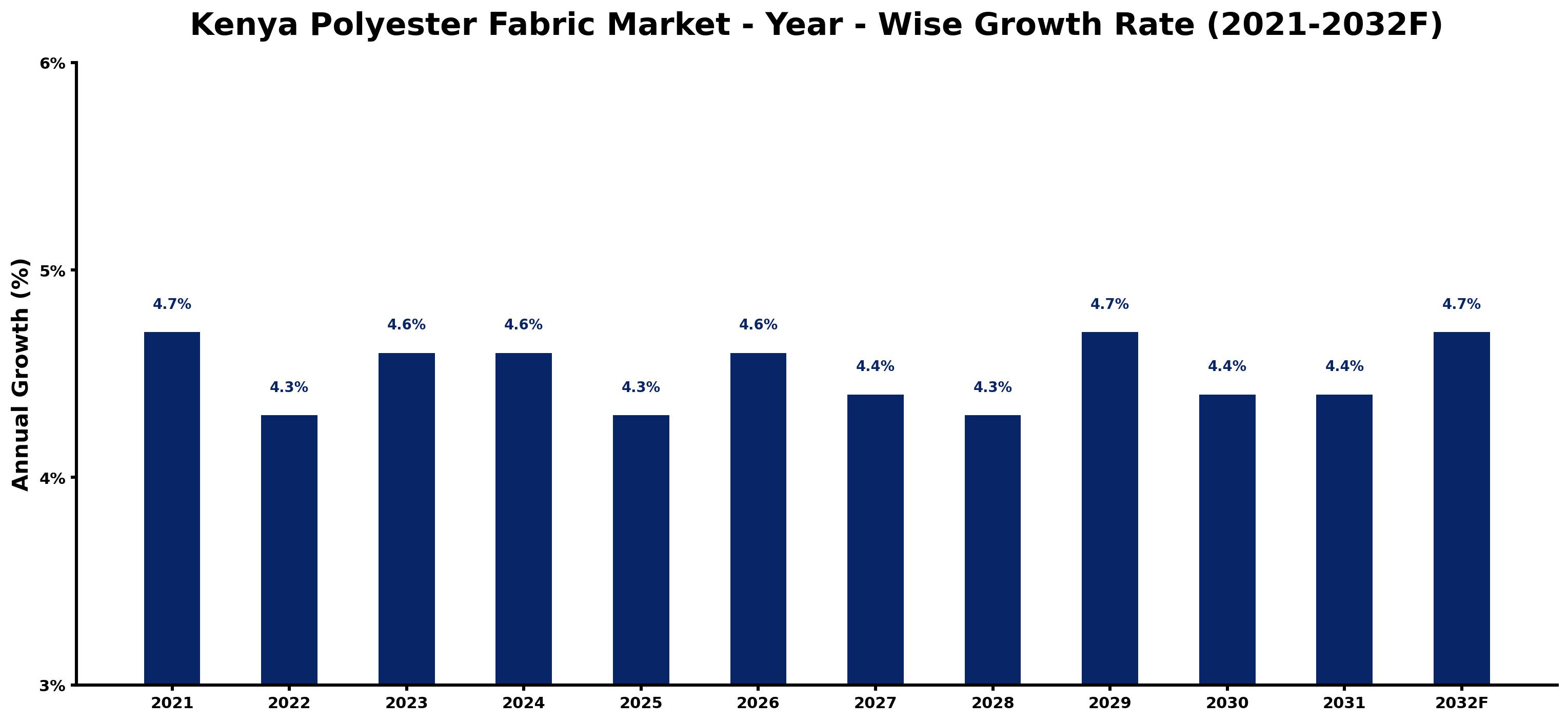
The table below presents the year wise growth rates along with the key drivers influencing the market
| Year | Growth Rate | Major Drivers |
| 2021 | 4.7% | Local manufacturers began increasing output to meet domestic textile demands. |
| 2022 | 4.3% | Tourism recovery spurred hospitality sector's fabric needs, boosting polyester consumption. |
| 2023 | 4.6% | Innovation in production methods improved fabric quality and reduced costs significantly. |
| 2024 | 4.6% | Retail expansion in urban areas fueled demand for fashionable polyester textiles. |
| 2025 | 4.3% | Sustainability trends prompted brands to explore recycled polyester options extensively. |
| 2026 | 4.6% | Increasing interest in local craftsmanship strengthened the market for unique textile designs. |
| 2027 | 4.4% | Emerging online retail platforms provided better access to polyester fabric products. |
| 2028 | 4.3% | Regional fashion weeks showcased Kenyan polyester fabrics, enhancing global visibility. |
| 2029 | 4.7% | Consumer preferences shifted towards lightweight, breathable fabrics due to climate considerations. |
| 2030 | 4.4% | Collaborations with international designers opened new avenues for innovative polyester applications. |
| 2031 | 4.4% | Local universities integrated textile programs, improving workforce skills and innovation. |
| 2032 | 4.7% | Positive economic indicators led to increased investments in textile manufacturing infrastructure. |
Note - Market size estimations and growth projections presented in this report are based on 6Wresearch's advanced forecasting approach, validated with industry datasets as of June 2026.
Kenya Polyester Fabric Market Synopsis
The Kenya Polyester Fabric Market is projected to reach 4.6% and witness significant growth during the forecast period (2026-2032). The market is poised to experience a compound annual growth rate (CAGR) of approximately 5%, driven by a variety of factors that underline the increasing adoption of polyester fabrics across multiple sectors, particularly in the fashion and apparel industries. Polyester's low cost, ease of maintenance, durability, and wrinkle resistance have made it an attractive choice for both consumers and manufacturers alike.
Kenya Polyester Fabric Market Growth Drivers
A multitude of factors contribute to the robust growth of the Kenya Polyester Fabric Market, creating a multifaceted landscape ripe for investment and expansion.
- The affordability of polyester fabrics makes them an appealing choice for consumers, especially in a market where purchasing power is on the rise.
- Their versatility is a crucial factor; polyester fabrics are used not only in clothing but also in various applications such as automotive interiors and home furnishings, expanding the market's reach.
- The increasing awareness and active participation in outdoor activities such as cycling and running have further propelled the demand for performance-oriented textile options, including polyester fabrics.
- The growth of the fashion industry significantly influences the polyester fabric market, as designers and brands increasingly opt for polyester due to its customization capabilities and aesthetic appeal.
- Lastly, the strategic initiatives by manufacturers to improve the quality of polyester fabrics through innovations in technology have enhanced their appeal among consumers.
Kenya Polyester Fabric Market Trends and Opportunities
The Kenya Polyester Fabric Market is currently witnessing several trends that are shaping its trajectory toward future growth.
- The shift towards sustainable and eco-friendly textiles is gaining momentum, presenting opportunities for recycled polyester fabrics, which can capture the environmentally conscious consumer segment.
- Advanced technologies such as digital printing and innovative weaving techniques are being adopted, allowing manufacturers to produce unique and customizable designs that cater to individual consumer preferences.
- Growing demand for athleisure and activewear garments has led to increased investment in moisture-wicking and breathable polyester fabric technologies, thereby enhancing performance features.
- The rise of e-commerce platforms has revolutionized distribution channels, making polyester fabrics more accessible to a broader audience, especially the tech-savvy younger demographic.
- Collaboration between fashion designers and textile manufacturers is becoming common, enabling bespoke and limited-edition collections that utilize polyester as a primary material, catering to niche markets.
Kenya Polyester Fabric Market Government Investment and Initiatives
The Kenyan government has recognized the importance of the textile industry, including the polyester fabric market, and is investing in various initiatives to foster its growth.
- Policies aimed at improving local manufacturing capabilities are being implemented, encouraging businesses to invest in modern manufacturing technologies to boost efficiency.
- Tax incentives and subsidies for manufacturers who engage in sustainable practices are in place to promote eco-friendly operations within the polyester fabric sector.
- Public-private partnerships are being initiated to enhance infrastructure, which is crucial for the transportation and distribution of textiles, thereby supporting market expansion.
- Funding for vocational training programs focused on textile production is increasing, ensuring that the workforce is equipped with the skills necessary to meet industry demands and innovations.
- Support for research and development in textile technologies is being prioritized, acknowledging the significance of innovation in maintaining competitiveness in the polyester fabric market.
Kenya Polyester Fabric Market Latest Developments (May 2025 - June 2026)
Recent developments in the Kenya Polyester Fabric Market between May 2025 and June 2026 reflect ongoing shifts and adaptations within the industry.
- The introduction of new polyester blends that enhance the fabric's performance characteristics has gained traction, allowing for a broader range of applications in both fashion and functional textiles.
- A significant increase in domestic consumption of polyester fabrics has been observed, primarily driven by emerging middle-class consumers seeking affordable fashion solutions.
- Efforts to enhance supply chain resilience have been implemented, with manufacturers focusing on local sourcing of raw materials to reduce dependency on imports.
- The penetration of online retail platforms for textiles has led to a shift in consumer purchasing behavior, with many opting for online purchases of polyester garments and fabrics.
- Increased collaborations between local designers and international brands are paving the way for innovative polyester fabric applications, thereby expanding market possibilities.
Kenya Polyester Fabric Market - Key Attractiveness of the Report
- 10 Years of Market Numbers
- Historical Data Starting from 2022 to 2025
- Base Year: 2025
- Forecast Data until 2032
- Key Performance Indicators Impacting the Market
- Major Upcoming Developments and Projects
Key Highlights of the Report:
- Kenya Polyester Fabric Market Outlook
- Market Size of Kenya Polyester Fabric Market, 2025
- Forecast of Kenya Polyester Fabric Market, 2032F
- Historical Data and Forecast of Kenya Polyester Fabric Revenues & Volume for the Period 2022-2032F
- Kenya Polyester Fabric Market Trend Evolution
- Kenya Polyester Fabric Market Drivers and Challenges
- Kenya Polyester Fabric Price Trends
- Kenya Polyester Fabric Porter's Five Forces
- Kenya Polyester Fabric Industry Life Cycle
- Historical Data and Forecast of Kenya Polyester Fabric Market Revenues & Volume By Type for the Period 2022-2032F
- Historical Data and Forecast of Kenya Polyester Fabric Market Revenues & Volume By PET for the Period 2022-2032F
- Historical Data and Forecast of Kenya Polyester Fabric Market Revenues & Volume By PCDT for the Period 2022-2032F
- Historical Data and Forecast of Kenya Polyester Fabric Market Revenues & Volume By Applications for the Period 2022-2032F
- Historical Data and Forecast of Kenya Polyester Fabric Market Revenues & Volume By Carpets & Rugs for the Period 2022-2032F
- Historical Data and Forecast of Kenya Polyester Fabric Market Revenues & Volume By Non-Woven Fabrics Fiberfill for the Period 2022-2032F
- Historical Data and Forecast of Kenya Polyester Fabric Market Revenues & Volume By Apparels for the Period 2022-2032F
- Historical Data and Forecast of Kenya Polyester Fabric Market Revenues & Volume By Home Textiles for the Period 2022-2032F
- Historical Data and Forecast of Kenya Polyester Fabric Market Revenues & Volume By Others? for the Period 2022-2032F
- Kenya Polyester Fabric Import Export Trade Statistics
- Market Opportunity Assessment By Type
- Market Opportunity Assessment By Applications
- Kenya Polyester Fabric Top Companies Market Share
- Kenya Polyester Fabric Competitive Benchmarking By Technical and Operational Parameters
- Kenya Polyester Fabric Company Profiles
- Kenya Polyester Fabric Key Strategic Recommendations






































