Kenya Prom Dresses Market Summary
The kenya prom dresses market was estimated at USD 496 Million in 2025 and is projected to reach USD 679 Million by 2032, growing at a CAGR of 5.4% from 2026 to 2032.
Kenya Prom Dresses Market Year-wise Growth Rate and Key Drivers
This graph highlights how the Kenya Prom Dresses Market has steadily grown over the past five years, supported by major growth factors.
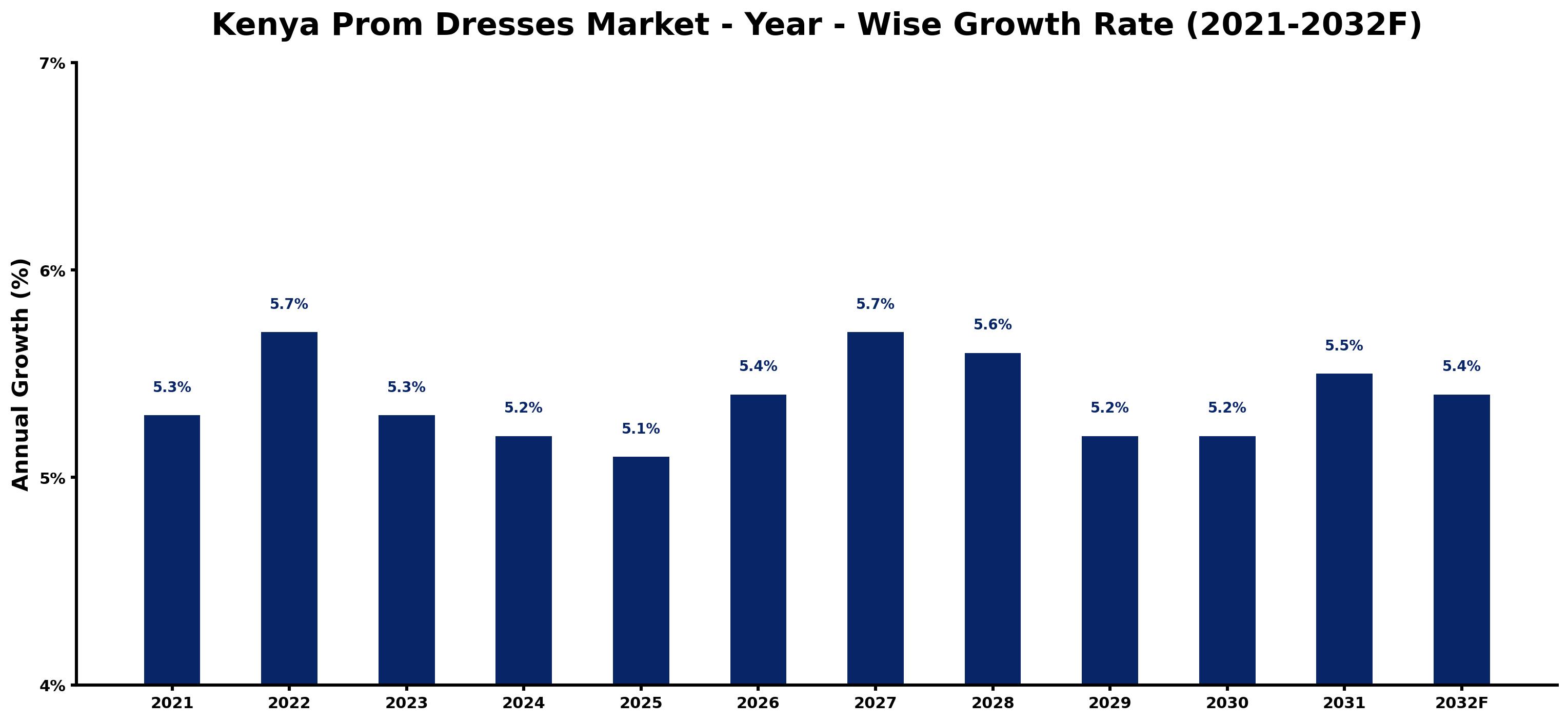
The table below presents the year wise growth rates along with the key drivers influencing the market
| Year | Growth Rate | Major Drivers |
| 2021 | 5.3% | Youthful demographic trends highlight a growing desire for fashionable prom attire. |
| 2022 | 5.7% | Increased internet accessibility facilitates online shopping for prom dresses among teens. |
| 2023 | 5.3% | Local designers gain popularity, blending traditional styles with modern fashion trends. |
| 2024 | 5.2% | Social media campaigns amplify awareness around the importance of prom events. |
| 2025 | 5.1% | Retailers diversify offerings, introducing sustainable fabrics to appeal to eco-conscious consumers. |
| 2026 | 5.4% | Emerging middle class drives increased disposable income for luxury prom dress purchases. |
| 2027 | 5.7% | Enhanced shopping experiences through virtual fitting rooms attract tech-savvy young buyers. |
| 2028 | 5.6% | Cultural shifts embrace formal occasions, elevating the status of prom celebrations. |
| 2029 | 5.2% | Collaborations with influencers shape consumer preferences, boosting brand visibility significantly. |
| 2030 | 5.2% | Economic stability leads to higher investment in event-related spending among families. |
| 2031 | 5.5% | Expansion of local manufacturing reduces costs, making prom dresses more accessible. |
| 2032 | 5.4% | Prominent fashion events inspire innovative designs, captivating the youth market profoundly. |
Note - Market size estimations and growth projections presented in this report are based on 6Wresearch's advanced forecasting approach, validated with industry datasets as of June 2026.
Kenya Prom Dresses Market Synopsis
The Kenya Prom Dresses Market is projected to reach 5.4% and witness significant growth during the forecast period (2026-2032). This burgeoning segment of the Kenyan fashion industry is largely influenced by the increasing enthusiasm for prom events and formal occasions among the youth. The market is characterized by a diverse array of styles, colors, and designs that cater to the varied preferences of consumers. Local designers are complementing international brands in the marketplace, providing ready-to-wear and custom-made options to accommodate the distinct demands of different consumer types.
Kenya Prom Dresses Market Growth Drivers
Key factors driving the growth of the Kenya Prom Dresses Market include the rising popularity of social events, which has led to a heightened demand for formal attire. As prom nights gain traction, more young individuals are seeking stylish outfits that reflect their personal taste and individuality. The following factors are especially influential:
- Increased disposable income among the youth is enabling more consumers to spend on high-quality and fashionable prom dresses, enhancing demand in the market.
- Social media platforms are acting as powerful influencers, showcasing various styles and encouraging younger consumers to explore diverse fashion options.
- The growing trend of sustainability is motivating consumers to opt for eco-friendly fabrics, prompting designers to innovate in this area.
- Changing fashion trends towards bold colors and unique designs are setting new benchmarks for what consumers expect in prom attire.
- A significant rise in online shopping is not only increasing accessibility but also expanding the range of available styles, driving the market further.
Kenya Prom Dresses Market Trends and Opportunities
Emerging trends within the Kenya Prom Dresses Market indicate a clear shift towards customizable and unique designs. Young consumers are increasingly seeking dresses that allow them to express their individuality. Additionally, notable trends include:
- Bright, bold colors such as emerald green and royal blue are gaining popularity, reflecting a departure from traditional pastel shades.
- Intricate embellishments, including beading and sequins, are becoming common as consumers seek dresses that add an element of glamour.
- Off-the-shoulder and high-neck styles are on the rise, offering modern interpretations of classic silhouettes.
- There is a notable emphasis on sustainable fashion, with many consumers actively seeking dresses made from organic or ethically sourced materials.
- Online shopping is thriving, with many consumers opting for the convenience and broader selections available from both local and international retailers.
Kenya Prom Dresses Market Challenges and Restraints
Despite the promising outlook for the Kenya Prom Dresses Market, several challenges persist that could impact the growth trajectory. Among the primary concerns are:
- The prevalence of counterfeit products poses a significant risk, undermining brand integrity and consumer trust in authentic offerings.
- Limited access to high-quality local fabrics results in a dependency on international imports, which can inflate production costs.
- A lack of standardized sizing limits consumer satisfaction, often leading to challenges in finding the right fit for diverse body types.
- As prom events are seasonal, there exists significant fluctuation in demand, presenting inventory management challenges for retailers.
- Retailers must navigate regulatory challenges, including taxation and consumer protection laws that impact operational efficacy.
Kenya Prom Dresses Market Investment Opportunities
The growing demand for stylish prom dresses among the youth offers substantial investment prospects. Opportunities in the Kenya Prom Dresses Market are multi-faceted and include:
- Establishing retail platforms, either physical or online, that showcase a wide array of prom dresses tailored specifically to local tastes.
- Fostering collaborations with local fashion designers to create culturally resonant designs, thereby appealing to a dedicated customer base.
- Investing in sustainable practices to meet the rising expectations of environmentally conscientious consumers.
- Implementing effective marketing strategies to engage younger demographics, leveraging social media to build brand awareness and loyalty.
- Offering exceptional customer service to foster repeat business, crucial for long-term profitability in the fashion space.
Kenya Prom Dresses Market Government Investment and Initiatives
While there are currently no specific policies that target the Kenya Prom Dresses Market directly, the broader governmental trade policies and initiatives play a considerable role. The Kenyan government promotes local industries and small and medium enterprises, which can indirectly benefit the prom dresses market. Key considerations include:
- The impetus on supporting local production to reduce import dependency, which can lead to a more resilient supply chain.
- Regulatory frameworks concerning labor practices that ensure ethical treatment of workers in the fashion industry.
- Consumer protection laws that aim to safeguard buyers from counterfeit products, crucial for maintaining trust in local brands.
- Efforts to bolster small businesses through financial incentives or grants that can aid startups focused on prom dresses.
- Environmental sustainability regulations that compel businesses to adopt eco-friendly practices, aligning with consumer preferences.
Kenya Prom Dresses Market Latest Developments (May 2025 - June 2026)
Recent industry developments from May 2025 to June 2026 have indicated an active evolution within the Kenya Prom Dresses Market. Trends point towards an increasing integration of technology, particularly in e-commerce, as retailers adapt to changing consumer habits driven by the pandemic's aftermath. There has been a noticeable rise in the collaboration between local designers and international brands, aimed at creating collections that resonate with modern youth while emphasizing sustainability. Notably, social media has emerged as a critical marketing tool, shaping consumer preferences and influencing purchasing decisions. Overall, these developments suggest a dynamic landscape with a focus on innovation, individuality, and environmental responsibility.
Kenya Prom Dresses Market - Key Attractiveness of the Report
- 10 Years of Market Numbers
- Historical Data Starting from 2022 to 2025
- Base Year: 2025
- Forecast Data until 2032
- Key Performance Indicators Impacting the Market
- Major Upcoming Developments and Projects
Key Highlights of the Report:
- Kenya Prom Dresses Market Outlook
- Market Size of Kenya Prom Dresses Market, 2025
- Forecast of Kenya Prom Dresses Market, 2032F
- Historical Data and Forecast of Kenya Prom Dresses Revenues & Volume for the Period 2022-2032F
- Kenya Prom Dresses Market Trend Evolution
- Kenya Prom Dresses Market Drivers and Challenges
- Kenya Prom Dresses Price Trends
- Kenya Prom Dresses Porter's Five Forces
- Kenya Prom Dresses Industry Life Cycle
- Historical Data and Forecast of Kenya Prom Dresses Market Revenues & Volume By Type for the Period 2022-2032F
- Historical Data and Forecast of Kenya Prom Dresses Market Revenues & Volume By Long Dresses for the Period 2022-2032F
- Historical Data and Forecast of Kenya Prom Dresses Market Revenues & Volume By Short Dresses for the Period 2022-2032F
- Historical Data and Forecast of Kenya Prom Dresses Market Revenues & Volume By Knee-length Dresses for the Period 2022-2032F
- Historical Data and Forecast of Kenya Prom Dresses Market Revenues & Volume By Fabric for the Period 2022-2032F
- Historical Data and Forecast of Kenya Prom Dresses Market Revenues & Volume By Chiffon for the Period 2022-2032F
- Historical Data and Forecast of Kenya Prom Dresses Market Revenues & Volume By Satin for the Period 2022-2032F
- Historical Data and Forecast of Kenya Prom Dresses Market Revenues & Volume By Organza for the Period 2022-2032F
- Historical Data and Forecast of Kenya Prom Dresses Market Revenues & Volume By Others for the Period 2022-2032F
- Historical Data and Forecast of Kenya Prom Dresses Market Revenues & Volume By Distribution Channel for the Period 2022-2032F
- Historical Data and Forecast of Kenya Prom Dresses Market Revenues & Volume By Store-Based for the Period 2022-2032F
- Historical Data and Forecast of Kenya Prom Dresses Market Revenues & Volume By Non-Store-Based for the Period 2022-2032F
- Kenya Prom Dresses Import Export Trade Statistics
- Market Opportunity Assessment By Type
- Market Opportunity Assessment By Fabric
- Market Opportunity Assessment By Distribution Channel
- Kenya Prom Dresses Top Companies Market Share
- Kenya Prom Dresses Competitive Benchmarking By Technical and Operational Parameters
- Kenya Prom Dresses Company Profiles
- Kenya Prom Dresses Key Strategic Recommendations






































