Kenya Recreational Vehicle Market Size Growth Rate
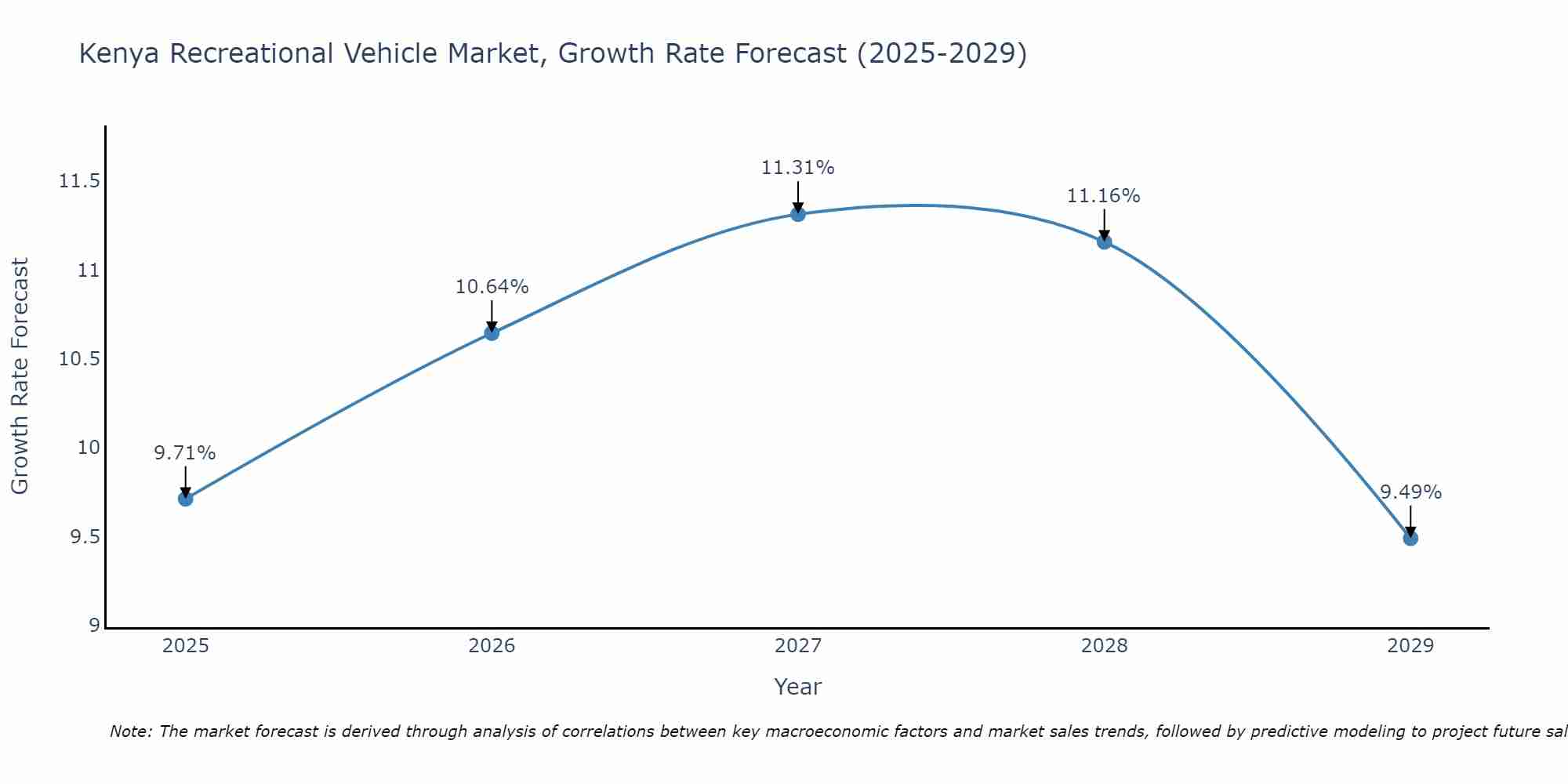
The Kenya Recreational Vehicle Market is projected to witness mixed growth rate patterns during 2025 to 2029. Growth accelerates to 11.31% in 2027, following an initial rate of 9.71%, before easing to 9.49% at the end of the period.
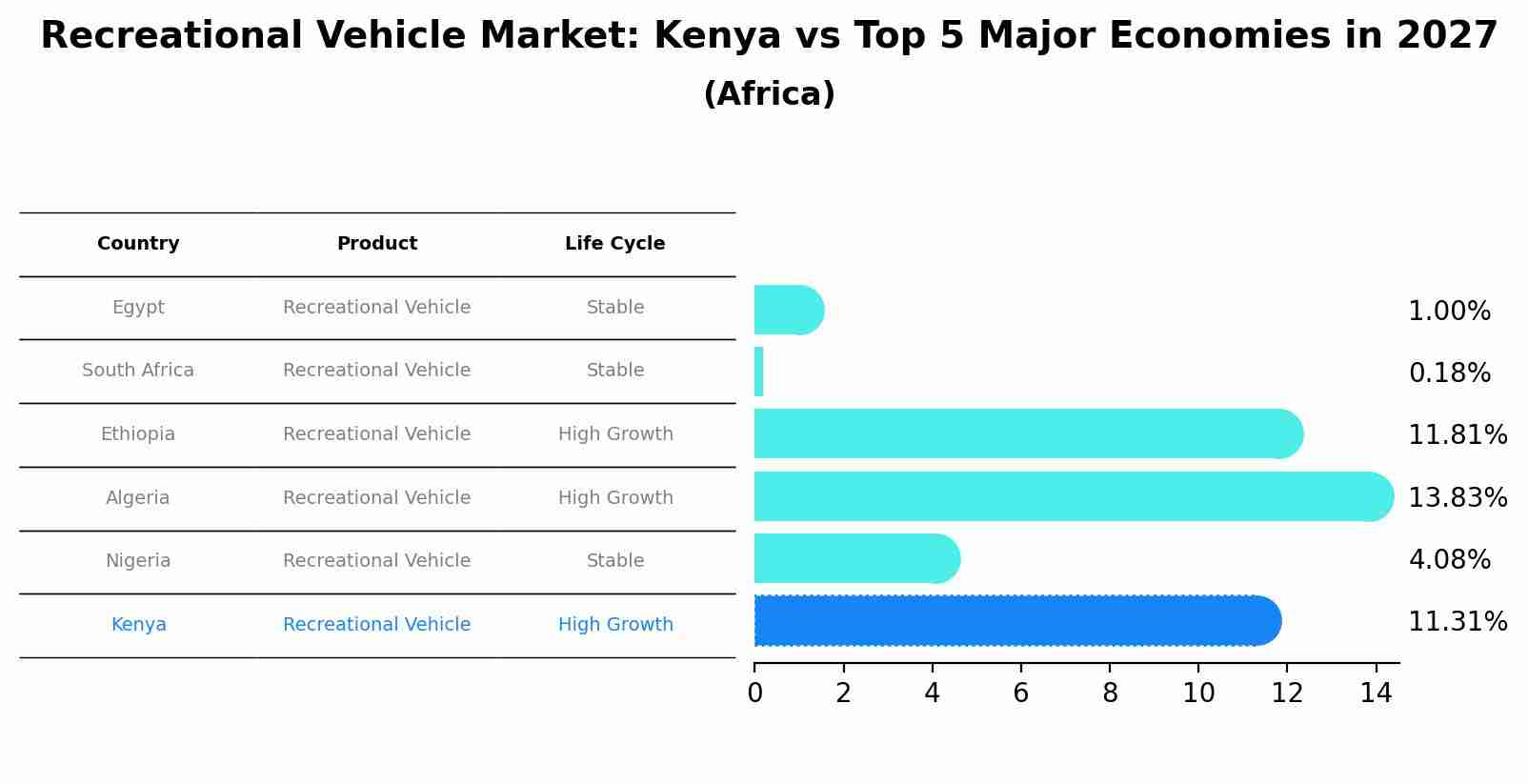
Recreational Vehicle Market: Kenya vs Top 5 Major Economies in 2027 (Africa)
In the Africa region, the Recreational Vehicle market in Kenya is projected to expand at a high growth rate of 11.31% by 2027. The largest economy is Egypt, followed by South Africa, Ethiopia, Algeria and Nigeria.
Kenya Recreational Vehicle Market Overview
The recreational vehicle (RV) market in Kenya is nascent, with increasing interest in outdoor tourism and leisure activities. RVs offer a flexible and cost-effective way to explore the country`s diverse landscapes and wildlife reserves. The market is driven by domestic tourism trends and growing disposable incomes among Kenya middle-class consumers. Key market challenges include infrastructure limitations and awareness among potential buyers regarding RV benefits and maintenance.
Drivers of the market
The Kenya recreational vehicle market is driven by the rise in domestic and international tourism, outdoor recreational activities, and the increasing popularity of camping and road trips. Factors such as disposable income levels and infrastructure development affect market dynamics.
Challenges of the market
The recreational vehicle market in Kenya encounters challenges such as high import duties, inadequate infrastructure for RV tourism, and limited consumer awareness about the benefits of recreational vehicles. These factors restrict market expansion and development of the RV tourism industry in the country.
Government Policy of the market
The Kenya government has formulated policies to regulate and promote the recreational vehicle market, recognizing its potential to boost tourism and economic development. Policies focus on infrastructure development, including the establishment of designated camping sites and facilities for recreational vehicles. Additionally, the government supports tourism initiatives that promote recreational vehicle travel as a sustainable and environmentally friendly tourism option. Moreover, the government collaborates with industry stakeholders to develop safety standards and regulations for recreational vehicles, ensuring the protection of consumers and promoting responsible use of these vehicles. These efforts are part of Kenya broader strategy to diversify its tourism offerings and attract international visitors interested in exploring the country`s natural landscapes and cultural heritage.
Key Highlights of the Report:
- Kenya Recreational Vehicle Market Outlook
- Market Size of Kenya Recreational Vehicle Market, 2019
- Forecast of Kenya Recreational Vehicle Market, 2026
- Historical Data and Forecast of Kenya Recreational Vehicle Revenues & Volume for the Period 2016 - 2026
- Kenya Recreational Vehicle Market Trend Evolution
- Kenya Recreational Vehicle Market Drivers and Challenges
- Kenya Recreational Vehicle Price Trends
- Kenya Recreational Vehicle Porter's Five Forces
- Kenya Recreational Vehicle Industry Life Cycle
- Historical Data and Forecast of Kenya Recreational Vehicle Market Revenues & Volume By Product Type for the Period 2016 - 2026
- Historical Data and Forecast of Kenya Recreational Vehicle Market Revenues & Volume By Fifth Wheel Campers for the Period 2016 - 2026
- Historical Data and Forecast of Kenya Recreational Vehicle Market Revenues & Volume By Folding Camper for the Period 2016 - 2026
- Historical Data and Forecast of Kenya Recreational Vehicle Market Revenues & Volume By Truck Campers for the Period 2016 - 2026
- Historical Data and Forecast of Kenya Recreational Vehicle Market Revenues & Volume By Travel Trailers for the Period 2016 - 2026
- Historical Data and Forecast of Kenya Recreational Vehicle Market Revenues & Volume By Class A Motorhomes for the Period 2016 - 2026
- Historical Data and Forecast of Kenya Recreational Vehicle Market Revenues & Volume By Class B Motorhomes for the Period 2016 - 2026
- Historical Data and Forecast of Kenya Recreational Vehicle Market Revenues & Volume By Class C Motorhomes for the Period 2016 - 2026
- Historical Data and Forecast of Kenya Recreational Vehicle Market Revenues & Volume By Applications for the Period 2016 - 2026
- Historical Data and Forecast of Kenya Recreational Vehicle Market Revenues & Volume By Leisure for the Period 2016 - 2026
- Historical Data and Forecast of Kenya Recreational Vehicle Market Revenues & Volume By Business for the Period 2016 - 2026
- Kenya Recreational Vehicle Import Export Trade Statistics
- Market Opportunity Assessment By Product Type
- Market Opportunity Assessment By Applications
- Kenya Recreational Vehicle Top Companies Market Share
- Kenya Recreational Vehicle Competitive Benchmarking By Technical and Operational Parameters
- Kenya Recreational Vehicle Company Profiles
- Kenya Recreational Vehicle Key Strategic Recommendations






































