Kenya Silk Market Size Growth Rate
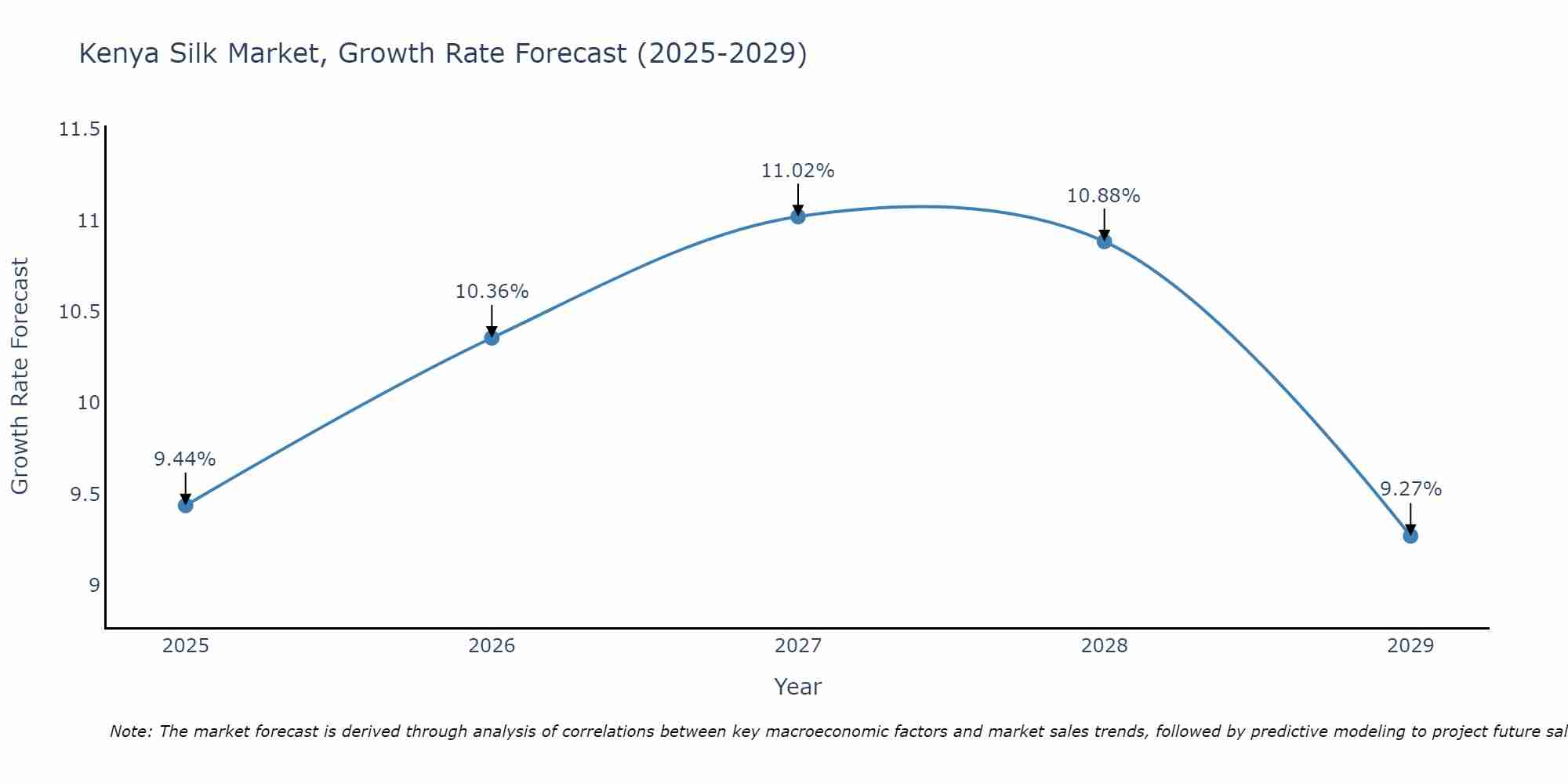
The Kenya Silk Market is projected to witness mixed growth rate patterns during 2025 to 2029. The growth rate begins at 9.44% in 2025, climbs to a high of 11.02% in 2027, and moderates to 9.27% by 2029.
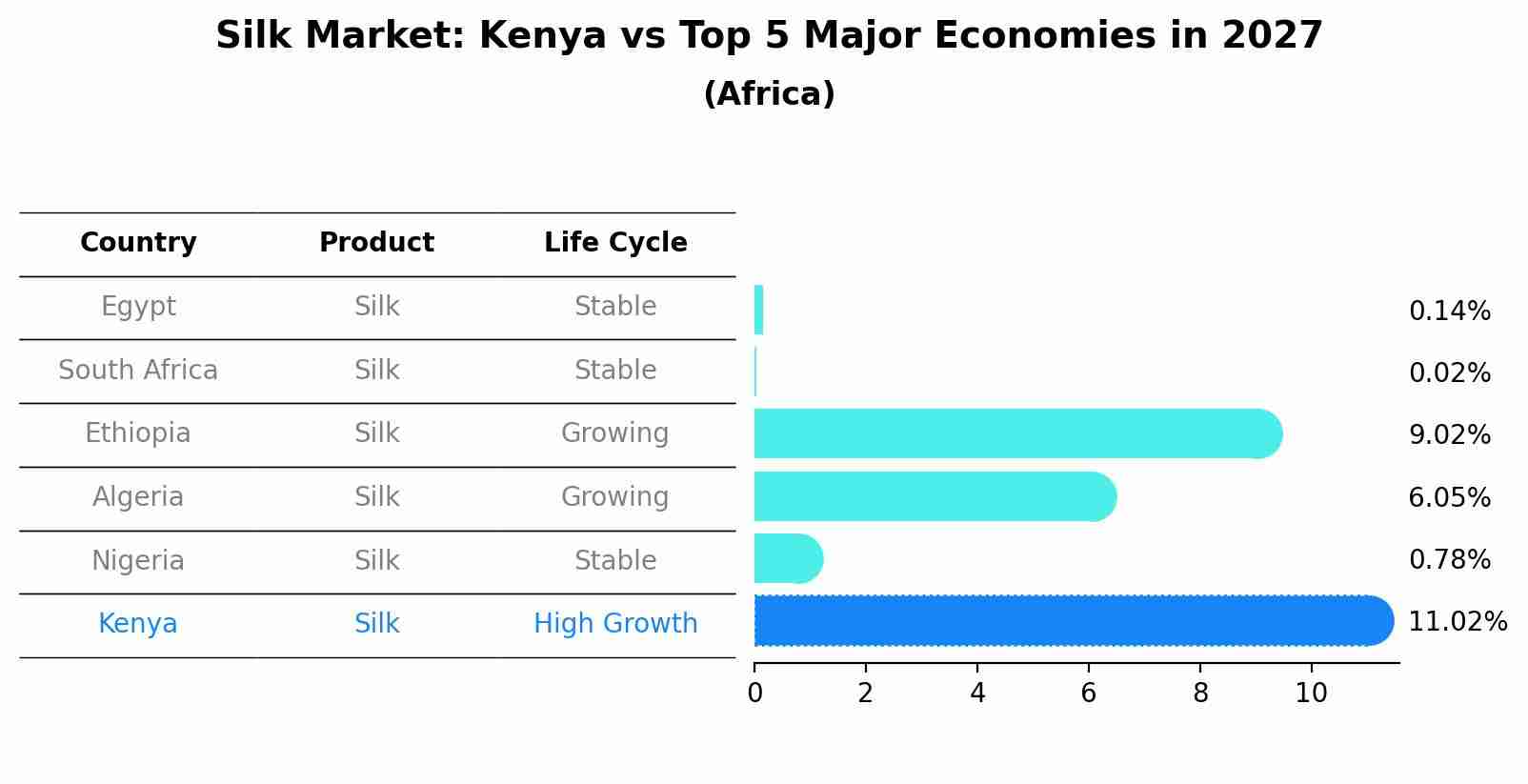
Silk Market: Kenya vs Top 5 Major Economies in 2027 (Africa)
Kenya's Silk market is anticipated to experience a high growth rate of 11.02% by 2027, reflecting trends observed in the largest economy Egypt, followed by South Africa, Ethiopia, Algeria and Nigeria.
Kenya Silk Market Overview
The Kenya Silk Market is a growing industry driven by increasing demand for silk products such as clothing, accessories, and home furnishings. The market is characterized by a mix of traditional handwoven silk fabrics and modern silk blends, catering to a diverse consumer base. Local artisans and designers play a key role in shaping the market with their unique designs and craftsmanship. Silk production in Kenya is also gaining traction due to the favorable climate for silkworm rearing and the government`s support for the sericulture industry. With a focus on sustainability and ethical practices, the Kenya Silk Market is poised for further growth and innovation, appealing to both domestic and international buyers seeking high-quality silk products.
Kenya Silk Market Trends
The Kenya Silk Market is experiencing a surge in demand for silk products due to a growing appreciation for sustainable and eco-friendly materials. Consumers are increasingly opting for silk clothing, bedding, and accessories for their luxurious feel and benefits such as moisture-wicking properties and hypoallergenic nature. Local designers and manufacturers are incorporating silk fabrics into their collections, catering to the rising demand for high-quality, ethically sourced products. Additionally, there is a trend towards supporting local artisans and promoting traditional silk weaving techniques, leading to a resurgence of interest in Kenyan silk products both domestically and internationally. Overall, the Kenya Silk Market is witnessing a shift towards sustainable and locally sourced silk products, driven by conscious consumer choices and a desire for premium quality goods.
Kenya Silk Market Challenges
In the Kenya silk market, some challenges faced include limited awareness and understanding of silk products among consumers, high production costs due to the specialized nature of silk farming and processing, inconsistent supply of silk due to dependency on natural factors like weather conditions affecting silk production, and competition from synthetic fabrics that are more affordable and easily accessible. Additionally, inadequate infrastructure for silk production and lack of government support in terms of funding and policies tailored to the silk industry also hinder the growth of the market. Overcoming these challenges would require targeted marketing efforts to educate consumers, investment in research and development for cost-effective production methods, and collaboration between stakeholders to improve the overall silk industry ecosystem in Kenya.
Kenya Silk Market Investment Opportunities
The Kenya Silk Market presents several investment opportunities for both domestic and international investors. With a growing demand for high-quality silk products globally, investing in silk production in Kenya can be lucrative. This could involve setting up silk farms for sericulture, investing in silk processing facilities, or partnering with local silk farmers to improve production techniques. Additionally, there is potential to tap into the growing eco-friendly and sustainable fashion trends by investing in Kenyan silk textiles and garments. Furthermore, the government of Kenya has been actively promoting the silk industry through various incentives and support programs, making it an attractive market for investors looking to capitalize on the increasing demand for silk products.
Kenya Silk Market Government Policy
The Kenyan government has implemented various policies to support the silk market in the country. These include the establishment of the Kenya Sericulture Research Center to promote silk farming and production, as well as the provision of training and technical assistance to silk farmers. Additionally, the government has put in place regulations to ensure the quality and standards of silk products, with the aim of boosting competitiveness in both domestic and international markets. Financial support in the form of subsidies and loans is also available to encourage investment in the silk industry. Overall, the government`s policies are geared towards fostering growth and sustainability in the Kenya silk market through capacity building, quality control, and financial assistance initiatives.
Kenya Silk Market Future Outlook
The future outlook for the Kenya Silk Market appears promising, driven by increasing consumer interest in sustainable and ethically sourced products. With a growing awareness of the environmental impact of traditional silk production methods, there is a shift towards demand for eco-friendly alternatives like peace silk, which is produced without harming the silkworms. Additionally, the rising popularity of silk as a versatile and luxurious fabric in the fashion industry is expected to further drive market growth. The government`s efforts to promote sericulture and support silk farmers through subsidies and training programs also bode well for the industry`s expansion. As a result, the Kenya Silk Market is projected to experience steady growth in the coming years, catering to both domestic and international markets.
Key Highlights of the Report:
- Kenya Silk Market Outlook
- Market Size of Kenya Silk Market, 2021
- Forecast of Kenya Silk Market, 2027
- Historical Data and Forecast of Kenya Silk Revenues & Volume for the Period 2018 - 2027
- Kenya Silk Market Trend Evolution
- Kenya Silk Market Drivers and Challenges
- Kenya Silk Price Trends
- Kenya Silk Porter's Five Forces
- Kenya Silk Industry Life Cycle
- Historical Data and Forecast of Kenya Silk Market Revenues & Volume By Production process for the Period 2018 - 2027
- Historical Data and Forecast of Kenya Silk Market Revenues & Volume By Cocoon Production for the Period 2018 - 2027
- Historical Data and Forecast of Kenya Silk Market Revenues & Volume By Reeling for the Period 2018 - 2027
- Historical Data and Forecast of Kenya Silk Market Revenues & Volume By Throwing for the Period 2018 - 2027
- Historical Data and Forecast of Kenya Silk Market Revenues & Volume By Weaving for the Period 2018 - 2027
- Historical Data and Forecast of Kenya Silk Market Revenues & Volume By Dyeing for the Period 2018 - 2027
- Historical Data and Forecast of Kenya Silk Market Revenues & Volume By Type for the Period 2018 - 2027
- Historical Data and Forecast of Kenya Silk Market Revenues & Volume By Mulberry Silk for the Period 2018 - 2027
- Historical Data and Forecast of Kenya Silk Market Revenues & Volume By Tussar Silk for the Period 2018 - 2027
- Historical Data and Forecast of Kenya Silk Market Revenues & Volume By Eri Silk for the Period 2018 - 2027
- Historical Data and Forecast of Kenya Silk Market Revenues & Volume By Spider Silk for the Period 2018 - 2027
- Historical Data and Forecast of Kenya Silk Market Revenues & Volume By Application for the Period 2018 - 2027
- Historical Data and Forecast of Kenya Silk Market Revenues & Volume By Textile for the Period 2018 - 2027
- Historical Data and Forecast of Kenya Silk Market Revenues & Volume By Cosmetics for the Period 2018 - 2027
- Historical Data and Forecast of Kenya Silk Market Revenues & Volume By Medicine for the Period 2018 - 2027
- Kenya Silk Import Export Trade Statistics
- Market Opportunity Assessment By Production process
- Market Opportunity Assessment By Type
- Market Opportunity Assessment By Application
- Kenya Silk Top Companies Market Share
- Kenya Silk Competitive Benchmarking By Technical and Operational Parameters
- Kenya Silk Company Profiles
- Kenya Silk Key Strategic Recommendations






































