Kenya Sports Apparel Market Summary
The kenya sports apparel market was estimated at USD 168 Million in 2025 and is projected to reach USD 233 Million by 2032, growing at a CAGR of 5.3% from 2026 to 2032.
Kenya Sports Apparel Market Year-wise Growth Rate and Key Drivers
This graph highlights how the Kenya Sports Apparel Market has steadily grown over the past five years, supported by major growth factors.
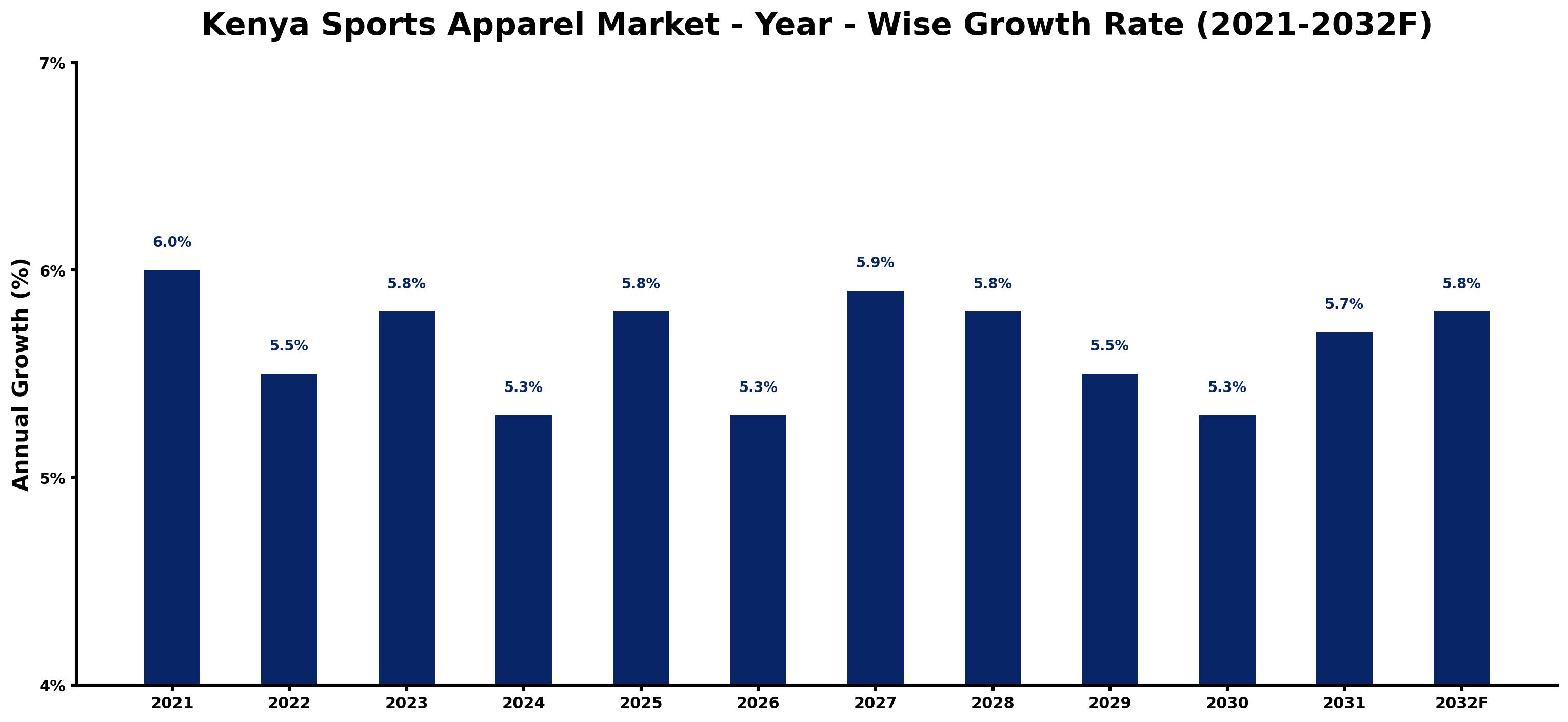
The table below presents the year wise growth rates along with the key drivers influencing the market
| Year | Growth Rate | Major Drivers |
| 2021 | 6.0% | Sports events resumed, triggering a noteworthy uptick in consumer purchasing patterns. |
| 2022 | 5.5% | Local manufacturing initiatives gained momentum, enhancing apparel availability and affordability. |
| 2023 | 5.8% | Youth interest in fitness expanded, fueling demand for stylish sportswear options. |
| 2024 | 5.3% | Influencers and athletes endorsed brands, significantly impacting consumer preferences and choices. |
| 2025 | 5.8% | E-commerce platforms emerged as crucial channels for reaching tech-savvy younger demographics. |
| 2026 | 5.3% | Health awareness campaigns highlighted the importance of active lifestyles, influencing apparel purchases. |
| 2027 | 5.9% | Emerging middle class displayed willingness to invest in quality sports apparel brands. |
| 2028 | 5.8% | Collaborations between international brands and local designers fostered unique market offerings. |
| 2029 | 5.5% | Corporate sponsorships of local sports clubs encouraged community involvement and apparel sales. |
| 2030 | 5.3% | Sustainable fashion trends prompted brands to innovate eco-friendly materials and production methods. |
| 2031 | 5.7% | Increased participation in marathons and fitness events created new opportunities for specialized gear. |
| 2032 | 5.8% | Technological advancements led to smart fabrics, enhancing performance and user experience. |
Note - Market size estimations and growth projections presented in this report are based on 6Wresearch's advanced forecasting approach, validated with industry datasets as of June 2026.
Kenya Sports Apparel Market Synopsis
The Kenya Sports Apparel Market is projected to reach 5.3% and witness significant growth during the forecast period (2026-2032). The market, which was valued at USD 311 million in 2020, is anticipated to grow at a compound annual growth rate (CAGR) of 11.2%, driven primarily by enhanced health awareness and an increasing focus on fitness activities among the population. This growth trajectory is expected to be further supported by rising disposable incomes and a favorable outlook towards sportswear fashion trends.
Kenya Sports Apparel Market Growth Drivers
Several factors are fostering growth within the Kenya Sports Apparel Market. Firstly, the increasing health consciousness among Kenyans is motivating a shift toward more active lifestyles, consequently boosting demand for sports apparel. Secondly, as the country's middle class expands, consumers are likely to allocate more of their disposable income towards quality sportswear. Thirdly, the evolving fashion landscape, where sportswear is increasingly accepted in casual settings, has augmented the appeal of athletic apparel.
Additionally, the rise of social media and influencer culture has demonstrated the advantages of sporting fashionable athletic gear, drawing more individuals into purchasing these products. Furthermore, technological advancements in fabric development, such as moisture-wicking and breathable materials, have empowered manufacturers to produce high-end clothing that is both functional and affordable, enhancing market viability.
Kenya Sports Apparel Market Trends and Opportunities
The Kenya Sports Apparel Market is characterized by a dynamic landscape shaping both current trends and future opportunities. Notably, the integration of sustainability into apparel production is becoming increasingly important, with consumers favoring brands that prioritize eco-friendly materials and ethical manufacturing practices. This trend aligns with the global movement towards environmentally conscious consumerism.
In addition, the rise in e-commerce and online retail platforms is enabling easier access to a variety of sports apparel, thus broadening consumer choices. The shift towards digitization has allowed brands to reach niche markets that were previously untapped. Moreover, the popularity of athleisure wear is surging, as it merges comfort with style, catering to both fitness enthusiasts and casual wear consumers.
Furthermore, local manufacturing initiatives are gaining traction, potentially reducing dependency on imported goods. This could foster economic growth and job creation in the region, enhancing the overall sports apparel value chain.
Kenya Sports Apparel Market Challenges and Restraints
Despite the promising growth outlook for the Kenya Sports Apparel Market, several challenges may impede its progress. One of the primary concerns is the competition from international brands, which often possess greater resources for marketing and distribution. These brands can create a significant barrier for local manufacturers aiming to establish their presence.
Moreover, economic fluctuations and inflation can adversely affect consumer purchasing power, leading to potential declines in sales. The reliance on imported materials can also pose a risk due to currency fluctuations and trade policies, potentially increasing production costs for local manufacturers.
Additionally, there exists a lack of awareness regarding the benefits of high-quality sportswear among certain segments of the population, which could limit market penetration. Finally, the informal retail sector remains a dominant channel for distribution, which may not always provide the necessary quality assurance consumers expect from branded sports apparel.
Kenya Sports Apparel Market Government Investment and Initiatives
The Government of Kenya has been actively involved in promoting the athletic sector, which in turn influences the Kenya Sports Apparel Market. Initiatives aimed at improving urban infrastructure and enhancing public spaces for sports activities are expected to encourage greater public participation in fitness and sports.
Moreover, government investment in local manufacturing capabilities can help reduce reliance on imports and stimulate job creation. Policies supporting small and medium-sized enterprises (SMEs) in the sportswear sector are crucial for nurturing local talent and innovation, thereby diversifying the apparel market.
The government has also engaged in partnerships with various stakeholders to promote sporting events, which not only enhances visibility for sports apparel but also drives a positive perception of fitness within society. Additionally, the Ministry of Sports has initiated programs aimed at encouraging youth participation in sports, indirectly boosting demand for sports apparel.
Kenya Sports Apparel Market Latest Developments (May 2025 - June 2026)
Between May 2025 and June 2026, the Kenya Sports Apparel Market has seen notable advancements that reflect ongoing trends within the industry. Manufacturers have been increasingly focusing on sustainability, with many brands committing to incorporating recycled materials into their product lines. This movement has resonated well with environmentally-conscious consumers and aligns with global practices in apparel production.
In alignment with technological progression, innovations in smart fabrics have gained traction, allowing for improved functionality in sportswear. Additionally, marketing efforts have expanded towards digital platforms, with brands leveraging social media to connect with a broader audience and promote upcoming collections.
Moreover, local trade fairs and exhibitions have provided platforms for emerging designers and manufacturers to showcase their products, enhancing community engagement and fostering local talent. Collaborations between local artists and sportswear brands have also increased, creating unique offerings that appeal to the youthful demographic.
Kenya Sports Apparel Market - Key Attractiveness of the Report
- 10 Years of Market Numbers
- Historical Data Starting from 2022 to 2025
- Base Year: 2025
- Forecast Data until 2032
- Key Performance Indicators Impacting the Market
- Major Upcoming Developments and Projects
Key Highlights of the Report:
- Kenya Sports Apparel Market Outlook
- Market Size of Kenya Sports Apparel Market, 2025
- Forecast of Kenya Sports Apparel Market, 2032F
- Historical Data and Forecast of Kenya Sports Apparel Revenues & Volume for the Period 2022-2032F
- Kenya Sports Apparel Market Trend Evolution
- Kenya Sports Apparel Market Drivers and Challenges
- Kenya Sports Apparel Price Trends
- Kenya Sports Apparel Porter's Five Forces
- Kenya Sports Apparel Industry Life Cycle
- Historical Data and Forecast of Kenya Sports Apparel Market Revenues & Volume By End-users for the Period 2022-2032F
- Historical Data and Forecast of Kenya Sports Apparel Market Revenues & Volume By Children for the Period 2022-2032F
- Historical Data and Forecast of Kenya Sports Apparel Market Revenues & Volume By Men for the Period 2022-2032F
- Historical Data and Forecast of Kenya Sports Apparel Market Revenues & Volume By Women for the Period 2022-2032F
- Historical Data and Forecast of Kenya Sports Apparel Market Revenues & Volume By Distribution Channel for the Period 2022-2032F
- Historical Data and Forecast of Kenya Sports Apparel Market Revenues & Volume By E-commerce for the Period 2022-2032F
- Historical Data and Forecast of Kenya Sports Apparel Market Revenues & Volume By Supermarket/Hypermarket for the Period 2022-2032F
- Historical Data and Forecast of Kenya Sports Apparel Market Revenues & Volume By Brand Outlets for the Period 2022-2032F
- Historical Data and Forecast of Kenya Sports Apparel Market Revenues & Volume By Discount Stores for the Period 2022-2032F
- Kenya Sports Apparel Import Export Trade Statistics
- Market Opportunity Assessment By End-users
- Market Opportunity Assessment By Distribution Channel
- Kenya Sports Apparel Top Companies Market Share
- Kenya Sports Apparel Competitive Benchmarking By Technical and Operational Parameters
- Kenya Sports Apparel Company Profiles
- Kenya Sports Apparel Key Strategic Recommendations






































