Kenya Textile Machinery Market Growth Rate Analysis (2025 - 2031)
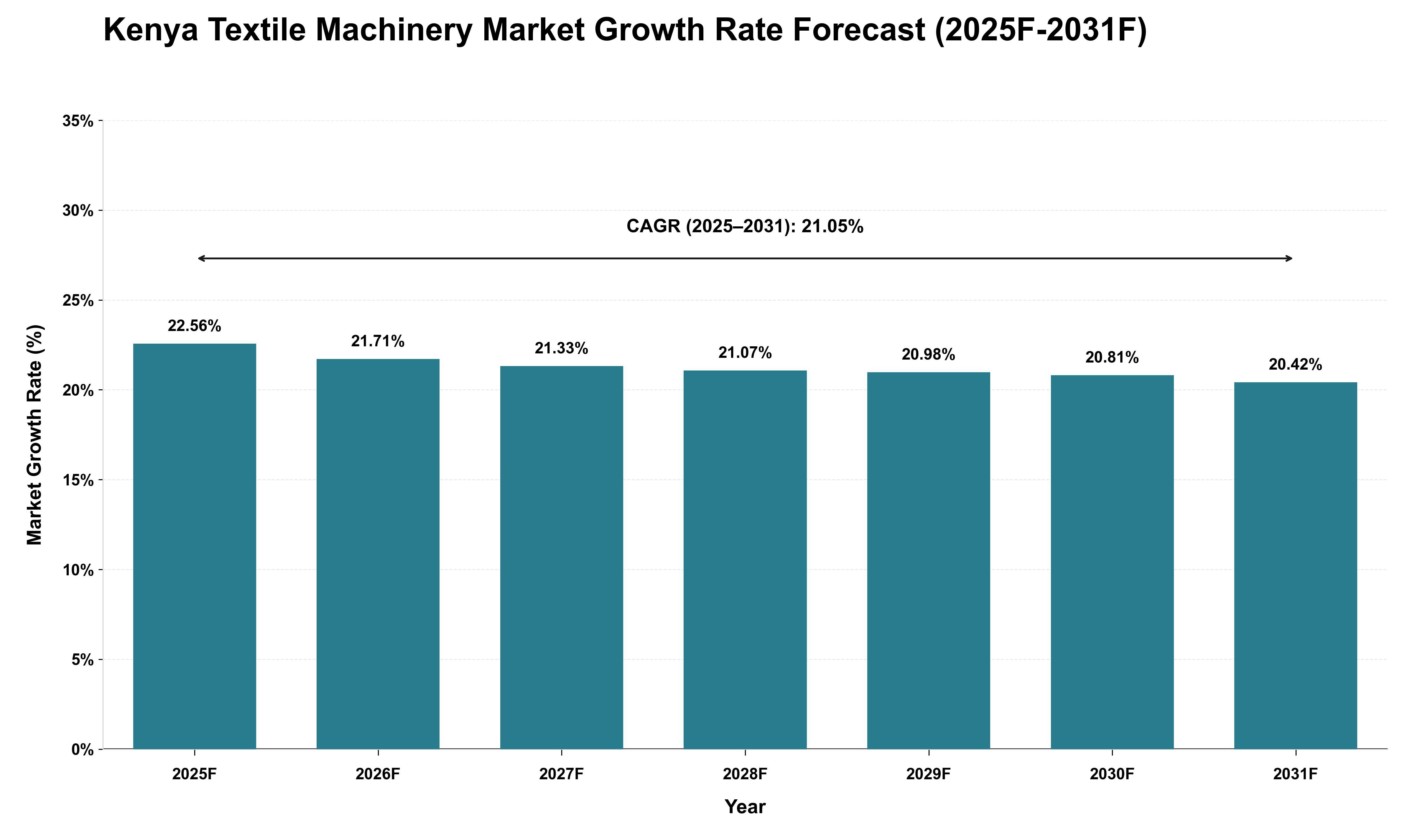
The Kenya textile machinery market will experience robust growth driven by increasing demand for efficient production technologies and a rising emphasis on local manufacturing capabilities. With a projected CAGR of 21.05% from 2025 to 2031, the annual growth rates will reflect a consistent decline, indicating a potential stabilization in import volumes as domestic production ramps up. The initial surge of 22.56% in 2025 will likely be fueled by heightened investments in textile infrastructure and favorable trade policies aimed at enhancing export competitiveness. As the market evolves, import dependencies may shift, with local manufacturers increasingly sourcing components domestically or from regional partners to mitigate supply chain vulnerabilities. This transition will be critical as global textile trends favor sustainability and innovation, positioning Kenya as an emerging hub for textile machinery within East Africa's broader economic landscape.
Key Highlights of the Report:
- Kenya Textile Machinery Market Outlook
- Market Size of Kenya Textile Machinery Market,2024
- Forecast of Kenya Textile Machinery Market, 2031
- Historical Data and Forecast of Kenya Textile Machinery Revenues & Volume for the Period 2021-2031
- Kenya Textile Machinery Market Trend Evolution
- Kenya Textile Machinery Market Drivers and Challenges
- Kenya Textile Machinery Price Trends
- Kenya Textile Machinery Porter's Five Forces
- Kenya Textile Machinery Industry Life Cycle
- Historical Data and Forecast of Kenya Textile Machinery Market Revenues & Volume By Machine Type for the Period 2021-2031
- Historical Data and Forecast of Kenya Textile Machinery Market Revenues & Volume By Spinning Machines for the Period 2021-2031
- Historical Data and Forecast of Kenya Textile Machinery Market Revenues & Volume By Weaving Machines for the Period 2021-2031
- Historical Data and Forecast of Kenya Textile Machinery Market Revenues & Volume By Dyeing Machines for the Period 2021-2031
- Historical Data and Forecast of Kenya Textile Machinery Market Revenues & Volume By Application for the Period 2021-2031
- Historical Data and Forecast of Kenya Textile Machinery Market Revenues & Volume By Apparel Manufacturing for the Period 2021-2031
- Historical Data and Forecast of Kenya Textile Machinery Market Revenues & Volume By Home Textiles for the Period 2021-2031
- Historical Data and Forecast of Kenya Textile Machinery Market Revenues & Volume By Industrial Textiles for the Period 2021-2031
- Historical Data and Forecast of Kenya Textile Machinery Market Revenues & Volume By Fabric Type for the Period 2021-2031
- Historical Data and Forecast of Kenya Textile Machinery Market Revenues & Volume By Cotton for the Period 2021-2031
- Historical Data and Forecast of Kenya Textile Machinery Market Revenues & Volume By Silk for the Period 2021-2031
- Historical Data and Forecast of Kenya Textile Machinery Market Revenues & Volume By Synthetic Fibers for the Period 2021-2031
- Historical Data and Forecast of Kenya Textile Machinery Market Revenues & Volume By Technology for the Period 2021-2031
- Historical Data and Forecast of Kenya Textile Machinery Market Revenues & Volume By Conventional for the Period 2021-2031
- Historical Data and Forecast of Kenya Textile Machinery Market Revenues & Volume By Digital for the Period 2021-2031
- Historical Data and Forecast of Kenya Textile Machinery Market Revenues & Volume By EcoFriendly for the Period 2021-2031
- Historical Data and Forecast of Kenya Textile Machinery Market Revenues & Volume By Automation Level for the Period 2021-2031
- Historical Data and Forecast of Kenya Textile Machinery Market Revenues & Volume By Manual for the Period 2021-2031
- Historical Data and Forecast of Kenya Textile Machinery Market Revenues & Volume By SemiAutomated for the Period 2021-2031
- Historical Data and Forecast of Kenya Textile Machinery Market Revenues & Volume By Fully Automated for the Period 2021-2031
- Kenya Textile Machinery Import Export Trade Statistics
- Market Opportunity Assessment By Machine Type
- Market Opportunity Assessment By Application
- Market Opportunity Assessment By Fabric Type
- Market Opportunity Assessment By Technology
- Market Opportunity Assessment By Automation Level
- Kenya Textile Machinery Top Companies Market Share
- Kenya Textile Machinery Competitive Benchmarking By Technical and Operational Parameters
- Kenya Textile Machinery Company Profiles
- Kenya Textile Machinery Key Strategic Recommendations






































