Kenya Window Blinds Market Growth Rate Analysis (2025 - 2031)
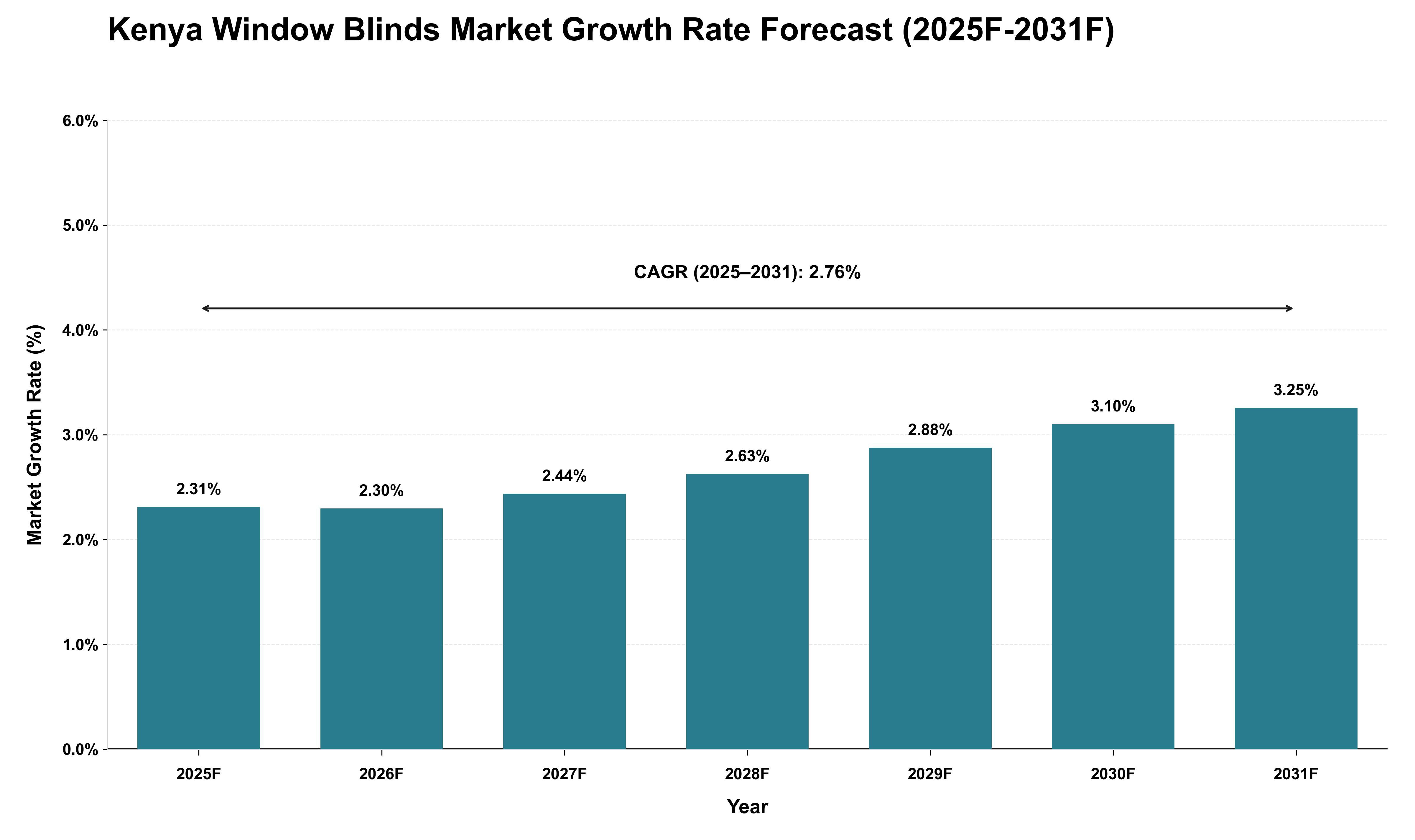
The Kenya window blinds market will experience a gradual increase in growth rates, reflecting broader macroeconomic dynamics and raw material availability. As the forecast period progresses, the anticipated CAGR of 2.76% will be underpinned by fluctuations in the pricing of key materials such as PVC and textiles, which are essential for production. Import dependencies will play a crucial role, as Kenya's reliance on foreign suppliers for these raw materials may lead to price volatility influenced by global supply chain disruptions or trade policies. The growth trajectory from 2.31% in 2025 to 3.25% in 2031 suggests an upward trend driven by rising urbanization and construction activities, which will likely enhance demand for window treatments. Additionally, cyclical trends in consumer spending on home improvement will further support this market expansion as disposable incomes rise and housing projects increase during this period.
Key Highlights of the Report:
- Kenya Window Blinds Market Outlook
- Market Size of Kenya Window Blinds Market, 2024
- Forecast of Kenya Window Blinds Market, 2031
- Historical Data and Forecast of Kenya Window Blinds Revenues & Volume for the Period 2021- 2031
- Kenya Window Blinds Market Trend Evolution
- Kenya Window Blinds Market Drivers and Challenges
- Kenya Window Blinds Price Trends
- Kenya Window Blinds Porter's Five Forces
- Kenya Window Blinds Industry Life Cycle
- Historical Data and Forecast of Kenya Window Blinds Market Revenues & Volume By Product for the Period 2021- 2031
- Historical Data and Forecast of Kenya Window Blinds Market Revenues & Volume By Roller Blinds for the Period 2021- 2031
- Historical Data and Forecast of Kenya Window Blinds Market Revenues & Volume By Venetian Blinds for the Period 2021- 2031
- Historical Data and Forecast of Kenya Window Blinds Market Revenues & Volume By Vertical Blinds for the Period 2021- 2031
- Historical Data and Forecast of Kenya Window Blinds Market Revenues & Volume By Panel Blinds for the Period 2021- 2031
- Historical Data and Forecast of Kenya Window Blinds Market Revenues & Volume By Corded Blinds for the Period 2021- 2031
- Historical Data and Forecast of Kenya Window Blinds Market Revenues & Volume By Others for the Period 2021- 2031
- Historical Data and Forecast of Kenya Window Blinds Market Revenues & Volume By Material for the Period 2021- 2031
- Historical Data and Forecast of Kenya Window Blinds Market Revenues & Volume By Metal for the Period 2021- 2031
- Historical Data and Forecast of Kenya Window Blinds Market Revenues & Volume By Wood for the Period 2021- 2031
- Historical Data and Forecast of Kenya Window Blinds Market Revenues & Volume By Plastic for the Period 2021- 2031
- Historical Data and Forecast of Kenya Window Blinds Market Revenues & Volume By Others for the Period 2021- 2031
- Historical Data and Forecast of Kenya Window Blinds Market Revenues & Volume By Application for the Period 2021- 2031
- Historical Data and Forecast of Kenya Window Blinds Market Revenues & Volume By Automatic for the Period 2021- 2031
- Historical Data and Forecast of Kenya Window Blinds Market Revenues & Volume By Manual for the Period 2021- 2031
- Historical Data and Forecast of Kenya Window Blinds Market Revenues & Volume By Installation for the Period 2021- 2031
- Historical Data and Forecast of Kenya Window Blinds Market Revenues & Volume By New Construction for the Period 2021- 2031
- Historical Data and Forecast of Kenya Window Blinds Market Revenues & Volume By Retro-fit for the Period 2021- 2031
- Kenya Window Blinds Import Export Trade Statistics
- Market Opportunity Assessment By Product
- Market Opportunity Assessment By Material
- Market Opportunity Assessment By Application
- Market Opportunity Assessment By Installation
- Kenya Window Blinds Top Companies Market Share
- Kenya Window Blinds Competitive Benchmarking By Technical and Operational Parameters
- Kenya Window Blinds Company Profiles
- Kenya Window Blinds Key Strategic Recommendations






































