Kuwait Feminine Hygiene Market: Import Trend Analysis
In the Kuwait feminine hygiene market, the import trend exhibited a Compound Annual Growth Rate (CAGR) of 5.57% during 2020-2024. This growth indicates a steady import momentum and reflects a stable demand shift within the market, suggesting a positive trade performance during this period.
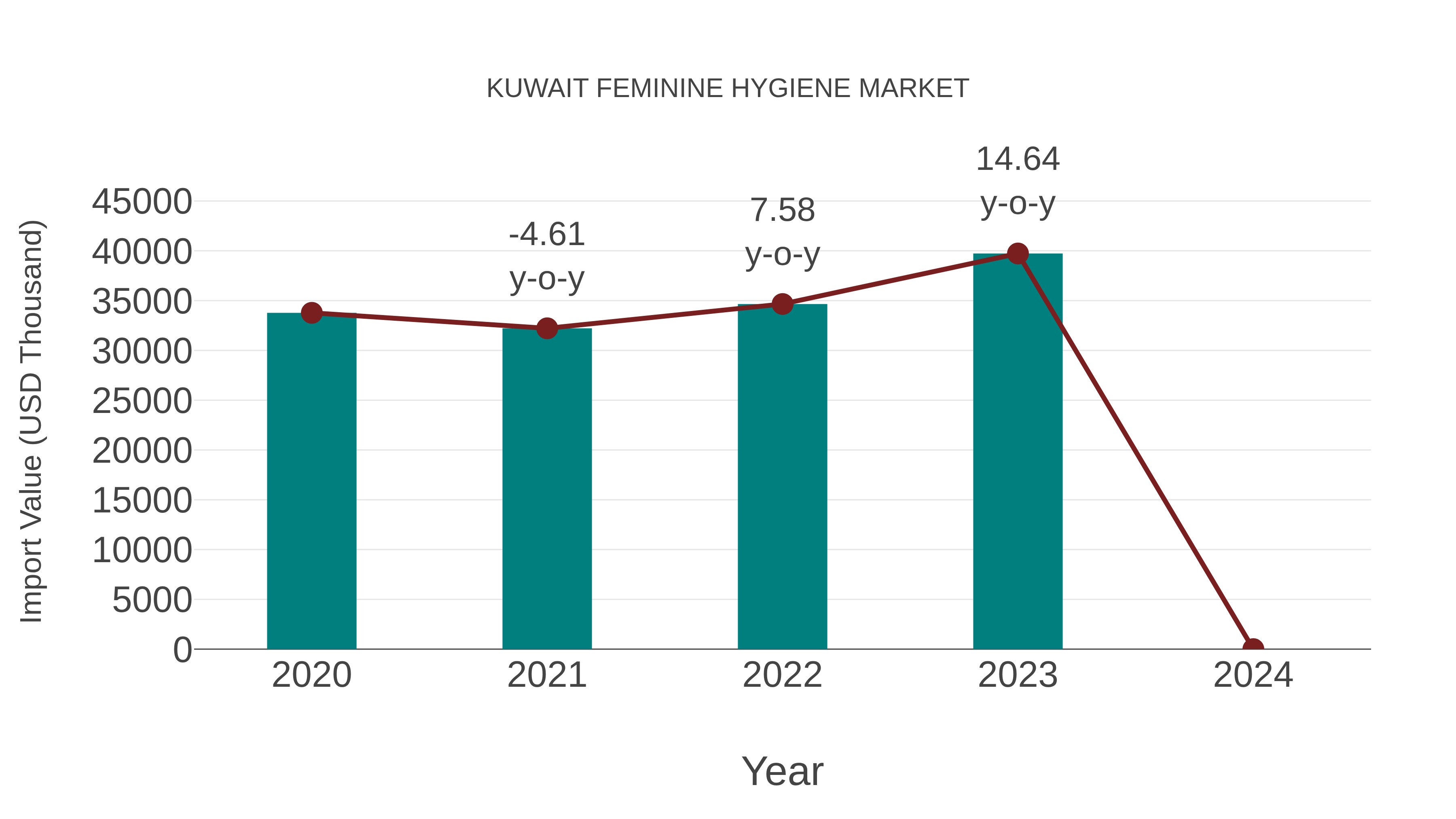
Kuwait Feminine Hygiene Market Synopsis
The Kuwait feminine hygiene market is expected to reach a value of USD 9.5 million by 2026, registering a CAGR of 7.4% during the forecast period (2020-2026). Increasing awareness about personal hygiene and increasing disposable income among women are driving the growth of this market in Kuwait. The rising usage of modern menstrual products like sanitary pads and tampons is further propelling the demand for these products in the country. Additionally, growing e-commerce platforms are providing an opportunity to reach out to more customers which has increased product availability and accessibility in remote areas as well.
However, high cost associated with branded products could hamper Kuwaits feminine hygiene market growth over the forecast period. Moreover, cultural taboos regarding menstruation are also hindering progress of this industry despite several initiatives taken by various government bodies aimed at creating awareness about menstrual health and promoting use of hygienic products among womenfolk in Kuwaiti society.
Key Highlights of the Report:
- Kuwait Feminine Hygiene Market Outlook
- Market Size of Kuwait Feminine Hygiene Market, 2019
- Forecast of Kuwait Feminine Hygiene Market, 2026
- Historical Data and Forecast of Kuwait Feminine Hygiene Revenues & Volume for the Period 2016 - 2026
- Kuwait Feminine Hygiene Market Trend Evolution
- Kuwait Feminine Hygiene Market Drivers and Challenges
- Kuwait Feminine Hygiene Price Trends
- Kuwait Feminine Hygiene Porter's Five Forces
- Kuwait Feminine Hygiene Industry Life Cycle
- Historical Data and Forecast of Kuwait Feminine Hygiene Market Revenues & Volume By Product Types for the Period 2016 - 2026
- Historical Data and Forecast of Kuwait Feminine Hygiene Market Revenues & Volume By Sanitary Napkins/Pads for the Period 2016 - 2026
- Historical Data and Forecast of Kuwait Feminine Hygiene Market Revenues & Volume By Tampons for the Period 2016 - 2026
- Historical Data and Forecast of Kuwait Feminine Hygiene Market Revenues & Volume By Menstrual Cups for the Period 2016 - 2026
- Historical Data and Forecast of Kuwait Feminine Hygiene Market Revenues & Volume By Others for the Period 2016 - 2026
- Historical Data and Forecast of Kuwait Feminine Hygiene Market Revenues & Volume By Distribution Channel for the Period 2016 - 2026
- Historical Data and Forecast of Kuwait Feminine Hygiene Market Revenues & Volume By Hypermarkets/Supermarket for the Period 2016 - 2026
- Historical Data and Forecast of Kuwait Feminine Hygiene Market Revenues & Volume By Convenience Stores for the Period 2016 - 2026
- Historical Data and Forecast of Kuwait Feminine Hygiene Market Revenues & Volume By Drug Stores/Pharmacies for the Period 2016 - 2026
- Historical Data and Forecast of Kuwait Feminine Hygiene Market Revenues & Volume By Others for the Period 2016 - 2026
- Kuwait Feminine Hygiene Import Export Trade Statistics
- Market Opportunity Assessment By Product Types
- Market Opportunity Assessment By Distribution Channel
- Kuwait Feminine Hygiene Top Companies Market Share
- Kuwait Feminine Hygiene Competitive Benchmarking By Technical and Operational Parameters
- Kuwait Feminine Hygiene Company Profiles
- Kuwait Feminine Hygiene Key Strategic Recommendations






































