Kuwait Food Blenders and Mixers Market: Import Trend Analysis
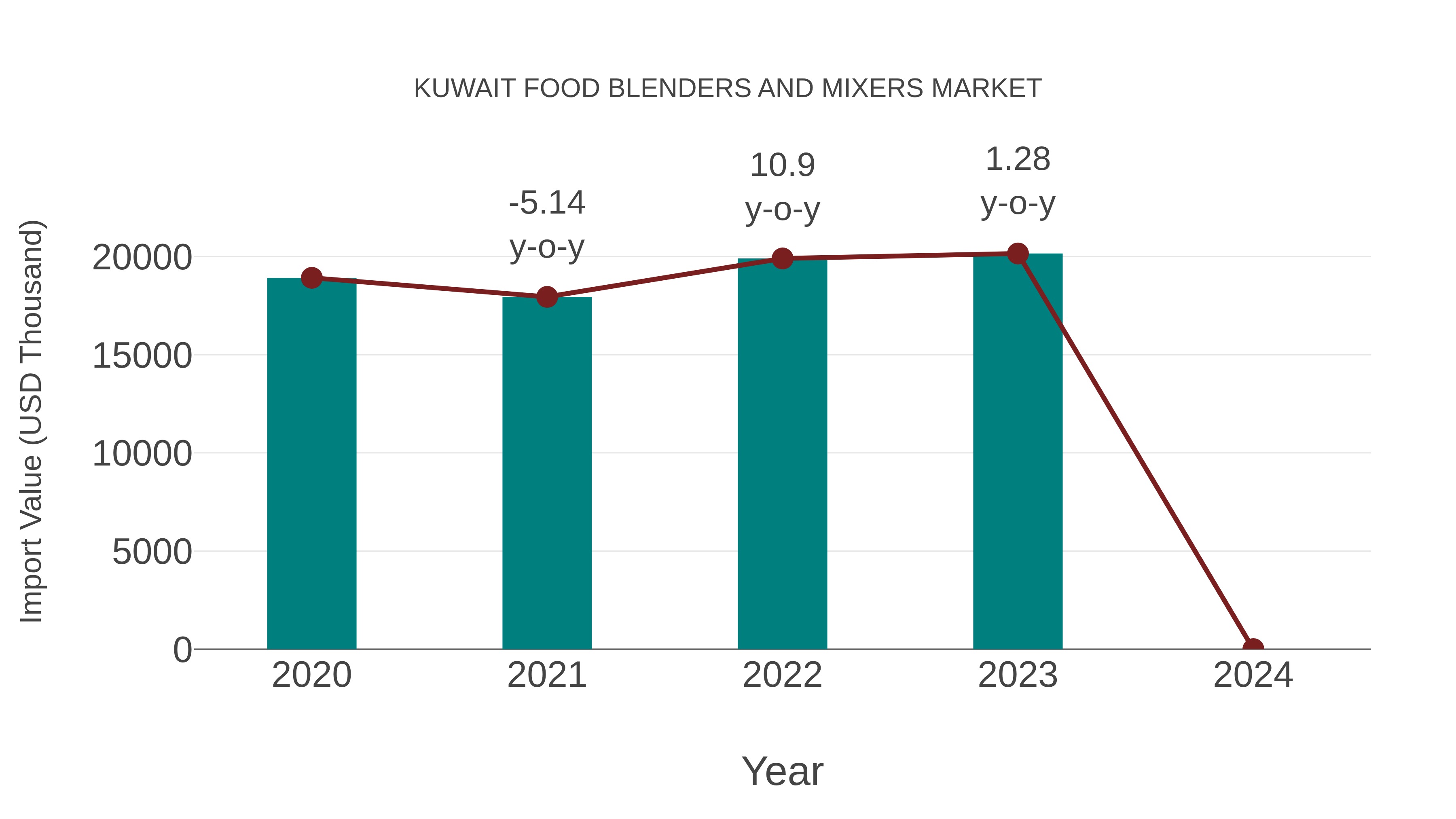
In the Kuwait food blenders and mixers market, the import trend from 2020 to 2024 showed a Compound Annual Growth Rate (CAGR) of 2.14%. This indicates a steady but modest import momentum during this period. The market stability and consistent demand shift for these products could have contributed to this growth rate.
Kuwait Food Blenders and Mixers Market Synopsis
The Kuwait Food Blenders and Mixers Market is experiencing steady growth driven by increasing consumer demand for convenient and efficient kitchen appliances. The market is characterized by a wide range of products including traditional blenders, hand mixers, stand mixers, and immersion blenders. Key trends in the market include the rising popularity of multi-functional blenders that can perform various tasks such as blending, chopping, and grinding. Manufacturers are also focusing on incorporating advanced features like digital controls, variable speed settings, and durable materials to enhance the performance and longevity of these appliances. With a growing emphasis on healthy eating and home cooking in Kuwait, the demand for food blenders and mixers is expected to continue to rise, presenting opportunities for both domestic and international players in the market.
Kuwait Food Blenders and Mixers Market Trends
The Kuwait Food Blenders and Mixers Market is experiencing a shift towards more advanced and efficient blending and mixing technologies to meet the growing demand for convenience and quality in food processing. Manufacturers are focusing on developing innovative products with features such as automation, energy efficiency, and customization options to cater to the diverse needs of food processing businesses. Additionally, there is a rising awareness among consumers about healthy eating habits, driving the demand for blenders and mixers that can handle a variety of ingredients, including fruits, vegetables, and nuts. Opportunities lie in the expansion of product offerings to include specialized blenders and mixers for specific food categories, such as smoothie makers and dough mixers, as well as in leveraging digital technologies for remote monitoring and control of blending and mixing processes.
Kuwait Food Blenders and Mixers Market Challenges
In the Kuwait Food Blenders and Mixers Market, some key challenges include intense competition among both domestic and international players, fluctuating raw material prices impacting production costs, and the need for continuous innovation to meet changing consumer preferences and demands. Additionally, ensuring compliance with strict regulations and quality standards set by authorities adds complexity to the market environment. Another challenge is the limited availability of skilled labor and technical expertise in the industry, which can hinder operational efficiency and product development efforts. To succeed in this market, companies need to invest in research and development, maintain cost-effective production processes, and establish strong distribution networks to reach a diverse consumer base effectively.
Kuwait Food Blenders and Mixers Market Investment Opportunities
The Kuwait Food Blenders and Mixers market is primarily driven by the growing demand for convenience and efficiency in food preparation among consumers. The increasing adoption of modern kitchen appliances, rising disposable income levels, and changing lifestyle preferences are further fueling the market growth. Additionally, the expanding foodservice industry, including restaurants, cafes, and hotels, is driving the demand for commercial-grade food blenders and mixers. Technological advancements in product design and functionality, such as multiple speed settings, various attachments, and compact sizes, are also contributing to market expansion. Moreover, the emphasis on healthy eating habits and the popularity of homemade meals are boosting the sales of blenders and mixers for preparing smoothies, soups, sauces, and other nutritious dishes in Kuwait.
Kuwait Food Blenders and Mixers Market Government Polices
The Kuwaiti government has implemented various policies to regulate the Food Blenders and Mixers Market. These policies include stringent quality control measures to ensure that products meet safety and hygiene standards. Additionally, import regulations are in place to monitor the quality of imported food blenders and mixers. The government also encourages local production by providing incentives and support to domestic manufacturers, aiming to boost self-sufficiency and reduce reliance on imports. Furthermore, there are policies in place to promote innovation and technology adoption in the industry, with an emphasis on sustainable practices. Overall, the government`s regulations aim to ensure consumer safety, promote local industry growth, and drive innovation in the Kuwait Food Blenders and Mixers Market.
Kuwait Food Blenders and Mixers Market Future Outlook
The Kuwait Food Blenders and Mixers Market is expected to witness steady growth in the coming years due to increasing consumer demand for convenient and efficient kitchen appliances. Factors such as rising disposable incomes, changing lifestyle preferences, and a growing interest in home cooking are driving the market expansion. Manufacturers are focusing on innovation and product development to meet the evolving needs of consumers, including features such as smart technology integration and energy efficiency. Additionally, the trend towards healthier eating habits and the popularity of baking and cooking shows are further boosting the demand for food blenders and mixers in Kuwait. Overall, the market is projected to experience a positive trajectory with opportunities for growth in both residential and commercial segments.
Key Highlights of the Report:
- Kuwait Food Blenders and Mixers Market Outlook
- Market Size of Kuwait Food Blenders and Mixers Market, 2025
- Forecast of Kuwait Food Blenders and Mixers Market, 2032
- Historical Data and Forecast of Kuwait Food Blenders and Mixers Revenues & Volume for the Period 2022 - 2032F
- Kuwait Food Blenders and Mixers Market Trend Evolution
- Kuwait Food Blenders and Mixers Market Drivers and Challenges
- Kuwait Food Blenders and Mixers Price Trends
- Kuwait Food Blenders and Mixers Porter's Five Forces
- Kuwait Food Blenders and Mixers Industry Life Cycle
- Historical Data and Forecast of Kuwait Food Blenders and Mixers Market Revenues & Volume By Type for the Period 2022 - 2032F
- Historical Data and Forecast of Kuwait Food Blenders and Mixers Market Revenues & Volume By High Shear for the Period 2022 - 2032F
- Historical Data and Forecast of Kuwait Food Blenders and Mixers Market Revenues & Volume By Shaft for the Period 2022 - 2032F
- Historical Data and Forecast of Kuwait Food Blenders and Mixers Market Revenues & Volume By Ribbon Mixer for the Period 2022 - 2032F
- Historical Data and Forecast of Kuwait Food Blenders and Mixers Market Revenues & Volume By Double Cone for the Period 2022 - 2032F
- Historical Data and Forecast of Kuwait Food Blenders and Mixers Market Revenues & Volume By Planetary Mixer for the Period 2022 - 2032F
- Historical Data and Forecast of Kuwait Food Blenders and Mixers Market Revenues & Volume By Screw Mixers & Blenders for the Period 2022 - 2032F
- Historical Data and Forecast of Kuwait Food Blenders and Mixers Market Revenues & Volume By Application for the Period 2022 - 2032F
- Historical Data and Forecast of Kuwait Food Blenders and Mixers Market Revenues & Volume By Bakery for the Period 2022 - 2032F
- Historical Data and Forecast of Kuwait Food Blenders and Mixers Market Revenues & Volume By Dairy for the Period 2022 - 2032F
- Historical Data and Forecast of Kuwait Food Blenders and Mixers Market Revenues & Volume By Beverages for the Period 2022 - 2032F
- Historical Data and Forecast of Kuwait Food Blenders and Mixers Market Revenues & Volume By Confectionery for the Period 2022 - 2032F
- Kuwait Food Blenders and Mixers Import Export Trade Statistics
- Market Opportunity Assessment By Type
- Market Opportunity Assessment By Application
- Kuwait Food Blenders and Mixers Top Companies Market Share
- Kuwait Food Blenders and Mixers Competitive Benchmarking By Technical and Operational Parameters
- Kuwait Food Blenders and Mixers Company Profiles
- Kuwait Food Blenders and Mixers Key Strategic Recommendations






































