Kyrgyz Republic Canned Tuna Market Size Growth Rate
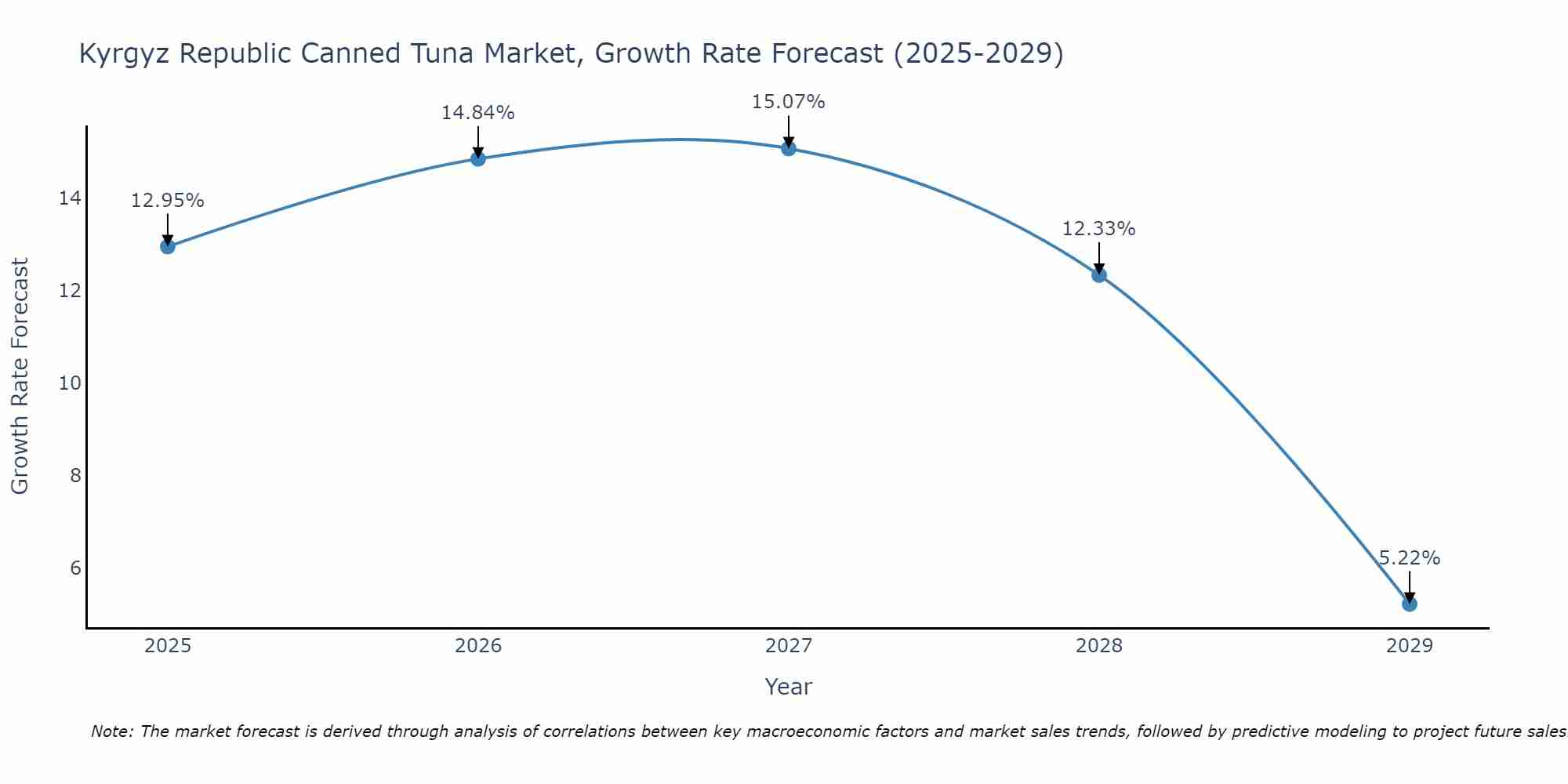
The Kyrgyz Republic Canned Tuna Market is projected to witness mixed growth rate patterns during 2025 to 2029. Starting at 12.95% in 2025, the market peaks at 15.07% in 2027, and settles at 5.22% by 2029.
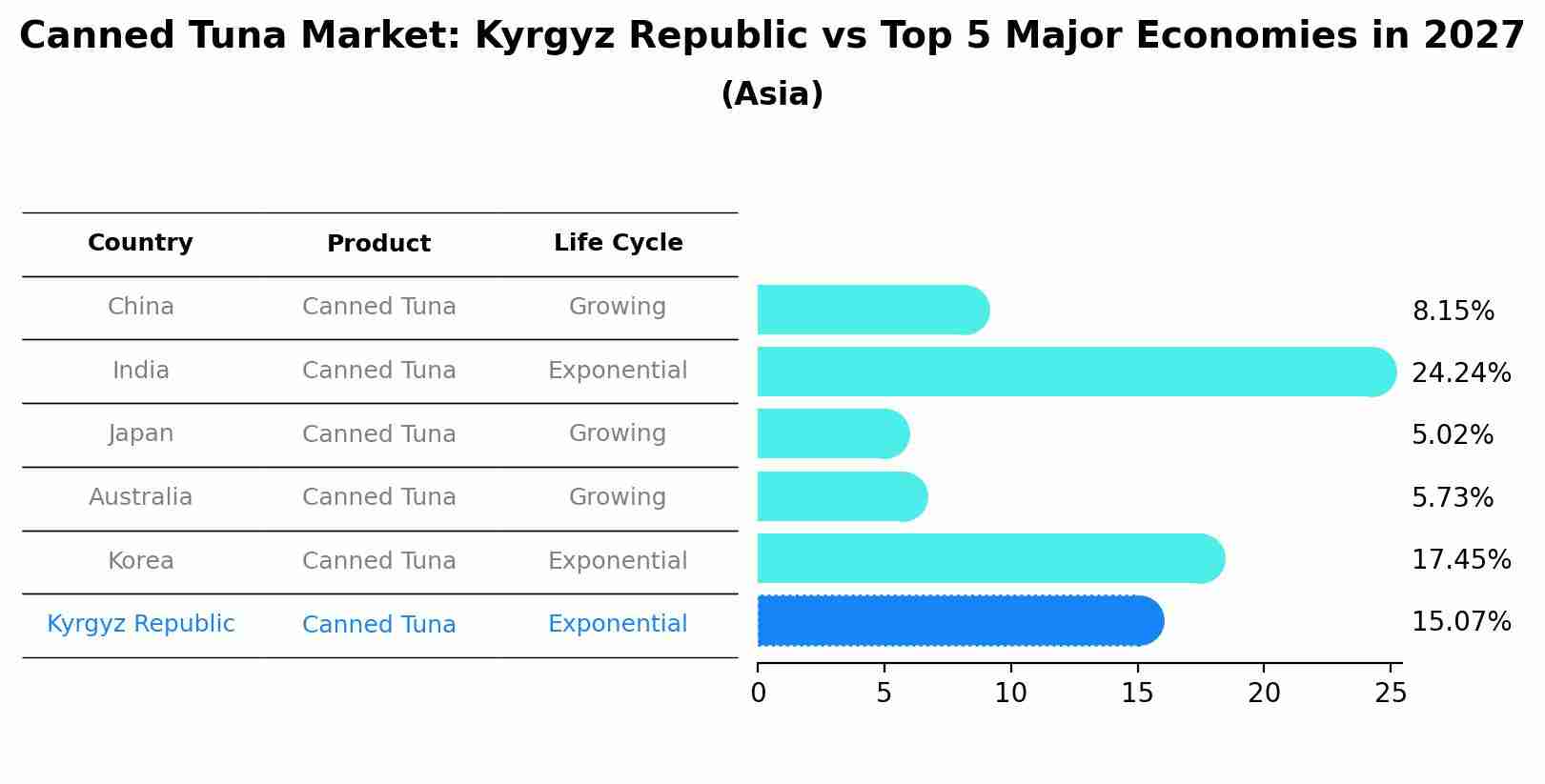
Canned Tuna Market: Kyrgyz Republic vs Top 5 Major Economies in 2027 (Asia)
In the Asia region, the Canned Tuna market in Kyrgyz Republic is projected to expand at a exponential growth rate of 15.07% by 2027. The largest economy is China, followed by India, Japan, Australia and South Korea.
Kyrgyzstan Canned Tuna Market Synopsis
The canned tuna market in Kyrgyzstan is a significant segment of the broader canned seafood market. Tuna is a popular choice among consumers for its nutritional benefits and versatility in meal preparation. The market is driven by imports, with a focus on maintaining high quality standards to satisfy health-conscious consumers.
Drivers of the market
The canned tuna market in Kyrgyzstan is driven by the increasing consumption of convenient and healthy food products. Tuna is a popular choice due to its high protein content and low-fat profile, making it a preferred option for health-conscious consumers. The convenience of canned tuna, which requires no cooking and has a long shelf life, appeals to busy individuals and families. Additionally, the growing awareness about the health benefits of omega-3 fatty acids, found in tuna, is boosting demand. The expansion of retail channels and the availability of various canned tuna products, including different flavors and packaging options, are also contributing to market growth.
Challenges of the market
The Kyrgyzstan Canned Tuna Market faces challenges related to sourcing sustainable tuna supplies and meeting international quality standards. Ensuring traceability and compliance with fishing regulations is essential for maintaining market access and consumer trust. Moreover, competition from other canned seafood products and fluctuating tuna prices on the global market pose additional challenges for local producers.
Government Policy of the market
In the Kyrgyzstan Canned Tuna Market, government policies focus on ensuring food safety, promoting sustainable fishing practices, and facilitating trade. Regulations governing tuna fishing quotas, processing standards, and product labeling contribute to the quality and integrity of Kyrgyz canned tuna products. Government support for the fishing industry, investment incentives, and trade agreements play a crucial role in enhancing the competitiveness of Kyrgyz canned tuna in domestic and international markets. Additionally, consumer education campaigns about the nutritional value of tuna and responsible consumption practices contribute to market growth and sustainability.
Key Highlights of the Report:
- Kyrgyzstan Canned Tuna Market Outlook
- Market Size of Kyrgyzstan Canned Tuna Market, 2024
- Forecast of Kyrgyzstan Canned Tuna Market, 2031
- Historical Data and Forecast of Kyrgyzstan Canned Tuna Revenues & Volume for the Period 2021-2031
- Kyrgyzstan Canned Tuna Market Trend Evolution
- Kyrgyzstan Canned Tuna Market Drivers and Challenges
- Kyrgyzstan Canned Tuna Price Trends
- Kyrgyzstan Canned Tuna Porter`s Five Forces
- Kyrgyzstan Canned Tuna Industry Life Cycle
- Historical Data and Forecast of Kyrgyzstan Canned Tuna Market Revenues & Volume By Product for the Period 2021-2031
- Historical Data and Forecast of Kyrgyzstan Canned Tuna Market Revenues & Volume By Skipjack for the Period 2021-2031
- Historical Data and Forecast of Kyrgyzstan Canned Tuna Market Revenues & Volume By Yellowfin for the Period 2021-2031
- Historical Data and Forecast of Kyrgyzstan Canned Tuna Market Revenues & Volume By Others for the Period 2021-2031
- Historical Data and Forecast of Kyrgyzstan Canned Tuna Market Revenues & Volume By Distribution Channel for the Period 2021-2031
- Historical Data and Forecast of Kyrgyzstan Canned Tuna Market Revenues & Volume By Hypermarket & Supermarket for the Period 2021-2031
- Historical Data and Forecast of Kyrgyzstan Canned Tuna Market Revenues & Volume By Specialty Stores for the Period 2021-2031
- Historical Data and Forecast of Kyrgyzstan Canned Tuna Market Revenues & Volume By Online for the Period 2021-2031
- Kyrgyzstan Canned Tuna Import Export Trade Statistics
- Market Opportunity Assessment By Product
- Market Opportunity Assessment By Distribution Channel
- Kyrgyzstan Canned Tuna Top Companies Market Share
- Kyrgyzstan Canned Tuna Competitive Benchmarking By Technical and Operational Parameters
- Kyrgyzstan Canned Tuna Company Profiles
- Kyrgyzstan Canned Tuna Key Strategic Recommendations






































