Belgium Canned Tuna Market Size (2020-2030)
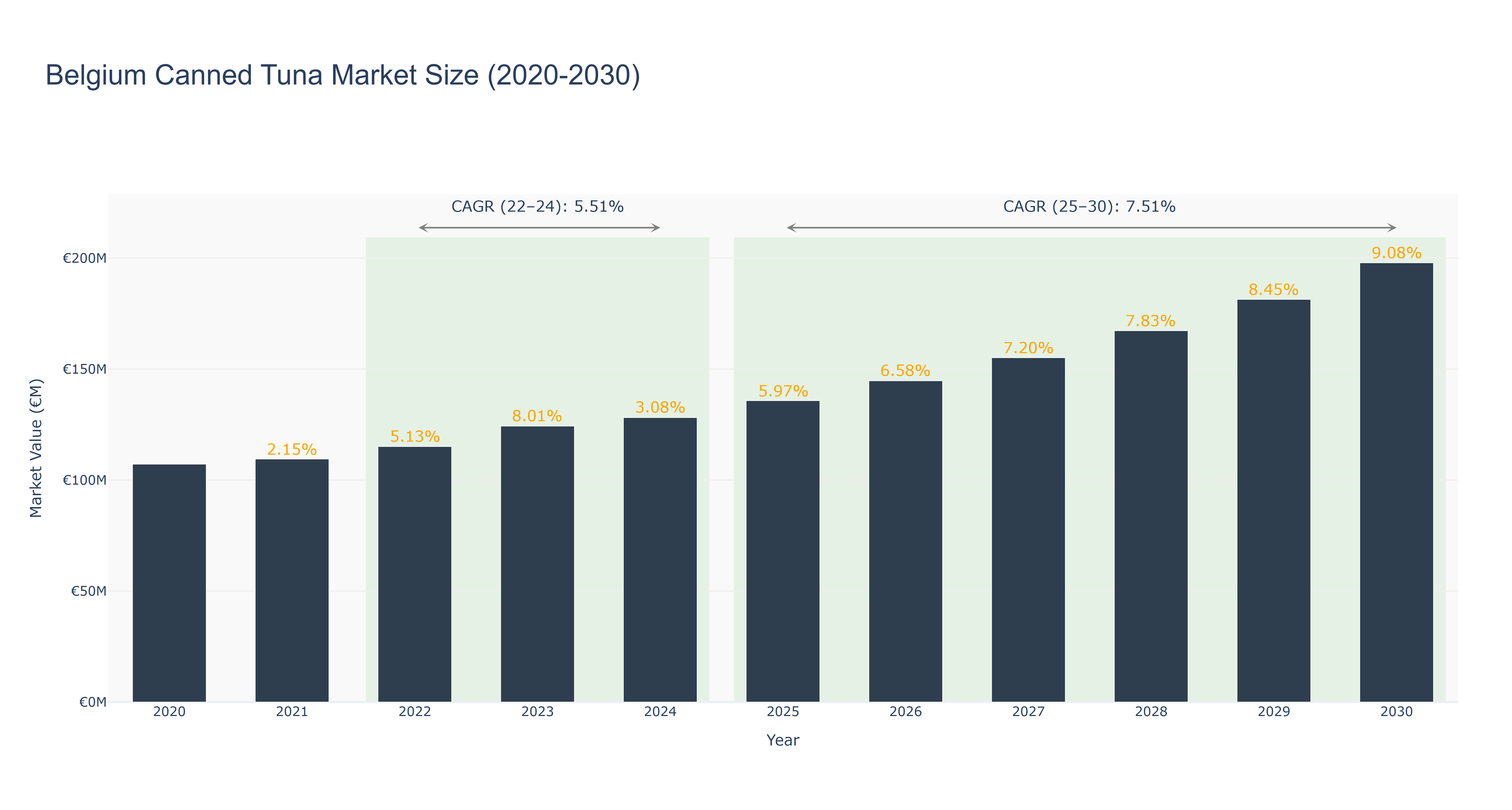
The Belgium Canned Tuna Market has demonstrated a robust growth trajectory, with the market size reaching its peak of €124.29 million in 2023, up from €115.08 million in 2022, reflecting a significant growth rate of 8.01% during this period. The actual CAGR from 2022 to 2024 is recorded at 5.51%, indicating stable growth amid rising consumer demand for convenient and healthy food options. Looking ahead, the forecasted market size is projected to increase substantially, reaching €197.88 million by 2030, with a CAGR of 7.51% from 2025-2030. This anticipated growth can be attributed to the ongoing trends of sustainability and a growing emphasis on marine conservation, driving innovations in eco-friendly packaging and sustainable sourcing practices. As consumers increasingly seek responsibly sourced products, the market is poised for dynamic expansion, supported by the strategic initiatives of key players within the industry.
Belgium Canned Tuna Market: Production & Trade Performance (2019-2025)
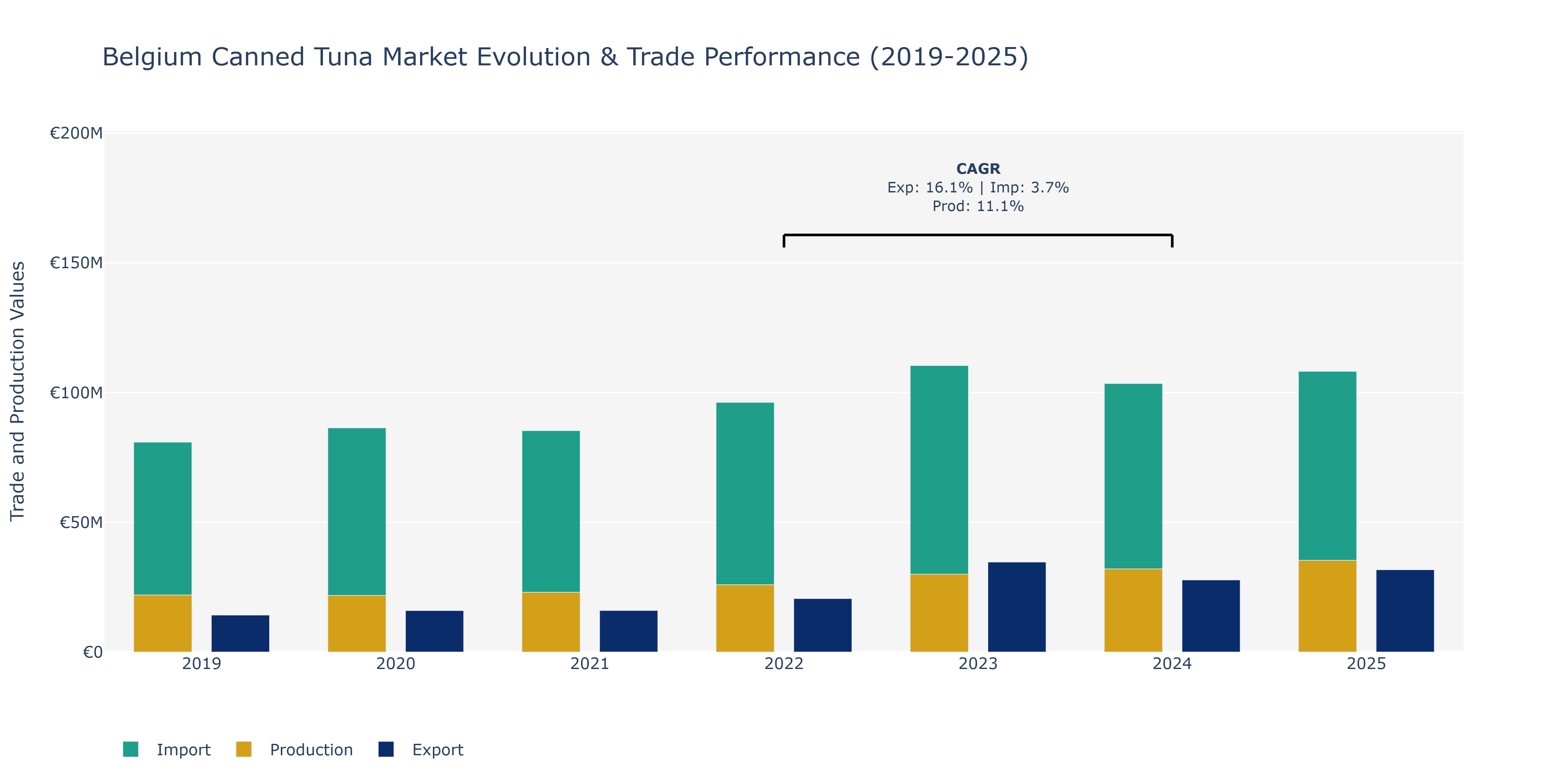
In the Belgium Canned Tuna Market, from 2019 to 2025, Exports exhibited an upward trajectory, reaching a peak of around €34.68 million in 2023 before slightly decreasing in 2024. This surge in Exports could be attributed to increased global demand for canned tuna products, reflecting changing consumer preferences towards convenient and healthy food options. Imports also showed a consistent growth pattern, with a notable increase from €80.88 million in 2019 to €108.18 million in 2025, indicative of the market's reliance on imported tuna products. On the other hand, Production levels steadily rose year on year, hitting a high of €35.35 million in 2025, driven by technological advancements in processing facilities and efforts to meet growing market demands. The CAGR figures further emphasize the market's positive momentum, especially in Exports and Production, highlighting the industry's potential for sustained growth in the coming years. Such trends align with the broader seafood industry's shift towards sustainable practices and the rising popularity of canned tuna as a convenient protein source among consumers.
Belgium Canned Tuna Market Overview
Canned tuna is a major segment of the canned seafood market in Belgium. It is widely used in salads, sandwiches, and pasta dishes. The market benefits from the product`s high protein content and versatility. Sustainability concerns are significant in this market, with many consumers seeking tuna sourced from certified sustainable fisheries. The industry is also responding to demands for transparency in sourcing and processing, as well as innovations in packaging to reduce environmental impact.
Drivers of the market
The demand for canned tuna in Belgium is fueled by its popularity as a healthy and convenient food option. Canned tuna is a versatile ingredient used in various dishes, from salads to sandwiches. The increasing awareness of the health benefits associated with tuna, such as its high protein and omega-3 content, drives market demand. Additionally, the long shelf life and ease of storage of canned tuna make it a staple in many households.
Challenges of the market
The Belgium canned tuna market is challenged by issues related to sustainability and market competition. Overfishing and strict regulations on tuna fishing quotas affect the availability and cost of raw materials, leading to supply chain instability and price volatility. Consumer demand for sustainably sourced tuna necessitates adherence to certification standards, which can increase operational costs. Additionally, the market faces intense competition from fresh and frozen tuna products, as well as other protein sources, driving the need for product innovation and differentiation. Health concerns about mercury levels in tuna and the use of preservatives in canned products also impact consumer confidence and demand.
Government Policy of the market
The canned tuna market in Belgium is influenced by both consumer demand for convenient protein sources and government regulations. Policies aimed at ensuring sustainable fishing practices and reducing overfishing are critical for the market. The government also supports initiatives to promote the health benefits of tuna consumption. Compliance with stringent EU food safety standards ensures that canned tuna products are safe and of high quality, thereby supporting market growth.
Key Highlights of the Report:
- Belgium Canned Tuna Market Outlook
- Market Size of Belgium Canned Tuna Market, 2024
- Forecast of Belgium Canned Tuna Market, 2031
- Historical Data and Forecast of Belgium Canned Tuna Revenues & Volume for the Period 2021-2031
- Belgium Canned Tuna Market Trend Evolution
- Belgium Canned Tuna Market Drivers and Challenges
- Belgium Canned Tuna Price Trends
- Belgium Canned Tuna Porter`s Five Forces
- Belgium Canned Tuna Industry Life Cycle
- Historical Data and Forecast of Belgium Canned Tuna Market Revenues & Volume By Product for the Period 2021-2031
- Historical Data and Forecast of Belgium Canned Tuna Market Revenues & Volume By Skipjack for the Period 2021-2031
- Historical Data and Forecast of Belgium Canned Tuna Market Revenues & Volume By Yellowfin for the Period 2021-2031
- Historical Data and Forecast of Belgium Canned Tuna Market Revenues & Volume By Others for the Period 2021-2031
- Historical Data and Forecast of Belgium Canned Tuna Market Revenues & Volume By Distribution Channel for the Period 2021-2031
- Historical Data and Forecast of Belgium Canned Tuna Market Revenues & Volume By Hypermarket & Supermarket for the Period 2021-2031
- Historical Data and Forecast of Belgium Canned Tuna Market Revenues & Volume By Specialty Stores for the Period 2021-2031
- Historical Data and Forecast of Belgium Canned Tuna Market Revenues & Volume By Online for the Period 2021-2031
- Belgium Canned Tuna Import Export Trade Statistics
- Market Opportunity Assessment By Product
- Market Opportunity Assessment By Distribution Channel
- Belgium Canned Tuna Top Companies Market Share
- Belgium Canned Tuna Competitive Benchmarking By Technical and Operational Parameters
- Belgium Canned Tuna Company Profiles
- Belgium Canned Tuna Key Strategic Recommendations






































