Latin America Pillow Market Size, Share & Growth Rate
The Latin America Pillow Market was estimated at USD 344 Million in 2025 and is projected to reach USD 468 Million by 2032, growing at a CAGR of 4.5% from 2026 to 2032. This growth trajectory is primarily driven by a surge in innovative pillow designs, increased brand recognition, and a shift towards customization among consumers. As awareness about the health benefits of specialized pillows grows, particularly in relation to neck and spine issues, the demand for pillows in the region is expected to rise significantly.
Latin America Pillow Market Year-wise Growth Rate and Key Drivers
This graph highlights how the Latin America Pillow Market has steadily grown over the years, supported by major growth factors.
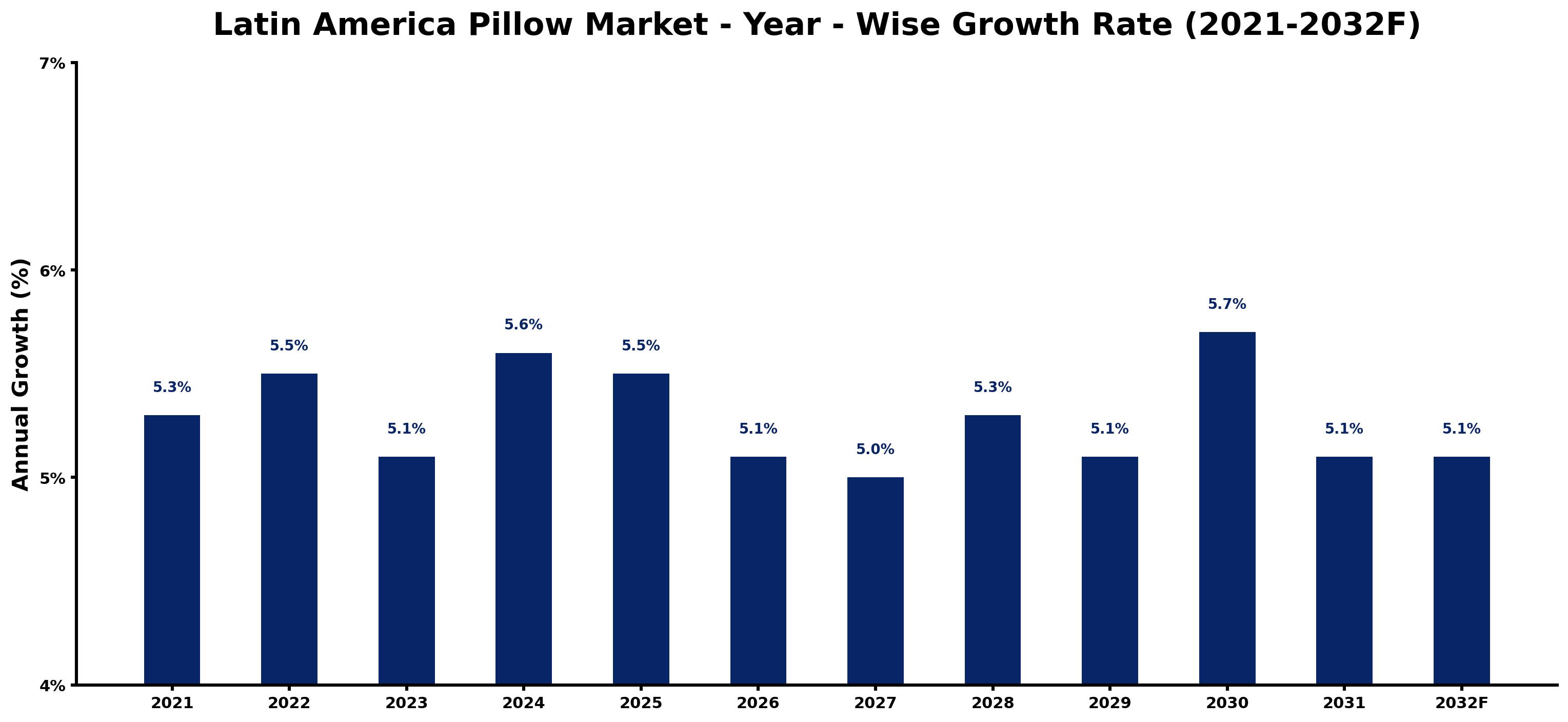
The table below presents the year‑wise growth rates along with the key drivers influencing the market
| Year | Growth Rate | Major Drivers |
| 2021 | 5.3% | Increasing adoption of advanced technologies |
| 2022 | 5.5% | Increasing smart city development projects |
| 2023 | 5.1% | Rising electricity demand across industries |
| 2024 | 5.6% | Expansion of commercial construction activities |
| 2025 | 5.5% | Increasing industrial infrastructure investments |
| 2026 | 5.1% | Rising electricity demand across industries |
| 2027 | 5.0% | Growing renewable energy integration projects |
| 2028 | 5.3% | Rising electricity demand across industries |
| 2029 | 5.1% | Expansion of commercial construction activities |
| 2030 | 5.7% | Increasing smart city development projects |
| 2031 | 5.1% | Expansion of manufacturing activities |
| 2032 | 5.1% | Increasing industrial automation investments |
Note - Market size estimations and growth projections presented in this report are based on 6Wresearch’s advanced forecasting approach, validated with industry datasets as of June 2026.
Latin America Pillow Market Synopsis
The strongest force currently shaping the Latin America Pillow Market is the increasing consumer awareness regarding health and wellness. This trend is influencing preferences for ergonomic, therapeutic, and smart pillows that cater to specific health needs. Additionally, the impact of urbanization and rising disposable incomes in the region is fueling growth across both residential and hospitality sectors.
With advancements in technology, pillows are evolving into multifunctional products. Features such as cooling technology and sleep tracking are becoming highly sought after, particularly among the millennial demographic. These innovations are redefining how consumers approach comfort and sleep health, thus driving further expansion of the market.
Latin America Pillow Market Key Takeaways
- The market is experiencing robust growth driven by innovative product development and rising health consciousness.
- Customization options are increasingly influencing purchasing decisions, appealing to diverse consumer preferences.
- The hospitality sector is recovering, boosting demand for high-quality pillows as tourism resumes in the region.
- Government initiatives aimed at promoting health and wellness are likely to enhance market growth prospects.
- Smart pillows with integrated technology are gaining traction, reflecting the growing trend towards health-focused sleep solutions.
Evaluation of Restraints in Latin America Pillow Market
Despite the positive growth forecast, the Latin America Pillow Market faces several restraints that could temper its expansion. The lingering economic impacts of the COVID-19 pandemic have led to fluctuating consumer spending patterns, affecting the premium segments of the market. Furthermore, supply chain disruptions and rising production costs are posing challenges for manufacturers, making it difficult to maintain competitive pricing. These factors could inhibit market growth, particularly for smaller companies striving to innovate and meet changing consumer demands.
Latin America Pillow Market Trends
Current trends within the Latin America Pillow Market reveal a shift toward health-centric and customizable products. The rise of e-commerce has also transformed retail strategies, allowing consumers to easily access a broader range of products tailored to their individual needs. Furthermore, the emergence of eco-friendly materials is a growing trend, as consumers increasingly seek sustainable options. The integration of technology in pillows is another significant trend; smart pillows equipped with monitoring capabilities are becoming more popular as consumers prioritize sleep quality.
Latin America Pillow Market Opportunities
The Latin America Pillow Market holds considerable growth opportunities, particularly in the realm of product innovation and customization. As awareness of sleep-related health issues continues to rise, there is a strong potential for pillows designed for specific conditions, such as orthopedic support or temperature regulation. Additionally, the ongoing recovery of the hospitality sector presents a lucrative avenue for growth, especially as hotels seek to enhance guest experiences. Investment in smart technologies and sustainability initiatives will also provide a pathway for companies to differentiate themselves and capture market share.
Government Initiatives in the Latin America Pillow Market
Governments across Latin America are increasingly recognizing the importance of health and wellness, leading to various initiatives aimed at promoting these areas. Investment in public health campaigns encouraging better sleep hygiene is likely to further stimulate demand for specialized pillows. Additionally, programs supporting local manufacturers can enhance product availability and variety. Furthermore, tourism development initiatives are expected to boost demand in the hospitality sector, making government policies a pivotal component of market growth.
Future Insights of the Latin America Pillow Market
Looking ahead to the period between 2026 and 2032, the Latin America Pillow Market is poised for dynamic growth. Driven by an increasing focus on health and comfort, alongside rising consumer awareness, the market is likely to see a proliferation of innovative products. As economic conditions stabilize, consumer confidence will return, and demand for quality sleep solutions will further escalate. Strategic partnerships between manufacturers and health professionals may also emerge as a driving force, reinforcing the market's commitment to enhancing consumer well-being.
Latin America Pillow Market Latest Developments (May 2025 - June 2026)
Recent industry developments indicate a significant push towards integrating technology with sleep products. Companies are exploring innovative features such as sleep tracking and personalized comfort settings. Additionally, sustainability is becoming a focal point, with brands increasingly investing in eco-friendly materials. The hospitality sector is also enhancing its offerings by incorporating premium pillow options as part of a broader strategy to improve guest experience and satisfaction.
Latin America Pillow Market - Key Attractiveness of the Report
- 10 Years of Market Numbers
- Historical Data Starting from 2022 to 2025
- Base Year: 2025
- Forecast Data until 2032
- Key Performance Indicators Impacting the Market
- Major Upcoming Developments and Projects






































