Latvia Fruit Pulp Market Top 5 Importing Countries and Market Competition (HHI) Analysis
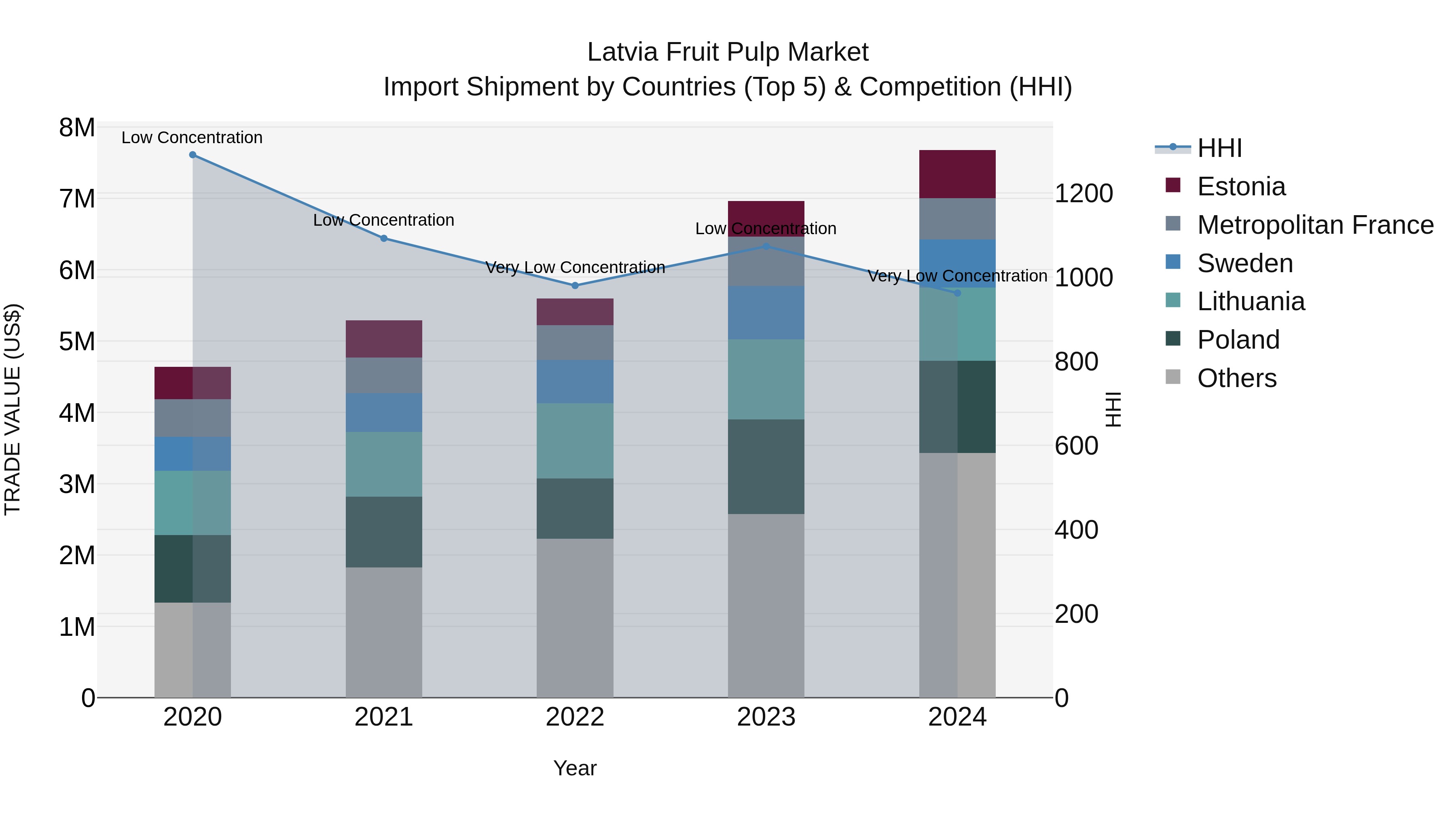
In 2024, Latvia`s fruit pulp import market continued to see healthy growth, with a CAGR of 13.42% from 2020 to 2024. The top exporting countries to Latvia include Poland, Lithuania, Turkey, Germany, and Sweden. The market concentration, as measured by HHI, decreased from low to very low in 2024, indicating a more diversified import market. The growth rate from 2023 to 2024 was strong at 10.22%, reflecting sustained interest and demand for fruit pulp in Latvia. This trend suggests opportunities for both domestic producers and foreign suppliers to capitalize on the growing market.
Key Highlights of the Report:
- Latvia Fruit Pulp Market Outlook
- Market Size of Latvia Fruit Pulp Market, 2025
- Forecast of Latvia Fruit Pulp Market, 2032
- Historical Data and Forecast of Latvia Fruit Pulp Revenues & Volume for the Period 2022 - 2032F
- Latvia Fruit Pulp Market Trend Evolution
- Latvia Fruit Pulp Market Drivers and Challenges
- Latvia Fruit Pulp Price Trends
- Latvia Fruit Pulp Porter`s Five Forces
- Latvia Fruit Pulp Industry Life Cycle
- Historical Data and Forecast of Latvia Fruit Pulp Market Revenues & Volume By Fruit Type for the Period 2022 - 2032F
- Historical Data and Forecast of Latvia Fruit Pulp Market Revenues & Volume By Mango for the Period 2022 - 2032F
- Historical Data and Forecast of Latvia Fruit Pulp Market Revenues & Volume By Strawberry for the Period 2022 - 2032F
- Historical Data and Forecast of Latvia Fruit Pulp Market Revenues & Volume By Apple for the Period 2022 - 2032F
- Historical Data and Forecast of Latvia Fruit Pulp Market Revenues & Volume By Guava for the Period 2022 - 2032F
- Historical Data and Forecast of Latvia Fruit Pulp Market Revenues & Volume By Berries for the Period 2022 - 2032F
- Historical Data and Forecast of Latvia Fruit Pulp Market Revenues & Volume By Citrus Fruits for the Period 2022 - 2032F
- Historical Data and Forecast of Latvia Fruit Pulp Market Revenues & Volume By Others for the Period 2022 - 2032F
- Historical Data and Forecast of Latvia Fruit Pulp Market Revenues & Volume By Form for the Period 2022 - 2032F
- Historical Data and Forecast of Latvia Fruit Pulp Market Revenues & Volume By Liquid for the Period 2022 - 2032F
- Historical Data and Forecast of Latvia Fruit Pulp Market Revenues & Volume By Powder for the Period 2022 - 2032F
- Historical Data and Forecast of Latvia Fruit Pulp Market Revenues & Volume By Application for the Period 2022 - 2032F
- Historical Data and Forecast of Latvia Fruit Pulp Market Revenues & Volume By Food and Beverages for the Period 2022 - 2032F
- Historical Data and Forecast of Latvia Fruit Pulp Market Revenues & Volume By Distribution for the Period 2022 - 2032F
- Historical Data and Forecast of Latvia Fruit Pulp Market Revenues & Volume By E-Commerce for the Period 2022 - 2032F
- Historical Data and Forecast of Latvia Fruit Pulp Market Revenues & Volume By Convenience Stores for the Period 2022 - 2032F
- Historical Data and Forecast of Latvia Fruit Pulp Market Revenues & Volume By Supermarkets/Hypermarkets for the Period 2022 - 2032F
- Historical Data and Forecast of Latvia Fruit Pulp Market Revenues & Volume By Specialty Stores for the Period 2022 - 2032F
- Historical Data and Forecast of Latvia Fruit Pulp Market Revenues & Volume By Others for the Period 2022 - 2032F
- Latvia Fruit Pulp Import Export Trade Statistics
- Market Opportunity Assessment By Fruit Type
- Market Opportunity Assessment By Form
- Market Opportunity Assessment By Application
- Market Opportunity Assessment By Distribution
- Latvia Fruit Pulp Top Companies Market Share
- Latvia Fruit Pulp Competitive Benchmarking By Technical and Operational Parameters
- Latvia Fruit Pulp Company Profiles
- Latvia Fruit Pulp Key Strategic Recommendations






































