Latvia Marine Plywood Market Top 5 Importing Countries and Market Competition (HHI) Analysis
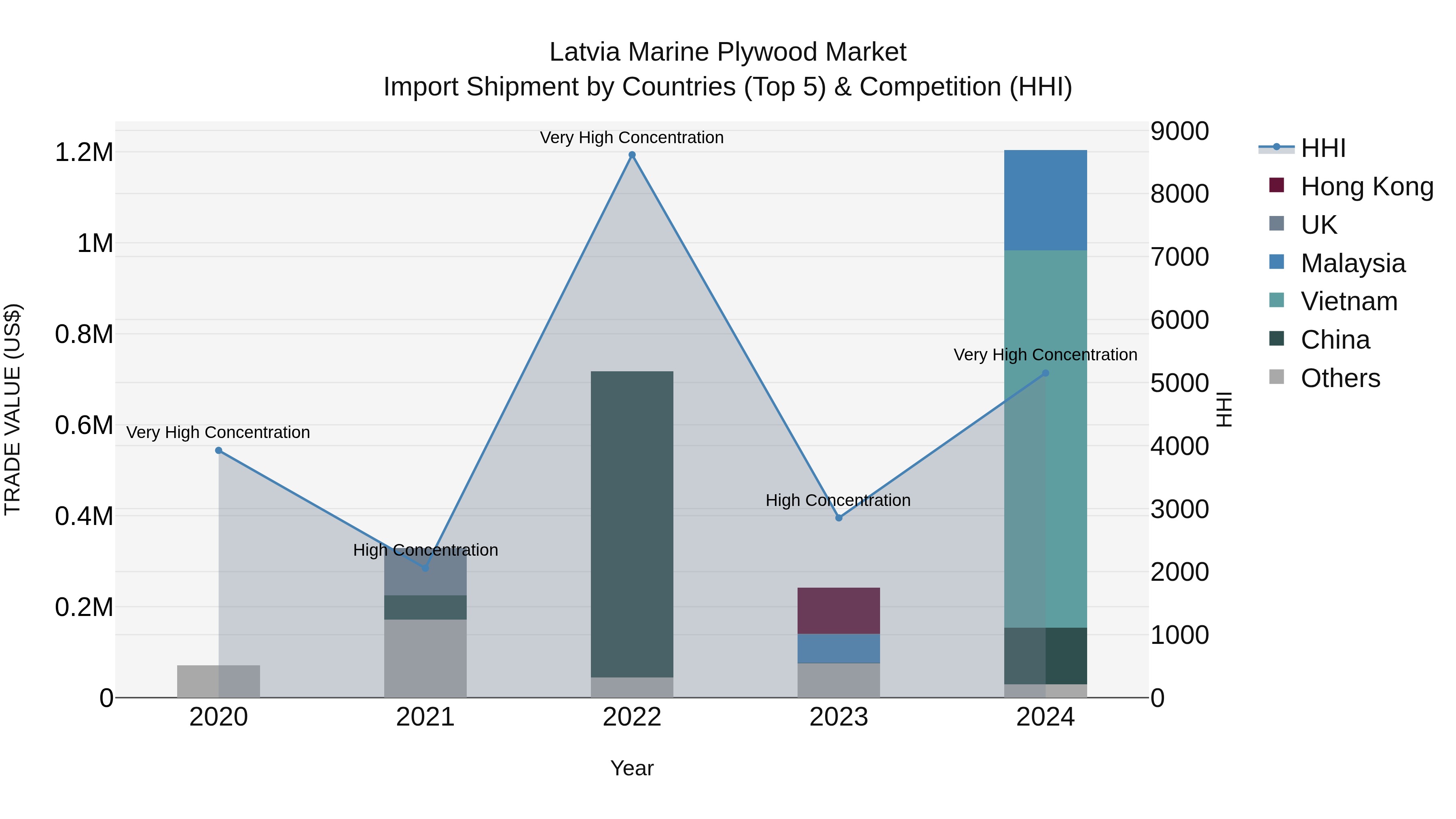
The marine plywood import market in Latvia experienced a significant surge in 2024, with Vietnam, Malaysia, China, Côte d`Ivoire, and Italy emerging as the top exporting countries. The high Herfindahl-Hirschman Index (HHI) concentration in 2023 intensified further in 2024, indicating a very competitive landscape. The impressive compound annual growth rate (CAGR) of 102.69% from 2020 to 2024 highlights the robust expansion of the market. Moreover, the remarkable growth rate of 398.27% from 2023 to 2024 underscores the accelerating pace of import shipments, signaling lucrative opportunities for market players in Latvia.
Latvia Marine Plywood Market Overview
The Latvia Marine Plywood Market is experiencing steady growth due to the increasing demand for high-quality plywood in the construction and marine industries. The country`s strategic location near major water bodies has further boosted the demand for marine plywood for boat building and other marine applications. Key players in the market are focusing on product innovation, quality control, and sustainable practices to meet the growing consumer preferences for eco-friendly and durable materials. The market is also witnessing a trend towards the use of advanced technology in plywood manufacturing processes to enhance product performance and durability. Overall, the Latvia Marine Plywood Market is expected to continue its growth trajectory driven by the construction industry`s need for reliable and long-lasting building materials.
Latvia Marine Plywood Market Trends
The Latvia Marine Plywood Market is experiencing a steady growth trend driven by the increasing demand for high-quality, durable plywood in the construction and marine industries. With a focus on sustainability and environmental responsibility, there is a growing preference for marine plywood sourced from certified sustainable forests. Additionally, advancements in technology and manufacturing processes have led to the development of innovative marine plywood products that offer enhanced strength, durability, and resistance to water damage. The market is also witnessing a rise in the adoption of marine plywood for various applications such as boat building, furniture making, and exterior construction projects. Overall, the Latvia Marine Plywood Market is expected to continue its growth trajectory due to the increasing construction activities and the rising awareness about the benefits of using marine plywood.
Latvia Marine Plywood Market Challenges
In the Latvia Marine Plywood Market, some of the key challenges include fluctuating raw material prices, competition from imported plywood products, and the impact of changing environmental regulations on manufacturing processes. Raw material prices, such as wood and adhesives, can be volatile, leading to uncertainty in production costs for marine plywood manufacturers. Additionally, imported plywood products from other countries may offer competitive pricing, posing a challenge for local producers to maintain market share. Environmental regulations related to sustainable sourcing of wood and emissions from manufacturing processes also add complexity to operations and require compliance measures, increasing costs for businesses. Overall, navigating these challenges while maintaining product quality and competitiveness in the market is crucial for the Latvia Marine Plywood industry.
Latvia Marine Plywood Market Investment Opportunities
The Latvia Marine Plywood Market presents promising investment opportunities due to the growing demand for high-quality marine plywood in the marine construction and furniture industries. With Latvia`s strategic location and access to abundant timber resources, investors can capitalize on the country`s competitive advantage in plywood production. Additionally, the increasing trend towards sustainable and eco-friendly materials in construction further enhances the market potential for marine plywood produced in Latvia. Investing in the Latvia Marine Plywood Market offers the opportunity to benefit from a stable and established industry, favorable government regulations supporting the timber sector, and the potential for export growth to neighboring European countries. Overall, this market presents a lucrative opportunity for investors seeking to capitalize on the demand for premium marine plywood products.
Latvia Marine Plywood Market Government Policy
In Latvia, the Marine Plywood Market is governed by various policies and regulations aimed at promoting sustainable forestry practices and ensuring the quality of plywood products. The Latvian government has implemented measures to protect forests, including certification programs such as the Forest Stewardship Council (FSC) and the Programme for the Endorsement of Forest Certification (PEFC). Additionally, regulations are in place to control logging activities and prevent illegal logging, contributing to the sustainability of the plywood industry. Importantly, the government also enforces quality standards for marine plywood to meet the requirements of the market and ensure consumer safety. Overall, these policies create a favorable environment for the Latvia Marine Plywood Market, supporting both economic growth and environmental sustainability.
Latvia Marine Plywood Market Future Outlook
The future outlook for the Latvia Marine Plywood Market looks promising, with a projected growth driven by factors such as increasing demand for high-quality, durable plywood in the construction and marine industries. The growing trend towards sustainable and eco-friendly building materials is expected to further boost the market. Additionally, the rise in renovation and remodeling activities in both residential and commercial sectors is likely to fuel the demand for marine plywood in Latvia. With ongoing advancements in manufacturing technologies and product innovations, the market is anticipated to witness steady growth in the coming years. However, factors such as fluctuating raw material prices and regulatory challenges related to forest conservation may pose some hindrances to market expansion. Overall, the Latvia Marine Plywood Market is poised for positive growth opportunities in the foreseeable future.
Key Highlights of the Report:
- Latvia Marine Plywood Market Outlook
- Market Size of Latvia Marine Plywood Market, 2024
- Forecast of Latvia Marine Plywood Market, 2031
- Historical Data and Forecast of Latvia Marine Plywood Revenues & Volume for the Period 2021- 2031
- Latvia Marine Plywood Market Trend Evolution
- Latvia Marine Plywood Market Drivers and Challenges
- Latvia Marine Plywood Price Trends
- Latvia Marine Plywood Porter's Five Forces
- Latvia Marine Plywood Industry Life Cycle
- Historical Data and Forecast of Latvia Marine Plywood Market Revenues & Volume By Application for the Period 2021- 2031
- Historical Data and Forecast of Latvia Marine Plywood Market Revenues & Volume By Marine Applications for the Period 2021- 2031
- Historical Data and Forecast of Latvia Marine Plywood Market Revenues & Volume By Non-Marine Applications for the Period 2021- 2031
- Latvia Marine Plywood Import Export Trade Statistics
- Market Opportunity Assessment By Application
- Latvia Marine Plywood Top Companies Market Share
- Latvia Marine Plywood Competitive Benchmarking By Technical and Operational Parameters
- Latvia Marine Plywood Company Profiles
- Latvia Marine Plywood Key Strategic Recommendations






































