Latvia Soybean Meal Market Size (2020-2030)
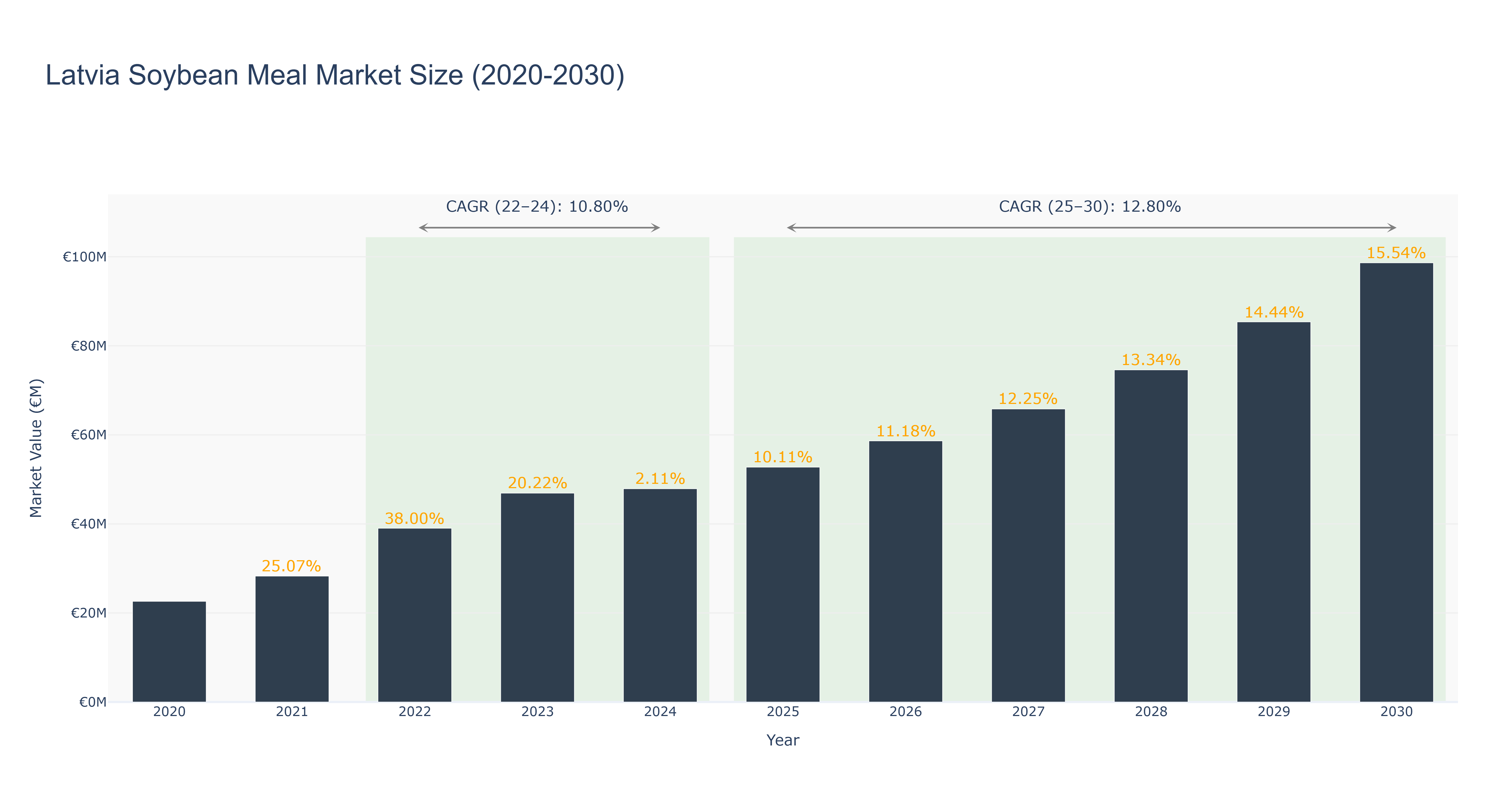
Latvia Soybean Meal Market has shown a steady growth trend over the years. The market peaked at €98.64 million in 2030, with a CAGR of 15.54% from 2020 to 2030. From 2020 to 2024, the market size increased from €22.61 million to €47.90 million, driven by increasing demand for soybean meal in livestock feed. The forecasted market size from 2025 to 2030 is expected to continue growing, with a CAGR of 12.80%. The market experienced a significant growth spurt from 2022 to 2024 with a CAGR of 10.80%, attributed to improved agricultural practices and technology adoption. Looking ahead, Latvia is set to introduce sustainable farming initiatives to further boost soybean production, enhancing the market's growth potential. Industry drivers for the Latvia Soybean Meal Market include the rising demand for high-protein animal feed and the government's focus on promoting sustainable agriculture practices.
Latvia Soybean Meal Market: Production & Trade Performance (2019-2025)
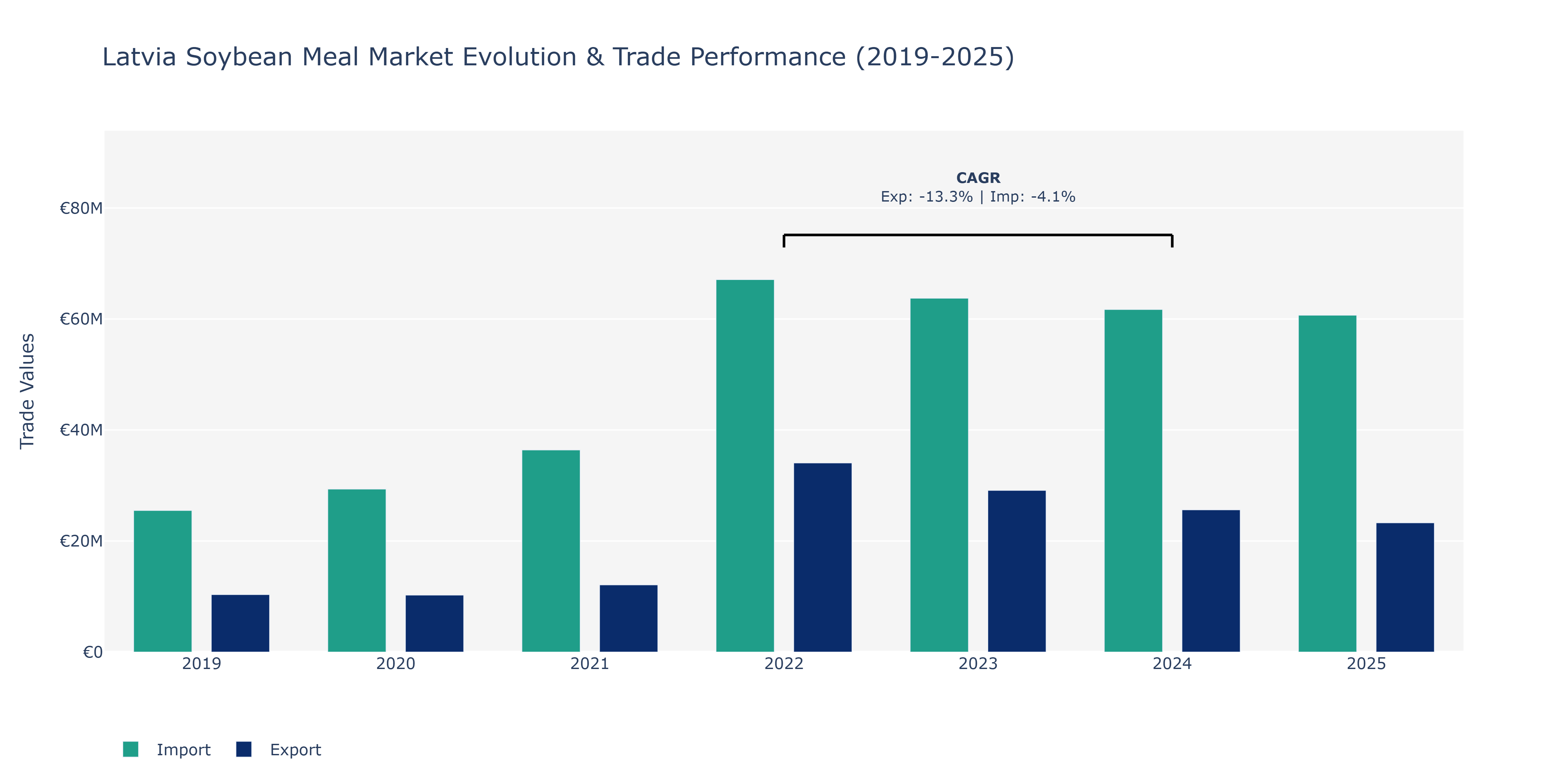
The Latvia Soybean Meal Market experienced fluctuations in both exports and imports from 2019 to 2025. Exports started at €10.35 million in 2019, decreased slightly in 2020 to €10.26 million, and then saw a significant surge in 2021 to €12.1 million, driven by potentially increased demand or strategic market expansions. However, from 2022 to 2025, exports demonstrated a declining trend, reaching €23.28 million in 2025, possibly influenced by changing global trade dynamics or shifts in domestic production. Conversely, imports followed a different trajectory, starting at €25.49 million in 2019, consistently increasing each year to a peak of €67.09 million in 2022 before slightly decreasing in the following years. This fluctuation could be attributed to evolving consumer preferences, currency exchange rates impacting import costs, or shifts in international trade agreements affecting import volumes. Such market dynamics highlight the need for market players to adapt strategies to navigate changing trade landscapes effectively.
Key Highlights of the Report:
- Latvia Soybean Meal Market Outlook
- Market Size of Latvia Soybean Meal Market, 2025
- Forecast of Latvia Soybean Meal Market, 2032
- Historical Data and Forecast of Latvia Soybean Meal Revenues & Volume for the Period 2022 - 2032F
- Latvia Soybean Meal Market Trend Evolution
- Latvia Soybean Meal Market Drivers and Challenges
- Latvia Soybean Meal Price Trends
- Latvia Soybean Meal Porter`s Five Forces
- Latvia Soybean Meal Industry Life Cycle
- Historical Data and Forecast of Latvia Soybean Meal Market Revenues & Volume By Application for the Period 2022 - 2032F
- Historical Data and Forecast of Latvia Soybean Meal Market Revenues & Volume By Animal Feed for the Period 2022 - 2032F
- Historical Data and Forecast of Latvia Soybean Meal Market Revenues & Volume By Food Industry for the Period 2022 - 2032F
- Historical Data and Forecast of Latvia Soybean Meal Market Revenues & Volume By Beverage for the Period 2022 - 2032F
- Historical Data and Forecast of Latvia Soybean Meal Market Revenues & Volume By Healthcare Products for the Period 2022 - 2032F
- Latvia Soybean Meal Import Export Trade Statistics
- Market Opportunity Assessment By Application
- Latvia Soybean Meal Top Companies Market Share
- Latvia Soybean Meal Competitive Benchmarking By Technical and Operational Parameters
- Latvia Soybean Meal Company Profiles
- Latvia Soybean Meal Key Strategic Recommendations






































