Lebanon Soap and detergents Market Summary
The lebanon soap and detergents market was estimated at USD 1221 Million in 2025 and is projected to reach USD 1744 Million by 2032, growing at a CAGR of 6.3% from 2026 to 2032.
Lebanon Soap and detergents Market Year-wise Growth Rate and Key Drivers
This graph highlights how the Lebanon Soap and detergents Market has steadily grown over the past five years, supported by major growth factors.
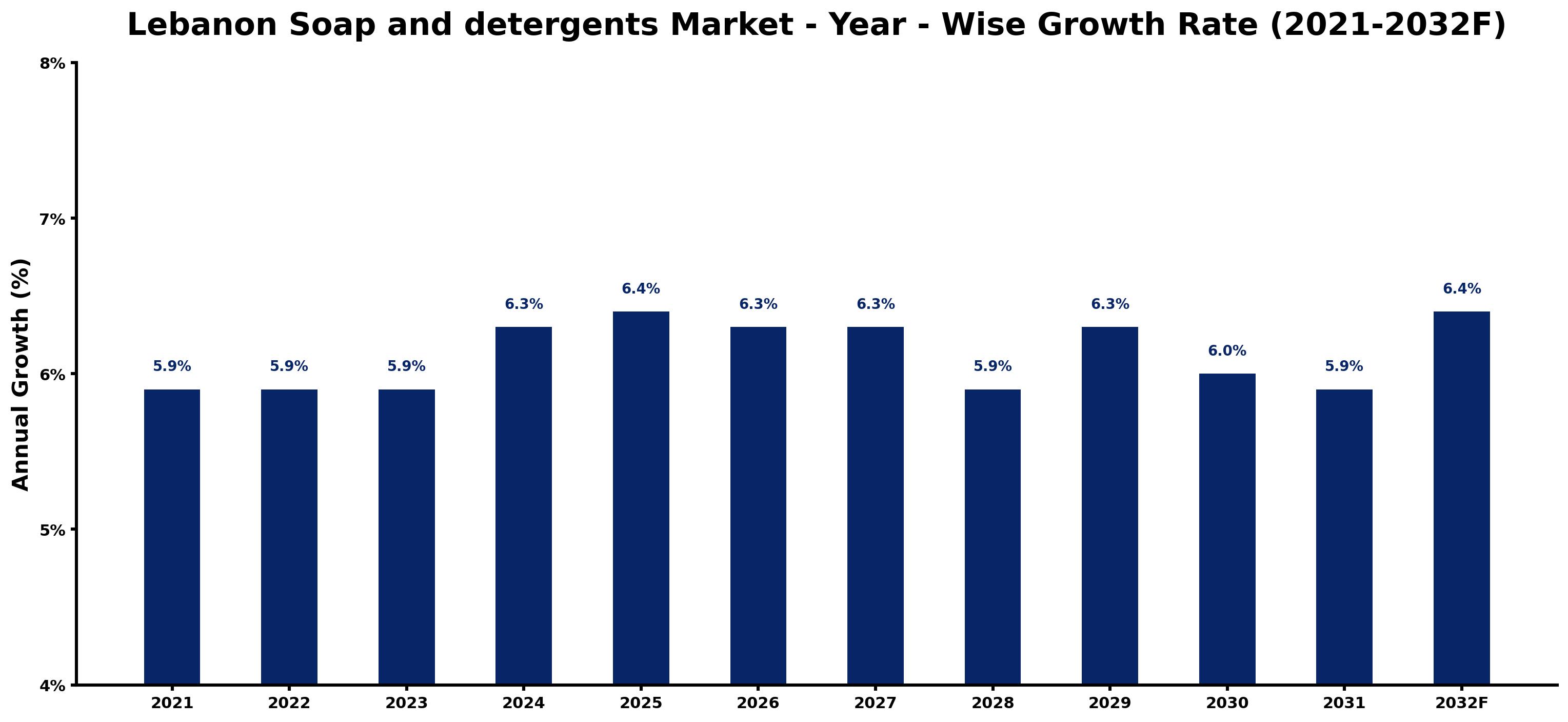
The table below presents the year wise growth rates along with the key drivers influencing the market
| Year | Growth Rate | Major Drivers |
| 2021 | 5.9% | Post-lockdown retail projects intensified, emphasizing hygiene and cleanliness in consumer behavior. |
| 2022 | 5.9% | Local manufacturers focused on natural ingredients, appealing to eco-conscious consumers' preferences. |
| 2023 | 5.9% | International brands adjusted marketing strategies, tapping into Lebanon's unique cultural heritage for branding. |
| 2024 | 6.3% | Innovative packaging solutions emerged, enhancing product visibility on crowded retail shelves. |
| 2025 | 6.4% | Urbanization trends fueled demand for convenience-focused cleaning products among busy households. |
| 2026 | 6.3% | Collaboration between local artisans and brands showcased traditional soap-making techniques, revitalizing interest. |
| 2027 | 6.3% | E-commerce platforms gained traction, enabling wider distribution of niche and artisanal products. |
| 2028 | 5.9% | Consumer awareness of sustainable practices encouraged brands to adopt eco-friendly production methods. |
| 2029 | 6.3% | Investment in local manufacturing capabilities reduced reliance on imports, stabilizing supply chains. |
| 2030 | 6.0% | Increased tourism highlighted local products, sparking interest in traditional Lebanese soap lines. |
| 2031 | 5.9% | Health awareness campaigns promoted hand hygiene, driving up sales of liquid soaps and sanitizers. |
| 2032 | 6.4% | Partnerships between soap industries and environmental NGOs emphasized corporate social responsibility initiatives. |
Note - Market size estimations and growth projections presented in this report are based on 6Wresearch's advanced forecasting approach, validated with industry datasets as of June 2026.
Lebanon Soap and detergents Market Synopsis
The Lebanon Soap and detergents Market is projected to reach 6.3% and witness significant growth during the forecast period (2026-2032). The market operates in a complex and often volatile business environment, heavily influenced by external economic factors. Over the past five years, the industry has experienced robust development, propelled by increasing urbanization and a surge in tourism. As of 2020, the total size of the Lebanese soap and detergents sector was estimated at approximately USD 851.1 million. The growth trajectory is anticipated to continue, with a compound annual growth rate (CAGR) of 3.1% forecasted throughout the period from 2026 to 2032. A rise in disposable incomes is expected to fuel sales in the Lebanon soap and detergents market, while a growing awareness of hygiene and cleanliness is likely to drive demand for premium products. Additionally, the increasing adoption of eco-friendly cleaning solutions presents new opportunities for manufacturers in this segment.
Lebanon Soap and detergents Market Growth Drivers
The growth of the Lebanon soap and detergents market can be attributed to various key drivers:
- Urbanization: The ongoing trend of urbanization in Lebanon has led to changes in consumer lifestyles, increasing the demand for various soap and detergent products.
- Rising Disposable Incomes: With increasing disposable income levels, consumers are more inclined to invest in premium-quality soap and detergent products, reflecting a shift towards quality over quantity.
- Awareness of Hygiene: The heightened awareness regarding hygiene, particularly exacerbated by the COVID-19 pandemic, has fueled demand for cleaning products that ensure cleanliness and safety in households.
- Tourism Growth: The revitalization of the tourism sector has contributed significantly to the demand for soaps and detergents, particularly in hospitality and service industries.
- Eco-friendly Trends: The growing consumer preference for environmentally friendly products is paving the way for eco-conscious manufacturers to introduce innovative cleaning solutions, thus creating new market segments.
Lebanon Soap and detergents Market Trends and Opportunities
The current landscape of the Lebanon soap and detergents market reveals various trends and promising opportunities:
- Premiumization: As consumers increasingly demand high-quality products, brands that position themselves in the premium segment are expected to capture a larger market share.
- Sustainability: Manufacturers focusing on sustainable and eco-friendly formulations can attract environmentally conscious consumers, leading to potential growth in market segments aligned with these values.
- Technological Advancements: The integration of technology in product development, including novel formulations and packaging solutions, is set to enhance product offerings and market competitiveness.
- Diversification: Opportunities exist for companies to diversify their product lines by introducing specialized soaps and detergents tailored to specific consumer needs.
- Digital Marketing: An increased focus on digital channels for marketing and distribution is transforming how products reach consumers, enabling businesses to engage with a broader audience.
Lebanon Soap and detergents Market Challenges and Restraints
Despite the positive growth outlook for the Lebanon soap and detergents market, several challenges pose potential constraints:
- Economic Instability: Political and economic challenges in Lebanon may hinder market performance and affect consumer spending on non-essential products.
- Supply Chain Disruptions: Ongoing supply chain issues could impact the availability of raw materials, affecting production schedules and product availability in the market.
- Competitive Pressure: The presence of numerous local and international brands creates intense competition, requiring continuous innovation and adaptation from manufacturers.
- Regulatory Challenges: Stringent regulatory compliance related to product formulations and labelling may pose obstacles for new entrants in the market.
- Health Concerns: Continued concerns regarding the impact of certain chemical ingredients in cleaning products may lead to shifts in consumer preferences, necessitating adaptations by manufacturers.
Lebanon Soap and detergents Market Government Investment and Initiatives
The government of Lebanon has recognized the importance of the soap and detergents market in contributing to economic growth. Initiatives aimed at supporting this sector include:
- Investment in Sustainable Practices: The government encourages manufacturers to adopt sustainable practices through grants and incentives, promoting eco-friendly production methodologies.
- Support for Local Industries: Various development plans have been implemented to bolster local industries, ensuring that domestic manufacturers receive the necessary support to compete effectively in the market.
- Infrastructure Development: Improvement of infrastructure, including transportation and logistics, is being prioritized to enhance the distribution capabilities of soap and detergent producers.
- Regulatory Framework: The government is working towards establishing a streamlined regulatory framework that facilitates easier compliance for manufacturers within the sector.
- Trade Partnerships: Efforts to forge trade partnerships with other nations aim to open new markets for Lebanese soap and detergent products, increasing export opportunities.
Lebanon Soap and detergents Market Latest Developments (May 2025 - June 2026)
Recent developments in the Lebanon soap and detergents market from May 2025 to June 2026 indicate a dynamic evolution within the sector:
- Emergence of New Product Lines: Manufacturers are increasingly introducing innovative product lines tailored to specific consumer demands, including organic and hypoallergenic options.
- Focus on Digital Transformation: Digital sales channels have gained traction, prompting businesses to enhance their online presence and marketing strategies.
- Consumer Preferences Shifts: There has been a notable shift towards sustainable and eco-friendly products, compelling manufacturers to reformulate existing products.
- Investment in R&D: Companies are allocating more resources to research and development in order to innovate and stay competitive in the marketplace.
- Public Awareness Campaigns: Increased efforts in public awareness campaigns regarding hygiene have resulted in heightened demand for cleaning products, further driving market growth.
Lebanon Soap and detergents Market - Key Attractiveness of the Report
- 10 Years of Market Numbers
- Historical Data Starting from 2022 to 2025
- Base Year: 2025
- Forecast Data until 2032
- Key Performance Indicators Impacting the Market
- Major Upcoming Developments and Projects
Key Highlights of the Report:
- Lebanon Soap and detergents Market Outlook
- Market Size of Lebanon Soap and detergents Market, 2025
- Forecast of Lebanon Soap and detergents Market, 2032F
- Historical Data and Forecast of Lebanon Soap and detergents Revenues & Volume for the Period 2022-2032F
- Lebanon Soap and detergents Market Trend Evolution
- Lebanon Soap and detergents Market Drivers and Challenges
- Lebanon Soap and detergents Price Trends
- Lebanon Soap and detergents Porter's Five Forces
- Lebanon Soap and detergents Industry Life Cycle
- Historical Data and Forecast of Lebanon Soap and detergents Market Revenues & Volume By Product for the Period 2022-2032F
- Historical Data and Forecast of Lebanon Soap and detergents Market Revenues & Volume By Household detergents for the Period 2022-2032F
- Historical Data and Forecast of Lebanon Soap and detergents Market Revenues & Volume By Industrial soaps & detergents for the Period 2022-2032F
- Historical Data and Forecast of Lebanon Soap and detergents Market Revenues & Volume By Household soaps for the Period 2022-2032F
- Historical Data and Forecast of Lebanon Soap and detergents Market Revenues & Volume By Others for the Period 2022-2032F
- Historical Data and Forecast of Lebanon Soap and detergents Market Revenues & Volume By Applications for the Period 2022-2032F
- Historical Data and Forecast of Lebanon Soap and detergents Market Revenues & Volume By Homecare Detergents for the Period 2022-2032F
- Historical Data and Forecast of Lebanon Soap and detergents Market Revenues & Volume By Industrial Soap and Detergent for the Period 2022-2032F
- Historical Data and Forecast of Lebanon Soap and detergents Market Revenues & Volume By Homecare Soaps for the Period 2022-2032F
- Historical Data and Forecast of Lebanon Soap and detergents Market Revenues & Volume By Others for the Period 2022-2032F
- Lebanon Soap and detergents Import Export Trade Statistics
- Market Opportunity Assessment By Product
- Market Opportunity Assessment By Applications
- Lebanon Soap and detergents Top Companies Market Share
- Lebanon Soap and detergents Competitive Benchmarking By Technical and Operational Parameters
- Lebanon Soap and detergents Company Profiles
- Lebanon Soap and detergents Key Strategic Recommendations






































