Liberia Naphtha Market: Top 5 Importing Countries and Market Competition (HHI) Analysis
Liberia`s naphtha import market in 2023 continued to be dominated by key exporters such as Singapore, United Arab Emirates, India, China, and France. The high Herfindahl-Hirschman Index (HHI) indicates a concentrated market, with significant market power held by a few players. The impressive Compound Annual Growth Rate (CAGR) of 62.18% and a remarkable growth rate of 470.82% highlight the rapid expansion and demand for naphtha imports in Liberia, showcasing lucrative opportunities for exporters in the coming years.
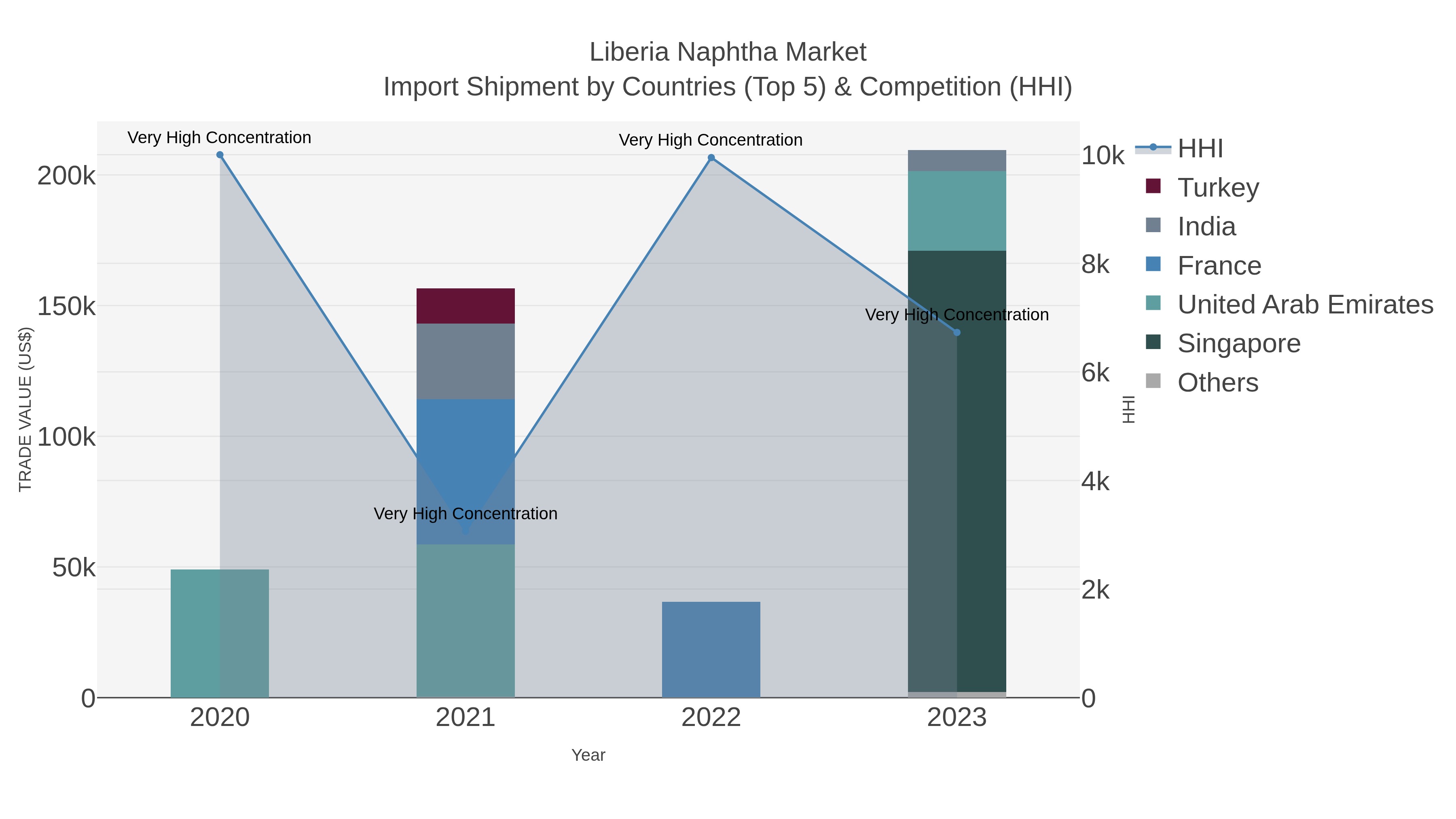
Liberia Naphtha Market Synopsis
The Liberia Naphtha Market is characterized by steady demand primarily driven by the country`s growing industrial sector. Naphtha, a light and volatile petroleum product used as a feedstock in petrochemical production, finds applications in various industries such as plastics, chemicals, and energy. The market is influenced by global oil prices, supply and demand dynamics, as well as government policies and regulations. Key players in the market include oil refineries, petrochemical companies, and distributors. Market trends indicate a shift towards cleaner and more sustainable energy sources, which may impact the demand for naphtha in the long term. Overall, the Liberia Naphtha Market presents opportunities for growth and innovation in line with evolving industry trends and consumer preferences.
Liberia Naphtha Market Trends
In the Liberia Naphtha market, current trends indicate a growing demand for cleaner and more efficient fuel sources due to increasing environmental concerns. This has led to a shift towards the use of naphtha as a feedstock for petrochemical production, driving market growth. Additionally, advancements in technology for naphtha processing and refining have improved product quality and efficiency, further boosting market opportunities. With a focus on sustainability and energy security, there is potential for investment in infrastructure development for naphtha production and distribution in Liberia. Overall, the market presents promising prospects for stakeholders to capitalize on the evolving trends and opportunities in the energy sector.
Liberia Naphtha Market Challenges
In the Liberia Naphtha market, some of the key challenges include limited infrastructure for refining and distribution, leading to reliance on imports for meeting demand. This dependency on imports exposes the market to supply chain disruptions and price fluctuations in the global market. Additionally, the lack of domestic production facilities and refining capacity hinders the market`s ability to control quality standards and pricing. Regulatory issues and government policies also play a role in shaping the market dynamics, with factors such as taxation and import regulations impacting the cost and availability of naphtha in Liberia. Overall, improving infrastructure, encouraging local production, and streamlining regulatory frameworks are essential steps to address the challenges faced by the Liberia Naphtha market.
Liberia Naphtha Market Investment Opportunities
The Liberia Naphtha Market is primarily driven by several key factors, including the growth in the petrochemical industry, increasing demand for gasoline blending, and the country`s economic development. The rising consumption of naphtha as a feedstock in the production of various petrochemical products such as plastics, resins, and solvents has spurred market growth. Additionally, the demand for naphtha as a blending component in gasoline to meet stringent fuel quality standards is contributing to market expansion. Moreover, Liberia`s economic development projects and infrastructure investments are driving the overall demand for naphtha in the country. These drivers collectively influence the growth trajectory of the Liberia Naphtha Market and are expected to continue shaping market dynamics in the foreseeable future.
Liberia Naphtha Market Government Polices
The Liberian government has implemented policies to regulate the naphtha market, aiming to promote fair competition and ensure environmental sustainability. These policies include licensing requirements for naphtha producers and distributors, quality standards to safeguard consumers, and environmental regulations to minimize the impact of naphtha production and usage on the environment. Additionally, the government has introduced tax incentives to encourage investment in the naphtha sector and promote economic growth. Overall, these policies are designed to create a transparent and efficient naphtha market in Liberia while prioritizing environmental protection and sustainable development.
Liberia Naphtha Market Future Outlook
The future outlook for the Liberia Naphtha Market appears promising, driven by factors such as increasing industrial activities, economic growth, and rising demand for petrochemical products in the region. With a focus on expanding infrastructure and energy projects, the demand for naphtha as a feedstock for various industries is expected to grow steadily. Additionally, the government`s efforts to attract foreign investments and improve the business environment are likely to further boost the market. However, challenges such as fluctuating crude oil prices and regulatory uncertainties could impact market growth. Overall, the Liberia Naphtha Market is anticipated to experience moderate growth in the coming years, presenting opportunities for industry players to capitalize on the evolving market dynamics.
Key Highlights of the Report:
- Liberia Naphtha Market Outlook
- Market Size of Liberia Naphtha Market, 2024
- Forecast of Liberia Naphtha Market, 2031
- Historical Data and Forecast of Liberia Naphtha Revenues & Volume for the Period 2021- 2031
- Liberia Naphtha Market Trend Evolution
- Liberia Naphtha Market Drivers and Challenges
- Liberia Naphtha Price Trends
- Liberia Naphtha Porter's Five Forces
- Liberia Naphtha Industry Life Cycle
- Historical Data and Forecast of Liberia Naphtha Market Revenues & Volume By Application for the Period 2021- 2031
- Historical Data and Forecast of Liberia Naphtha Market Revenues & Volume By Chemicals for the Period 2021- 2031
- Historical Data and Forecast of Liberia Naphtha Market Revenues & Volume By Energy/Fuel for the Period 2021- 2031
- Historical Data and Forecast of Liberia Naphtha Market Revenues & Volume By Others for the Period 2021- 2031
- Liberia Naphtha Import Export Trade Statistics
- Market Opportunity Assessment By Application
- Liberia Naphtha Top Companies Market Share
- Liberia Naphtha Competitive Benchmarking By Technical and Operational Parameters
- Liberia Naphtha Company Profiles
- Liberia Naphtha Key Strategic Recommendations






































