Lithuania Basketball Market Size (2020-2030)
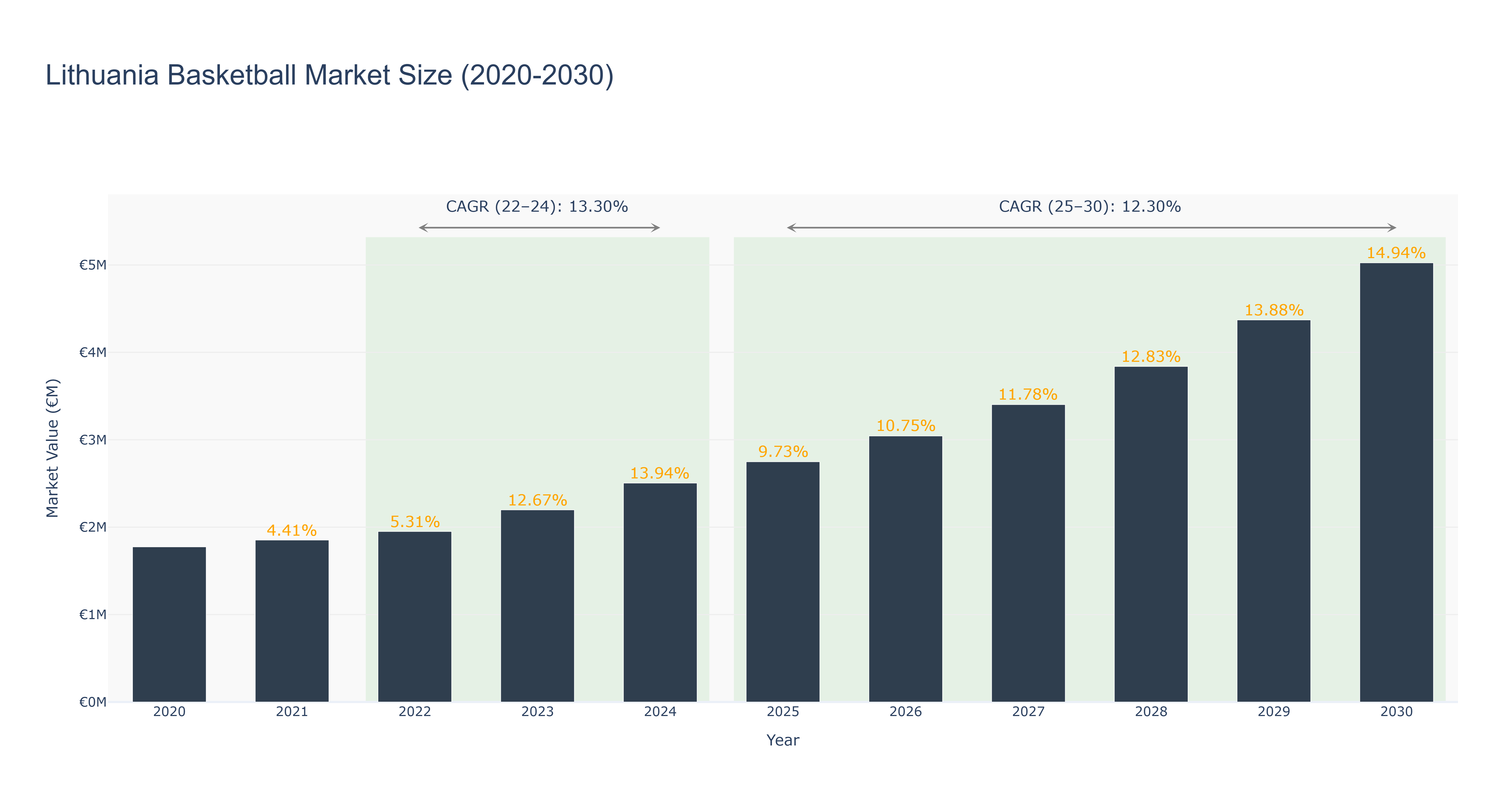
Lithuania Basketball Market has shown a steady growth trajectory over the years. The peak market size of €5.02 million is projected for 2030, with a notable increase from €1.77 million in 2020. The market experienced significant growth from 2020 to 2024, driven by increasing popularity and investment in basketball in Lithuania. The forecasted growth from 2025 to 2030 is expected to continue at a slightly lower but still strong rate, with a CAGR of 12.30% compared to 13.30% in the previous period. This slight decrease in CAGR could be attributed to market saturation and potential economic factors. Looking ahead, Lithuania is planning to launch a national basketball training program to nurture young talents, which could further boost the market and solidify its position as a basketball powerhouse.
Lithuania Basketball Market: Production & Trade Performance (2019-2025)
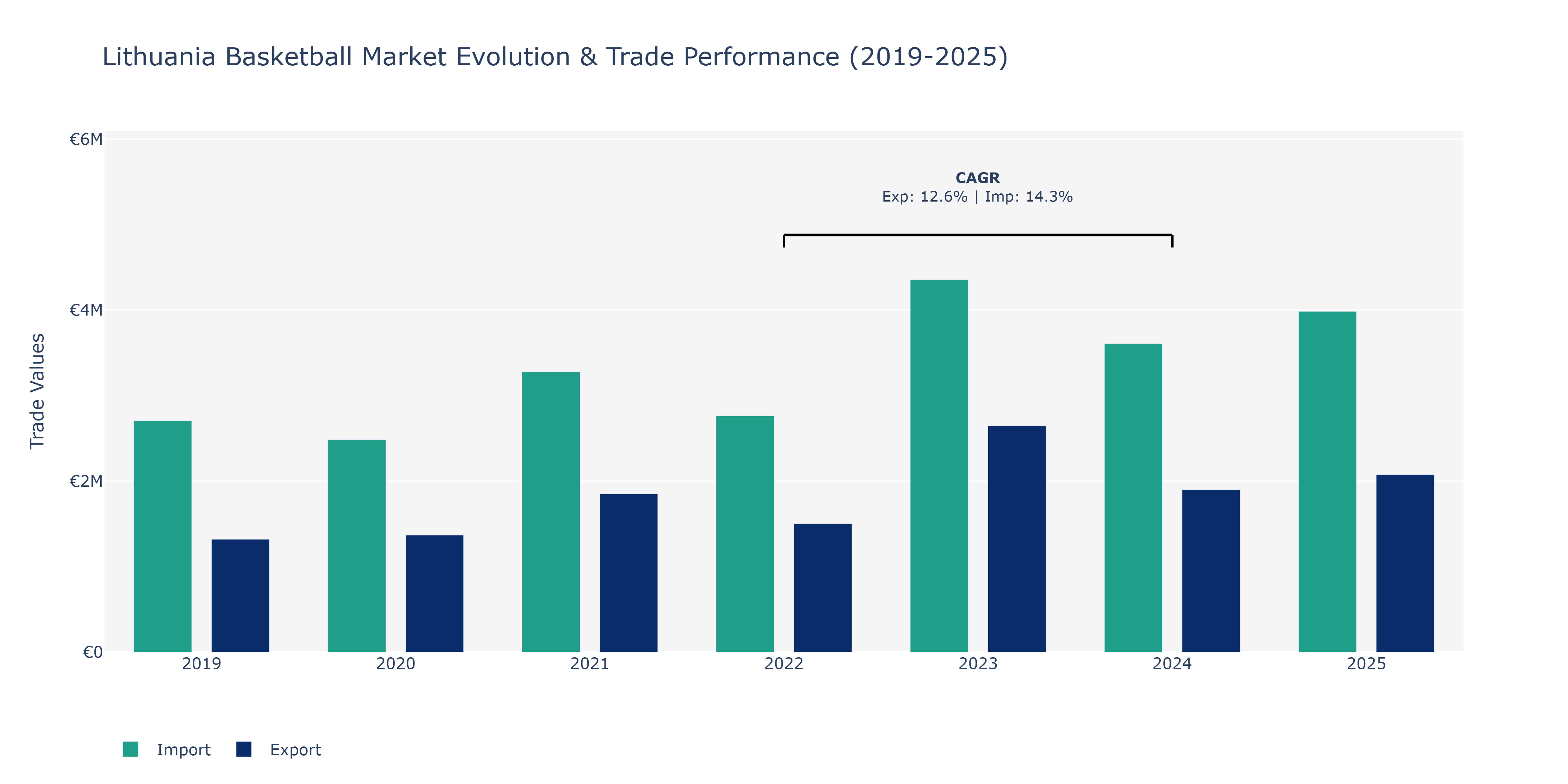
Between 2019 and 2025, Lithuania's Basketball Market experienced notable fluctuations in both Exports and Imports. Starting at €1.32 million in 2019, exports showed a steady upward trajectory, reaching €2.65 million in 2023 before declining to €2.08 million in 2025. In contrast, imports peaked at €3.28 million in 2021, showcasing a fluctuating pattern over the years, with a value of €3.99 million in 2025. The market's export growth can be attributed to the increasing demand for Lithuanian basketball products globally, driven by the country's strong basketball culture and the success of its players in international leagues. On the other hand, the fluctuations in imports could be influenced by changes in global trade dynamics, evolving consumer preferences for international basketball merchandise, and fluctuations in currency exchange rates impacting the cost of imports. The CAGR for exports and imports from 2022 to 2024 at 12.57% and 14.27%, respectively, indicates a positive growth trend during that period, reflecting the market's resilience and competitiveness in the global basketball industry.
Key Highlights of the Report:
- Lithuania Basketball Market Outlook
- Market Size of Lithuania Basketball Market, 2025
- Forecast of Lithuania Basketball Market, 2032
- Historical Data and Forecast of Lithuania Basketball Revenues & Volume for the Period 2022 - 2032F
- Lithuania Basketball Market Trend Evolution
- Lithuania Basketball Market Drivers and Challenges
- Lithuania Basketball Price Trends
- Lithuania Basketball Porter`s Five Forces
- Lithuania Basketball Industry Life Cycle
- Historical Data and Forecast of Lithuania Basketball Market Revenues & Volume By Type for the Period 2022 - 2032F
- Historical Data and Forecast of Lithuania Basketball Market Revenues & Volume By Rubber for the Period 2022 - 2032F
- Historical Data and Forecast of Lithuania Basketball Market Revenues & Volume By Cattle Hide for the Period 2022 - 2032F
- Historical Data and Forecast of Lithuania Basketball Market Revenues & Volume By PU for the Period 2022 - 2032F
- Historical Data and Forecast of Lithuania Basketball Market Revenues & Volume By PVC for the Period 2022 - 2032F
- Lithuania Basketball Import Export Trade Statistics
- Market Opportunity Assessment By Type
- Lithuania Basketball Top Companies Market Share
- Lithuania Basketball Competitive Benchmarking By Technical and Operational Parameters
- Lithuania Basketball Company Profiles
- Lithuania Basketball Key Strategic Recommendations






































