Lithuania Blast Furnace Market Size (2020-2030)
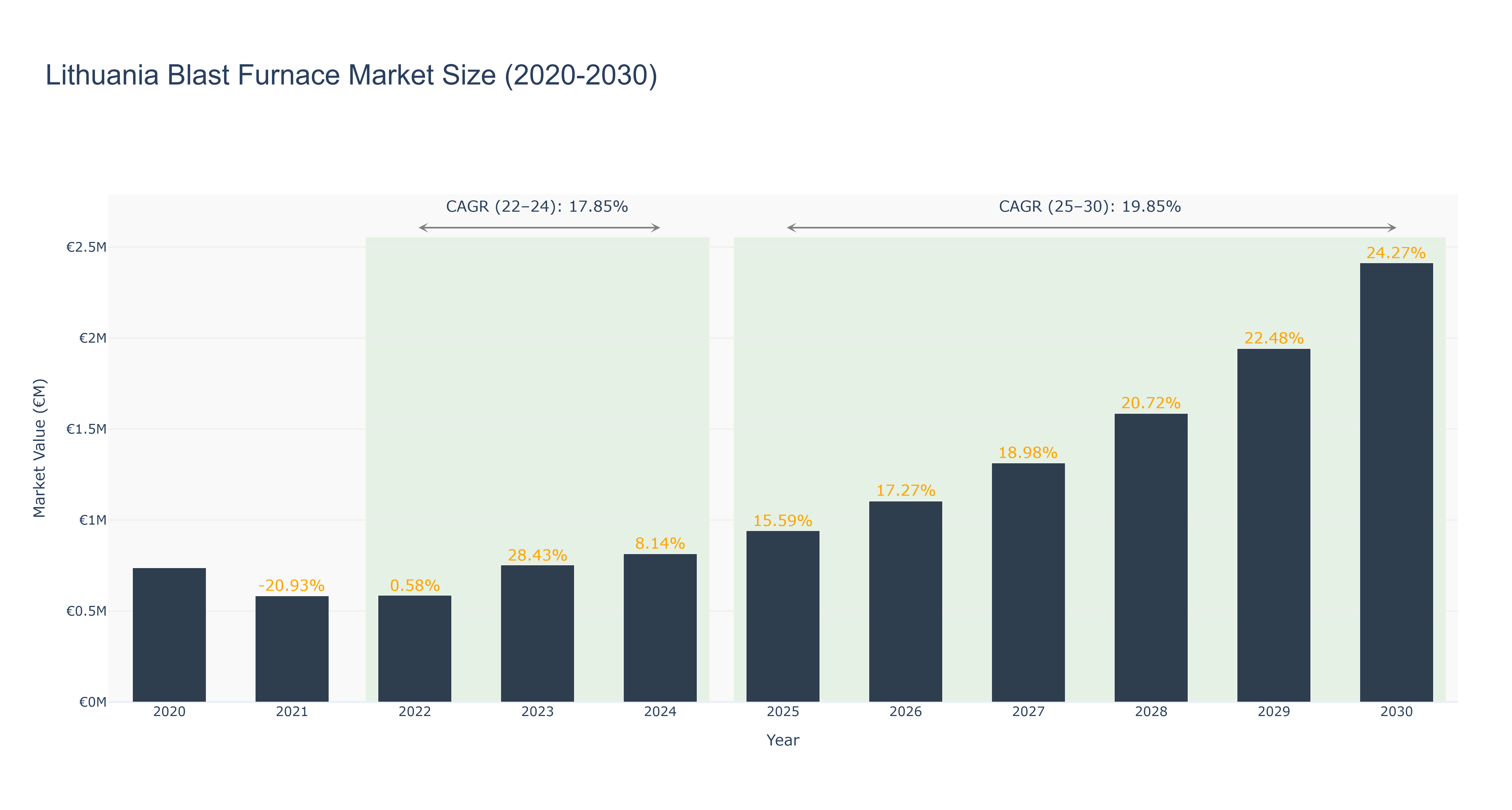
The Lithuania Blast Furnace Market experienced significant fluctuations from 2020 to 2024, peaking at €737.48 thousand in 2020 before declining to €583.13 thousand in 2021, reflecting a challenging period with a growth rate of -20.93%. However, the market rebounded, reaching €753.21 thousand in 2023 and €814.52 thousand in 2024, resulting in an actual CAGR of 17.85% for the 2022-2024 period. Looking ahead, the market is projected to grow substantially, with forecasted sizes of €941.47 thousand in 2025 and €2.41 million by 2030, indicating a robust CAGR of 19.85% from 2025 to 2030. Key drivers for this growth include increasing demand for steel production and modernization of existing facilities. Additionally, ongoing investments in infrastructure and energy efficiency initiatives are expected to further stimulate market expansion in Lithuania's blast furnace sector.
Lithuania Blast Furnace Market: Production & Trade Performance (2019-2025)
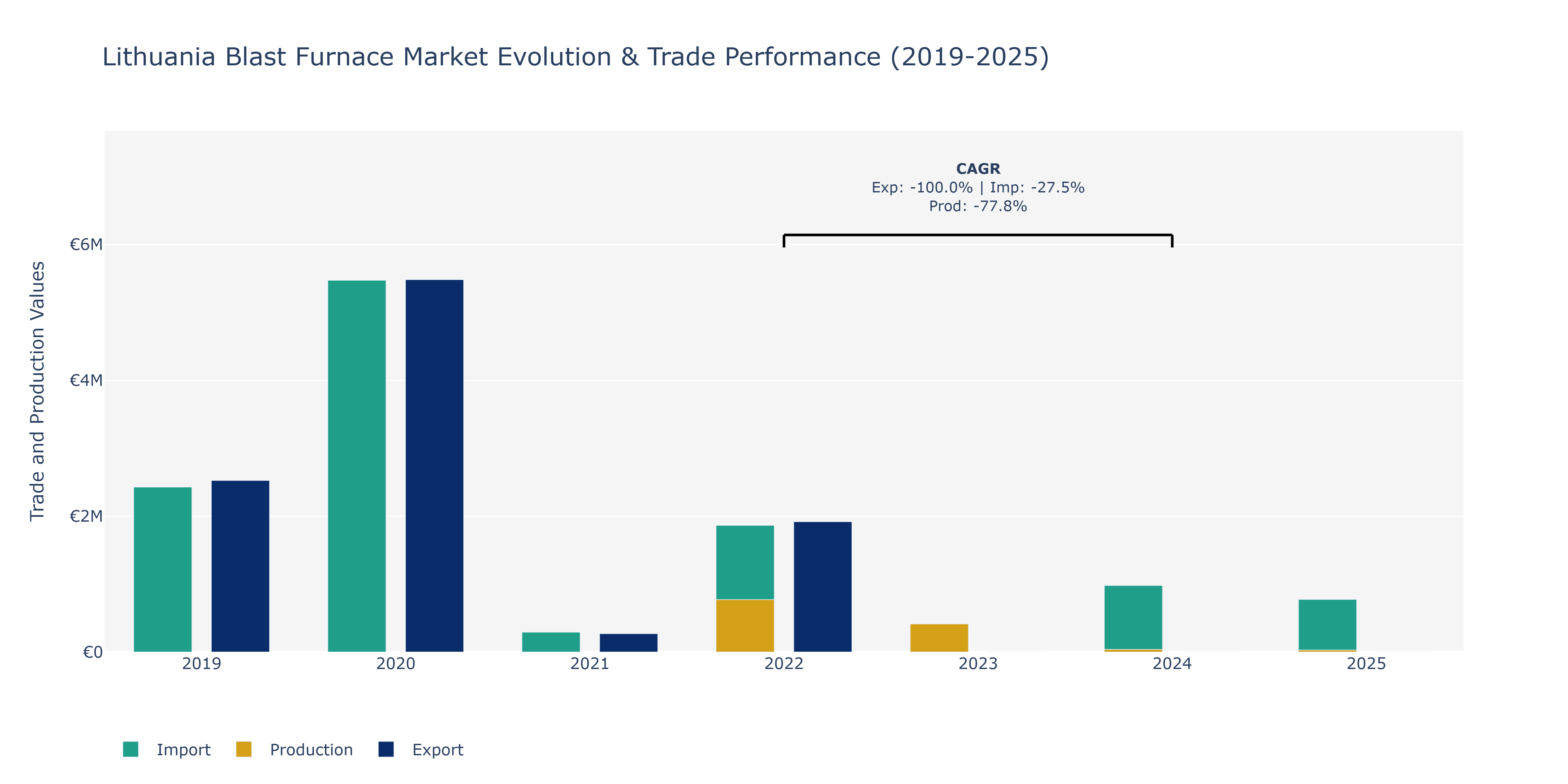
In the Lithuania Blast Furnace Market, exports experienced a notable fluctuation over the years, peaking at €5.48 million in 2020 from €2.53 million in 2019, followed by a sharp decline to €270.34 thousand in 2021. This sudden drop may be attributed to global economic disruptions affecting steel demand and trade flows. Imports, on the other hand, showcased a more consistent trend, reaching €1.83 million in 2024 after a decline in 2023. The varying production levels reflect a downward trajectory, plummeting from €1.92 million in 2022 to €38 million in 2024. This significant decrease can be linked to shifts in domestic demand, technological advancements impacting production efficiency, and potential environmental regulations. The market may see challenges in balancing production capacity with shifting demand dynamics, urging stakeholders to focus on sustainable practices and market diversification strategies to navigate uncertainties in the steel industry.
Key Highlights of the Report:
- Lithuania Blast Furnace Market Outlook
- Market Size of Lithuania Blast Furnace Market, 2024
- Forecast of Lithuania Blast Furnace Market, 2031
- Historical Data and Forecast of Lithuania Blast Furnace Revenues & Volume for the Period 2021-2031
- Lithuania Blast Furnace Market Trend Evolution
- Lithuania Blast Furnace Market Drivers and Challenges
- Lithuania Blast Furnace Price Trends
- Lithuania Blast Furnace Porter`s Five Forces
- Lithuania Blast Furnace Industry Life Cycle
- Historical Data and Forecast of Lithuania Blast Furnace Market Revenues & Volume By Type for the Period 2021-2031
- Historical Data and Forecast of Lithuania Blast Furnace Market Revenues & Volume By Cold Blast Blowers for the Period 2021-2031
- Historical Data and Forecast of Lithuania Blast Furnace Market Revenues & Volume By Hot Blast Ovens for the Period 2021-2031
- Historical Data and Forecast of Lithuania Blast Furnace Market Revenues & Volume By Applications for the Period 2021-2031
- Historical Data and Forecast of Lithuania Blast Furnace Market Revenues & Volume By Electronics for the Period 2021-2031
- Historical Data and Forecast of Lithuania Blast Furnace Market Revenues & Volume By Automobile for the Period 2021-2031
- Historical Data and Forecast of Lithuania Blast Furnace Market Revenues & Volume By Casting for the Period 2021-2031
- Historical Data and Forecast of Lithuania Blast Furnace Market Revenues & Volume By Others for the Period 2021-2031
- Lithuania Blast Furnace Import Export Trade Statistics
- Market Opportunity Assessment By Type
- Market Opportunity Assessment By Applications
- Lithuania Blast Furnace Top Companies Market Share
- Lithuania Blast Furnace Competitive Benchmarking By Technical and Operational Parameters
- Lithuania Blast Furnace Company Profiles
- Lithuania Blast Furnace Key Strategic Recommendations






































