Lithuania Computer Monitor Market Size Growth Rate
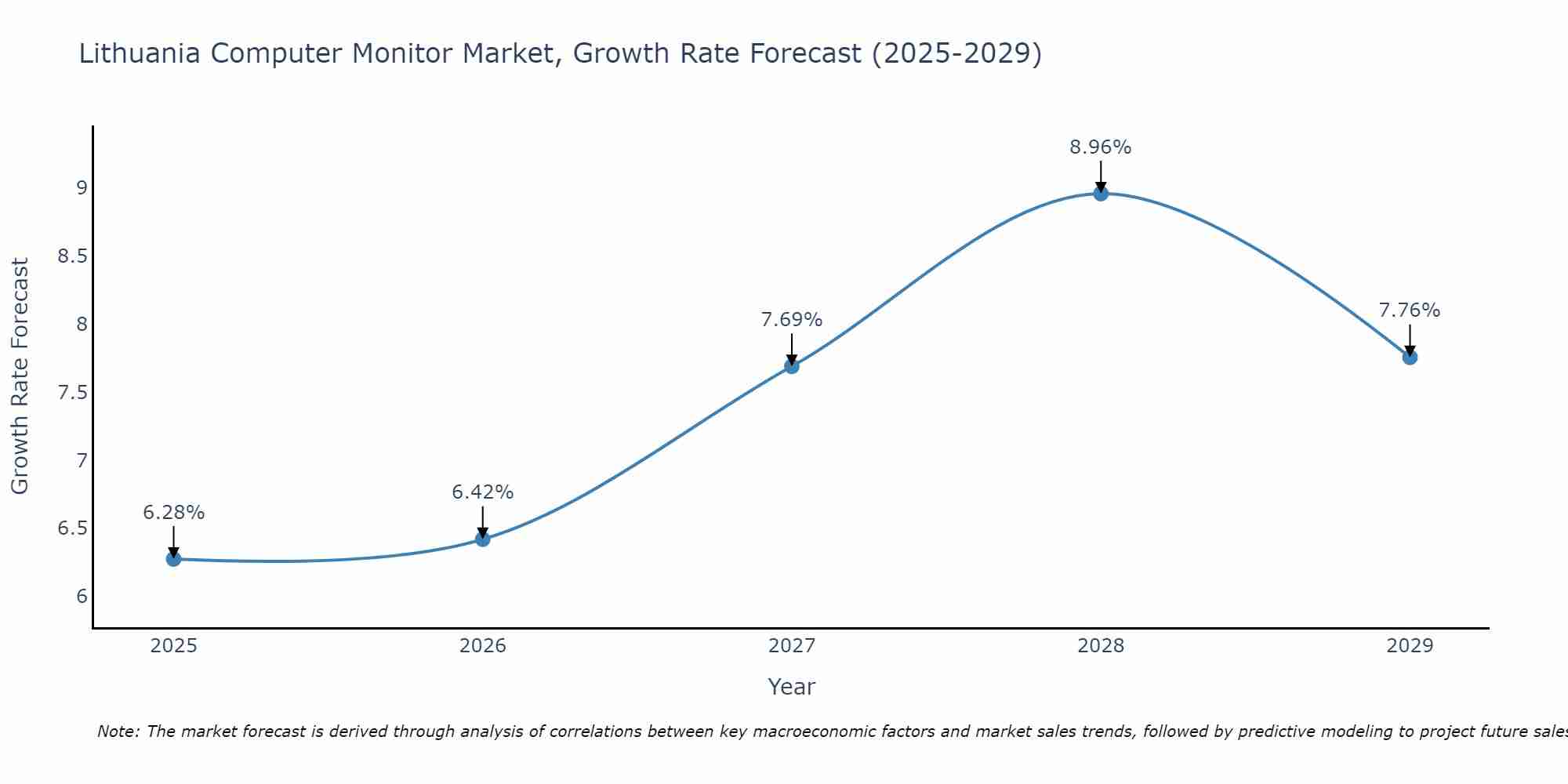
The Lithuania Computer Monitor Market is projected to witness mixed growth rate patterns during 2025 to 2029. The growth rate begins at 6.28% in 2025, climbs to a high of 8.96% in 2028, and moderates to 7.76% by 2029.
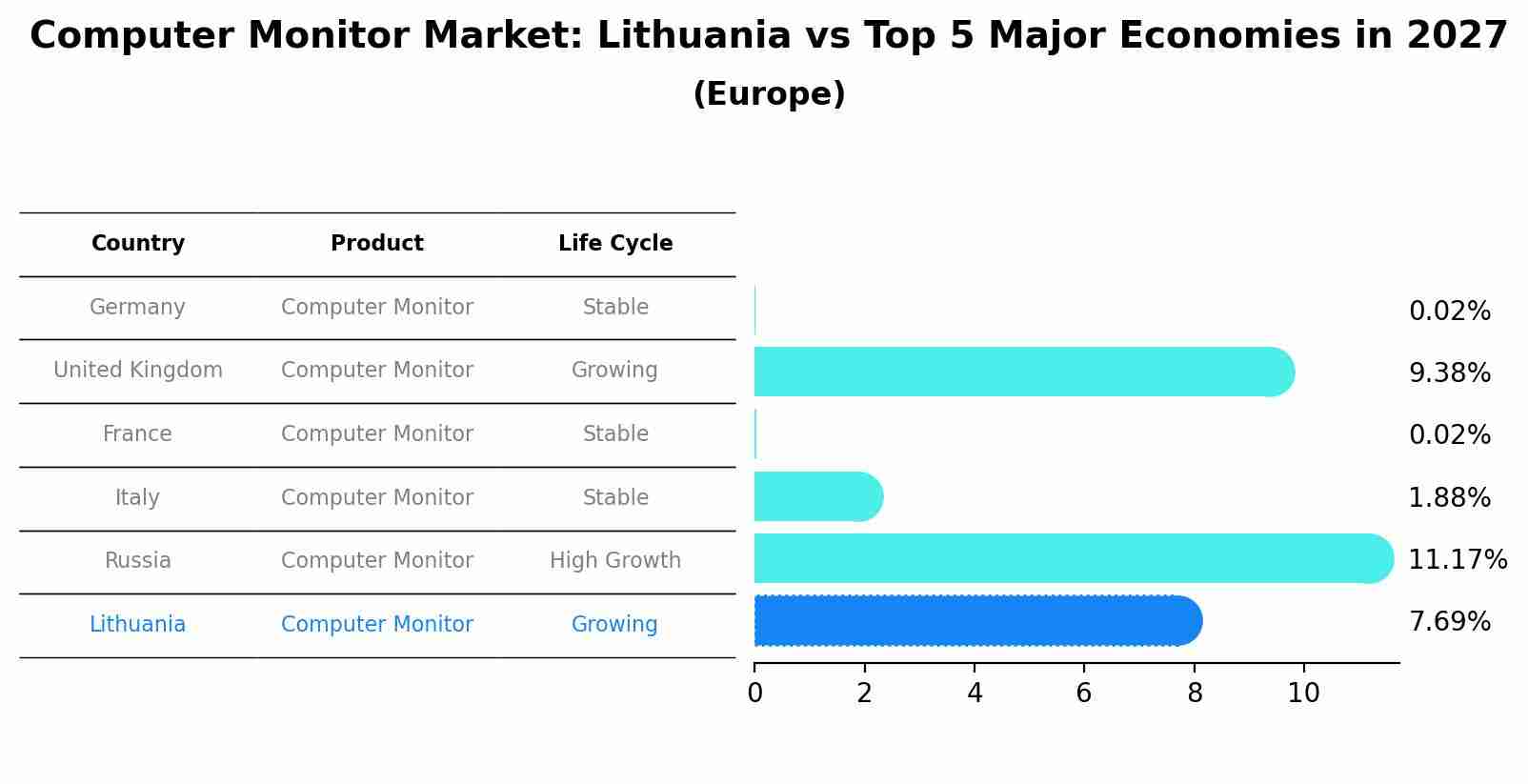
Computer Monitor Market: Lithuania vs Top 5 Major Economies in 2027 (Europe)
The Computer Monitor market in Lithuania is projected to grow at a growing growth rate of 7.69% by 2027, highlighting the country's increasing focus on advanced technologies within the Europe region, where Germany holds the dominant position, followed closely by United Kingdom, France, Italy and Russia, shaping overall regional demand.
Key Highlights of the Report:
- Lithuania Computer Monitor Market Outlook
- Market Size of Lithuania Computer Monitor Market, 2024
- Forecast of Lithuania Computer Monitor Market, 2031
- Historical Data and Forecast of Lithuania Computer Monitor Revenues & Volume for the Period 2021-2031
- Lithuania Computer Monitor Market Trend Evolution
- Lithuania Computer Monitor Market Drivers and Challenges
- Lithuania Computer Monitor Price Trends
- Lithuania Computer Monitor Porter`s Five Forces
- Lithuania Computer Monitor Industry Life Cycle
- Historical Data and Forecast of Lithuania Computer Monitor Market Revenues & Volume By Resolution for the Period 2021-2031
- Historical Data and Forecast of Lithuania Computer Monitor Market Revenues & Volume By 1366x768 for the Period 2021-2031
- Historical Data and Forecast of Lithuania Computer Monitor Market Revenues & Volume By 1920x1080 for the Period 2021-2031
- Historical Data and Forecast of Lithuania Computer Monitor Market Revenues & Volume By 1536x864 for the Period 2021-2031
- Historical Data and Forecast of Lithuania Computer Monitor Market Revenues & Volume By 1440x900 for the Period 2021-2031
- Historical Data and Forecast of Lithuania Computer Monitor Market Revenues & Volume By 1280x720 for the Period 2021-2031
- Historical Data and Forecast of Lithuania Computer Monitor Market Revenues & Volume By Other Resolutions for the Period 2021-2031
- Historical Data and Forecast of Lithuania Computer Monitor Market Revenues & Volume By Application for the Period 2021-2031
- Historical Data and Forecast of Lithuania Computer Monitor Market Revenues & Volume By Consumer and Commercial for the Period 2021-2031
- Historical Data and Forecast of Lithuania Computer Monitor Market Revenues & Volume By Gaming for the Period 2021-2031
- Lithuania Computer Monitor Import Export Trade Statistics
- Market Opportunity Assessment By Resolution
- Market Opportunity Assessment By Application
- Lithuania Computer Monitor Top Companies Market Share
- Lithuania Computer Monitor Competitive Benchmarking By Technical and Operational Parameters
- Lithuania Computer Monitor Company Profiles
- Lithuania Computer Monitor Key Strategic Recommendations






































