Lithuania Egg Powder Market Size (2020-2030)
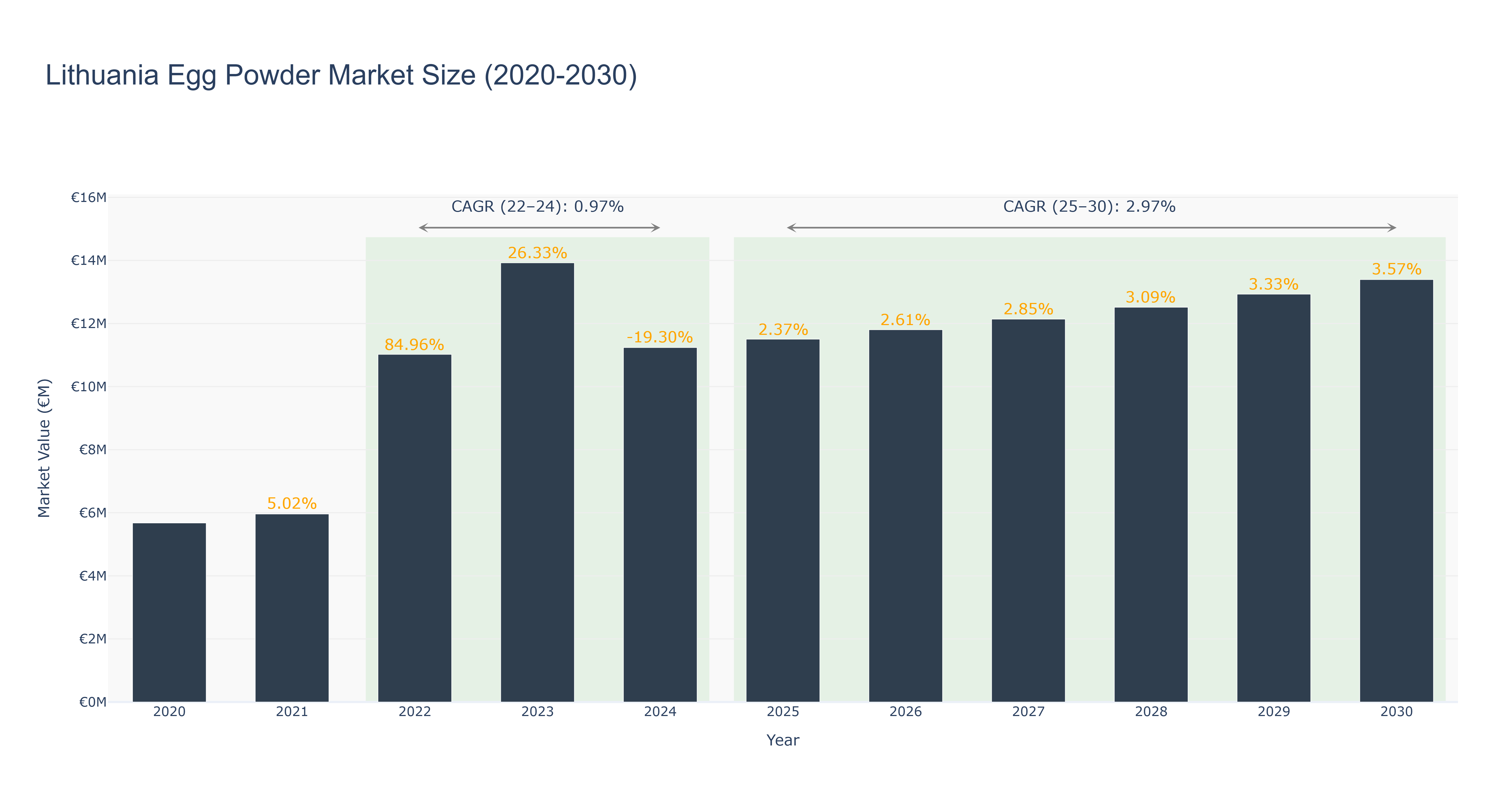
Lithuania Egg Powder Market has shown a fluctuating trend over the years. The market peaked at €13.92 million in 2023, experiencing a steady growth rate. However, a significant decline was observed in 2024, dropping to €11.24 million due to external factors impacting supply chain or demand. From 2025 to 2030, the market is forecasted to grow steadily with a Compound Annual Growth Rate (CAGR) of 2.97%, indicating a positive outlook for the industry. The recent developments in the market include increased focus on organic egg powder production to meet consumer demands for healthier options. Future projects may involve technological advancements to enhance production efficiency and sustainability. The industry drivers include increasing health consciousness among consumers and the versatility of egg powder in various food applications.
Lithuania Egg Powder Market: Production & Trade Performance (2019-2025)
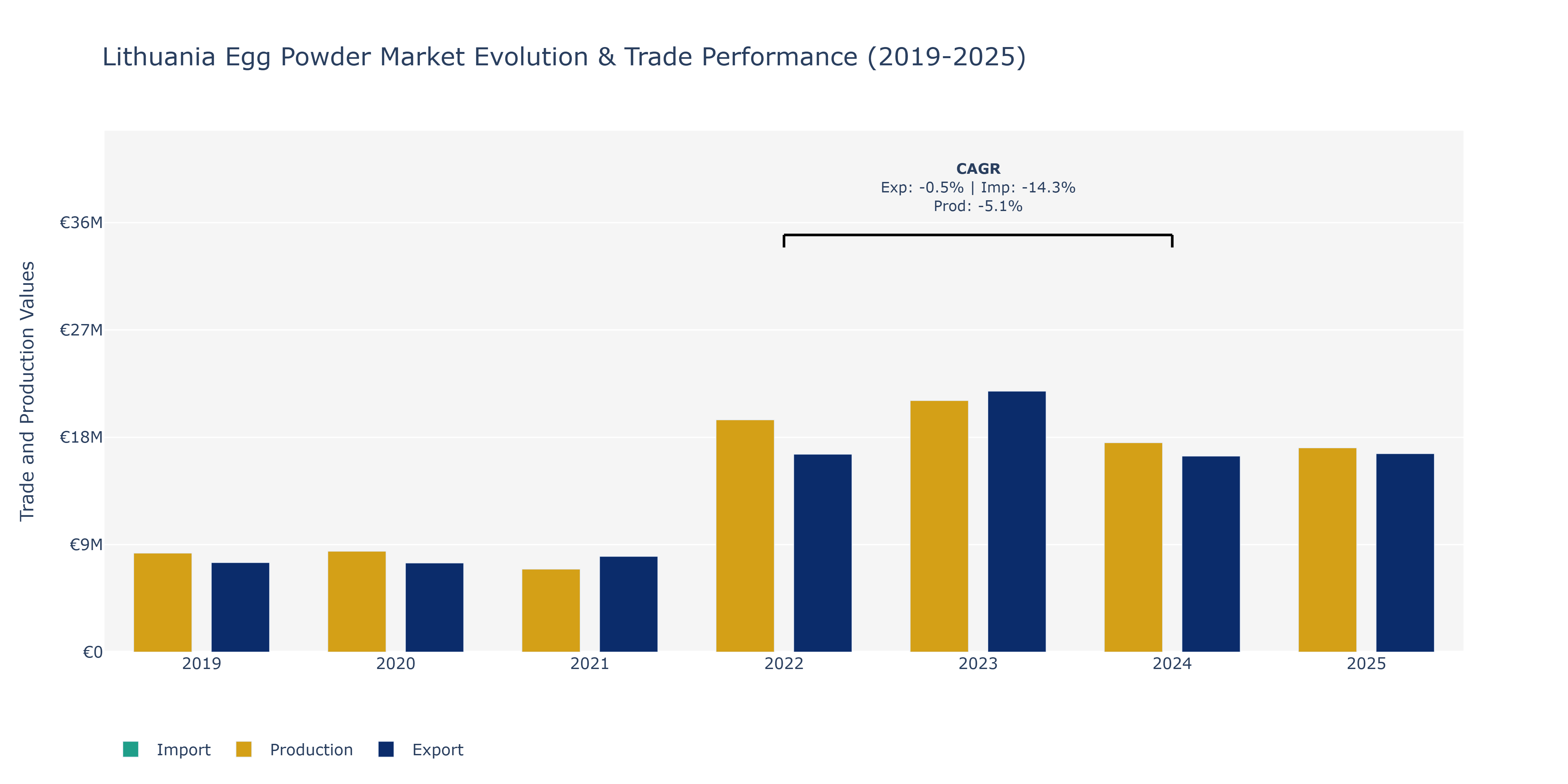
Between 2019 and 2025, the Lithuania Egg Powder Market witnessed varying trends in Exports, Imports, and Production. Exports experienced fluctuating performance, reaching a peak in 2023 at approximately €21.87 million and then slightly declining in 2025 to around €16.63 million. Imports, on the other hand, showed a consistent decline from €11.32 million in 2022 to about €7.48 million in 2025. Production levels also saw a decrease from €21.08 million in 2023 to approximately €17.12 million in 2025. These dynamics could be attributed to evolving global demand patterns, changes in trade agreements impacting import volumes, and internal production capacity adjustments in response to market conditions. Further research could delve into how shifts in consumer preferences towards healthier alternatives or advancements in production technologies might have influenced these trends in the Lithuania Egg Powder Market.
Key Highlights of the Report:
- Lithuania Egg Powder Market Outlook
- Market Size of Lithuania Egg Powder Market, 2025
- Forecast of Lithuania Egg Powder Market, 2032
- Historical Data and Forecast of Lithuania Egg Powder Revenues & Volume for the Period 2022 - 2032F
- Lithuania Egg Powder Market Trend Evolution
- Lithuania Egg Powder Market Drivers and Challenges
- Lithuania Egg Powder Price Trends
- Lithuania Egg Powder Porter`s Five Forces
- Lithuania Egg Powder Industry Life Cycle
- Historical Data and Forecast of Lithuania Egg Powder Market Revenues & Volume By Types for the Period 2022 - 2032F
- Historical Data and Forecast of Lithuania Egg Powder Market Revenues & Volume By Whole Eggfor the Period 2022 - 2032F
- Historical Data and Forecast of Lithuania Egg Powder Market Revenues & Volume By Egg Yolkfor the Period 2022 - 2032F
- Historical Data and Forecast of Lithuania Egg Powder Market Revenues & Volume By White Eggfor the Period 2022 - 2032F
- Historical Data and Forecast of Lithuania Egg Powder Market Revenues & Volume By End-user for the Period 2022 - 2032F
- Historical Data and Forecast of Lithuania Egg Powder Market Revenues & Volume By Bakery for the Period 2022 - 2032F
- Historical Data and Forecast of Lithuania Egg Powder Market Revenues & Volume By Sauces, Dressings, and Mixesfor the Period 2022 - 2032F
- Historical Data and Forecast of Lithuania Egg Powder Market Revenues & Volume By Others for the Period 2022 - 2032F
- Lithuania Egg Powder Import Export Trade Statistics
- Market Opportunity Assessment By Types
- Market Opportunity Assessment By End-user
- Lithuania Egg Powder Top Companies Market Share
- Lithuania Egg Powder Competitive Benchmarking By Technical and Operational Parameters
- Lithuania Egg Powder Company Profiles
- Lithuania Egg Powder Key Strategic Recommendations






































