Lithuania Electric Mobility Market Top 5 Importing Countries and Market Competition (HHI) Analysis
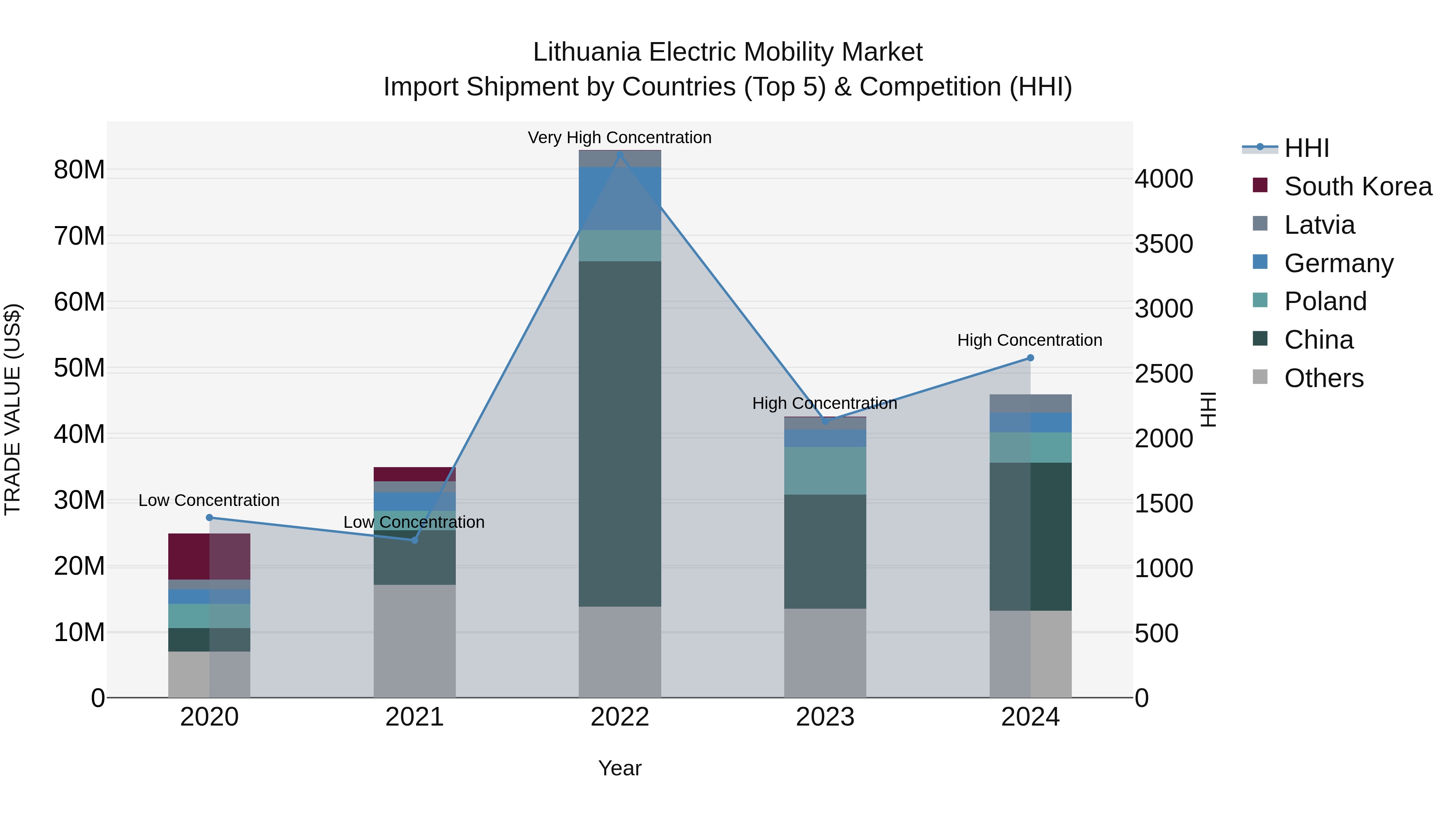
Lithuania`s electric mobility import market continues to thrive with key suppliers being China, Poland, Germany, Latvia, and Estonia in 2024. The high Herfindahl-Hirschman Index (HHI) indicates a concentrated market, while the impressive Compound Annual Growth Rate (CAGR) of 16.57% from 2020 to 2024 demonstrates strong industry expansion. The growth rate of 7.87% from 2023 to 2024 signals sustained momentum in electric mobility imports. With a diverse supplier base and robust growth trends, Lithuania`s electric mobility sector is poised for further advancement in the coming years.
Lithuania Electric Mobility Market Overview
The electric mobility market in Lithuania is experiencing growth driven by increasing environmental awareness and government incentives. The country aims to reduce carbon emissions by promoting electric vehicles (EVs) and has implemented measures such as tax breaks, subsidies, and infrastructure development to support the transition to cleaner transportation. Lithuanians are showing a growing interest in EVs, leading to a rising number of registrations for electric cars and the expansion of charging networks across the country. Market players like automotive manufacturers, charging infrastructure providers, and energy companies are actively participating in the development of the electric mobility ecosystem in Lithuania, signaling a promising future for the sector.
Lithuania Electric Mobility Market Trends and Opportunities
The Lithuania Electric Mobility Market is experiencing a growth trend driven by increasing environmental concerns and government initiatives to reduce carbon emissions. The market is witnessing a surge in electric vehicle (EV) adoption, supported by favorable policies such as incentives for EV purchases and infrastructure development for charging stations. Additionally, the growing focus on sustainable transportation solutions presents opportunities for companies involved in EV manufacturing, charging infrastructure development, and related services. With a rising awareness of the benefits of electric mobility and a push towards cleaner transportation options, the Lithuania Electric Mobility Market is poised for further expansion in the coming years, providing opportunities for investment and innovation in the sector.
Lithuania Electric Mobility Market Challenges
In the Lithuania Electric Mobility Market, challenges include limited infrastructure for charging stations, high initial costs of electric vehicles, and range anxiety among consumers. The lack of a comprehensive charging network makes it difficult for potential buyers to adopt electric vehicles confidently. Additionally, the higher upfront costs of electric cars compared to traditional vehicles present a barrier to entry for many consumers. Range anxiety, the fear of running out of battery power while driving, is another significant challenge that affects consumer adoption of electric vehicles in Lithuania. Addressing these challenges through investment in charging infrastructure, government incentives, and public awareness campaigns will be crucial in promoting the growth of the electric mobility market in the country.
Lithuania Electric Mobility Market Drivers
The Lithuania Electric Mobility Market is primarily driven by government initiatives promoting sustainable transportation, such as incentives for electric vehicle (EV) adoption, subsidies for charging infrastructure development, and favorable regulations. Increasing environmental awareness among consumers, coupled with rising concerns about air pollution and climate change, are also key drivers pushing the market forward. The availability of a growing variety of EV models from both domestic and international manufacturers, along with improving technology leading to longer battery range and faster charging times, has further boosted consumer interest in electric vehicles. Additionally, the push towards reducing dependency on fossil fuels and achieving energy independence is fueling the adoption of electric mobility solutions in Lithuania.
Lithuania Electric Mobility Market Government Policy
The Lithuanian government has implemented various policies to promote electric mobility in the country. These policies include financial incentives such as tax breaks and subsidies for purchasing electric vehicles, as well as exemptions from certain road taxes and parking fees. Additionally, the government has set targets to increase the number of electric vehicles on the road and to expand the charging infrastructure across the country. They have also introduced initiatives to support research and development in the electric vehicle sector and to raise awareness about the benefits of transitioning to electric mobility. Overall, these policies aim to accelerate the adoption of electric vehicles in Lithuania and reduce greenhouse gas emissions from the transportation sector.
Lithuania Electric Mobility Market Future Outlook
The Lithuania Electric Mobility Market is expected to witness significant growth in the coming years due to increasing government support and initiatives aimed at promoting electric vehicles (EVs) as a sustainable transportation option. The country has set ambitious targets to reduce greenhouse gas emissions and improve air quality, which will drive the demand for EVs. Additionally, the expanding charging infrastructure, advancements in battery technology, and growing consumer awareness about the environmental benefits of EVs will further fuel market growth. With a focus on reducing dependence on fossil fuels and achieving a more sustainable transportation system, the Lithuania Electric Mobility Market is poised for expansion, offering opportunities for automakers, charging station providers, and other stakeholders in the ecosystem.
Key Highlights of the Report:
- Lithuania Electric Mobility Market Outlook
- Market Size of Lithuania Electric Mobility Market, 2024
- Forecast of Lithuania Electric Mobility Market, 2031
- Historical Data and Forecast of Lithuania Electric Mobility Revenues & Volume for the Period 2021- 2031
- Lithuania Electric Mobility Market Trend Evolution
- Lithuania Electric Mobility Market Drivers and Challenges
- Lithuania Electric Mobility Price Trends
- Lithuania Electric Mobility Porter's Five Forces
- Lithuania Electric Mobility Industry Life Cycle
- Historical Data and Forecast of Lithuania Electric Mobility Market Revenues & Volume By Product for the Period 2021- 2031
- Historical Data and Forecast of Lithuania Electric Mobility Market Revenues & Volume By Electric Bikes for the Period 2021- 2031
- Historical Data and Forecast of Lithuania Electric Mobility Market Revenues & Volume By Electric Scooters for the Period 2021- 2031
- Historical Data and Forecast of Lithuania Electric Mobility Market Revenues & Volume By Electric Motorized Scooters for the Period 2021- 2031
- Historical Data and Forecast of Lithuania Electric Mobility Market Revenues & Volume By Electric Motorcycles for the Period 2021- 2031
- Historical Data and Forecast of Lithuania Electric Mobility Market Revenues & Volume By Drive for the Period 2021- 2031
- Historical Data and Forecast of Lithuania Electric Mobility Market Revenues & Volume By Belt Drive for the Period 2021- 2031
- Historical Data and Forecast of Lithuania Electric Mobility Market Revenues & Volume By Chain Drive for the Period 2021- 2031
- Historical Data and Forecast of Lithuania Electric Mobility Market Revenues & Volume By Hub Drive for the Period 2021- 2031
- Historical Data and Forecast of Lithuania Electric Mobility Market Revenues & Volume By Battery for the Period 2021- 2031
- Historical Data and Forecast of Lithuania Electric Mobility Market Revenues & Volume By Lead Acid Battery for the Period 2021- 2031
- Historical Data and Forecast of Lithuania Electric Mobility Market Revenues & Volume By Li-Ion Battery for the Period 2021- 2031
- Historical Data and Forecast of Lithuania Electric Mobility Market Revenues & Volume By End-use for the Period 2021- 2031
- Historical Data and Forecast of Lithuania Electric Mobility Market Revenues & Volume By Personal for the Period 2021- 2031
- Historical Data and Forecast of Lithuania Electric Mobility Market Revenues & Volume By Commercial for the Period 2021- 2031
- Lithuania Electric Mobility Import Export Trade Statistics
- Market Opportunity Assessment By Product
- Market Opportunity Assessment By Drive
- Market Opportunity Assessment By Battery
- Market Opportunity Assessment By End-use
- Lithuania Electric Mobility Top Companies Market Share
- Lithuania Electric Mobility Competitive Benchmarking By Technical and Operational Parameters
- Lithuania Electric Mobility Company Profiles
- Lithuania Electric Mobility Key Strategic Recommendations






































