Lithuania Gaming Computer Market Size (2020-2030)
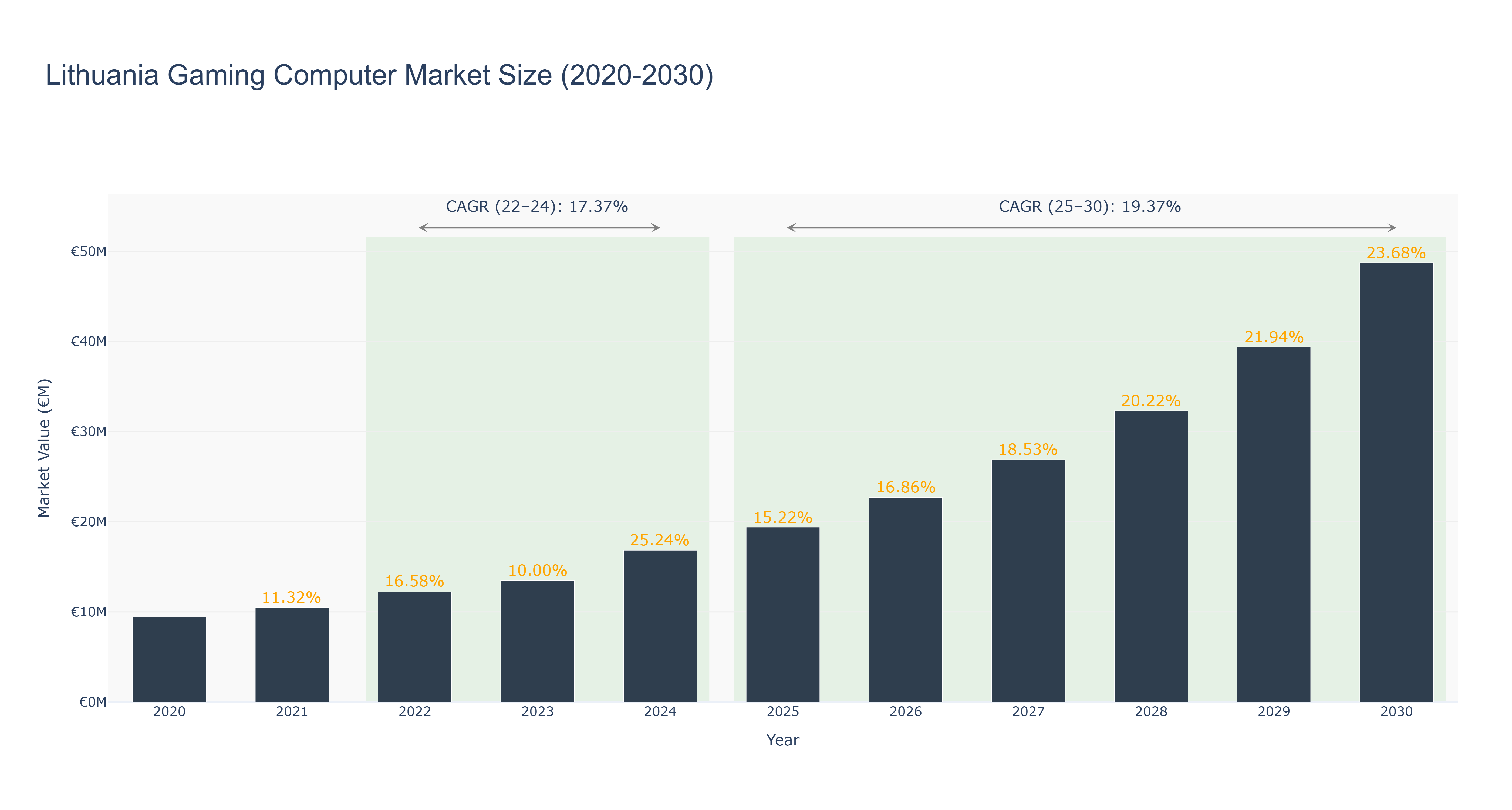
The Lithuania Gaming Computer Market has shown a notable growth trajectory over the years. The peak market size of €48.72 million in 2030 marks a significant milestone, reflecting a robust expansion. The actual market size has seen steady increases from €9.42 million in 2020 to €16.84 million in 2024. Forecasted market size is expected to continue this upward trend, reaching €39.40 million in 2029 and eventually peaking at €48.72 million in 2030. The CAGR values of 17.37% (2022-24) and 19.37% (2025-30) demonstrate sustained growth momentum. This growth can be attributed to increasing demand for gaming computers, technological advancements, and a growing gaming community in Lithuania. Looking ahead, upcoming developments in the market include the launch of new gaming peripherals and enhanced gaming infrastructure to further drive market expansion.
Lithuania Gaming Computer Market: Production & Trade Performance (2019-2025)
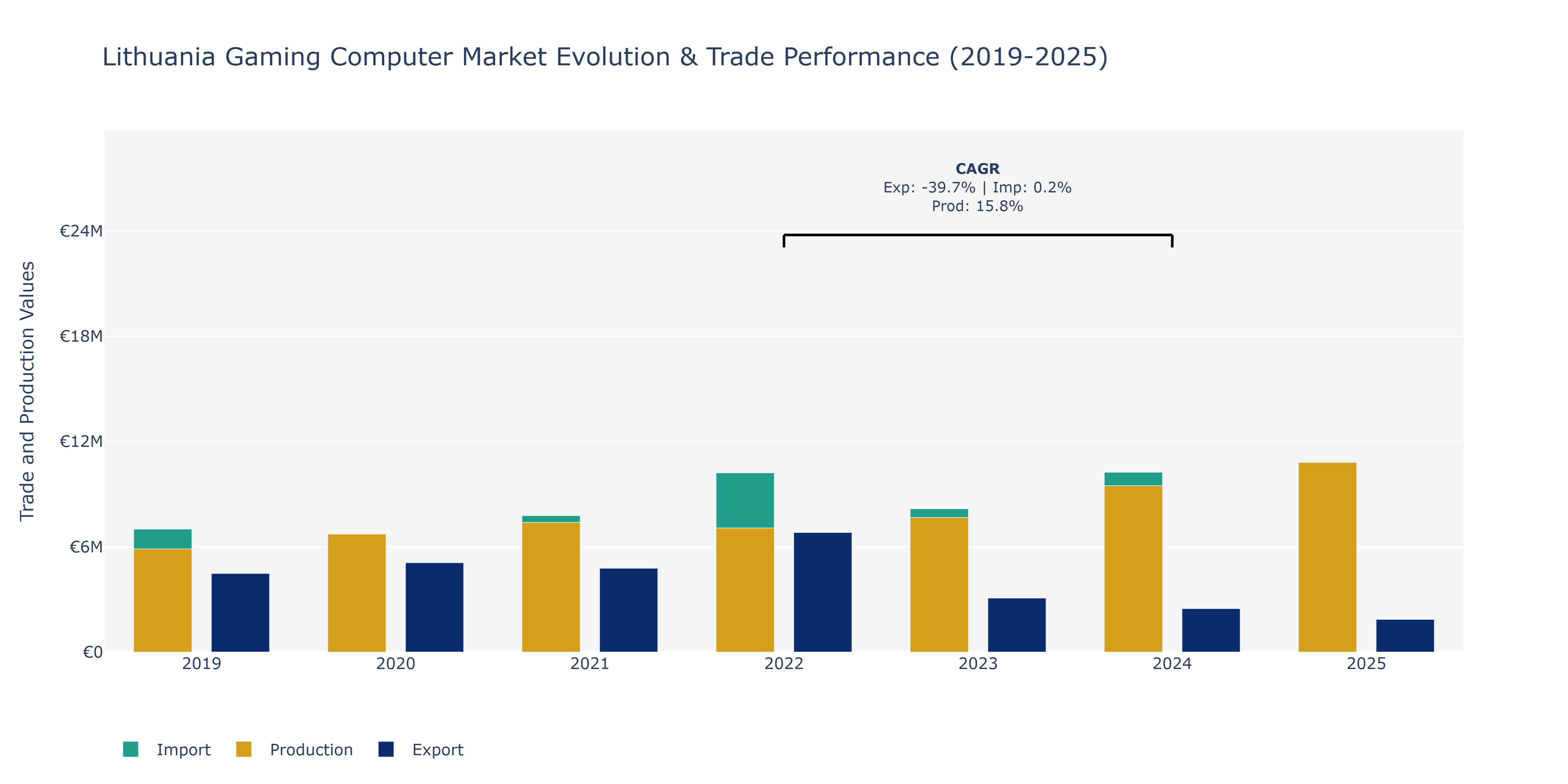
In the Lithuania Gaming Computer Market, exports saw fluctuations over the years, starting at €4.48 million in 2019, peaking at €6.82 million in 2022, before dropping to €1.86 million in 2025. Conversely, imports showed a steady increase from €7.01 million in 2019 to €10.42 million in 2025, with a minor dip in 2020. Production value followed a growth trend, rising from €5.88 million in 2019 to €10.80 million in 2025, with a notable peak in 2024. The surge in imports can be attributed to the growing demand for gaming computers in Lithuania, reflecting the market's inclination towards advanced technology. The decline in exports post-2022 could be due to evolving consumer preferences, potentially influenced by international market dynamics. As production steadily increased, it indicates local manufacturing capabilities strengthening to meet the demand for gaming computers in the region.
Key Highlights of the Report:
- Lithuania Gaming Computer Market Outlook
- Market Size of Lithuania Gaming Computer Market, 2025
- Forecast of Lithuania Gaming Computer Market, 2032
- Historical Data and Forecast of Lithuania Gaming Computer Revenues & Volume for the Period 2022 - 2032F
- Lithuania Gaming Computer Market Trend Evolution
- Lithuania Gaming Computer Market Drivers and Challenges
- Lithuania Gaming Computer Price Trends
- Lithuania Gaming Computer Porter's Five Forces
- Lithuania Gaming Computer Industry Life Cycle
- Historical Data and Forecast of Lithuania Gaming Computer Market Revenues & Volume By Type for the Period 2022 - 2032F
- Historical Data and Forecast of Lithuania Gaming Computer Market Revenues & Volume By Desktops for the Period 2022 - 2032F
- Historical Data and Forecast of Lithuania Gaming Computer Market Revenues & Volume By Laptops for the Period 2022 - 2032F
- Historical Data and Forecast of Lithuania Gaming Computer Market Revenues & Volume By Application for the Period 2022 - 2032F
- Historical Data and Forecast of Lithuania Gaming Computer Market Revenues & Volume By Gaming for the Period 2022 - 2032F
- Historical Data and Forecast of Lithuania Gaming Computer Market Revenues & Volume By E-sports for the Period 2022 - 2032F
- Historical Data and Forecast of Lithuania Gaming Computer Market Revenues & Volume By End User for the Period 2022 - 2032F
- Historical Data and Forecast of Lithuania Gaming Computer Market Revenues & Volume By Gamers for the Period 2022 - 2032F
- Historical Data and Forecast of Lithuania Gaming Computer Market Revenues & Volume By E-sports Organizations for the Period 2022 - 2032F
- Lithuania Gaming Computer Import Export Trade Statistics
- Market Opportunity Assessment By Type
- Market Opportunity Assessment By Application
- Market Opportunity Assessment By End User
- Lithuania Gaming Computer Top Companies Market Share
- Lithuania Gaming Computer Competitive Benchmarking By Technical and Operational Parameters
- Lithuania Gaming Computer Company Profiles
- Lithuania Gaming Computer Key Strategic Recommendations






































