Lithuania Graphite Electrode Market - Import Trends (2019-2025)
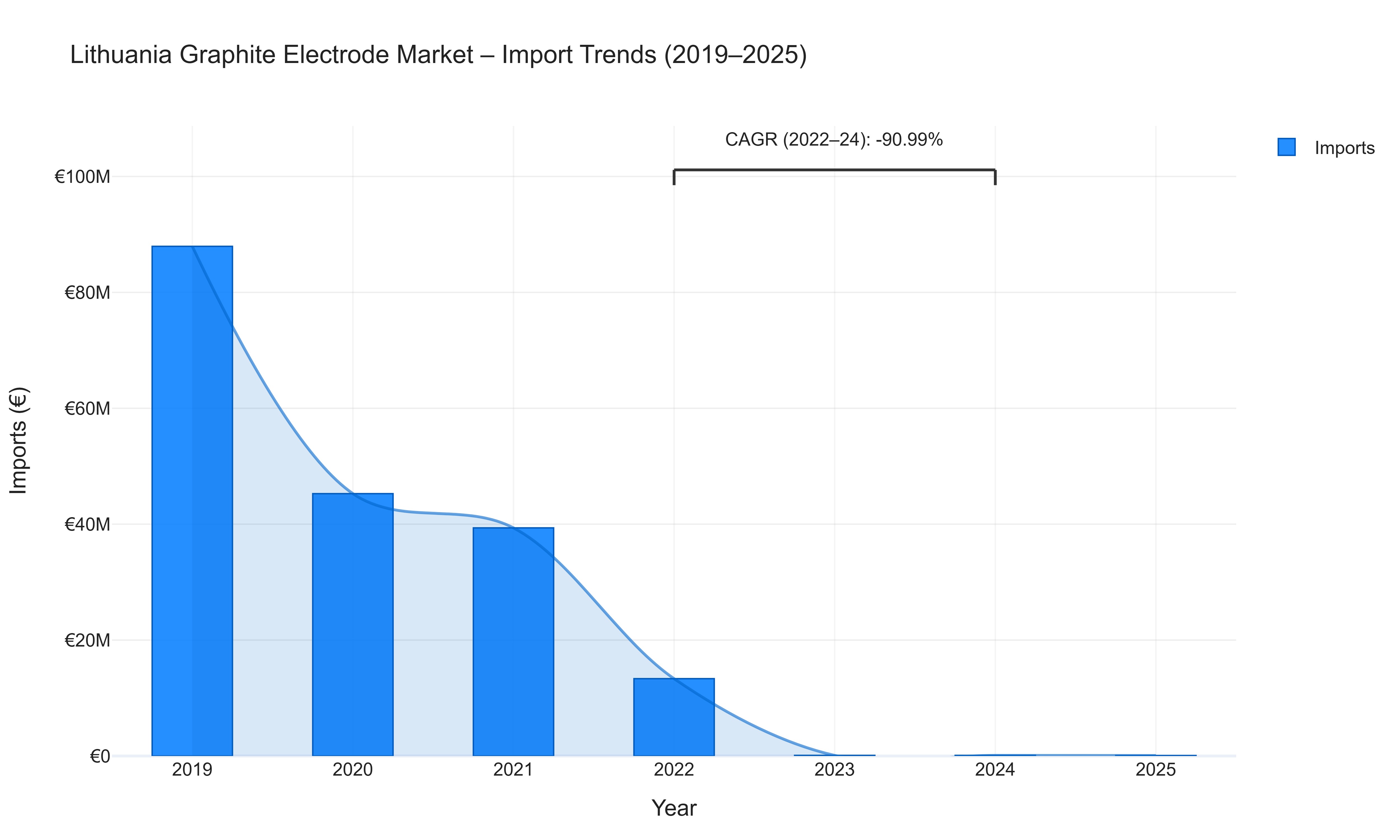
The Import Value for graphite electrodes in Lithuania witnessed significant fluctuations over the years, with notable peaks in 2019 at €87.95 million and a subsequent sharp decline to €13.34 million in 2022. This downward trend continued until 2023, reaching €103.98 thousand, before a slight uptick in 2024 and a further decrease in 2025. These fluctuations can be attributed to various factors such as shifts in the global supply chain, changes in demand dynamics, and market uncertainties. The exceptionally low CAGR of -90.99% from 2022 to 2024 reflects the drastic reduction in import values during this period, indicating a challenging market environment and potentially shifting dynamics within the graphite electrode industry. This trend underscores the need for market players to adapt to evolving conditions and implement strategic measures to navigate the volatile import landscape effectively.
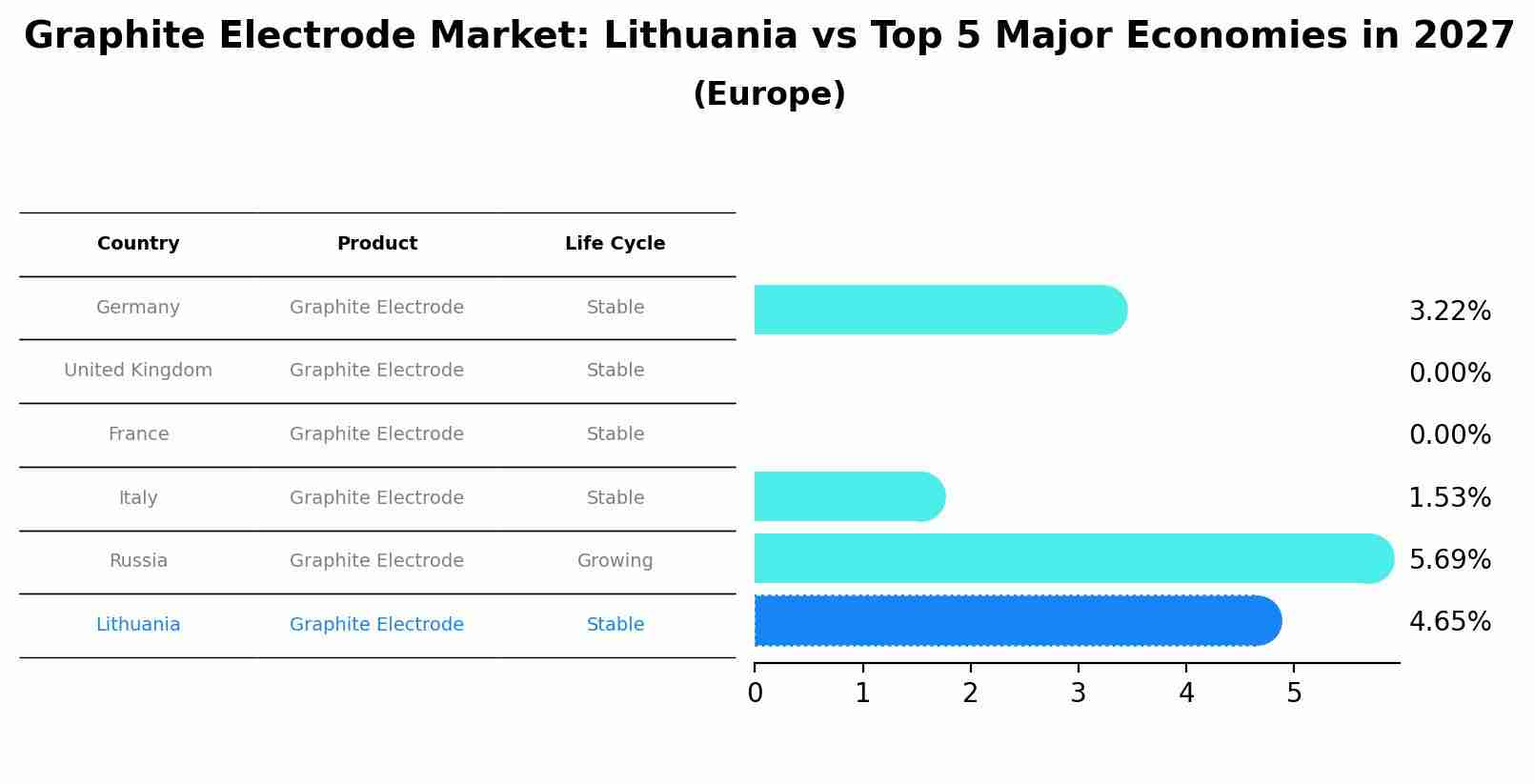
Graphite Electrode Market: Lithuania vs Top 5 Major Economies in 2027 (Europe)
The Graphite Electrode market in Lithuania is projected to grow at a stable growth rate of 4.65% by 2027, within the Europe region led by Germany, along with other countries like United Kingdom, France, Italy and Russia, collectively shaping a dynamic and evolving market environment driven by innovation and increasing adoption of emerging technologies.
Key Highlights of the Report:
- Lithuania Graphite Electrode Market Outlook
- Market Size of Lithuania Graphite Electrode Market, 2024
- Forecast of Lithuania Graphite Electrode Market, 2031
- Historical Data and Forecast of Lithuania Graphite Electrode Revenues & Volume for the Period 2021-2031
- Lithuania Graphite Electrode Market Trend Evolution
- Lithuania Graphite Electrode Market Drivers and Challenges
- Lithuania Graphite Electrode Price Trends
- Lithuania Graphite Electrode Porter`s Five Forces
- Lithuania Graphite Electrode Industry Life Cycle
- Historical Data and Forecast of Lithuania Graphite Electrode Market Revenues & Volume By Electrode Grade for the Period 2021-2031
- Historical Data and Forecast of Lithuania Graphite Electrode Market Revenues & Volume By Ultra High Power (UHP) for the Period 2021-2031
- Historical Data and Forecast of Lithuania Graphite Electrode Market Revenues & Volume By High Power (SHP) for the Period 2021-2031
- Historical Data and Forecast of Lithuania Graphite Electrode Market Revenues & Volume By Regular Power (RP) for the Period 2021-2031
- Historical Data and Forecast of Lithuania Graphite Electrode Market Revenues & Volume By Application for the Period 2021-2031
- Historical Data and Forecast of Lithuania Graphite Electrode Market Revenues & Volume By Electric Arc Furnace for the Period 2021-2031
- Historical Data and Forecast of Lithuania Graphite Electrode Market Revenues & Volume By Basic Oxygen Furnace for the Period 2021-2031
- Historical Data and Forecast of Lithuania Graphite Electrode Market Revenues & Volume By Non-steel Application for the Period 2021-2031
- Lithuania Graphite Electrode Import Export Trade Statistics
- Market Opportunity Assessment By Electrode Grade
- Market Opportunity Assessment By Application
- Lithuania Graphite Electrode Top Companies Market Share
- Lithuania Graphite Electrode Competitive Benchmarking By Technical and Operational Parameters
- Lithuania Graphite Electrode Company Profiles
- Lithuania Graphite Electrode Key Strategic Recommendations






































