Lithuania Handbag Market Size (2020-2030)
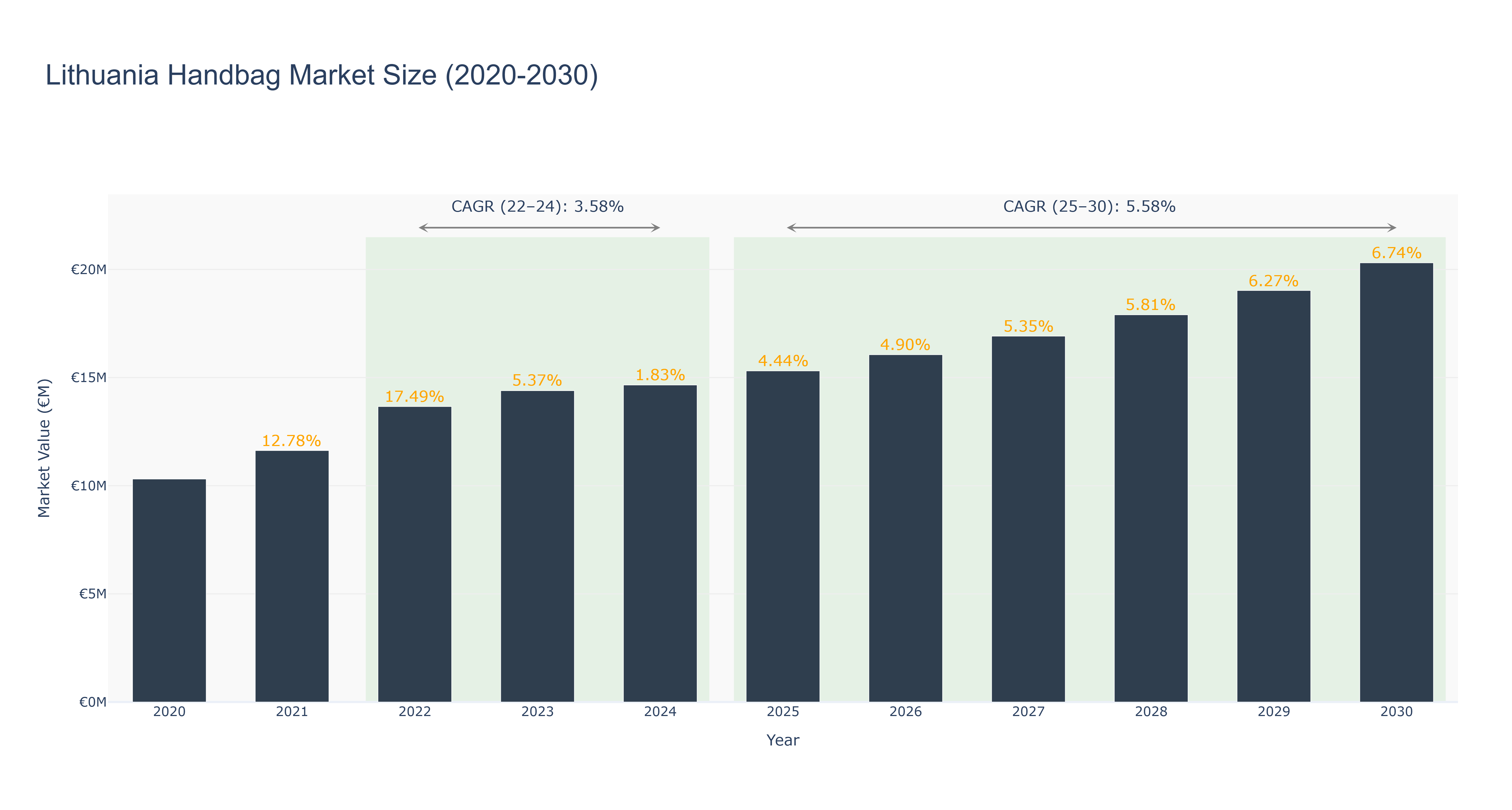
The Lithuania Handbag Market has shown a steady growth trajectory over the years. The peak market size was €20.31 million in 2030, with consistent growth from €10.31 million in 2020. The market size increased from €13.66 million in 2022 to €14.66 million in 2024, with a CAGR of 3.58%. Forecasted growth from 2025 to 2030 is projected to be robust, with a CAGR of 5.58%. This growth can be attributed to increasing disposable income, changing fashion trends, and growing consumer awareness. In line with this positive trend, upcoming developments in the Lithuanian market include collaborations between local designers and international brands, aiming to expand market reach and offer innovative products. As such, the Lithuania Handbag Market is poised for continued expansion, driven by consumer demand and strategic industry partnerships.
Lithuania Handbag Market: Production & Trade Performance (2019-2025)
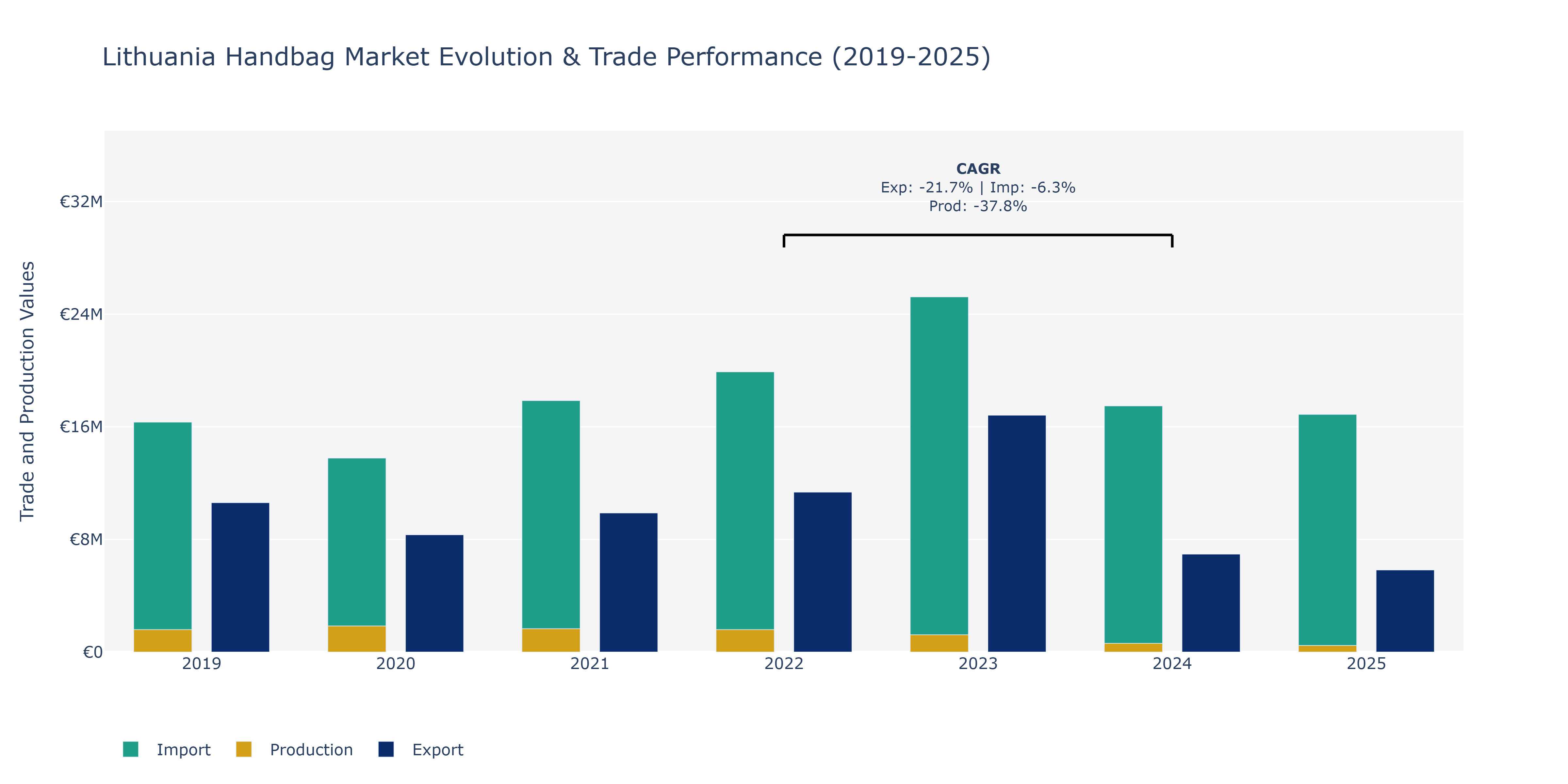
Between 2019 and 2025, the Lithuania Handbag Market experienced fluctuations in Exports, Imports, and Production. Exports saw a decline from €10.61 million in 2019 to around €5.83 million in 2025, with a peak in 2023 at €16.83 million. Imports followed a similar pattern, decreasing from over €16.33 million in 2019 to approximately €16.88 million in 2025, peaking at €25.23 million in 2023. Production also showed a downward trend, dropping from €1.6 million in 2019 to about €0.5 million in 2025, with a peak in 2020 at €1.8 million. The decline in production could be attributed to shifts in consumer preferences towards alternative materials or styles, impacting the local manufacturing sector. The fluctuating export and import values may have been influenced by changing global trade dynamics and economic conditions, leading to varying demand levels for handbags in Lithuania. To adapt to these market changes, industry players may need to focus on product innovation, sustainable practices, and diversified market strategies to remain competitive in the evolving landscape.
Key Highlights of the Report:
- Lithuania Handbag Market Outlook
- Market Size of Lithuania Handbag Market, 2025
- Forecast of Lithuania Handbag Market, 2032
- Historical Data and Forecast of Lithuania Handbag Revenues & Volume for the Period 2022 - 2032F
- Lithuania Handbag Market Trend Evolution
- Lithuania Handbag Market Drivers and Challenges
- Lithuania Handbag Price Trends
- Lithuania Handbag Porter`s Five Forces
- Lithuania Handbag Industry Life Cycle
- Historical Data and Forecast of Lithuania Handbag Market Revenues & Volume By Product Type for the Period 2022 - 2032F
- Historical Data and Forecast of Lithuania Handbag Market Revenues & Volume By Satchel for the Period 2022 - 2032F
- Historical Data and Forecast of Lithuania Handbag Market Revenues & Volume By Bucket Bag for the Period 2022 - 2032F
- Historical Data and Forecast of Lithuania Handbag Market Revenues & Volume By Clutch for the Period 2022 - 2032F
- Historical Data and Forecast of Lithuania Handbag Market Revenues & Volume By Tote Bag for the Period 2022 - 2032F
- Historical Data and Forecast of Lithuania Handbag Market Revenues & Volume By Other Product Types for the Period 2022 - 2032F
- Historical Data and Forecast of Lithuania Handbag Market Revenues & Volume By Distribution Channel for the Period 2022 - 2032F
- Historical Data and Forecast of Lithuania Handbag Market Revenues & Volume By Online Retail Stores for the Period 2022 - 2032F
- Historical Data and Forecast of Lithuania Handbag Market Revenues & Volume By Offline Retail Stores for the Period 2022 - 2032F
- Lithuania Handbag Import Export Trade Statistics
- Market Opportunity Assessment By Product Type
- Market Opportunity Assessment By Distribution Channel
- Lithuania Handbag Top Companies Market Share
- Lithuania Handbag Competitive Benchmarking By Technical and Operational Parameters
- Lithuania Handbag Company Profiles
- Lithuania Handbag Key Strategic Recommendations






































