Lithuania Kids Footwear Market Size (2020-2030)
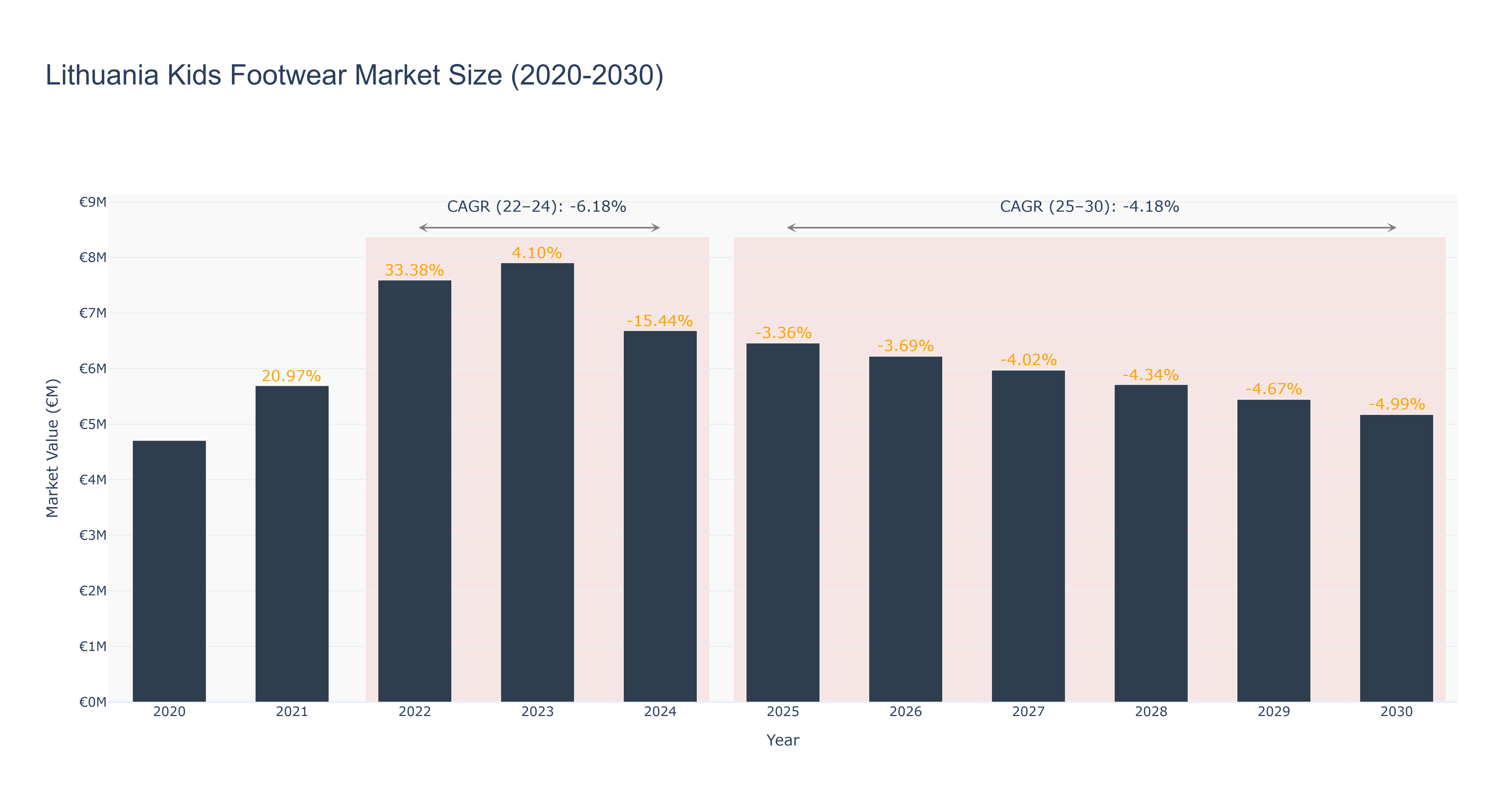
Lithuania Kids Footwear Market has experienced fluctuations in market size over the years. The peak market size was €7.90 million in 2023, followed by a decline to €6.68 million in 2024. Forecasted market sizes show a further decrease to €5.17 million by 2030. The CAGR for the period 2022-24 was -6.18%, while for 2025-30 it is projected at -4.18%. The downward trend can be attributed to changing consumer preferences, economic uncertainties, and increased competition. Looking ahead, the market is expected to focus on sustainable practices and innovative designs to attract customers. Recent developments include partnerships with local designers to create unique collections and plans to expand online sales channels to reach a wider audience. These strategies aim to revitalize the market and drive future growth despite current challenges.
Lithuania Kids Footwear Market: Production & Trade Performance (2019-2025)
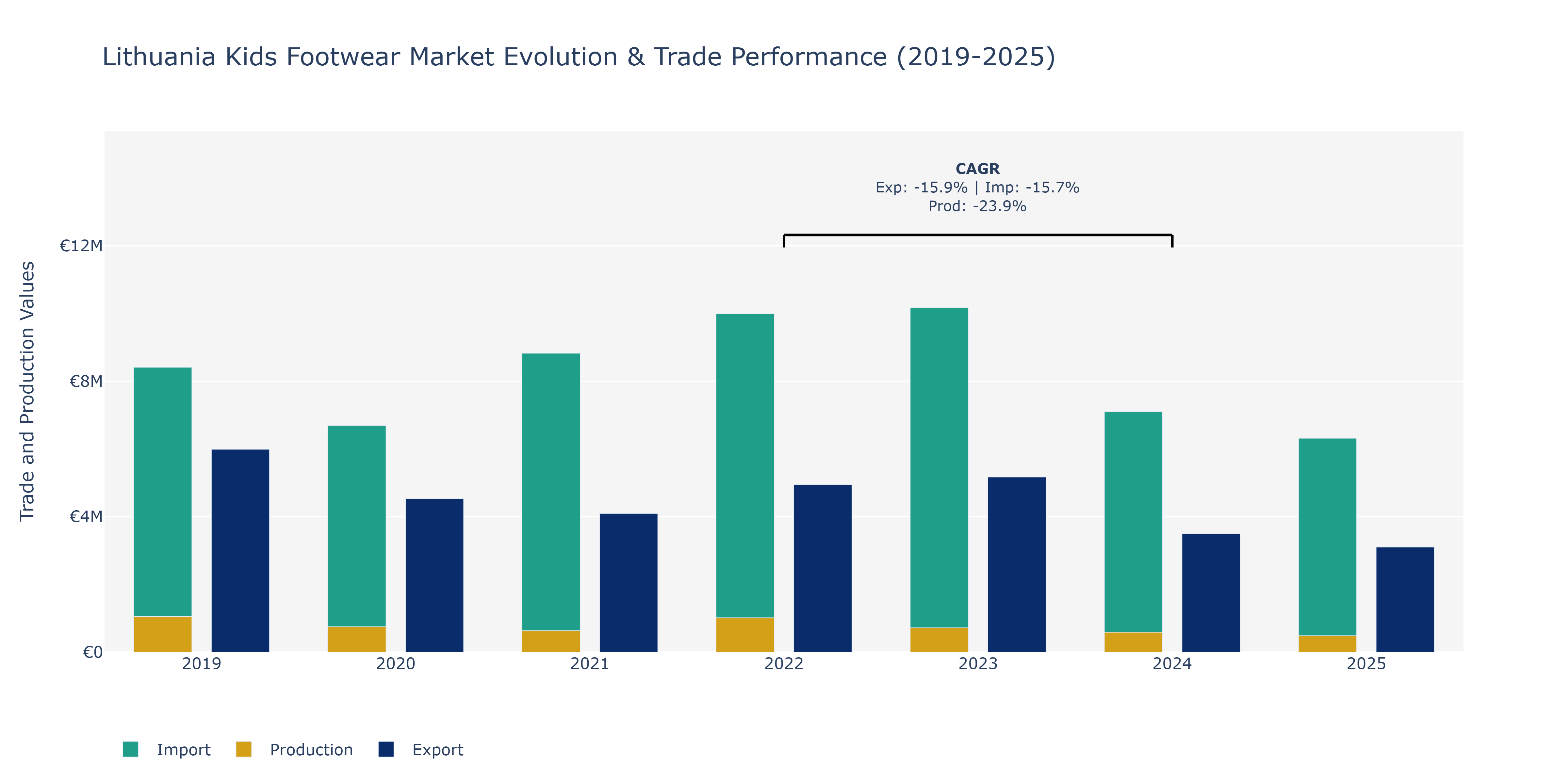
In the Lithuania Kids Footwear Market, from 2019 to 2025, exports consistently decreased from €5.99 million to around €3.10 million. Imports followed a similar trend, declining from €8.41 million in 2019 to approximately €6.32 million in 2025. Production also experienced a continuous decrease, dropping from €1.05 million in 2019 to about €0.48 million in 2025. The market saw its peak export and import values in 2019, while production peaked in 2019 as well. These declines can be attributed to various factors such as changing consumer preferences, global economic conditions affecting purchasing power, and increasing competition from other markets. The decrease in production specifically may indicate shifts in manufacturing strategies or outsourcing practices within the market. To mitigate the declining trend, market players may need to focus on product innovation, quality improvements, and strategic pricing strategies to remain competitive in the industry.
Key Highlights of the Report:
- Lithuania Kids Footwear Market Outlook
- Market Size of Lithuania Kids Footwear Market, 2025
- Forecast of Lithuania Kids Footwear Market, 2032
- Historical Data and Forecast of Lithuania Kids Footwear Revenues & Volume for the Period 2022 - 2032F
- Lithuania Kids Footwear Market Trend Evolution
- Lithuania Kids Footwear Market Drivers and Challenges
- Lithuania Kids Footwear Price Trends
- Lithuania Kids Footwear Porter`s Five Forces
- Lithuania Kids Footwear Industry Life Cycle
- Historical Data and Forecast of Lithuania Kids Footwear Market Revenues & Volume By Product Type for the Period 2022 - 2032F
- Historical Data and Forecast of Lithuania Kids Footwear Market Revenues & Volume By Casual for the Period 2022 - 2032F
- Historical Data and Forecast of Lithuania Kids Footwear Market Revenues & Volume By Sports for the Period 2022 - 2032F
- Historical Data and Forecast of Lithuania Kids Footwear Market Revenues & Volume By Formal for the Period 2022 - 2032F
- Historical Data and Forecast of Lithuania Kids Footwear Market Revenues & Volume By Others for the Period 2022 - 2032F
- Historical Data and Forecast of Lithuania Kids Footwear Market Revenues & Volume By End-users for the Period 2022 - 2032F
- Historical Data and Forecast of Lithuania Kids Footwear Market Revenues & Volume By Boys for the Period 2022 - 2032F
- Historical Data and Forecast of Lithuania Kids Footwear Market Revenues & Volume By Girls for the Period 2022 - 2032F
- Historical Data and Forecast of Lithuania Kids Footwear Market Revenues & Volume By Unisex for the Period 2022 - 2032F
- Lithuania Kids Footwear Import Export Trade Statistics
- Market Opportunity Assessment By Product Type
- Market Opportunity Assessment By End-users
- Lithuania Kids Footwear Top Companies Market Share
- Lithuania Kids Footwear Competitive Benchmarking By Technical and Operational Parameters
- Lithuania Kids Footwear Company Profiles
- Lithuania Kids Footwear Key Strategic Recommendations






































