Lithuania Naphtha Market Top 5 Importing Countries and Market Competition (HHI) Analysis
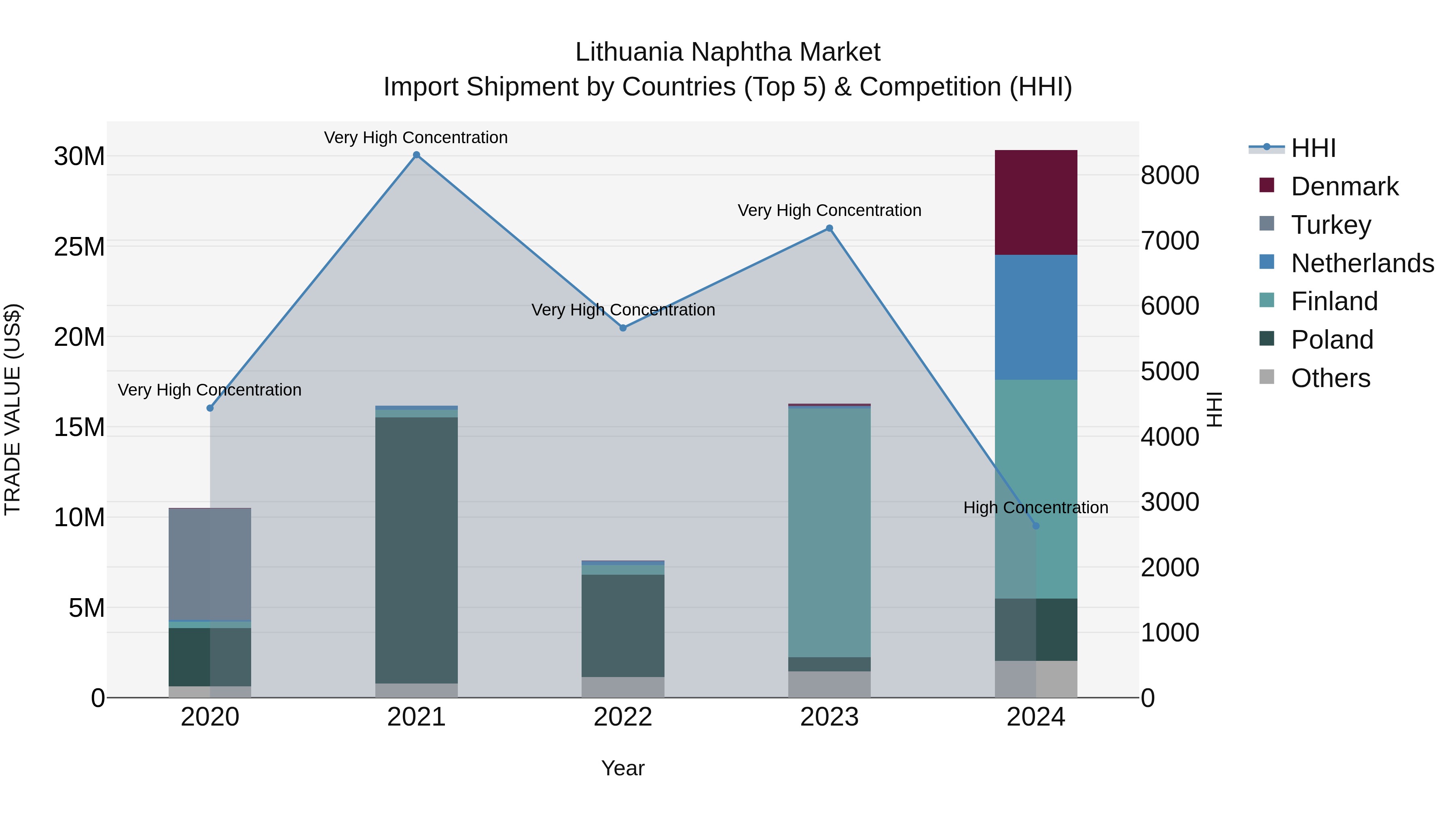
Lithuania`s naphtha import market saw significant growth in 2024, with top exporters including Finland, Netherlands, Denmark, Poland, and Belgium. The market concentration remained high, indicating a competitive landscape. The impressive CAGR of 30.37% from 2020-24 and a remarkable growth rate of 86.28% from 2023-24 highlight the increasing demand for naphtha in Lithuania, reflecting a thriving market with potential opportunities for both buyers and sellers.
Lithuania Naphtha Market Synopsis
The Lithuania Naphtha Market is experiencing steady growth driven by various industries such as petrochemicals, refineries, and energy production. Naphtha serves as a key feedstock for the production of olefins, aromatics, and other chemicals, making it a crucial component in the manufacturing sector. The market is influenced by factors such as global oil prices, demand from end-user industries, and government regulations. Additionally, increasing investments in infrastructure and industrial development in Lithuania are expected to further boost the demand for naphtha in the coming years. Market players are focusing on enhancing production capacity, product quality, and exploring new applications to stay competitive in the evolving market landscape.
Lithuania Naphtha Market Trends
Currently, the Lithuania Naphtha Market is experiencing a steady growth trajectory driven by the increasing demand for petrochemical products in the region. One of the key trends in the market is the shift towards sustainable and environmentally friendly production processes, leading to a rising interest in bio-based naphtha derived from renewable sources. Another significant opportunity lies in the development of new technologies for naphtha processing and utilization, aimed at improving efficiency and reducing environmental impact. Additionally, the growing focus on diversifying energy sources and reducing dependency on traditional fossil fuels presents a promising outlook for the naphtha market in Lithuania, with potential for innovation and investment in renewable energy solutions.
Lithuania Naphtha Market Challenges
In the Lithuania Naphtha Market, several challenges are faced, including fluctuating global oil prices that directly impact naphtha pricing, competition from alternative energy sources, and regulatory uncertainties surrounding environmental policies. Additionally, the market may face supply chain disruptions due to geopolitical tensions or natural disasters, affecting the availability and cost of naphtha. Market players in Lithuania must also contend with changing consumer preferences towards cleaner energy sources, which could dampen demand for naphtha-based products in the long term. Adapting to these challenges will require market participants to enhance operational efficiency, diversify their product offerings, invest in sustainable practices, and stay informed about the evolving regulatory landscape to remain competitive in the Lithuania Naphtha Market.
Lithuania Naphtha Market Investment Opportunities
The Lithuania Naphtha Market is primarily driven by factors such as the increasing demand for naphtha as a feedstock in the petrochemical industry for the production of plastics, resins, and other chemicals. Additionally, the growth of the transportation and automotive sectors in the region has led to a rise in demand for naphtha as a blending component in gasoline. Furthermore, the expansion of refineries and the increasing focus on upgrading their production capabilities to meet stringent environmental regulations are also contributing to the growth of the naphtha market in Lithuania. Overall, the market is expected to be driven by the continued industrialization and economic development in the country, coupled with the growing need for naphtha in various end-use industries.
Lithuania Naphtha Market Government Polices
The Lithuanian government has implemented various policies related to the naphtha market to promote energy security and sustainability. Key policies include the promotion of renewable energy sources through the implementation of the National Energy Independence Strategy 2050, which aims to reduce dependence on imported fossil fuels like naphtha. Additionally, Lithuania is part of the European Union Emissions Trading System (EU ETS), which sets a cap on greenhouse gas emissions and incentivizes industries to reduce their carbon footprint, potentially impacting naphtha production and consumption. The government also supports energy efficiency measures and investments in alternative energy sources to diversify the energy mix and reduce reliance on naphtha, aligning with the country`s goals for a more sustainable and secure energy future.
Lithuania Naphtha Market Future Outlook
The future outlook for the Lithuania Naphtha Market appears promising due to several factors. The increasing demand for petrochemical products and the growth of the chemical industry are expected to drive the consumption of naphtha in the country. Additionally, the rising investments in infrastructure and industrial development projects are likely to create a steady demand for naphtha as a feedstock. The shift towards cleaner energy sources and the emphasis on reducing carbon emissions may also lead to the exploration of naphtha as a potential alternative in the energy sector. However, challenges such as fluctuating crude oil prices, geopolitical uncertainties, and regulatory changes could impact the market dynamics. Overall, with strategic planning and adaptation to market trends, the Lithuania Naphtha Market is poised for growth in the coming years.
Key Highlights of the Report:
- Lithuania Naphtha Market Outlook
- Market Size of Lithuania Naphtha Market, 2024
- Forecast of Lithuania Naphtha Market, 2031
- Historical Data and Forecast of Lithuania Naphtha Revenues & Volume for the Period 2021- 2031
- Lithuania Naphtha Market Trend Evolution
- Lithuania Naphtha Market Drivers and Challenges
- Lithuania Naphtha Price Trends
- Lithuania Naphtha Porter's Five Forces
- Lithuania Naphtha Industry Life Cycle
- Historical Data and Forecast of Lithuania Naphtha Market Revenues & Volume By Application for the Period 2021- 2031
- Historical Data and Forecast of Lithuania Naphtha Market Revenues & Volume By Chemicals for the Period 2021- 2031
- Historical Data and Forecast of Lithuania Naphtha Market Revenues & Volume By Energy/Fuel for the Period 2021- 2031
- Historical Data and Forecast of Lithuania Naphtha Market Revenues & Volume By Others for the Period 2021- 2031
- Lithuania Naphtha Import Export Trade Statistics
- Market Opportunity Assessment By Application
- Lithuania Naphtha Top Companies Market Share
- Lithuania Naphtha Competitive Benchmarking By Technical and Operational Parameters
- Lithuania Naphtha Company Profiles
- Lithuania Naphtha Key Strategic Recommendations






































