Slovakia Naphtha Market Top 5 Importing Countries and Market Competition (HHI) Analysis
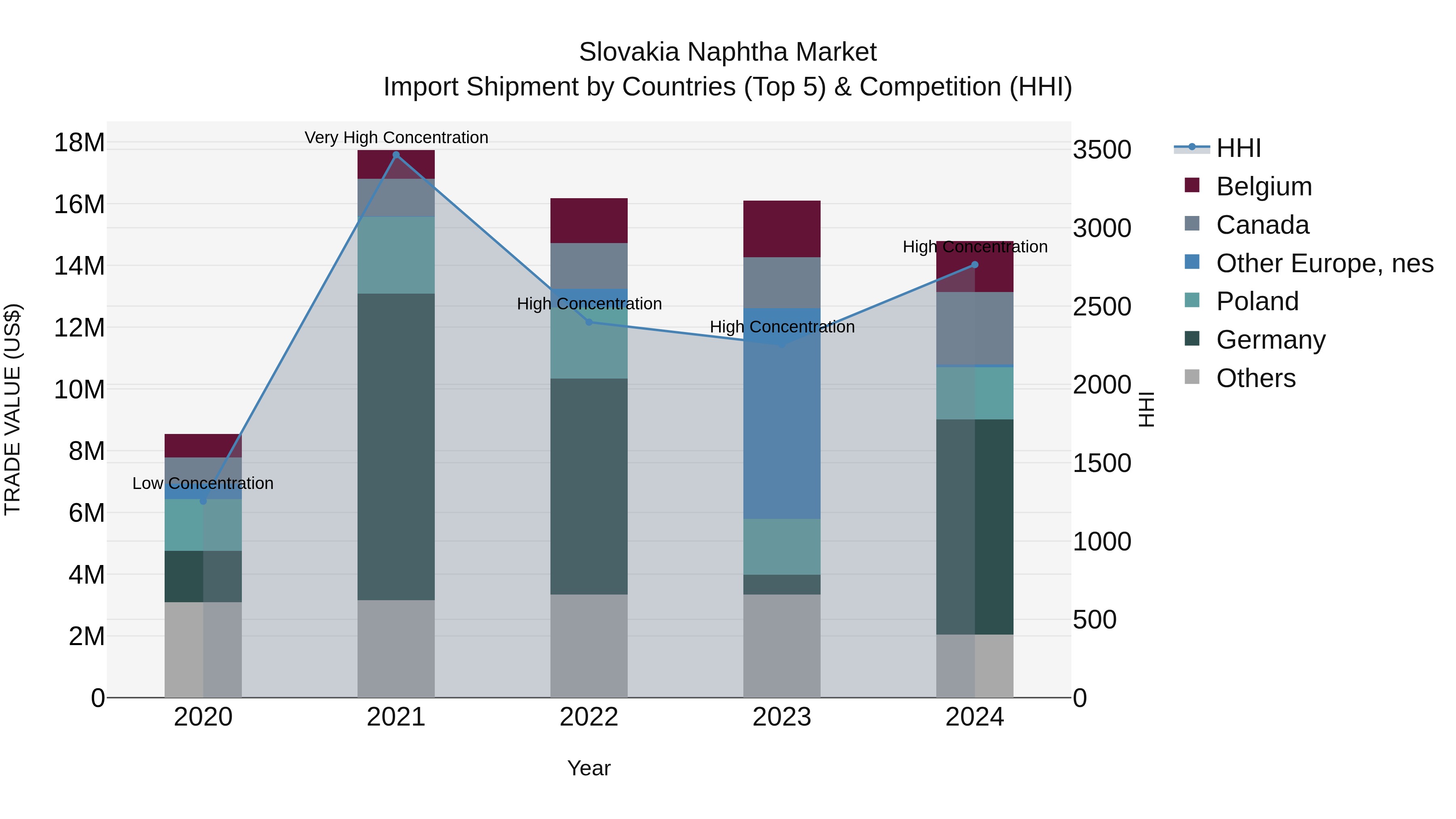
Slovakia`s naphtha import Market Top 5 Importing Countries and Market Competition (HHI) Analysis in 2024 continued to be dominated by key exporters such as Germany, Canada, Poland, Belgium, and the USA. Despite a slight decrease in growth rate from 2023 to 2024, the compound annual growth rate (CAGR) from 2020 to 2024 remained strong at 14.69%. The high concentration of the Herfindahl-Hirschman Index (HHI) indicates a competitive Market Top 5 Importing Countries and Market Competition (HHI) Analysis with significant Market Top 5 Importing Countries and Market Competition (HHI) Analysis share held by a few major players. Slovakia`s reliance on these top exporting countries highlights the importance of monitoring global trends and geopolitical factors impacting naphtha trade.
Slovakia Naphtha Market Synopsis
The Slovakia Naphtha Market is experiencing steady growth due to its diverse applications in various industries such as petrochemicals, chemicals, and refineries. Naphtha is a key feedstock in the production of plastics, synthetic fibers, and other chemical products, driving demand in the market. Additionally, the increasing focus on developing cleaner fuels has led to the utilization of naphtha as a blending component in gasoline production. The market is also influenced by global crude oil prices, as naphtha is derived from crude oil refining processes. Key players in the Slovakia Naphtha Market include refineries, chemical manufacturers, and petrochemical companies. Ongoing investments in infrastructure and technology advancements are expected to further propel the market growth in the coming years.
Slovakia Naphtha Market Trends
The Slovakia Naphtha Market is experiencing steady growth due to the increasing demand for petrochemical feedstock and the expansion of the chemical industry in the region. The market is witnessing a shift towards cleaner and more sustainable naphtha production methods, driven by environmental regulations and consumer preferences. Opportunities in the market include the development of advanced refining technologies to enhance naphtha quality, as well as investments in infrastructure to support the transportation and storage of naphtha. Additionally, the growing focus on renewable energy sources presents opportunities for the integration of bio-based naphtha into the market. Overall, the Slovakia Naphtha Market is poised for further growth and innovation, with potential for strategic partnerships and collaborations to drive sustainable development in the industry.
Slovakia Naphtha Market Challenges
In the Slovakia Naphtha Market, there are several key challenges faced by industry players. These include fluctuating crude oil prices, which directly impact naphtha prices and profitability. Additionally, competition from alternative energy sources and regulatory pressures to reduce carbon emissions pose challenges for naphtha producers. Infrastructure constraints and limited refining capacity in Slovakia also hinder the market`s growth potential. Furthermore, the market is susceptible to geopolitical tensions and global economic uncertainties, which can disrupt supply chains and affect demand for naphtha products. Overall, navigating these challenges requires strategic planning, innovation, and adaptability to ensure competitiveness and sustainability in the Slovakia Naphtha Market.
Slovakia Naphtha Market Investment Opportunities
The Slovakia Naphtha Market is primarily driven by factors such as the growing demand for petrochemical products, particularly in the plastics and chemicals industries. The increasing industrialization and urbanization in Slovakia are fueling the demand for naphtha as a feedstock for the production of various chemicals and plastics. Additionally, the country`s strategic location in Central Europe and its strong transportation infrastructure make it an attractive hub for naphtha trade. Furthermore, the shift towards cleaner energy sources and the development of new technologies for naphtha processing are expected to drive market growth in the coming years. Overall, these factors are driving the Slovakia Naphtha Market towards expansion and development.
Slovakia Naphtha Market Government Polices
In Slovakia, the government has implemented policies related to the naphtha market that focus on environmental protection and energy efficiency. These policies include regulations on emissions control, waste management, and the promotion of renewable energy sources. The government has also introduced measures to increase transparency and competition within the naphtha market, aiming to ensure fair pricing and prevent monopolistic practices. Additionally, Slovakia has established partnerships with other European Union countries to align its naphtha market regulations with EU standards and promote sustainable energy practices. Overall, the government`s policies in Slovakia`s naphtha market are geared towards balancing economic growth with environmental sustainability and energy security.
Slovakia Naphtha Market Future Outlook
The future outlook for the Slovakia Naphtha Market is expected to be positive, driven by several factors such as increasing demand from the petrochemical industry, growing investments in refinery infrastructure, and rising usage in the production of plastics and chemicals. The market is likely to benefit from the country`s strategic location in Central Europe, which provides access to key markets and transportation networks. Additionally, environmental regulations and the shift towards cleaner fuels may impact the market dynamics, leading to potential changes in naphtha consumption patterns. Overall, the Slovakia Naphtha Market is anticipated to witness steady growth in the coming years, with opportunities for market players to capitalize on emerging trends and technological advancements in the industry.
Key Highlights of the Report:
- Slovakia Naphtha Market Outlook
- Market Size of Slovakia Naphtha Market, 2024
- Forecast of Slovakia Naphtha Market, 2031
- Historical Data and Forecast of Slovakia Naphtha Revenues & Volume for the Period 2021- 2031
- Slovakia Naphtha Market Trend Evolution
- Slovakia Naphtha Market Drivers and Challenges
- Slovakia Naphtha Price Trends
- Slovakia Naphtha Porter's Five Forces
- Slovakia Naphtha Industry Life Cycle
- Historical Data and Forecast of Slovakia Naphtha Market Revenues & Volume By Application for the Period 2021- 2031
- Historical Data and Forecast of Slovakia Naphtha Market Revenues & Volume By Chemicals for the Period 2021- 2031
- Historical Data and Forecast of Slovakia Naphtha Market Revenues & Volume By Energy/Fuel for the Period 2021- 2031
- Historical Data and Forecast of Slovakia Naphtha Market Revenues & Volume By Others for the Period 2021- 2031
- Slovakia Naphtha Import Export Trade Statistics
- Market Opportunity Assessment By Application
- Slovakia Naphtha Top Companies Market Share
- Slovakia Naphtha Competitive Benchmarking By Technical and Operational Parameters
- Slovakia Naphtha Company Profiles
- Slovakia Naphtha Key Strategic Recommendations






































