Lithuania Pasta And Noodles Market Size (2020-2030)
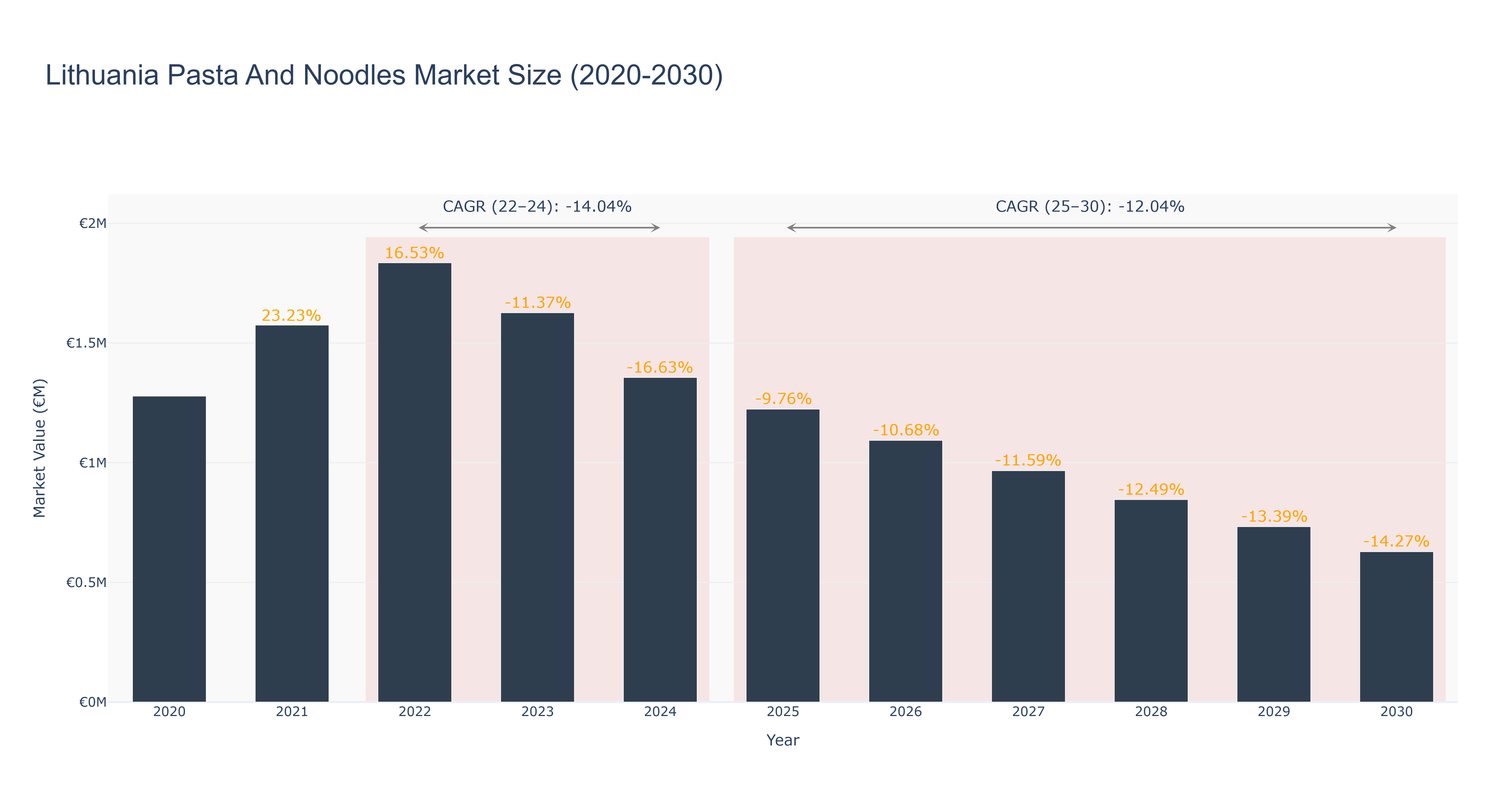
The Lithuania Pasta And Noodles Market experienced a peak market size of €1.84 million in 2022. The market size gradually declined to €1.09 million in 2026, with a negative CAGR of -10.68% from 2020 to 2026. The forecasted market size is expected to continue decreasing to €0.63 million by 2030, with a CAGR of -12.04% from 2025 to 2030. The market faced challenges due to changing consumer preferences towards healthier food options and increased competition from other food categories. To counter this trend, market players are focusing on innovative product offerings, such as gluten-free and organic pasta and noodles, to attract health-conscious consumers. In the near future, collaborations with local farmers to source high-quality ingredients sustainably are expected to enhance the market's competitiveness and sustainability.
Lithuania Pasta And Noodles Market: Production & Trade Performance (2019-2025)
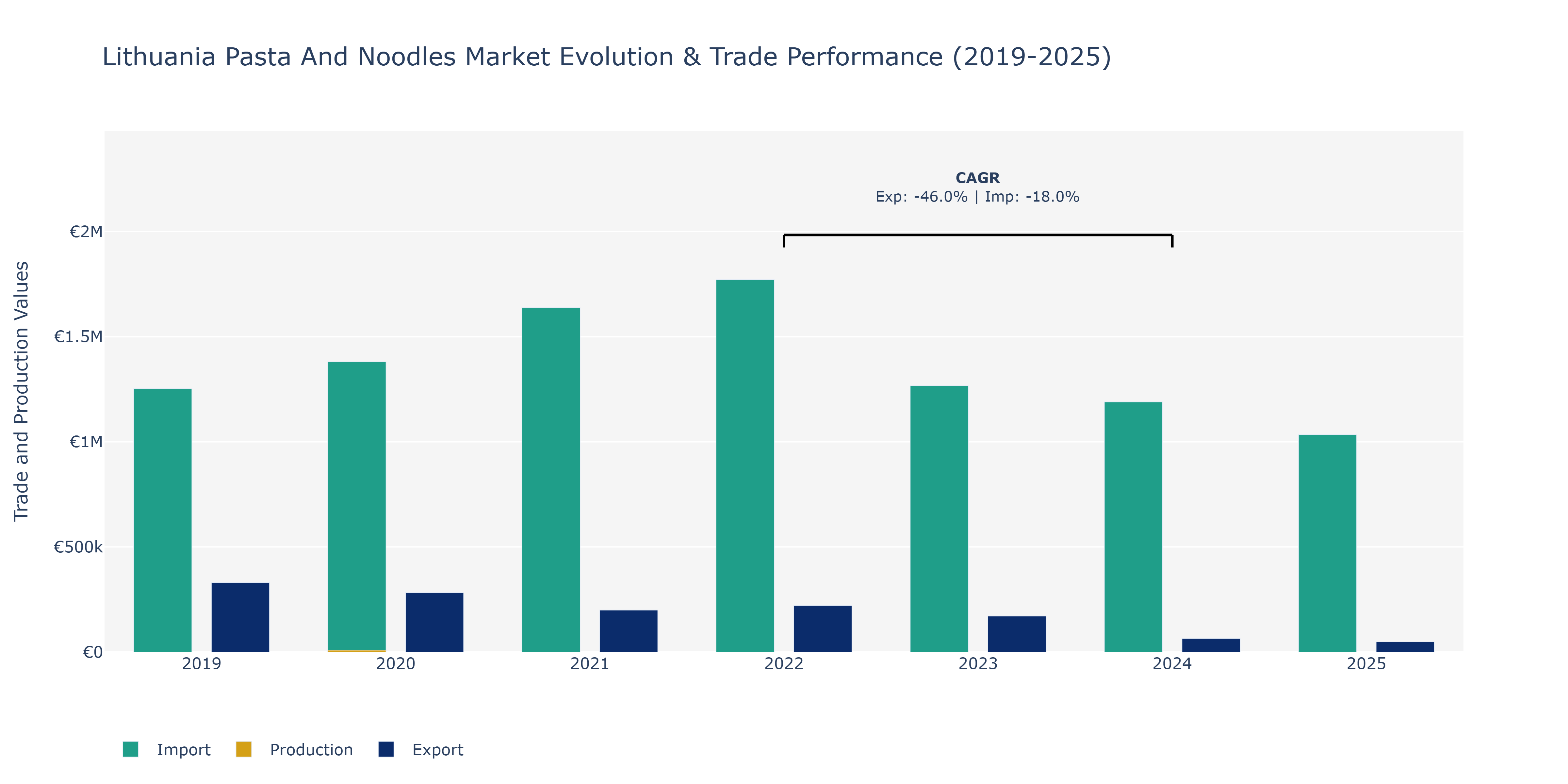
In the Lithuania Pasta and Noodles Market, exports experienced a downward trend from 2019 to 2025, starting at €330.88 thousand in 2019 and decreasing to around €48.64 thousand in 2025. This decline can be attributed to various factors such as changing consumer preferences towards healthier or locally-produced food options, impacting the demand for traditional pasta and noodles. On the other hand, imports saw a fluctuating pattern, peaking at €1.77 million in 2022 before declining to approximately €1.03 million in 2025. This fluctuation could be due to shifts in global trade dynamics, currency exchange rates, or changes in import regulations affecting the inflow of pasta and noodles into the Lithuanian market. To maintain market relevance, local producers could focus on innovating their product offerings to align with evolving consumer preferences and investing in sustainable production practices to appeal to environmentally-conscious consumers.
Key Highlights of the Report:
- Lithuania Pasta and Noodles Market Outlook
- Market Size of Lithuania Pasta and Noodles Market, 2025
- Forecast of Lithuania Pasta and Noodles Market, 2032
- Historical Data and Forecast of Lithuania Pasta and Noodles Revenues & Volume for the Period 2022 - 2032F
- Lithuania Pasta and Noodles Market Trend Evolution
- Lithuania Pasta and Noodles Market Drivers and Challenges
- Lithuania Pasta and Noodles Price Trends
- Lithuania Pasta and Noodles Porter`s Five Forces
- Lithuania Pasta and Noodles Industry Life Cycle
- Historical Data and Forecast of Lithuania Pasta and Noodles Market Revenues & Volume By Product for the Period 2022 - 2032F
- Historical Data and Forecast of Lithuania Pasta and Noodles Market Revenues & Volume By Ambient for the Period 2022 - 2032F
- Historical Data and Forecast of Lithuania Pasta and Noodles Market Revenues & Volume By Dried for the Period 2022 - 2032F
- Historical Data and Forecast of Lithuania Pasta and Noodles Market Revenues & Volume By Chilled for the Period 2022 - 2032F
- Lithuania Pasta and Noodles Import Export Trade Statistics
- Market Opportunity Assessment By Product
- Lithuania Pasta and Noodles Top Companies Market Share
- Lithuania Pasta and Noodles Competitive Benchmarking By Technical and Operational Parameters
- Lithuania Pasta and Noodles Company Profiles
- Lithuania Pasta and Noodles Key Strategic Recommendations






































