Lithuania Pneumatic Valves Market Size (2020-2030)
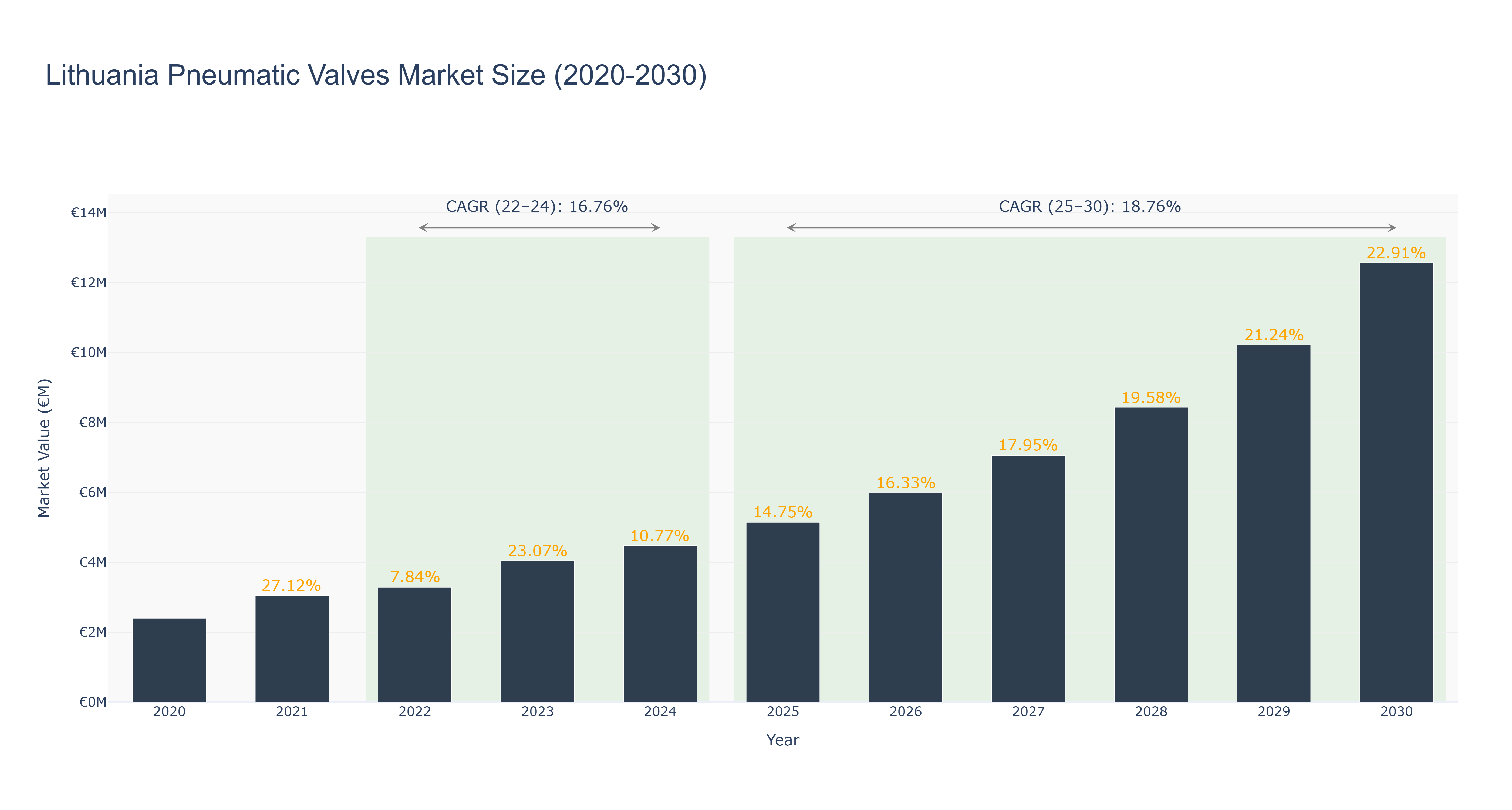
The Lithuania Pneumatic Valves Market has shown a steady growth trajectory over the years. The peak market size of €12.56 million is forecasted for 2030, with a notable increase in market size from €2.40 million in 2020 to €4.48 million in 2024. The market is expected to continue its upward trend, reaching €12.56 million by 2030, with a CAGR of 18.76% from 2025 to 2030. The market experienced a significant growth spurt from 2025 onwards, driven by increasing industrial automation and the demand for efficient pneumatic systems. Looking ahead, Lithuania is set to witness the implementation of new smart manufacturing initiatives in the pneumatic valves sector, aimed at enhancing production efficiency and reliability in the country's industrial landscape.
Lithuania Pneumatic Valves Market: Production & Trade Performance (2019-2025)
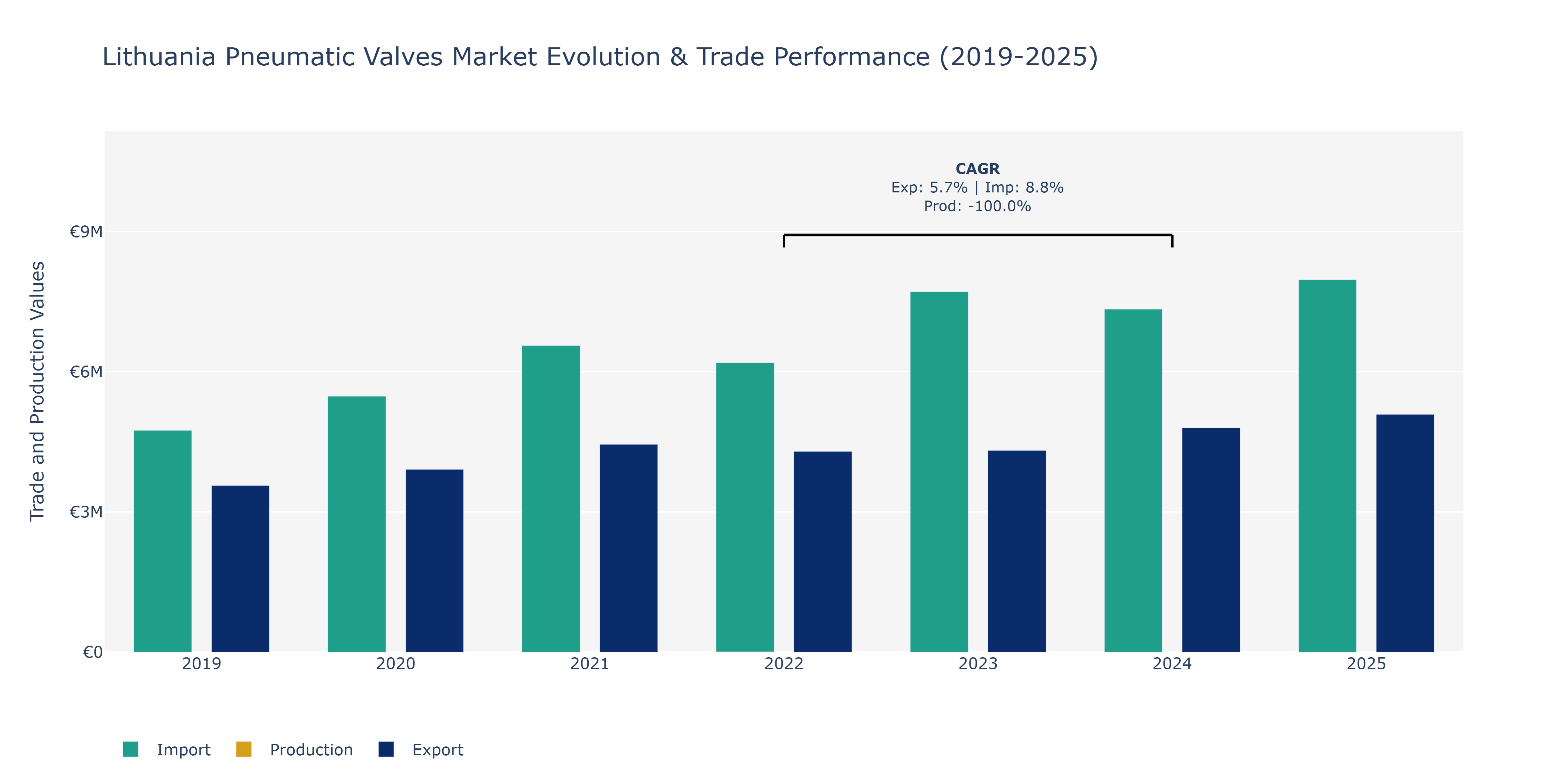
From 2019 to 2025, the Lithuania Pneumatic Valves Market demonstrated consistent growth in both exports and imports. Exports increased from €3.57 million in 2019 to approximately €5.09 million in 2025, with a peak in 2024 at €4.80 million. Conversely, imports showed a similar upward trajectory, rising from €4.75 million in 2019 to around €7.97 million in 2025, reaching a peak in 2023 at €7.72 million. The surge in exports and imports can be attributed to Lithuania's growing industrial sector, particularly in manufacturing and automation, leading to increased demand for pneumatic valves. Additionally, the strategic geographical location of Lithuania within the EU market could have facilitated trade growth. To sustain this momentum, market players could focus on technological innovations and quality enhancements to meet evolving industry standards and regulations, thereby securing a competitive edge in the market.
Key Highlights of the Report:
- Lithuania Pneumatic Valves Market Outlook
- Market Size of Lithuania Pneumatic Valves Market, 2025
- Forecast of Lithuania Pneumatic Valves Market, 2032
- Historical Data and Forecast of Lithuania Pneumatic Valves Revenues & Volume for the Period 2022 - 2032F
- Lithuania Pneumatic Valves Market Trend Evolution
- Lithuania Pneumatic Valves Market Drivers and Challenges
- Lithuania Pneumatic Valves Price Trends
- Lithuania Pneumatic Valves Porter`s Five Forces
- Lithuania Pneumatic Valves Industry Life Cycle
- Historical Data and Forecast of Lithuania Pneumatic Valves Market Revenues & Volume By Product Type for the Period 2022 - 2032F
- Historical Data and Forecast of Lithuania Pneumatic Valves Market Revenues & Volume By Sliding shaft for the Period 2022 - 2032F
- Historical Data and Forecast of Lithuania Pneumatic Valves Market Revenues & Volume By Rotating shaft for the Period 2022 - 2032F
- Historical Data and Forecast of Lithuania Pneumatic Valves Market Revenues & Volume By End-Users for the Period 2022 - 2032F
- Historical Data and Forecast of Lithuania Pneumatic Valves Market Revenues & Volume By Chemicals and petrochemicals for the Period 2022 - 2032F
- Historical Data and Forecast of Lithuania Pneumatic Valves Market Revenues & Volume By Power generation and management for the Period 2022 - 2032F
- Historical Data and Forecast of Lithuania Pneumatic Valves Market Revenues & Volume By Mining for the Period 2022 - 2032F
- Historical Data and Forecast of Lithuania Pneumatic Valves Market Revenues & Volume By Water and wastewater management for the Period 2022 - 2032F
- Lithuania Pneumatic Valves Import Export Trade Statistics
- Market Opportunity Assessment By Product Type
- Market Opportunity Assessment By End-Users
- Lithuania Pneumatic Valves Top Companies Market Share
- Lithuania Pneumatic Valves Competitive Benchmarking By Technical and Operational Parameters
- Lithuania Pneumatic Valves Company Profiles
- Lithuania Pneumatic Valves Key Strategic Recommendations






































