Lithuania Polycrystalline Diamond Market Size (2020-2030)
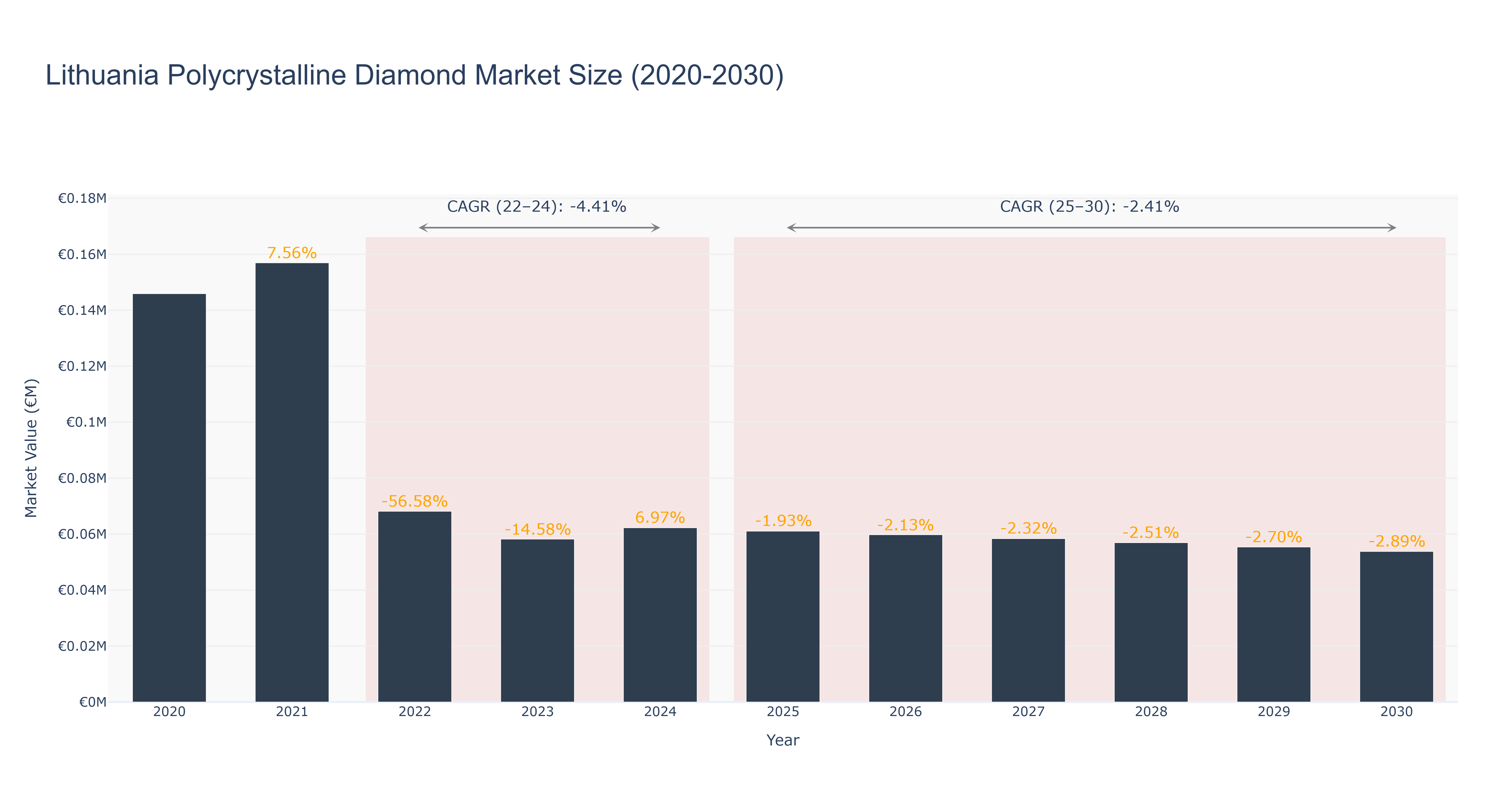
The Lithuania Polycrystalline Diamond Market experienced a peak market size of €0.16 million in 2021. From 2020 to 2024, the market size fluctuated between €0.15 million and €0.06 million. The forecasted market size from 2025 to 2030 shows a consistent decline, with a CAGR of -2.41% from 2025 to 2030. The market's downward trend can be attributed to factors such as technological advancements leading to cost reductions and increased competition. Looking ahead, recent developments in the Lithuanian market indicate a shift towards sustainable practices and eco-friendly diamond manufacturing processes. Future projects in the pipeline focus on enhancing product quality and expanding market reach. As the market continues to evolve, adapting to changing consumer preferences and industry drivers will be crucial for sustained growth.
Lithuania Polycrystalline Diamond Market: Production & Trade Performance (2019-2025)
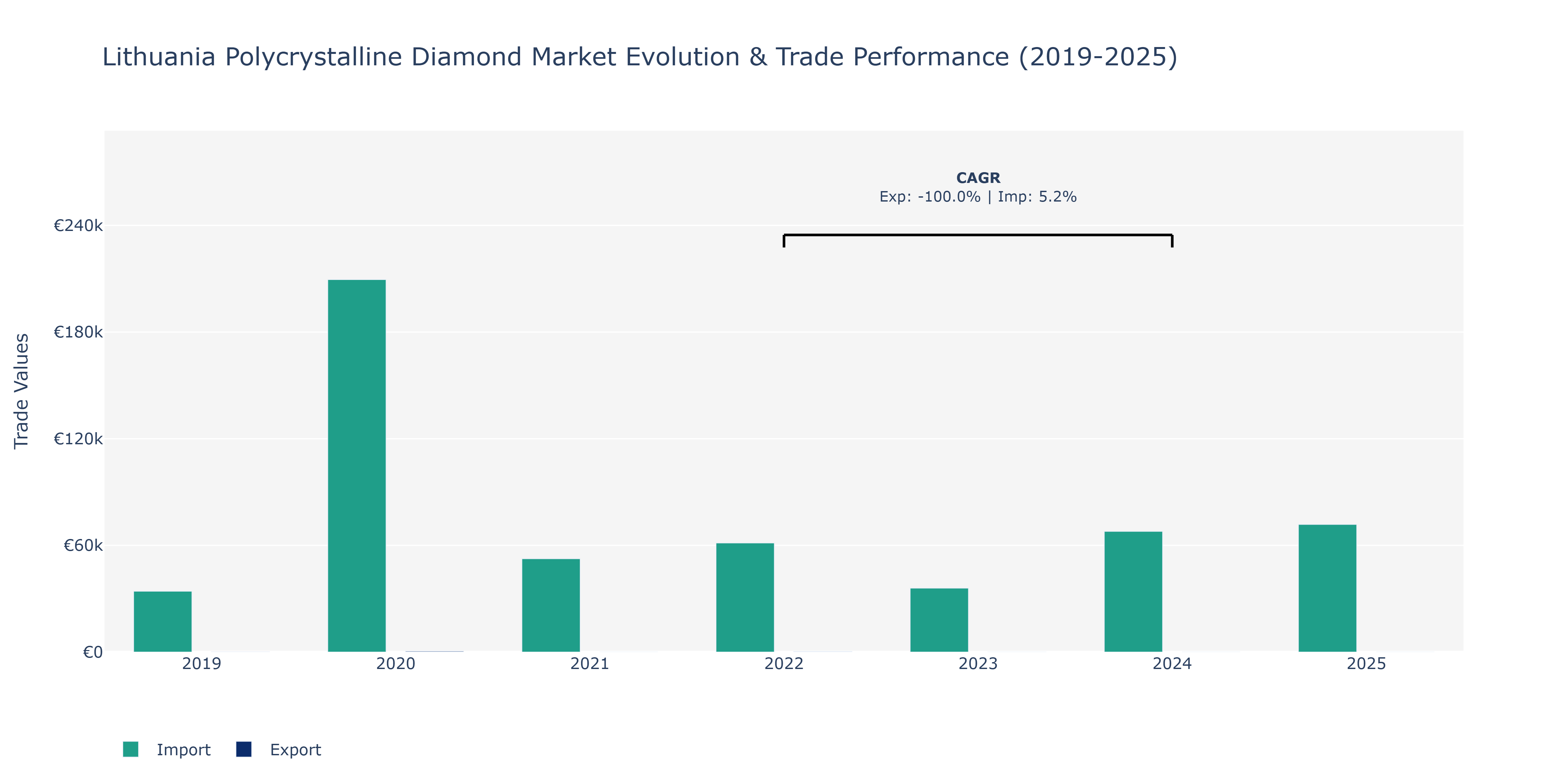
In the Lithuania Polycrystalline Diamond Market, the exports witnessed fluctuations over the years. In 2019, exports amounted to €100, showing a substantial increase to €473 in 2020 before declining sharply to €272 in 2022 and further dropping significantly to €5 in 2023. This drastic decrease may be attributed to various factors such as changes in global demand, supply chain disruptions, or competitive pricing strategies. On the other hand, imports followed a different trajectory, increasing consistently from €34.16 thousand in 2019 to €71.74 thousand in 2025, with the highest peak observed in 2025. The steady growth in imports could be influenced by technological advancements, increased industrial activities, or partnerships with key international suppliers. The 5.19% CAGR in imports from 2022 to 2024 suggests a moderate expansion in the market, indicating growing demand for polycrystalline diamond imports in Lithuania.
Key Highlights of the Report:
- Lithuania Polycrystalline Diamond Market Outlook
- Market Size of Lithuania Polycrystalline Diamond Market, 2025
- Forecast of Lithuania Polycrystalline Diamond Market, 2032
- Historical Data and Forecast of Lithuania Polycrystalline Diamond Revenues & Volume for the Period 2022 - 2032F
- Lithuania Polycrystalline Diamond Market Trend Evolution
- Lithuania Polycrystalline Diamond Market Drivers and Challenges
- Lithuania Polycrystalline Diamond Price Trends
- Lithuania Polycrystalline Diamond Porter`s Five Forces
- Lithuania Polycrystalline Diamond Industry Life Cycle
- Historical Data and Forecast of Lithuania Polycrystalline Diamond Market Revenues & Volume By Type for the Period 2022 - 2032F
- Historical Data and Forecast of Lithuania Polycrystalline Diamond Market Revenues & Volume By Floral Type for the Period 2022 - 2032F
- Historical Data and Forecast of Lithuania Polycrystalline Diamond Market Revenues & Volume By Leaf Type for the Period 2022 - 2032F
- Historical Data and Forecast of Lithuania Polycrystalline Diamond Market Revenues & Volume By Grass Type for the Period 2022 - 2032F
- Historical Data and Forecast of Lithuania Polycrystalline Diamond Market Revenues & Volume By Application for the Period 2022 - 2032F
- Historical Data and Forecast of Lithuania Polycrystalline Diamond Market Revenues & Volume By Mechanical Device for the Period 2022 - 2032F
- Historical Data and Forecast of Lithuania Polycrystalline Diamond Market Revenues & Volume By Optical Material for the Period 2022 - 2032F
- Historical Data and Forecast of Lithuania Polycrystalline Diamond Market Revenues & Volume By Electron Device for the Period 2022 - 2032F
- Lithuania Polycrystalline Diamond Import Export Trade Statistics
- Market Opportunity Assessment By Type
- Market Opportunity Assessment By Application
- Lithuania Polycrystalline Diamond Top Companies Market Share
- Lithuania Polycrystalline Diamond Competitive Benchmarking By Technical and Operational Parameters
- Lithuania Polycrystalline Diamond Company Profiles
- Lithuania Polycrystalline Diamond Key Strategic Recommendations






































