Lithuania Propylene Glycol Market Size (2020-2030)
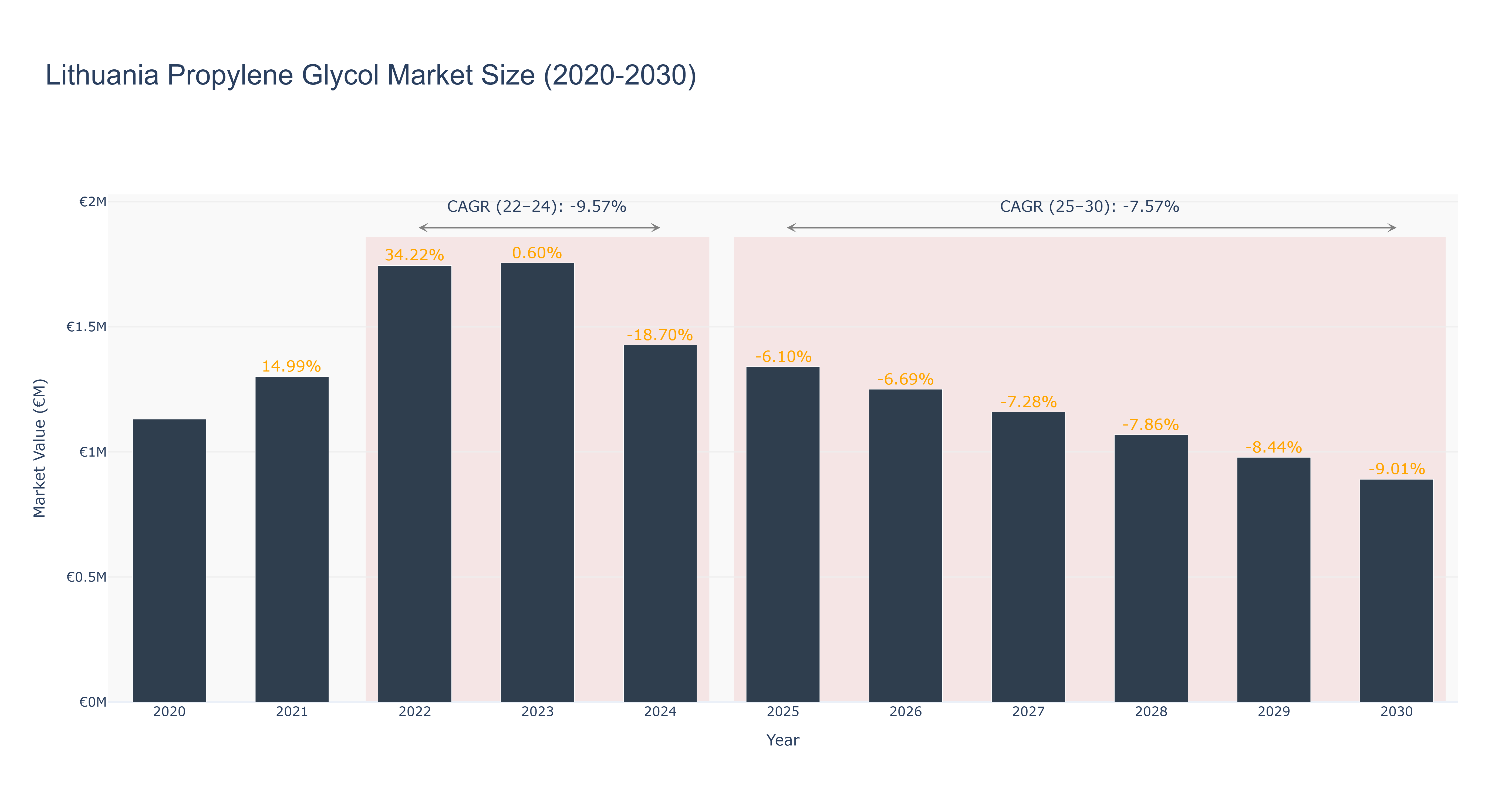
The Lithuania Propylene Glycol Market experienced a peak market size of €1.76 million in 2023, with a subsequent decline to €1.43 million in 2024. The market is forecasted to continue shrinking, reaching €0.89 million by 2030, with a CAGR of -7.57% from 2025 to 2030. The recent negative growth trend can be attributed to factors such as changing consumer preferences towards alternative products and economic uncertainties impacting demand. Looking ahead, industry drivers like increasing focus on sustainable practices and technological advancements in production processes could potentially drive market growth. Moreover, upcoming projects in Lithuania aimed at enhancing production efficiency and expanding market reach could play a crucial role in revitalizing the Propylene Glycol Market in the near future.
Lithuania Propylene Glycol Market: Production & Trade Performance (2019-2025)
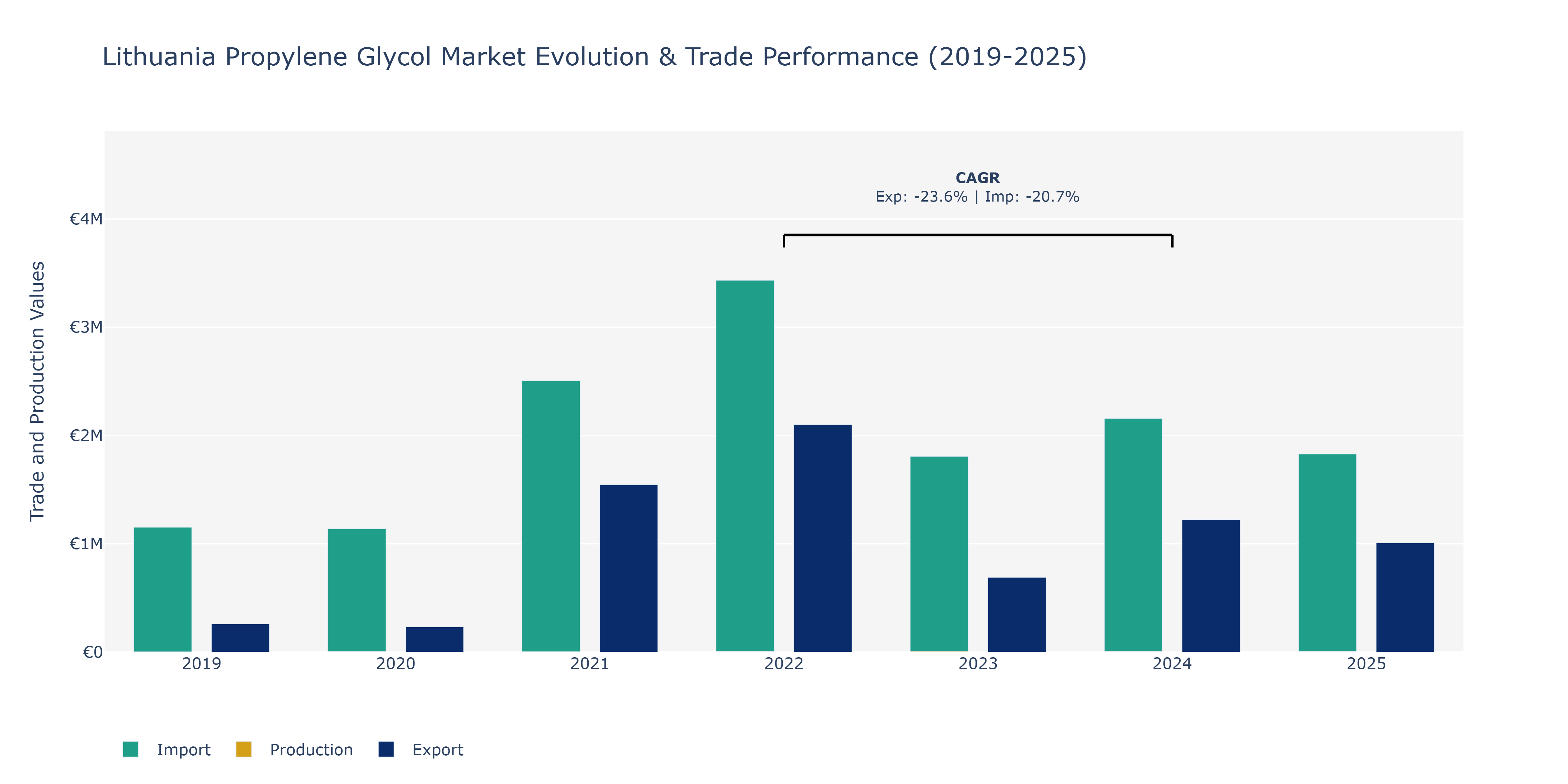
In the Lithuania Propylene Glycol Market, from 2019 to 2025, exports experienced fluctuations. In 2021, exports peaked at €1.54 million, showcasing a notable surge compared to the preceding years. However, from 2021 to 2023, exports declined drastically by almost 55%. Imports followed a similar pattern, peaking in 2021 at €2.51 million before decreasing by about 28% by 2023. Production, on the other hand, fluctuated moderately throughout the period but saw a significant increase in 2023 to reach 7,000 euros. These fluctuations in exports, imports, and production can be attributed to various factors such as changes in demand from key industries like pharmaceuticals, cosmetics, and food processing, as well as shifts in global supply chains impacting trade volumes. The market dynamics are likely influenced by evolving consumer preferences towards sustainable and eco-friendly products, driving the demand for propylene glycol in different end-use applications.
Key Highlights of the Report:
- Lithuania Propylene Glycol Market Outlook
- Market Size of Lithuania Propylene Glycol Market, 2025
- Forecast of Lithuania Propylene Glycol Market, 2032
- Historical Data and Forecast of Lithuania Propylene Glycol Revenues & Volume for the Period 2022 - 2032F
- Lithuania Propylene Glycol Market Trend Evolution
- Lithuania Propylene Glycol Market Drivers and Challenges
- Lithuania Propylene Glycol Price Trends
- Lithuania Propylene Glycol Porter`s Five Forces
- Lithuania Propylene Glycol Industry Life Cycle
- Historical Data and Forecast of Lithuania Propylene Glycol Market Revenues & Volume By Application for the Period 2022 - 2032F
- Historical Data and Forecast of Lithuania Propylene Glycol Market Revenues & Volume By Unsaturated Polyester Resins,Functional Fluids,Food, Drug, and Cosmetics,Liquid Detergent,Paints and Coating,Others for the Period 2022 - 2032F
- Lithuania Propylene Glycol Import Export Trade Statistics
- Market Opportunity Assessment By Application
- Lithuania Propylene Glycol Top Companies Market Share
- Lithuania Propylene Glycol Competitive Benchmarking By Technical and Operational Parameters
- Lithuania Propylene Glycol Company Profiles
- Lithuania Propylene Glycol Key Strategic Recommendations






































