Lithuania Titanium Dioxide Market Size (2020-2030)
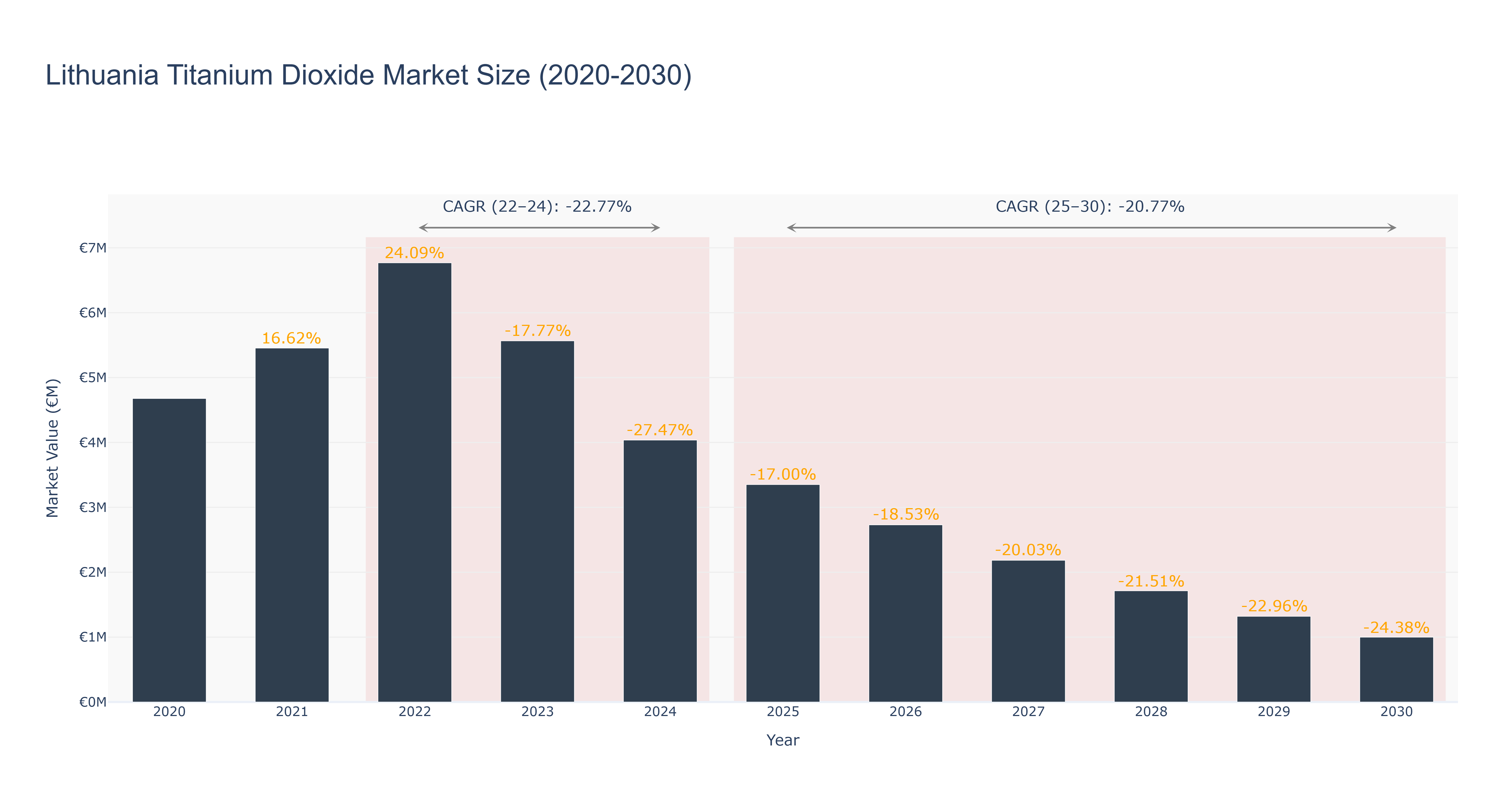
The Lithuania Titanium Dioxide Market reached its peak size in 2022 at €6.77 million, reflecting a robust growth of 24.09% from the previous year. However, the market faced significant declines in 2023 and 2024, with sizes dropping to €5.57 million and €4.04 million, respectively, resulting in a negative CAGR of -22.77% for the 2022-2024 period. Looking ahead, the forecasted values from 2025 to 2030 indicate a continued contraction, with market sizes projected to decline from €3.35 million in 2025 to €998.40 thousand by 2030, reflecting a CAGR of -20.77%. This downturn is attributed to reduced demand from key sectors, economic uncertainties, and potential regulatory changes impacting production. While no significant upcoming projects are currently noted, macroeconomic drivers, including global supply chain disruptions and environmental concerns, will shape the market's trajectory in the coming years.
Lithuania Titanium Dioxide Market: Production & Trade Performance (2019-2025)
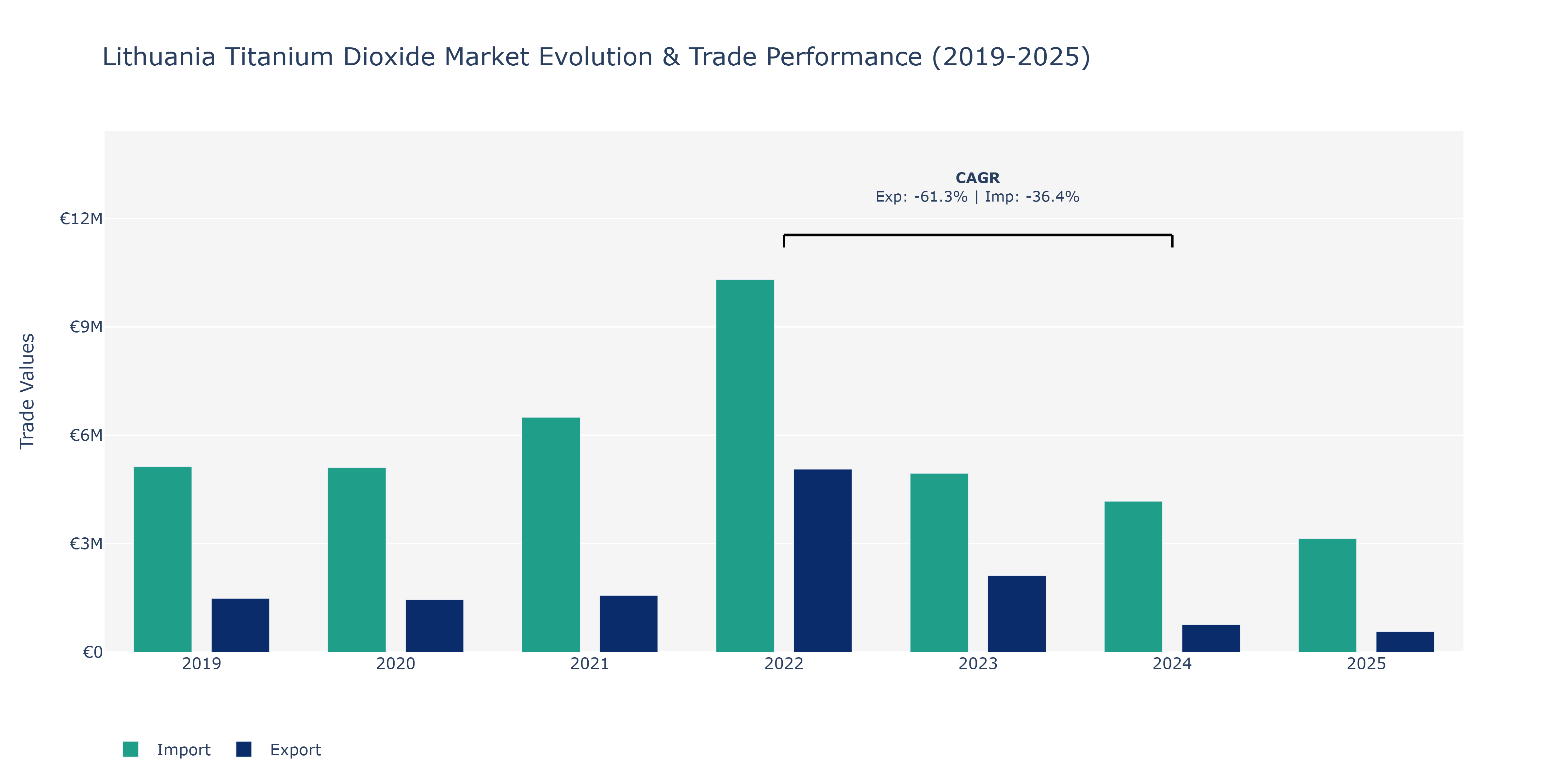
Between 2019 and 2025, Lithuania's Titanium Dioxide market showcased varying trends in exports and imports. Exports peaked at €5.1 billion in 2022, driven by a substantial surge from 2019 figures. However, by 2025, exports experienced a notable decline to around €570 million, indicating a significant drop over the period. In contrast, imports witnessed a more stable trajectory, with a peak of €6.5 billion in 2021 before showing a downward trend to approximately €3.1 billion in 2025. Factors contributing to these shifts may include global economic conditions, changes in demand for titanium dioxide products, and shifts in international trade policies impacting the market dynamics. The decrease in exports could be influenced by increased competition from other global suppliers or shifts in consumer preferences towards alternative products. On the import side, fluctuations could be linked to changes in domestic manufacturing demands or efforts to diversify supply chain sources to mitigate risks. These market movements emphasize the importance of adaptability and strategic planning within the titanium dioxide industry to navigate dynamic global landscapes effectively.
Key Highlights of the Report:
- Lithuania Titanium Dioxide Market Outlook
- Market Size of Lithuania Titanium Dioxide Market, 2025
- Forecast of Lithuania Titanium Dioxide Market, 2032
- Historical Data and Forecast of Lithuania Titanium Dioxide Revenues & Volume for the Period 2022 - 2032F
- Lithuania Titanium Dioxide Market Trend Evolution
- Lithuania Titanium Dioxide Market Drivers and Challenges
- Lithuania Titanium Dioxide Price Trends
- Lithuania Titanium Dioxide Porter`s Five Forces
- Lithuania Titanium Dioxide Industry Life Cycle
- Historical Data and Forecast of Lithuania Titanium Dioxide Market Revenues & Volume By Grade for the Period 2022 - 2032F
- Historical Data and Forecast of Lithuania Titanium Dioxide Market Revenues & Volume By Rutile for the Period 2022 - 2032F
- Historical Data and Forecast of Lithuania Titanium Dioxide Market Revenues & Volume By Anatase for the Period 2022 - 2032F
- Historical Data and Forecast of Lithuania Titanium Dioxide Market Revenues & Volume By Application for the Period 2022 - 2032F
- Historical Data and Forecast of Lithuania Titanium Dioxide Market Revenues & Volume By Paints and Coatings for the Period 2022 - 2032F
- Historical Data and Forecast of Lithuania Titanium Dioxide Market Revenues & Volume By Plastics for the Period 2022 - 2032F
- Historical Data and Forecast of Lithuania Titanium Dioxide Market Revenues & Volume By Paper and Pulp for the Period 2022 - 2032F
- Historical Data and Forecast of Lithuania Titanium Dioxide Market Revenues & Volume By Cosmetics for the Period 2022 - 2032F
- Historical Data and Forecast of Lithuania Titanium Dioxide Market Revenues & Volume By Others for the Period 2022 - 2032F
- Lithuania Titanium Dioxide Import Export Trade Statistics
- Market Opportunity Assessment By Grade
- Market Opportunity Assessment By Application
- Lithuania Titanium Dioxide Top Companies Market Share
- Lithuania Titanium Dioxide Competitive Benchmarking By Technical and Operational Parameters
- Lithuania Titanium Dioxide Company Profiles
- Lithuania Titanium Dioxide Key Strategic Recommendations






































