Malaysia Bakeware Market Summary
The malaysia bakeware market was estimated at USD 418 Million in 2025 and is projected to reach USD 544 Million by 2032, growing at a CAGR of 5.3% from 2026 to 2032.
Malaysia Bakeware Market Year-wise Growth Rate and Key Drivers
This graph highlights how the Malaysia Bakeware Market has steadily grown over the past five years, supported by major growth factors.
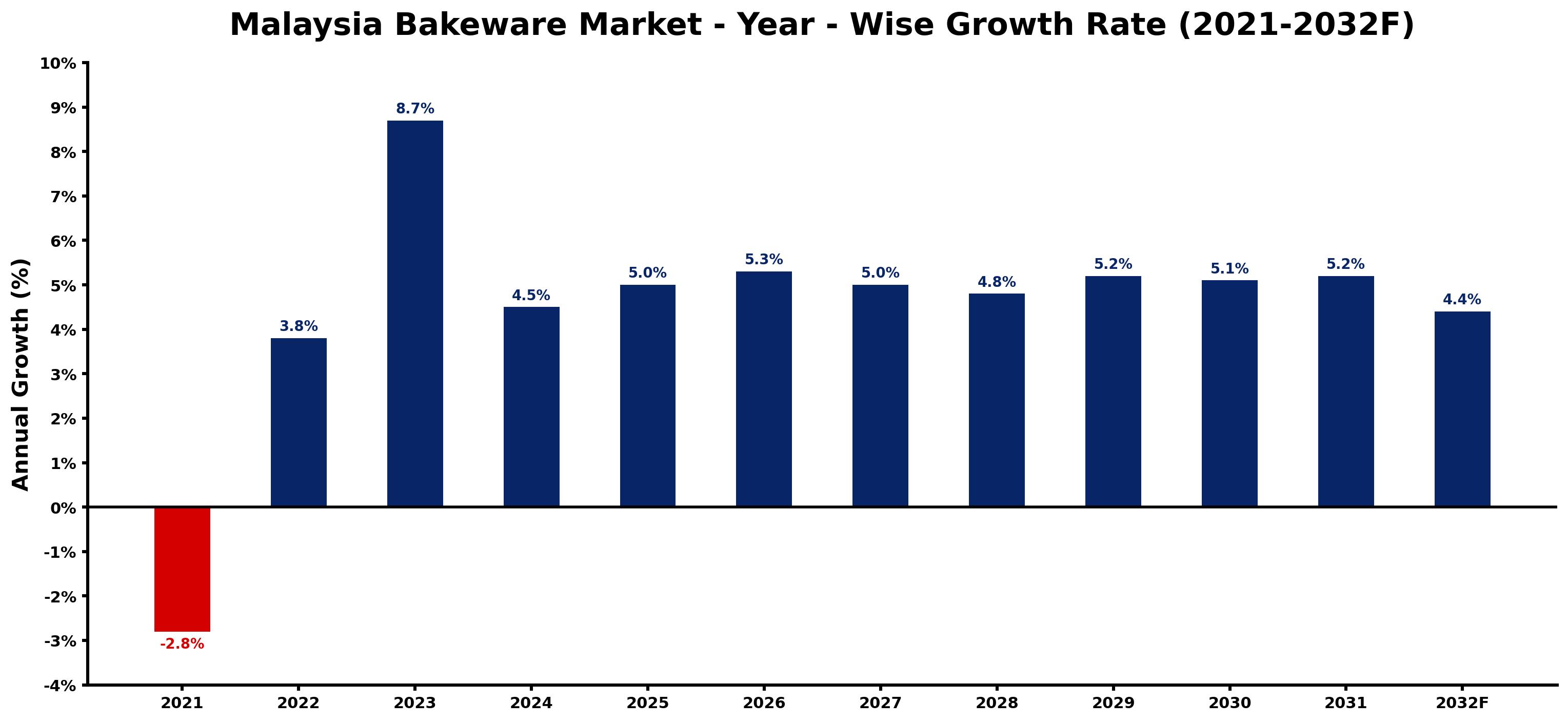
The table below presents the year wise growth rates along with the key drivers influencing the market
| Year | Growth Rate | Major Drivers |
| 2021 | -2.8% | Supply chain disruptions caused significant delays in product availability, undermining sales and consumer trust. |
| 2022 | 3.8% | E-commerce platforms flourish, providing accessible bakeware options to diverse consumers. |
| 2023 | 8.7% | Health-conscious baking becomes popular, influencing purchases of specialized bakeware products. |
| 2024 | 4.5% | Culinary classes expand, driving interest in premium bakeware among aspiring bakers. |
| 2025 | 5.0% | Increased home renovation projects lead to more dedicated kitchen spaces for baking. |
| 2026 | 5.3% | Social media influencers promote unique bakeware, capturing younger market segments effectively. |
| 2027 | 5.0% | Sustainable materials gain traction, reflecting consumer preferences for eco-friendly bakeware. |
| 2028 | 4.8% | Local brands innovate, offering culturally relevant designs tailored to Malaysian preferences. |
| 2029 | 5.2% | Regional culinary competitions emerge, heightening awareness of quality bakeware among enthusiasts. |
| 2030 | 5.1% | Cross-border shopping trends rise, introducing international bakeware brands to Malaysian consumers. |
| 2031 | 5.2% | Collaborations between chefs and bakeware brands highlight product quality and versatility. |
| 2032 | 4.4% | Technological advancements in non-stick coatings enhance performance, attracting more serious bakers. |
Note - Market size estimations and growth projections presented in this report are based on 6Wresearch's advanced forecasting approach, validated with industry datasets as of June 2026.
Malaysia Bakeware Market Synopsis
The Malaysia Bakeware Market is projected to reach 5.3% and witness significant growth during the forecast period (2026-2032). This growth is primarily driven by the rising interest in baking among millennials, an increase in disposable incomes, and evolving food preferences. As baking becomes more prevalent as a hobby and profession, the demand for high-quality bakeware is expected to surge. Additionally, ongoing technological innovations in bakeware materials, which enhance heat retention and durability, are anticipated to further stimulate market growth. The expansion of e-commerce platforms is also playing a crucial role by providing greater access to diverse bakeware products.
Malaysia Bakeware Market Growth Drivers
Several key factors are propelling the growth of the Malaysia Bakeware Market. The following elements are noteworthy:
- Increased Interest in Home Baking: The Covid-19 pandemic has led to a surge in home baking, driving demand for various bakeware products. Consumers have embraced baking as a way to create homemade meals and treats, significantly influencing market expansion.
- Rising Disposable Incomes: As the income levels of Malaysian consumers rise, they are more willing to invest in high-quality bakeware products. This trend is expected to positively impact the market as consumers seek premium options for their baking needs.
- Evolving Consumer Preferences: The shift towards healthier eating habits has influenced baking practices. Consumers are increasingly utilizing alternative ingredients, which in turn drives demand for specialized bakeware suitable for healthier recipes.
- Technological Advancements: The introduction of innovative materials in bakeware, designed for better performance and heat retention, is set to enhance the baking experience. These advancements are creating opportunities for manufacturers to differentiate their offerings.
- Growth of E-Commerce: The rise of online shopping platforms allows consumers easier access to a wide range of bakeware products, including niche items. This has opened new channels for sales and marketing, significantly benefiting market players.
Malaysia Bakeware Market Trends and Opportunities
The Malaysia Bakeware Market is witnessing several notable trends that present opportunities for growth. Increasing consumer inclination toward personalized baking experiences is driving demand for customizable bakeware options. Furthermore, social media platforms have fostered a community around baking, influencing trends and encouraging consumers to share their creations. These trends highlight the growing importance of aesthetics and functionality in bakeware design, which manufacturers can leverage to attract new customers.
Malaysia Bakeware Market Challenges and Restraints
Despite the promising growth, the Malaysia Bakeware Market faces several challenges that could impede progress. These include:
- Competition from Low-Cost Imports: The influx of inexpensive bakeware products from international markets poses a threat to local manufacturers, affecting pricing strategies and market share.
- Consumer Price Sensitivity: While disposable incomes are rising, Malaysian consumers remain price-conscious, often opting for more affordable bakeware options, which can limit the growth of premium products.
- Market Saturation: As the market expands, particularly in urban areas, saturation could become a concern, making it essential for companies to innovate continually to remain competitive.
- Regulatory Compliance: Manufacturers must navigate complex regulations regarding safety and environmental standards, which can increase operational costs and impact product offerings.
- Changing Consumer Trends: The baking landscape is continuously evolving, and companies must stay ahead of trends to meet changing consumer preferences, which can be challenging.
Malaysia Bakeware Market Government Investment and Initiatives
The Malaysian government is actively supporting various initiatives that aim to promote local manufacturing, including in the bakeware sector. Investment in infrastructure and technology upgrades for the food and beverage industry, including bakeware production, is being emphasized. In addition, government incentives aimed at small and medium enterprises (SMEs) encourage local entrepreneurs to innovate and expand their product lines, creating a more competitive environment. These initiatives are expected to enhance the overall attractiveness of the Malaysia Bakeware Market by fostering growth and sustainability.
Malaysia Bakeware Market Latest Developments (May 2025 - June 2026)
Recent developments in the Malaysia Bakeware Market indicate a continued focus on sustainability and eco-friendly materials. Industry players are increasingly exploring options that reduce environmental impact, aligning with global consumer trends. Additionally, the launch of new product lines featuring innovative designs and smart technology integration reflects the market's evolution. The growing collaboration between local manufacturers and e-commerce platforms is facilitating greater market penetration and access to consumers, especially in previously underserved areas. These trends point towards an increasingly dynamic market landscape as businesses adapt to the changing demands of consumers.
Malaysia Bakeware Market - Key Attractiveness of the Report
- 10 Years of Market Numbers
- Historical Data Starting from 2022 to 2025
- Base Year: 2025
- Forecast Data until 2032
- Key Performance Indicators Impacting the Market
- Major Upcoming Developments and Projects
Key Highlights of the Report:
- Malaysia Bakeware Market Outlook
- Market Size of Malaysia Bakeware Market, 2025
- Forecast of Malaysia Bakeware Market, 2032
- Historical Data and Forecast of Malaysia Bakeware Revenues & Volume for the Period 2022-2032F
- Malaysia Bakeware Market Trend Evolution
- Malaysia Bakeware Market Drivers and Challenges
- Malaysia Bakeware Price Trends
- Malaysia Bakeware Porter's Five Forces
- Malaysia Bakeware Industry Life Cycle
- Historical Data and Forecast of Malaysia Bakeware Market Revenues & Volume By Product Type for the Period 2022-2032F
- Historical Data and Forecast of Malaysia Bakeware Market Revenues & Volume By Ceramic for the Period 2022-2032F
- Historical Data and Forecast of Malaysia Bakeware Market Revenues & Volume By Aluminium for the Period 2022-2032F
- Historical Data and Forecast of Malaysia Bakeware Market Revenues & Volume By Cast Iron for the Period 2022-2032F
- Historical Data and Forecast of Malaysia Bakeware Market Revenues & Volume By Stainless Steel for the Period 2022-2032F
- Historical Data and Forecast of Malaysia Bakeware Market Revenues & Volume By Glass for the Period 2022-2032F
- Historical Data and Forecast of Malaysia Bakeware Market Revenues & Volume By Others for the Period 2022-2032F
- Historical Data and Forecast of Malaysia Bakeware Market Revenues & Volume By Applications for the Period 2022-2032F
- Historical Data and Forecast of Malaysia Bakeware Market Revenues & Volume By Commercial for the Period 2022-2032F
- Historical Data and Forecast of Malaysia Bakeware Market Revenues & Volume By Household for the Period 2022-2032F
- Malaysia Bakeware Import Export Trade Statistics
- Market Opportunity Assessment By Product Type
- Market Opportunity Assessment By Applications
- Malaysia Bakeware Top Companies Market Share
- Malaysia Bakeware Competitive Benchmarking By Technical and Operational Parameters
- Malaysia Bakeware Company Profiles
- Malaysia Bakeware Key Strategic Recommendations






































