Malaysia Bicycle Parts and Accessories Market Summary
The malaysia bicycle parts and accessories market was estimated at USD 171 Million in 2025 and is projected to reach USD 223 Million by 2032, growing at a CAGR of 5.7% from 2026 to 2032.
Malaysia Bicycle Parts and Accessories Market Year-wise Growth Rate and Key Drivers
This graph highlights how the Malaysia Bicycle Parts and Accessories Market has steadily grown over the past five years, supported by major growth factors.
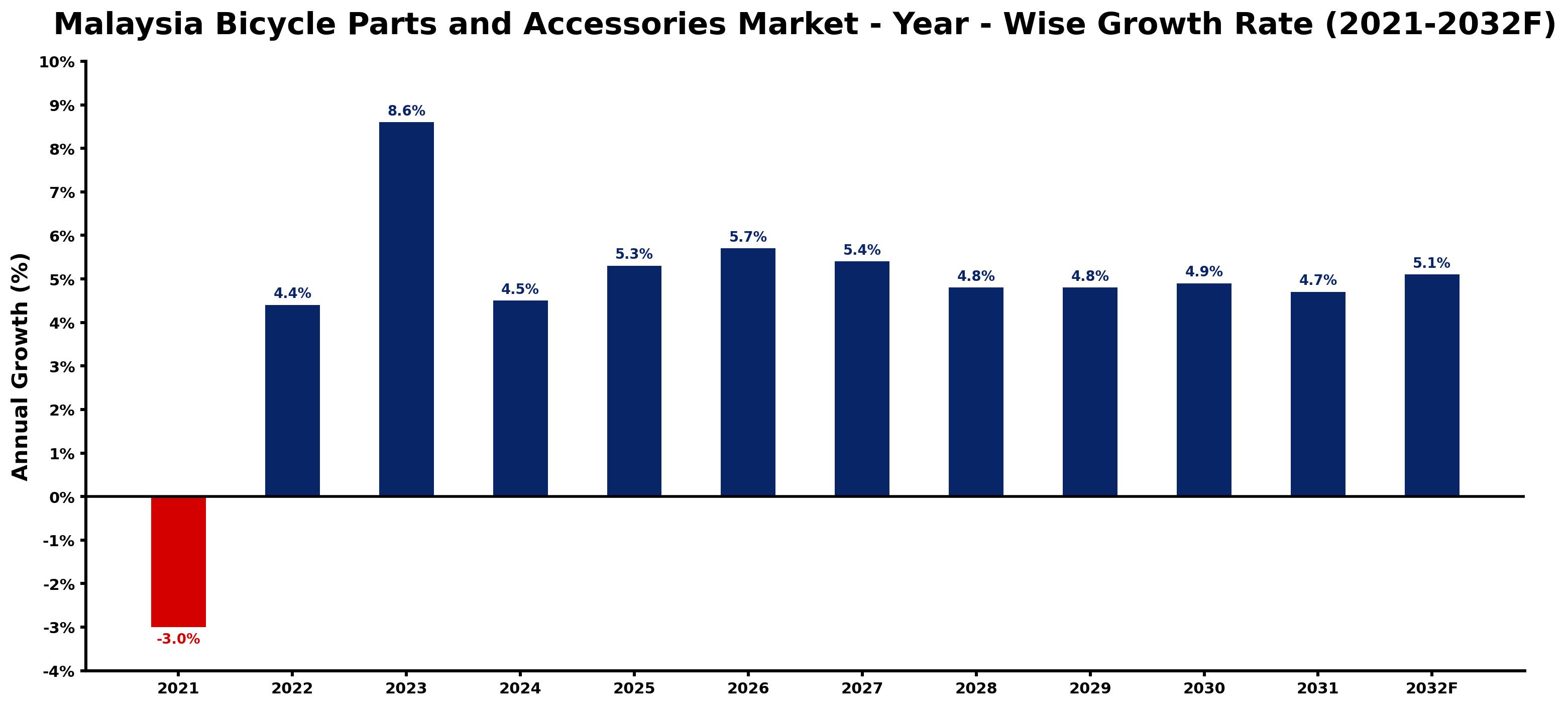
The table below presents the year wise growth rates along with the key drivers influencing the market
| Year | Growth Rate | Major Drivers |
| 2021 | -3.0% | Pandemicrelated supply chain disruptions hindered availability of bicycle parts, causing a decline in sales. |
| 2022 | 4.4% | Cycling events flourished, fostering a vibrant community and increasing visibility for cycling. |
| 2023 | 8.6% | Urban development plans integrated cycling infrastructure into public transportation initiatives. |
| 2024 | 4.5% | E-commerce platforms enhanced accessibility, offering diverse bicycle parts and accessories online. |
| 2025 | 5.3% | Consumer preferences shifted towards eco-friendly products, boosting demand for sustainable components. |
| 2026 | 5.7% | Local manufacturing initiatives emerged, reducing reliance on imports and lowering costs. |
| 2027 | 5.4% | Collaborations with cycling organizations promoted awareness of health benefits associated with cycling. |
| 2028 | 4.8% | Innovations in smart cycling accessories attracted tech-savvy consumers to the market. |
| 2029 | 4.8% | Tourism campaigns highlighted cycling as an attractive way to explore Malaysia's landscapes. |
| 2030 | 4.9% | Corporate responsibility programs supported local cycling initiatives, enhancing brand loyalty among consumers. |
| 2031 | 4.7% | Investment in cycling lanes increased, influencing urban design and encouraging biking habits. |
| 2032 | 5.1% | Market competition intensified, driving companies to invest in research and product development. |
Note - Market size estimations and growth projections presented in this report are based on 6Wresearch's advanced forecasting approach, validated with industry datasets as of June 2026.
Malaysia Bicycle Parts and Accessories Market Synopsis
The Malaysia Bicycle Parts and Accessories Market is projected to reach 5.7% and witness significant growth during the forecast period (2026-2032). The market is experiencing a rapid upward trajectory, driven by a confluence of factors including rising disposable incomes, heightened health consciousness, and supportive government initiatives aimed at promoting cycling as a viable mode of transportation and leisure activity. Equally important is the surge in popularity of electric bicycles (e-bikes), which has captivated a diverse demographic, further propelling demand for bicycle parts and accessories.
Malaysia Bicycle Parts and Accessories Market Growth Drivers
The Malaysia Bicycle Parts and Accessories Market is expected to register a robust compound annual growth rate (CAGR) of 5% during the 2026-2032 period. The following factors are particularly influential in driving market growth:
- Increased disposable incomes among Malaysians are allowing consumers to invest more in high-quality bicycles and components, shifting from basic models to premium options.
- The growing awareness of health and fitness is motivating individuals to engage in cycling as part of their daily routines, thereby elevating the demand for bicycles and associated accessories.
- Government initiatives aimed at promoting cycling infrastructure, including dedicated bike lanes and cycling events, are fostering a healthier lifestyle and boosting the cycling culture in urban areas.
- The rise of e-commerce platforms has enabled consumers to easily access a wider range of bicycle parts and accessories, facilitating greater competition and pushing manufacturers to deliver better products.
- Innovations in bicycle components, including lightweight materials and enhanced durability, are attracting both amateur and professional cyclists, thereby expanding the market reach.
Malaysia Bicycle Parts and Accessories Market Challenges and Restraints
While the Malaysia Bicycle Parts and Accessories Market is on an upward trajectory, certain challenges must be navigated:
- Fluctuating raw material prices can adversely impact production costs, creating uncertainty for manufacturers in the bicycle parts segment.
- Lack of awareness regarding proper maintenance and care among new cyclists may limit the longevity and usage of bicycles, potentially affecting parts replacement sales.
- Competitive pressures from low-cost imports may compromise profitability for local manufacturers, who may struggle to match pricing while maintaining quality standards.
- Urban congestion and traffic issues may deter potential cyclists from adopting cycling as a primary mode of transportation, impacting overall market growth.
- Seasonality in cycling habits can lead to fluctuating demand for specific parts and accessories throughout the year, complicating inventory management for retailers.
Malaysia Bicycle Parts and Accessories Market Government Investment and Initiatives
The Malaysian government has recognized cycling as a sustainable mode of transport and has implemented various initiatives to promote this lifestyle. Investments in cycling infrastructure, including the establishment of dedicated bike lanes and bicycle-sharing programs in urban areas, are gaining traction. Moreover, government policies aimed at enhancing public awareness of the health benefits associated with cycling are encouraging more citizens to adopt this eco-friendly mode of transportation. These initiatives are complemented by funding programs designed to support local manufacturers in innovating and producing high-quality bicycle components, ultimately contributing to the growth and sustainability of the Malaysia Bicycle Parts and Accessories Market.
Malaysia Bicycle Parts and Accessories Market Latest Developments (May 2025 - June 2026)
Recent developments in the Malaysia Bicycle Parts and Accessories Market indicate a proactive approach by stakeholders to address emerging trends. In response to the rising demand for e-bikes, several manufacturers have focused on expanding their product lines to include advanced components specific to electric bicycles. Efforts to enhance online retail channels have intensified, allowing consumers to easily compare and purchase products from the comfort of their homes. Furthermore, there has been a concerted push toward sustainability, with manufacturers exploring eco-friendly materials for bicycle production. These trends are indicative of a marketplace that is becoming increasingly sophisticated and responsive to consumer needs.
Malaysia Bicycle Parts and Accessories Market - Key Attractiveness of the Report
- 10 Years of Market Numbers
- Historical Data Starting from 2022 to 2025
- Base Year: 2025
- Forecast Data until 2032
- Key Performance Indicators Impacting the Market
- Major Upcoming Developments and Projects
Key Highlights of the Report:
- Malaysia Bicycle Parts and Accessories Market Outlook
- Market Size of Malaysia Bicycle Parts and Accessories Market, 2025
- Forecast of Malaysia Bicycle Parts and Accessories Market, 2032
- Historical Data and Forecast of Malaysia Bicycle Parts and Accessories Revenues & Volume for the Period 2022-2032F
- Malaysia Bicycle Parts and Accessories Market Trend Evolution
- Malaysia Bicycle Parts and Accessories Market Drivers and Challenges
- Malaysia Bicycle Parts and Accessories Price Trends
- Malaysia Bicycle Parts and Accessories Porter's Five Forces
- Malaysia Bicycle Parts and Accessories Industry Life Cycle
- Historical Data and Forecast of Malaysia Bicycle Parts and Accessories Market Revenues & Volume By Types for the Period 2022-2032F
- Historical Data and Forecast of Malaysia Bicycle Parts and Accessories Market Revenues & Volume By Transmission Parts for the Period 2022-2032F
- Historical Data and Forecast of Malaysia Bicycle Parts and Accessories Market Revenues & Volume By Frame & Forks Parts for the Period 2022-2032F
- Historical Data and Forecast of Malaysia Bicycle Parts and Accessories Market Revenues & Volume By Wheel Parts for the Period 2022-2032F
- Historical Data and Forecast of Malaysia Bicycle Parts and Accessories Market Revenues & Volume By Steering Components for the Period 2022-2032F
- Historical Data and Forecast of Malaysia Bicycle Parts and Accessories Market Revenues & Volume By Applications for the Period 2022-2032F
- Historical Data and Forecast of Malaysia Bicycle Parts and Accessories Market Revenues & Volume By Mountain Bicycles for the Period 2022-2032F
- Historical Data and Forecast of Malaysia Bicycle Parts and Accessories Market Revenues & Volume By Road Bicycles for the Period 2022-2032F
- Historical Data and Forecast of Malaysia Bicycle Parts and Accessories Market Revenues & Volume By Others for the Period 2022-2032F
- Malaysia Bicycle Parts and Accessories Import Export Trade Statistics
- Market Opportunity Assessment By Types
- Market Opportunity Assessment By Applications
- Malaysia Bicycle Parts and Accessories Top Companies Market Share
- Malaysia Bicycle Parts and Accessories Competitive Benchmarking By Technical and Operational Parameters
- Malaysia Bicycle Parts and Accessories Company Profiles
- Malaysia Bicycle Parts and Accessories Key Strategic Recommendations






































