Malaysia Bulletproof Vest Market Summary
The malaysia bulletproof vest market was estimated at USD 221 Million in 2025 and is projected to reach USD 289 Million by 2032, growing at a CAGR of 5.4% from 2026 to 2032.
Malaysia Bulletproof Vest Market Year-wise Growth Rate and Key Drivers
This graph highlights how the Malaysia Bulletproof Vest Market has steadily grown over the past five years, supported by major growth factors.
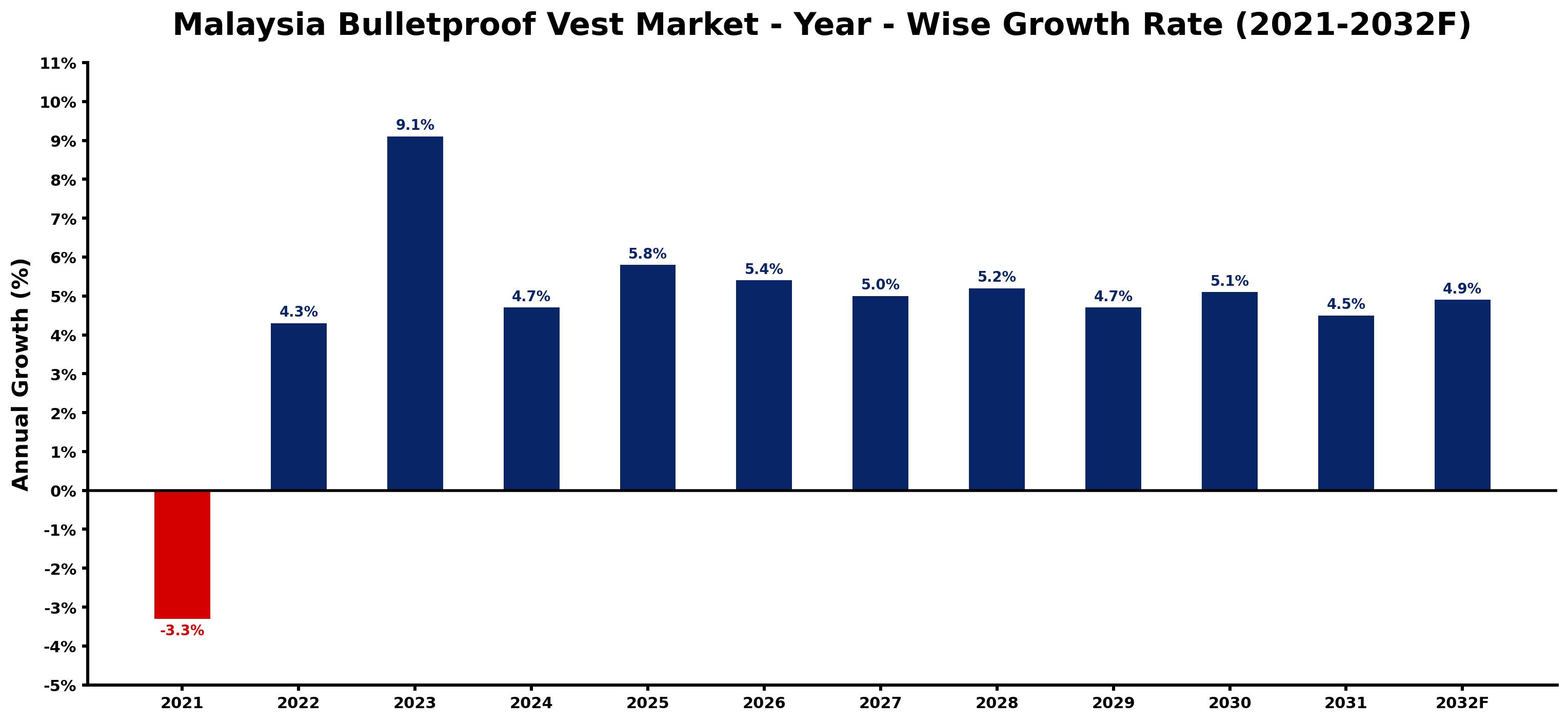
The table below presents the year wise growth rates along with the key drivers influencing the market
| Year | Growth Rate | Major Drivers |
| 2021 | -3.3% | Supply chain disruptions caused by pandemicrelated restrictions hampered production and limited market availability. |
| 2022 | 4.3% | Rising crime rates in urban areas highlighted the necessity for personal protective gear. |
| 2023 | 9.1% | Corporate security budgets shifted towards advanced protective solutions amid geopolitical tensions. |
| 2024 | 4.7% | Emerging threats from terrorism increased interest in tactical clothing and armor. |
| 2025 | 5.8% | Local manufacturers began enhancing quality standards to meet international market expectations. |
| 2026 | 5.4% | Technological advancements in materials resulted in lighter, more durable bulletproof vests. |
| 2027 | 5.0% | Growing international collaborations positioned Malaysia as a regional hub for defense manufacturing. |
| 2028 | 5.2% | Corporate investments in R&D fostered innovation within the personal protection equipment sector. |
| 2029 | 4.7% | E-commerce platforms expanded accessibility to a broader audience seeking protective gear. |
| 2030 | 5.1% | Social media campaigns heightened awareness about personal safety and protective clothing. |
| 2031 | 4.5% | Increased focus on law enforcement modernization led to bulk procurement of body armor. |
| 2032 | 4.9% | Expanding military contracts underscored Malaysia's commitment to national security enhancement. |
Note - Market size estimations and growth projections presented in this report are based on 6Wresearch's advanced forecasting approach, validated with industry datasets as of June 2026.
Malaysia Bulletproof Vest Market Synopsis
The Malaysia Bulletproof Vest Market is projected to reach 5.4% and witness significant growth during the forecast period (2026-2032). The increasing emphasis on public safety and security by Malaysian authorities has led to substantial investments in protective gear, including bulletproof vests. These developments stem from rising crime rates and the need for enhanced safety protocols across various sectors, including law enforcement and private security. Moreover, the growing inclination towards tactical gear among outdoor enthusiasts is further propelling market demand.
Malaysia Bulletproof Vest Market Growth Drivers
The growth of the Malaysia Bulletproof Vest Market can be attributed to several key factors:
- The Malaysian government is prioritizing national security, leading to increased funding for law enforcement agencies to acquire advanced personal protective equipment, including bulletproof vests.
- Heightened awareness of personal safety among citizens and businesses will drive demand for protective gear across various commercial sectors.
- The rising threat of organized crime and terrorism has heightened the urgency for enhanced protective measures, leading to a surge in the procurement of bulletproof vests.
- Advancements in technology and materials used in bulletproof vests are resulting in lighter, more comfortable, and effective products that appeal to a broader range of users.
- The growing popularity of tactical gear for recreational activities such as hunting and outdoor sports is expanding the customer base beyond traditional military and police forces.
Malaysia Bulletproof Vest Market Challenges and Restraints
Despite the positive growth outlook, the Malaysia Bulletproof Vest Market faces several challenges:
- High costs associated with advanced bulletproof technology may limit accessibility for smaller security firms and individual users.
- Inconsistent regulatory standards across different regions within Malaysia can hinder market growth by creating compliance challenges for manufacturers.
- The market is also susceptible to fluctuations in raw material prices, which can directly impact production costs and, consequently, the final pricing of bulletproof vests.
- Lack of awareness regarding the necessity of wearing bulletproof vests during high-risk situations can result in underutilization of these products.
- Competition from alternative protective gear and personal safety solutions may impede market expansion, as consumers may choose less expensive options over bulletproof vests.
Malaysia Bulletproof Vest Market Trends and Opportunities
The market is witnessing several emerging trends that point towards various opportunities:
- The integration of smart technology into bulletproof vests, such as sensors and communication devices, provides opportunities for manufacturers to develop innovative products that cater to modern safety needs.
- The expansion of the e-commerce sector in Malaysia is enabling easier access to bulletproof vests for consumers, driving online sales and brand visibility.
- Increased collaboration between government bodies and private sector manufacturers is likely to foster innovation in design and technology, ultimately benefiting end-users.
- Greater emphasis on sustainability has opened avenues for the development of eco-friendly bulletproof materials, appealing to environmentally conscious consumers.
- The potential for export growth as local manufacturers seek to penetrate international markets, capitalizing on the rising global demand for personal protective equipment.
Malaysia Bulletproof Vest Market Government Investment and Initiatives
The Malaysian government has implemented various initiatives aimed at enhancing public safety and security, which in turn positively impacts the bulletproof vest market. Investments in security infrastructure, including advanced surveillance systems and personal protective equipment, underscore the government's commitment to ensuring safety for its citizens. Additionally, the allocation of budgetary resources specifically targeted at police and armed forces for modernizing their gear directly translates to increased procurement of bulletproof vests. Furthermore, awareness campaigns initiated by government agencies highlight the importance of personal safety, which indirectly boosts market demand.
Malaysia Bulletproof Vest Market Latest Developments (May 2025 - June 2026)
In the period from May 2025 to June 2026, the Malaysia Bulletproof Vest Market has seen notable developments. The government has announced new incentives for law enforcement agencies to upgrade their equipment, focusing on bulletproof technology. Additionally, market players are investing in research and development to create vests that not only offer ballistic protection but also include features such as moisture-wicking fabrics and improved ergonomic designs. There has been a marked increase in collaborations between local manufacturers and technology firms to integrate smart features into bulletproof vests, enhancing functionality and user experience. Moreover, rising public awareness campaigns about personal safety have contributed to a surge in consumer interest in acquiring bulletproof vests.
Malaysia Bulletproof Vest Market - Key Attractiveness of the Report
- 10 Years of Market Numbers
- Historical Data Starting from 2022 to 2025
- Base Year: 2025
- Forecast Data until 2032
- Key Performance Indicators Impacting the Market
- Major Upcoming Developments and Projects
Key Highlights of the Report:
- Malaysia Bulletproof Vest Market Outlook
- Market Size of Malaysia Bulletproof Vest Market, 2025
- Forecast of Malaysia Bulletproof Vest Market, 2032
- Historical Data and Forecast of Malaysia Bulletproof Vest Revenues & Volume for the Period 2022-2032
- Malaysia Bulletproof Vest Market Trend Evolution
- Malaysia Bulletproof Vest Market Drivers and Challenges
- Malaysia Bulletproof Vest Price Trends
- Malaysia Bulletproof Vest Porter's Five Forces
- Malaysia Bulletproof Vest Industry Life Cycle
- Historical Data and Forecast of Malaysia Bulletproof Vest Market Revenues & Volume By Type for the Period 2022-2032
- Historical Data and Forecast of Malaysia Bulletproof Vest Market Revenues & Volume By Soft Vest for the Period 2022-2032
- Historical Data and Forecast of Malaysia Bulletproof Vest Market Revenues & Volume By Hard Vest for the Period 2022-2032
- Historical Data and Forecast of Malaysia Bulletproof Vest Market Revenues & Volume By Purpose for the Period 2022-2032
- Historical Data and Forecast of Malaysia Bulletproof Vest Market Revenues & Volume By Military for the Period 2022-2032
- Historical Data and Forecast of Malaysia Bulletproof Vest Market Revenues & Volume By Civilian for the Period 2022-2032
- Malaysia Bulletproof Vest Import Export Trade Statistics
- Market Opportunity Assessment By Type
- Market Opportunity Assessment By Purpose
- Malaysia Bulletproof Vest Top Companies Market Share
- Malaysia Bulletproof Vest Competitive Benchmarking By Technical and Operational Parameters
- Malaysia Bulletproof Vest Company Profiles
- Malaysia Bulletproof Vest Key Strategic Recommendations






































