Malaysia Carnauba Wax Market Size Growth Rate
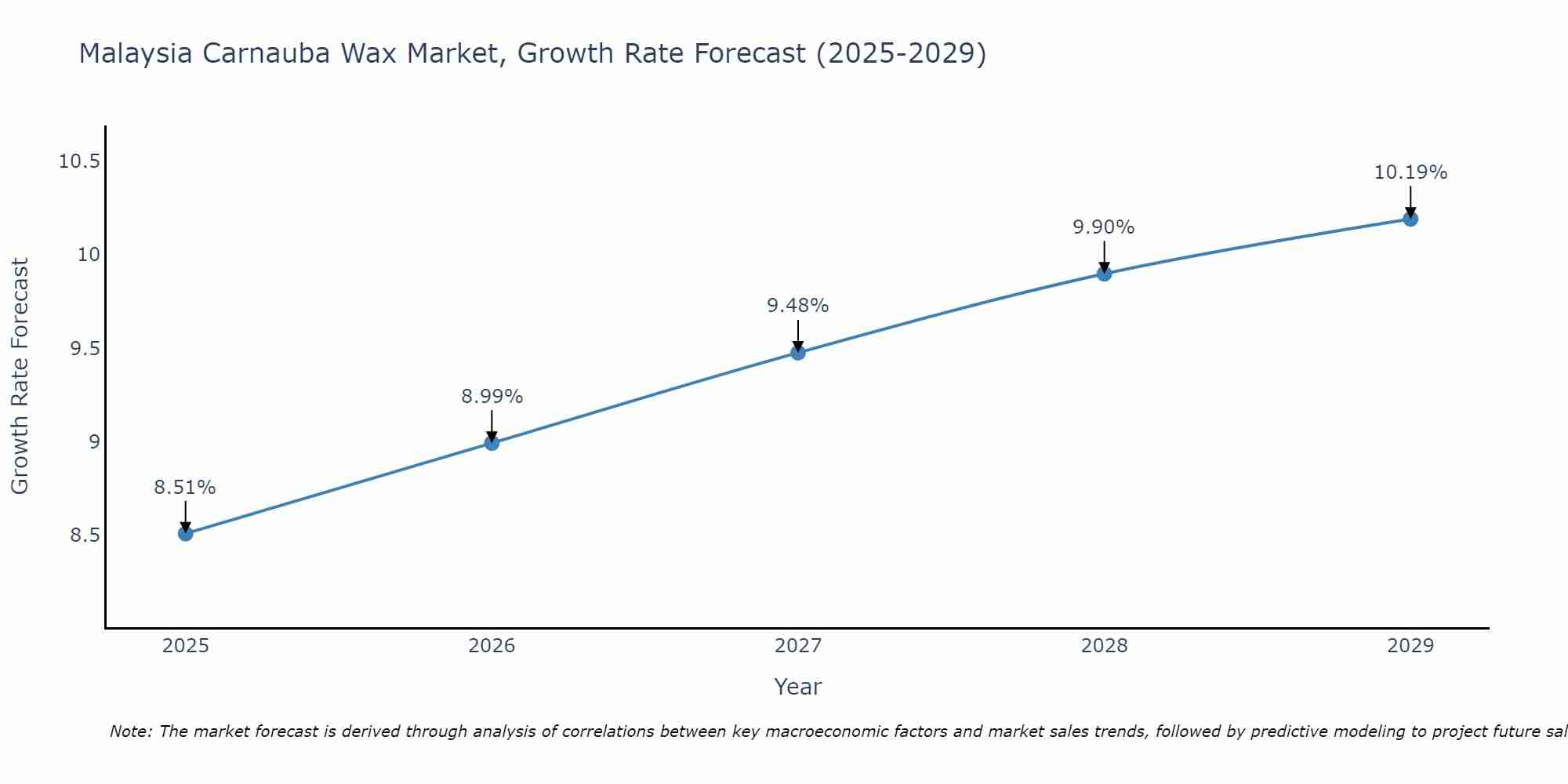
The Malaysia Carnauba Wax Market is poised for steady growth rate improvements from 2025 to 2029. Commencing at 8.51% in 2025, growth builds up to 10.19% by 2029.
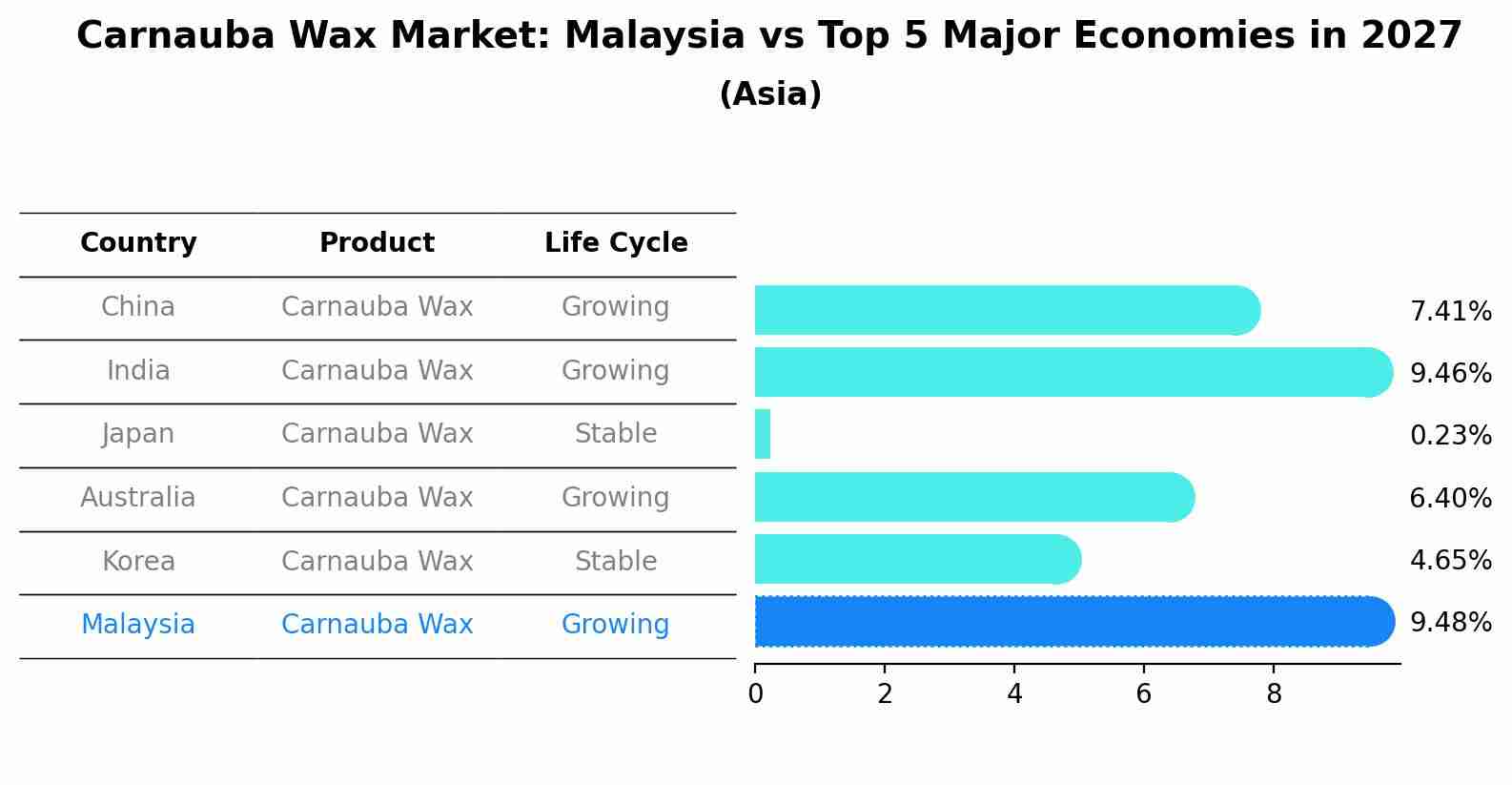
Carnauba Wax Market: Malaysia vs Top 5 Major Economies in 2027 (Asia)
In the Asia region, the Carnauba Wax market in Malaysia is projected to expand at a growing growth rate of 9.48% by 2027. The largest economy is China, followed by India, Japan, Australia and South Korea.
Malaysia Carnauba Wax Market Synopsis
The carnauba wax market in Malaysia plays a crucial role in various industries, including cosmetics, pharmaceuticals, and automotive. Carnauba wax is highly valued for its natural, glossy finish and protective properties. As industries continue to grow in Malaysia, the demand for carnauba wax as an essential ingredient is expected to rise. With its superior quality and sustainable sourcing practices, Malaysia is well-positioned to supply the global market with carnauba wax. Producers may focus on expanding their capacity and ensuring consistent quality to meet the increasing demand from both domestic and international clients.
Drivers of the Market
Carnauba wax is gaining prominence in various industries, including cosmetics, food, and automotive, due to its natural and eco-friendly properties. Malaysia is a significant producer of carnauba wax, and the market outlook is positive. The demand for carnauba wax is driven by its use in cosmetics as a natural thickener and glossy finisher, as well as its role in the food industry as a glazing agent. However, sustainability and ethical sourcing concerns should be addressed to ensure long-term growth and meet the demands of conscious consumers.
Challenges of the Market
The Malaysia carnauba wax market faces challenges due to its reliance on the automotive and cosmetics industries. Fluctuations in the demand for carnauba wax products within these sectors, influenced by economic conditions and consumer preferences, can lead to market instability. Additionally, sourcing sustainable carnauba wax presents a challenge, as it is primarily harvested from palm trees, and concerns about deforestation and environmental impact have prompted calls for more responsible sourcing practices.
COVID 19 Impact on the Market
In the Malaysia carnauba wax market, the COVID-19 pandemic had varied effects. Initially, the market experienced disruptions as global supply chains were affected. Carnauba wax is often used in cosmetics and automotive products, both of which saw reduced demand during lockdowns. However, the market showed resilience as it adapted to the changing landscape. Manufacturers diversified their product offerings, targeting industries with stable demand, such as pharmaceuticals and food. Online sales and export opportunities also helped mitigate the impact. As restrictions eased and economic recovery began, the carnauba wax market gradually rebounded.
Key Players in the Market
For the carnauba wax market in Malaysia, key players include Carnauba do Brasil, Foncepi, and Akrochem Corporation. These companies are recognized for their expertise in carnauba wax production and distribution.
Key Highlights of the Report:
- Malaysia Carnauba Wax Market Outlook
- Market Size of Malaysia Carnauba Wax Market, 2024
- Forecast of Malaysia Carnauba Wax Market, 2031
- Historical Data and Forecast of Malaysia Carnauba Wax Revenues & Volume for the Period 2021-2031
- Malaysia Carnauba Wax Market Trend Evolution
- Malaysia Carnauba Wax Market Drivers and Challenges
- Malaysia Carnauba Wax Price Trends
- Malaysia Carnauba Wax Porter's Five Forces
- Malaysia Carnauba Wax Industry Life Cycle
- Historical Data and Forecast of Malaysia Carnauba Wax Market Revenues & Volume By Product for the Period 2021-2031
- Historical Data and Forecast of Malaysia Carnauba Wax Market Revenues & Volume By Type1 for the Period 2021-2031
- Historical Data and Forecast of Malaysia Carnauba Wax Market Revenues & Volume By Type3 for the Period 2021-2031
- Historical Data and Forecast of Malaysia Carnauba Wax Market Revenues & Volume By Type4 for the Period 2021-2031
- Historical Data and Forecast of Malaysia Carnauba Wax Market Revenues & Volume By Application for the Period 2021-2031
- Historical Data and Forecast of Malaysia Carnauba Wax Market Revenues & Volume By Cosmetics for the Period 2021-2031
- Historical Data and Forecast of Malaysia Carnauba Wax Market Revenues & Volume By Food for the Period 2021-2031
- Historical Data and Forecast of Malaysia Carnauba Wax Market Revenues & Volume By Automotive for the Period 2021-2031
- Historical Data and Forecast of Malaysia Carnauba Wax Market Revenues & Volume By Pharmaceutical for the Period 2021-2031
- Historical Data and Forecast of Malaysia Carnauba Wax Market Revenues & Volume By Others for the Period 2021-2031
- Malaysia Carnauba Wax Import Export Trade Statistics
- Market Opportunity Assessment By Product
- Market Opportunity Assessment By Application
- Malaysia Carnauba Wax Top Companies Market Share
- Malaysia Carnauba Wax Competitive Benchmarking By Technical and Operational Parameters
- Malaysia Carnauba Wax Company Profiles
- Malaysia Carnauba Wax Key Strategic Recommendations






































