Malaysia Cellulose Fiber Market Size Growth Rate
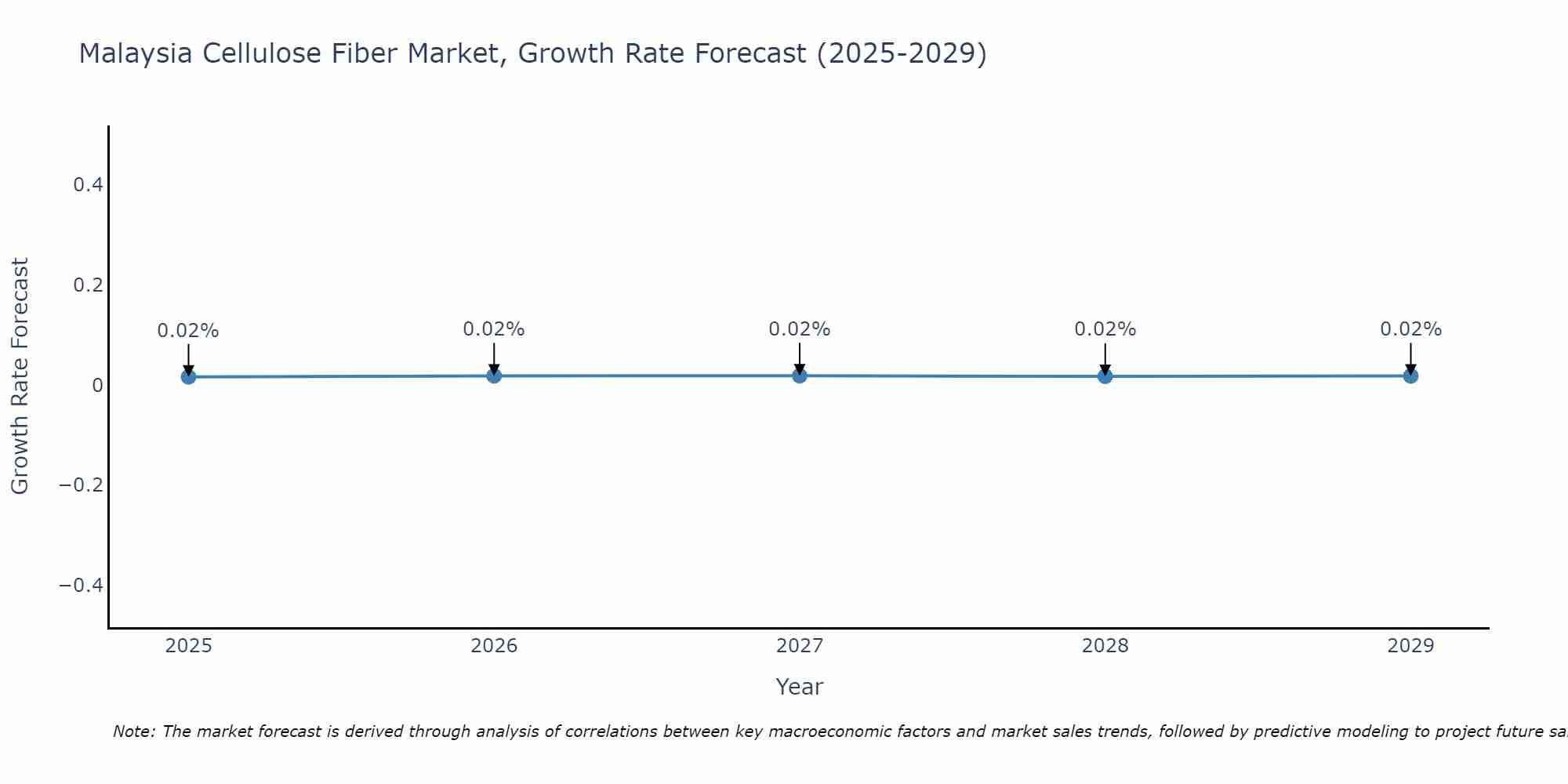
The Malaysia Cellulose Fiber Market is projected to witness mixed growth rate patterns during 2025 to 2029. Starting at 0.02% in 2025, the market peaks at 0.02% in 2027, and settles at 0.02% by 2029.
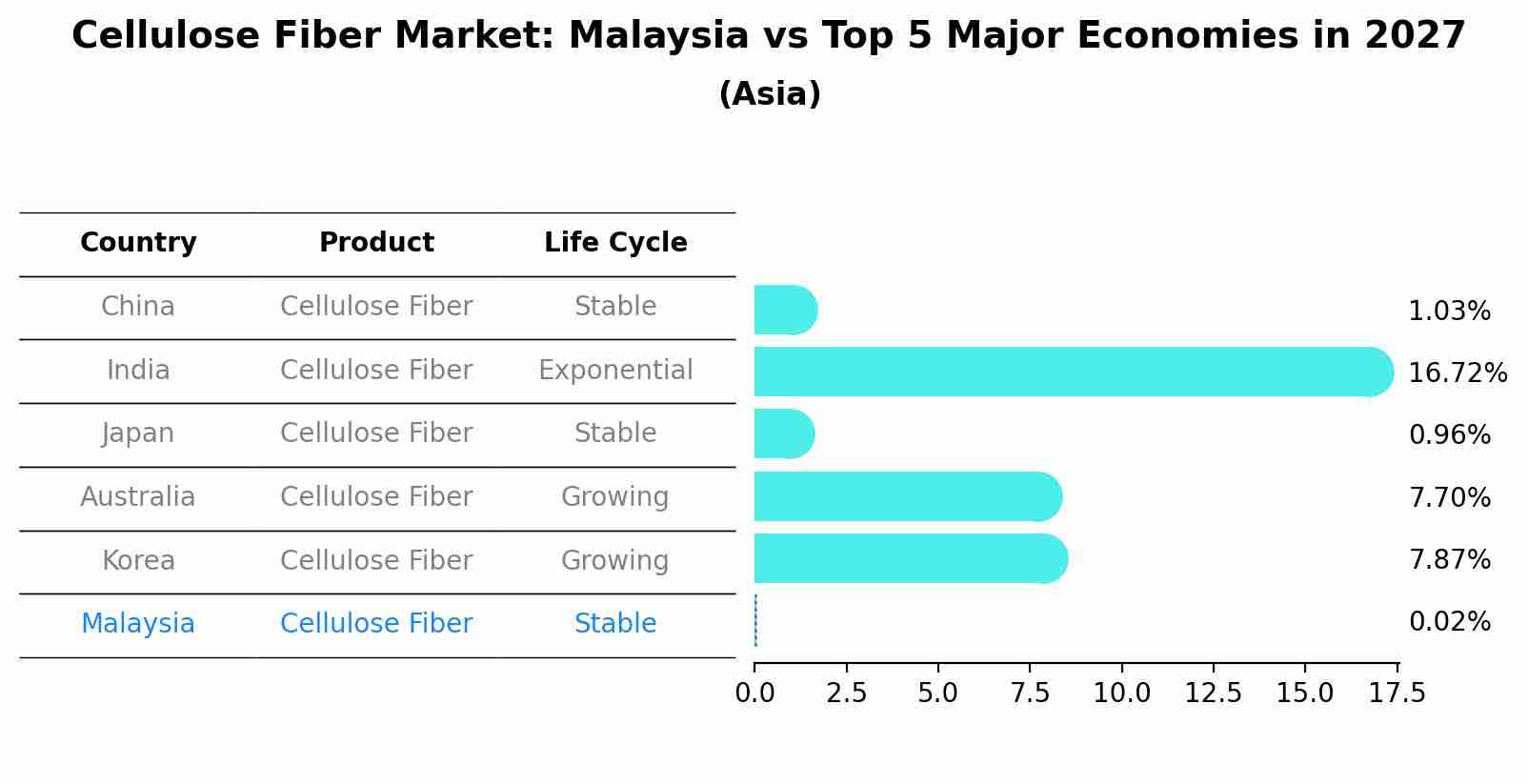
Cellulose Fiber Market: Malaysia vs Top 5 Major Economies in 2027 (Asia)
By 2027, the Cellulose Fiber market in Malaysia is anticipated to reach a growth rate of 0.02%, as part of an increasingly competitive Asia region, where China remains at the forefront, supported by India, Japan, Australia and South Korea, driving innovations and market adoption across sectors.
Malaysia Cellulose Fiber Market Synopsis
The cellulose fiber market in Malaysia exhibits promising prospects, influenced by the increasing awareness of sustainable and eco-friendly materials. Cellulose fibers are derived from renewable sources like wood pulp and agricultural residues, aligning with the country`s sustainability goals. Key applications include textiles, paper production, and automotive interiors, with a growing emphasis on green packaging materials. Government initiatives promoting sustainable practices and green products further bolster the cellulose fiber market. With a focus on research and development for enhanced product performance, Malaysia is well-positioned to capture a significant share of the growing global demand for cellulose fibers.
Drivers of the Market
The Malaysia cellulose fiber market is poised for significant growth in the coming years. One of the key drivers behind this growth is the increasing awareness of sustainability and environmental concerns. Cellulose fibers, being biodegradable and renewable, are gaining popularity as a sustainable alternative to synthetic fibers. As more industries and consumers prioritize eco-friendly products, the demand for cellulose fibers is expected to rise. Additionally, the textile and apparel industry is a major consumer of cellulose fibers, and the growing fashion industry in Malaysia is further boosting the market. Innovations in cellulose fiber technology are also driving market growth by enhancing the performance and versatility of these fibers in various applications.
Challenges of the Market
The cellulose fiber market in Malaysia encounters various challenges. Sustainability is a significant concern as consumers are increasingly looking for eco-friendly products. Meeting stringent environmental regulations and ensuring sustainable sourcing of raw materials can be demanding for industry players. Additionally, competition from synthetic fibers and the need for continuous research and development to enhance the properties of cellulose fibers pose challenges. Economic uncertainties and volatile market prices for raw materials can also affect the profitability of this market.
COVID 19 Impact on the Market
The cellulose fiber market in Malaysia experienced a complex set of challenges during the COVID-19 pandemic. On one hand, the demand for cellulose fibers used in textiles and non-woven applications, such as face masks and hygiene products, surged due to increased health and safety measures. However, the market faced supply chain disruptions and production challenges as the pandemic disrupted global logistics and operations. On the other hand, cellulose fibers used in paper production encountered a downturn as offices and businesses reduced their paper consumption during remote work arrangements. As the situation stabilized and demand for certain cellulose fiber applications remained strong, the market demonstrated resilience and the ability to adapt to changing consumer needs and industrial demands.
Key Players in the Market
In the Malaysia cellulose fiber market, a few major players dominate with a focus on sustainable and eco-friendly fiber solutions. Leading companies include Lenzing AG, Sateri Holdings Limited, and Aditya Birla Group.
Key Highlights of the Report:
- Malaysia Cellulose Fiber Market Outlook
- Market Size of Malaysia Cellulose Fiber Market, 2024
- Forecast of Malaysia Cellulose Fiber Market, 2031
- Historical Data and Forecast of Malaysia Cellulose Fiber Revenues & Volume for the Period 2021-2031
- Malaysia Cellulose Fiber Market Trend Evolution
- Malaysia Cellulose Fiber Market Drivers and Challenges
- Malaysia Cellulose Fiber Price Trends
- Malaysia Cellulose Fiber Porter's Five Forces
- Malaysia Cellulose Fiber Industry Life Cycle
- Historical Data and Forecast of Malaysia Cellulose Fiber Market Revenues & Volume By Fiber Type for the Period 2021-2031
- Historical Data and Forecast of Malaysia Cellulose Fiber Market Revenues & Volume By Introduction for the Period 2021-2031
- Historical Data and Forecast of Malaysia Cellulose Fiber Market Revenues & Volume By Natural Cellulose Fibers for the Period 2021-2031
- Historical Data and Forecast of Malaysia Cellulose Fiber Market Revenues & Volume By Man-made Cellulose Fibers for the Period 2021-2031
- Historical Data and Forecast of Malaysia Cellulose Fiber Market Revenues & Volume By Others for the Period 2021-2031
- Historical Data and Forecast of Malaysia Cellulose Fiber Market Revenues & Volume By Applications for the Period 2021-2031
- Historical Data and Forecast of Malaysia Cellulose Fiber Market Revenues & Volume By Introduction for the Period 2021-2031
- Historical Data and Forecast of Malaysia Cellulose Fiber Market Revenues & Volume By Apparel for the Period 2021-2031
- Historical Data and Forecast of Malaysia Cellulose Fiber Market Revenues & Volume By Home Textile for the Period 2021-2031
- Historical Data and Forecast of Malaysia Cellulose Fiber Market Revenues & Volume By Industrial for the Period 2021-2031
- Historical Data and Forecast of Malaysia Cellulose Fiber Market Revenues & Volume By Others for the Period 2021-2031
- Malaysia Cellulose Fiber Import Export Trade Statistics
- Market Opportunity Assessment By Fiber Type
- Market Opportunity Assessment By Applications
- Malaysia Cellulose Fiber Top Companies Market Share
- Malaysia Cellulose Fiber Competitive Benchmarking By Technical and Operational Parameters
- Malaysia Cellulose Fiber Company Profiles
- Malaysia Cellulose Fiber Key Strategic Recommendations






































