Malaysia Chocolate and Cocoa Products Market Summary
The malaysia chocolate and cocoa products market was estimated at USD 188 Million in 2025 and is projected to reach USD 245 Million by 2032, growing at a CAGR of 5.8% from 2026 to 2032.
Malaysia Chocolate and Cocoa Products Market Year-wise Growth Rate and Key Drivers
This graph highlights how the Malaysia Chocolate and Cocoa Products Market has steadily grown over the past five years, supported by major growth factors.
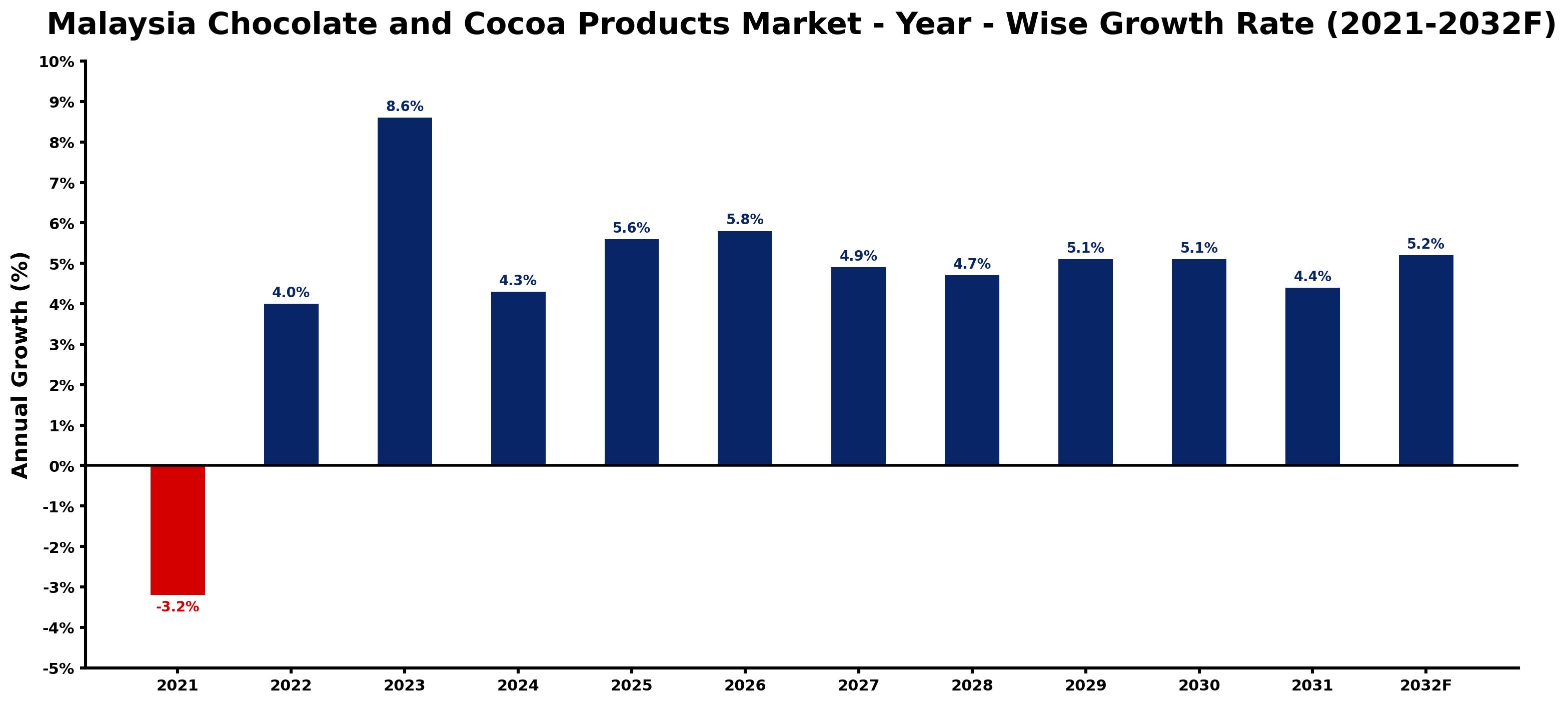
The table below presents the year wise growth rates along with the key drivers influencing the market
| Year | Growth Rate | Major Drivers |
| 2021 | -3.2% | Intensified competition from cheaper imported confectionery diverted consumer spending away from local chocolate brands. |
| 2022 | 4.0% | Consumer trends leaned towards artisanal products, emphasizing local cocoa sourcing efforts. |
| 2023 | 8.6% | Digital platforms enabled small businesses to reach wider customer bases effectively. |
| 2024 | 4.3% | Health-conscious consumers began favoring dark chocolate for its perceived health benefits. |
| 2025 | 5.6% | Emerging boutique chocolatiers showcased unique flavors, attracting adventurous Malaysian palates. |
| 2026 | 5.8% | Environmental sustainability became a priority, influencing sourcing practices in chocolate production. |
| 2027 | 4.9% | Collaborations between local farmers and brands strengthened the supply chain ecosystem effectively. |
| 2028 | 4.7% | Increased disposable income allowed consumers to explore premium chocolate experiences regularly. |
| 2029 | 5.1% | Culinary tourism showcased Malaysian chocolates, promoting the nation's rich cacao heritage successfully. |
| 2030 | 5.1% | Educational initiatives on cocoa farming practices improved local agricultural quality significantly. |
| 2031 | 4.4% | Competitive pricing strategies by major brands sparked a value-oriented consumer shift. |
| 2032 | 5.2% | Innovations in packaging increased product visibility, driving impulse purchases in retail outlets. |
Note - Market size estimations and growth projections presented in this report are based on 6Wresearch's advanced forecasting approach, validated with industry datasets as of June 2026.
Malaysia Chocolate and Cocoa Products Market Synopsis
The Malaysia Chocolate and Cocoa Products Market is projected to reach 5.8% and witness significant growth during the forecast period (2026-2032). The anticipated compound annual growth rate (CAGR) of 6.9% is driven by various factors, including the increasing demand for premium quality chocolates and the rising acceptance of functional confectionery among consumers. This growth is further supported by an upward trend in income levels, which allows consumers to invest in higher-value products. Additionally, the shift towards online sales channels has been pivotal in enhancing market accessibility for Malaysian consumers.
Malaysia Chocolate and Cocoa Products Market Growth Drivers
The primary growth drivers for the Malaysia Chocolate and Cocoa Products Market can be categorized into several key factors:
- The escalating demand for premium and dark chocolates is shaping consumer preferences, as individuals become more health-conscious and seek out products with higher cocoa content.
- Increased disposable income levels among Malaysian consumers are enabling them to spend more on quality confectionery products, thereby fuelling market expansion.
- The acceptance and popularity of functional confectionery, which incorporates health benefits alongside indulgence, are attracting a broader customer base.
- The rise of e-commerce platforms is facilitating convenient access to a diverse range of chocolate and cocoa products, significantly impacting purchasing behavior.
- Manufacturers are investing in innovation to meet the evolving preferences of consumers, focusing on healthier options and sustainable sourcing of cocoa.
Malaysia Chocolate and Cocoa Products Market Trends and Opportunities
As the Malaysia Chocolate and Cocoa Products Market continues to evolve, several trends and opportunities are emerging:
- There is a notable shift towards clean label products, where consumers are increasingly looking for transparency in ingredients and healthier options.
- The growth of artisanal chocolate brands is creating niche market opportunities for unique and handcrafted products, enhancing local craftsmanship.
- Innovations in sustainable packaging are gaining traction, as both consumers and manufacturers emphasize environmental responsibility.
- The potential for expanding into health-oriented chocolate products, such as functional chocolates infused with superfoods, presents a lucrative avenue for manufacturers.
- Collaborations with local farmers to ensure ethical sourcing of cocoa can enhance brand loyalty and consumer trust in the Malaysian market.
Malaysia Chocolate and Cocoa Products Market Challenges and Restraints
Despite the positive growth trajectory, the Malaysia Chocolate and Cocoa Products Market faces several challenges that could impede progress:
- The fluctuating prices of raw cocoa and other essential ingredients can affect profit margins for manufacturers, leading to increased prices for consumers.
- The competitive landscape is becoming more intense, with numerous local and international brands vying for market share, making differentiation increasingly important.
- Health concerns regarding sugar consumption and obesity are prompting a re-evaluation of product formulations, which could pose challenges for traditional chocolate types.
- Supply chain disruptions, influenced by global events or local policies, may hinder the timely availability of raw materials required for production.
- Consumer skepticism towards artificial ingredients and additives necessitates continuous product reformulation and marketing strategies to maintain market relevance.
Malaysia Chocolate and Cocoa Products Market Government Investment and Initiatives
The Malaysian government has recognized the potential of the chocolate and cocoa sector and is actively investing in initiatives designed to boost the industry. These initiatives include:
- Support for research and development in cocoa farming techniques, aimed at increasing yield and quality among local farmers.
- Investment in infrastructure to bolster supply chain efficiency, ensuring timely distribution from producers to consumers.
- Establishment of training programs for farmers to enhance their skills in sustainable farming practices, which aligns with global sustainability trends.
- Incentives for businesses looking to innovate in the chocolate sector, including grants and funding for technology adoption.
- Promotion of Malaysia as a hub for cocoa processing in the Asia-Pacific region, thereby enticing foreign investment and enhancing the local economy.
Malaysia Chocolate and Cocoa Products Market Latest Developments (May 2025 - June 2026)
In the period between May 2025 and June 2026, the Malaysia Chocolate and Cocoa Products Market has witnessed several significant developments:
- The emergence of new brands focusing on organic and ethically sourced products has diversified the market, appealing to a more conscious consumer base.
- Efforts to promote local cocoa farmers through various government initiatives have gained traction, fostering a closer connection between producers and chocolate manufacturers.
- Technological advancements in production processes are being adopted by key manufacturers to enhance efficiency and product quality.
- Increased collaboration among stakeholders in the industry has led to more robust networking opportunities and knowledge sharing, promoting best practices.
- Consumer trends towards online shopping have continued to grow, with many companies enhancing their digital marketing strategies to leverage this shift.
Malaysia Chocolate and Cocoa Products Market - Key Attractiveness of the Report
- 10 Years of Market Numbers
- Historical Data Starting from 2022 to 2025
- Base Year: 2025
- Forecast Data until 2032
- Key Performance Indicators Impacting the Market
- Major Upcoming Developments and Projects
Key Highlights of the Report:
- Malaysia Chocolate and Cocoa Products Market Outlook
- Market Size of Malaysia Chocolate and Cocoa Products Market, 2025
- Forecast of Malaysia Chocolate and Cocoa Products Market, 2032F
- Historical Data and Forecast of Malaysia Chocolate and Cocoa Products Revenues & Volume for the Period 2022-2032F
- Malaysia Chocolate and Cocoa Products Market Trend Evolution
- Malaysia Chocolate and Cocoa Products Market Drivers and Challenges
- Malaysia Chocolate and Cocoa Products Price Trends
- Malaysia Chocolate and Cocoa Products Porter's Five Forces
- Malaysia Chocolate and Cocoa Products Industry Life Cycle
- Historical Data and Forecast of Malaysia Chocolate and Cocoa Products Market Revenues & Volume By Cocoa Types for the Period 2022-2032F
- Historical Data and Forecast of Malaysia Chocolate and Cocoa Products Market Revenues & Volume By Cocoa Butter for the Period 2022-2032F
- Historical Data and Forecast of Malaysia Chocolate and Cocoa Products Market Revenues & Volume By Cocoa Powder for the Period 2022-2032F
- Historical Data and Forecast of Malaysia Chocolate and Cocoa Products Market Revenues & Volume By Cocoa Liquor for the Period 2022-2032F
- Historical Data and Forecast of Malaysia Chocolate and Cocoa Products Market Revenues & Volume By Chocolate Type for the Period 2022-2032F
- Historical Data and Forecast of Malaysia Chocolate and Cocoa Products Market Revenues & Volume By Dark Chocolate for the Period 2022-2032F
- Historical Data and Forecast of Malaysia Chocolate and Cocoa Products Market Revenues & Volume By Milk Chocolate for the Period 2022-2032F
- Historical Data and Forecast of Malaysia Chocolate and Cocoa Products Market Revenues & Volume By White Chocolate for the Period 2022-2032F
- Historical Data and Forecast of Malaysia Chocolate and Cocoa Products Market Revenues & Volume By Filled Chocolate for the Period 2022-2032F
- Historical Data and Forecast of Malaysia Chocolate and Cocoa Products Market Revenues & Volume By Applications for the Period 2022-2032F
- Historical Data and Forecast of Malaysia Chocolate and Cocoa Products Market Revenues & Volume By Confectionery for the Period 2022-2032F
- Historical Data and Forecast of Malaysia Chocolate and Cocoa Products Market Revenues & Volume By Food & Beverage for the Period 2022-2032F
- Historical Data and Forecast of Malaysia Chocolate and Cocoa Products Market Revenues & Volume By Cosmetics for the Period 2022-2032F
- Historical Data and Forecast of Malaysia Chocolate and Cocoa Products Market Revenues & Volume By Pharmaceuticals for the Period 2022-2032F
- Historical Data and Forecast of Malaysia Chocolate and Cocoa Products Market Revenues & Volume By Distribution Channel for the Period 2022-2032F
- Historical Data and Forecast of Malaysia Chocolate and Cocoa Products Market Revenues & Volume By Offline for the Period 2022-2032F
- Historical Data and Forecast of Malaysia Chocolate and Cocoa Products Market Revenues & Volume By Online for the Period 2022-2032F
- Malaysia Chocolate and Cocoa Products Import Export Trade Statistics
- Market Opportunity Assessment By Cocoa Types
- Market Opportunity Assessment By Chocolate Type
- Market Opportunity Assessment By Applications
- Market Opportunity Assessment By Distribution Channel
- Malaysia Chocolate and Cocoa Products Top Companies Market Share
- Malaysia Chocolate and Cocoa Products Competitive Benchmarking By Technical and Operational Parameters
- Malaysia Chocolate and Cocoa Products Company Profiles
- Malaysia Chocolate and Cocoa Products Key Strategic Recommendations






































